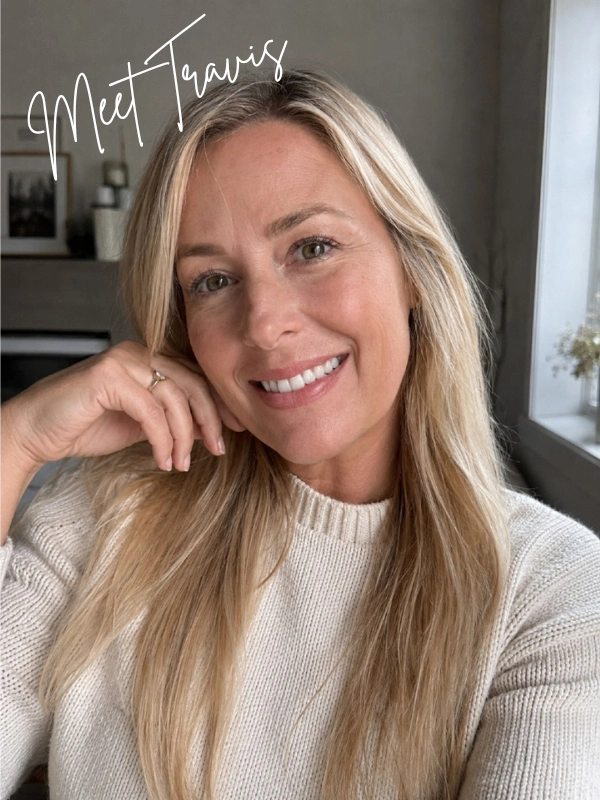
At some point, a woman can start hearing that growing older means dressing a little quieter. The bright jacket goes unworn, a favorite necklace seems too noticeable, and clothes that once felt fun begin to feel risky.
The frustrating part is that your taste may be just as strong as ever. Yet advice about what women over 50 “should” wear can make even simple outfits feel like a test you might fail.
Stylish outfits for women over 50 should make you feel present, not hidden. Aging gracefully through fashion starts with better fit, thoughtful color, and a few familiar outfit formulas that let you look modern without dressing like someone else.
Aging Gracefully Does Not Mean Making Yourself Less Noticeable
There is a strange idea that elegant dressing becomes quieter with age. Hemlines get longer, colors become softer, and anything slightly bold starts to feel like something you need permission to wear.
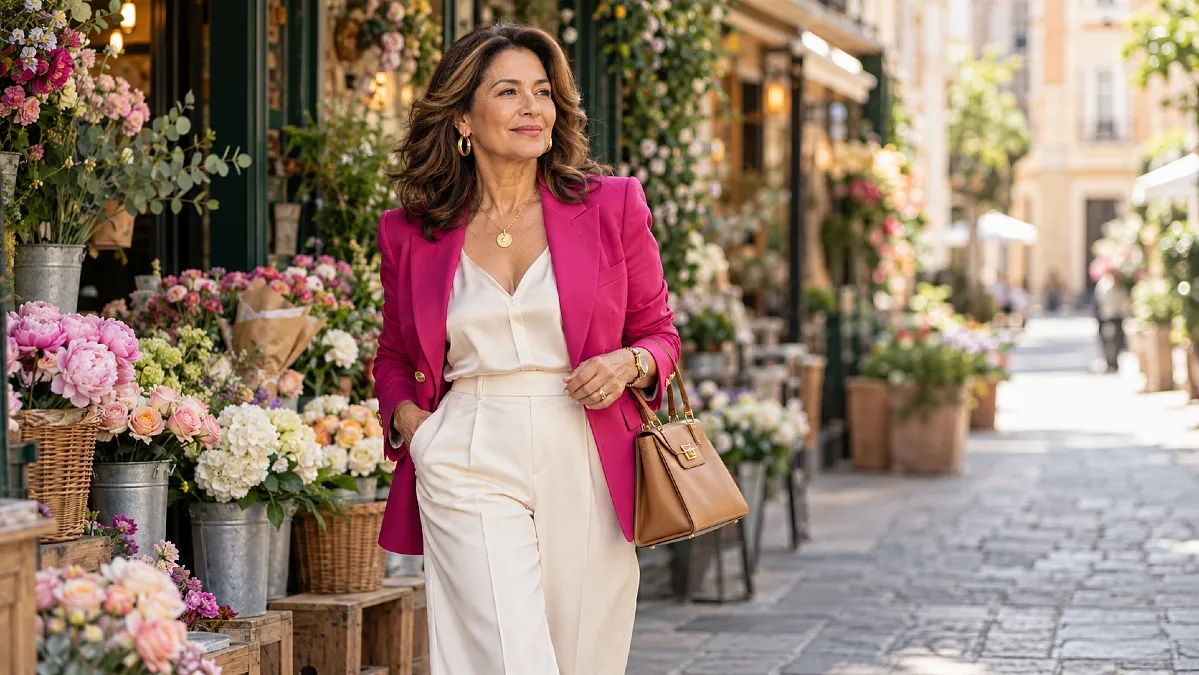
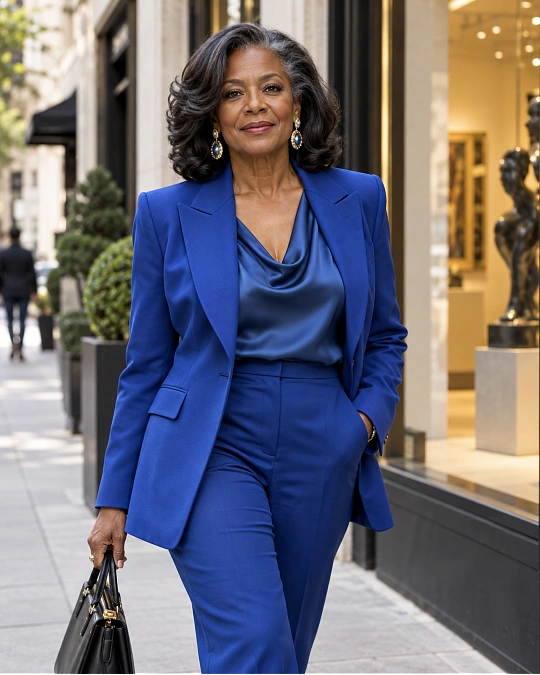
But grace has very little to do with blending into the background. A woman in a beautifully fitted red blazer can look every bit as elegant as someone in head-to-toe beige.
The difference is how the clothes work together. Good proportions, thoughtful fabrics, and personal details make a stronger impression than following rules about what a certain age should wear.
Being stylish does not mean trying to look younger. It means allowing the person you are now to be reflected in your clothes.
That might be a crisp white shirt worn with dramatic earrings. It could be wide-leg trousers and a colorful silk scarf, or simply a beautiful pair of jeans that fit properly.
Some old fashion rules are worth questioning because they encourage women to shrink their choices rather than improve them.
| Old Fashion Rule | A Better Way to Think About It |
|---|---|
| Wear neutral colors to look mature | Wear colors that suit your taste, using neutrals to balance them |
| Avoid fitted clothes after 50 | Choose clothes that follow your shape without feeling tight |
| Keep accessories small and simple | Let one beautiful accessory become the focus |
| Stop following fashion trends | Choose modern details that work with your existing wardrobe |
| Cover up to look elegant | Use proportion, fabric, and fit to decide how much coverage feels right |
There is nothing wrong with dressing simply or preferring understated colors. The point is that these should be personal choices, not restrictions placed on you because of your age.
You can look refined while being colorful, expressive, relaxed, or a little unexpected. Those qualities can live comfortably together.
Start Dressing the Body You Have Now, Not the One You Remember
One of the hardest parts of dressing over 50 is accepting that familiar clothes may no longer sit the same way. A jacket might pull across the shoulders, trousers may feel different at the waist, or a once-reliable dress may no longer hang as expected.
Bodies can change with age, but so do clothing cuts and sizing. A poor fit does not mean your body is the problem.
Instead of chasing the size printed on a label, pay attention to what happens when you move. Sit down in the trousers, lift your arms in the jacket, and walk across the room in the shoes.
Clothes that fit comfortably often look more polished because you are not constantly adjusting them.
Find Structure Without Feeling Restricted
The goal is not to hide your shape or squeeze it into something uncomfortable. It is to give your outfit a clear silhouette.
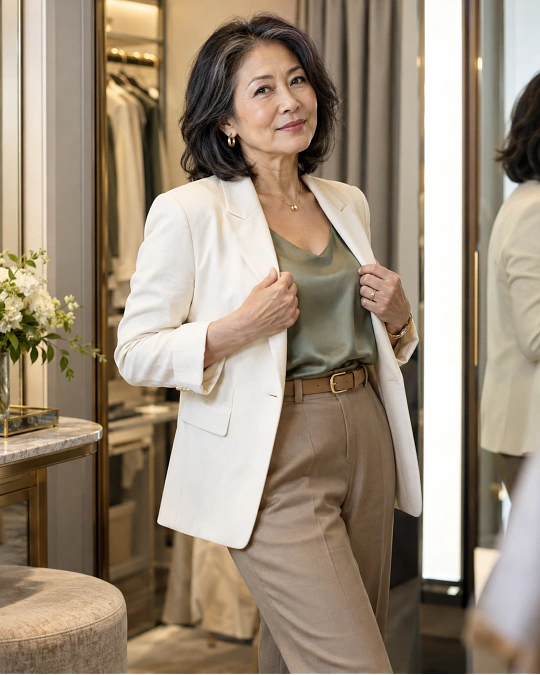
For example, straight-leg trousers can create a clean line without clinging. A gently shaped blazer can define the upper body while leaving enough room for easy movement.
A cotton poplin shirt brings a little structure to softer trousers. A knit top with a smooth finish sits neatly beneath a jacket without adding unnecessary bulk.
Fit note: Check where a garment ends as carefully as how it fits around your body. A jacket ending at the widest part of your hips may create a different balance than one that finishes slightly above or below.
Small changes in length can make an outfit feel completely different. Sometimes a simple alteration does more than buying several new pieces.
The best wardrobe is not the one filled with clothes that used to fit. It is the one that makes getting dressed comfortable and enjoyable right now.
Let Color and Signature Details Keep Your Personality Visible
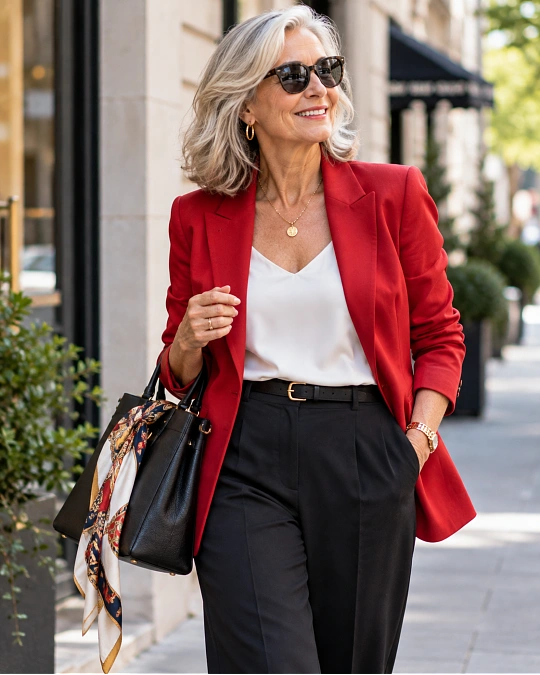
Some women gradually replace their colorful clothes with black, navy, gray, and beige because those shades feel easier to coordinate. Neutrals can be beautiful, but they should not become a hiding place.
If you have always loved emerald green, rich burgundy, cobalt blue, or warm coral, there is no reason to stop wearing those colors.
The secret is knowing how much color you want in one outfit. A single stronger shade against a calm base often creates more impact than several competing colors.
Take a pair of navy trousers and a soft white blouse. Add a deep green jacket, and the outfit immediately has more personality without becoming busy.
You can also use color closer to your face through scarves, earrings, necklines, or jackets. Try different shades in natural daylight and notice which ones you enjoy seeing against your skin and hair.
Create a Signature Detail People Associate With You
Personal style becomes stronger when something in your wardrobe feels distinctly yours. It does not have to be expensive, dramatic, or even particularly fashionable.
Perhaps you love gold hoop earrings, printed silk scarves, structured handbags, or red lipstick. Maybe your signature is a beautifully pressed shirt with the sleeves casually rolled.
These familiar details can make simple outfits feel more complete.
Color note: If a bright shade feels overwhelming, start with a scarf, handbag, or pair of shoes. Keeping the rest of the outfit quiet gives that color enough space to stand out.
Your signature can change whenever you want. What matters is choosing it because you love it, not because a fashion rule says it is suitable.
Give Comfortable Clothes Enough Shape to Look Intentional
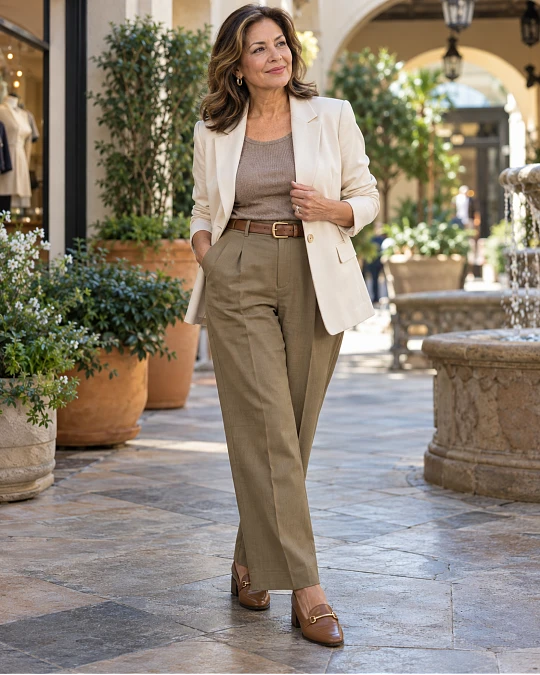
Comfort is one of the best things to prioritize as you get older. Yet comfortable clothing sometimes gets confused with clothing that has no shape.
A soft cardigan, loose trousers, and relaxed top can all be lovely pieces. When every item is oversized, however, the outfit may lose its balance.
The answer is not to replace comfort with stiff tailoring. It is to combine relaxed pieces with one item that gives the look a clearer outline.
For example, wide-leg trousers can look beautiful with a fine-knit sweater that ends near the waistband. An oversized shirt can work with straight-leg jeans and a neatly shaped leather belt.
These combinations feel easy to wear while still looking considered.
Fabric Makes a Bigger Difference Than Many Women Realize
The way fabric falls affects the whole outfit. Two pairs of trousers in the same size can look very different if one is made from thin jersey and the other from a substantial woven fabric.
Knowing what to look for helps you judge clothing by its quality and usefulness rather than its label.
| Clothing Piece | What to Look For | Why It Works |
|---|---|---|
| Everyday trousers | Smooth cotton twill, ponte, or softly draped wool blends | Holds a cleaner shape while allowing movement |
| Casual tops | Midweight cotton or fine knits with good recovery | Less likely to cling or lose shape during the day |
| Blazers | Lined or neatly finished styles with gentle shoulder structure | Gives relaxed outfits a more defined outline |
| Dresses | Fabrics with enough weight to fall smoothly | Creates movement without unnecessary bulk |
| Cardigans | Fine or medium-gauge knits with firm cuffs and hems | Looks neat over shirts, dresses, and simple tops |
A fabric does not have to be expensive to work well. Check whether it feels comfortable, hangs smoothly, and returns to shape after being gently stretched.
A few styling adjustments can also help you find that balance between comfort and polish.
- With wide trousers: Try a shorter top or a gentle front tuck so the waistline remains visible.
- With oversized shirts: Roll the sleeves, open the neckline slightly, or pair them with narrower bottoms.
- With soft dresses: Add a cropped jacket or a belt if you want more waist definition.
- With relaxed jeans: Wear loafers, polished sneakers, or ankle boots that create a neat finish.
Shoe swap: If chunky sneakers make an outfit feel heavier than you want, try a streamlined leather sneaker or a simple loafer. The cleaner shoe shape can change the look without changing your clothes.
The goal is not to appear dressed up all the time. It is to feel that your clothes were chosen with care, even on an ordinary Tuesday.
Stay Current Without Trying to Dress Like Someone Else
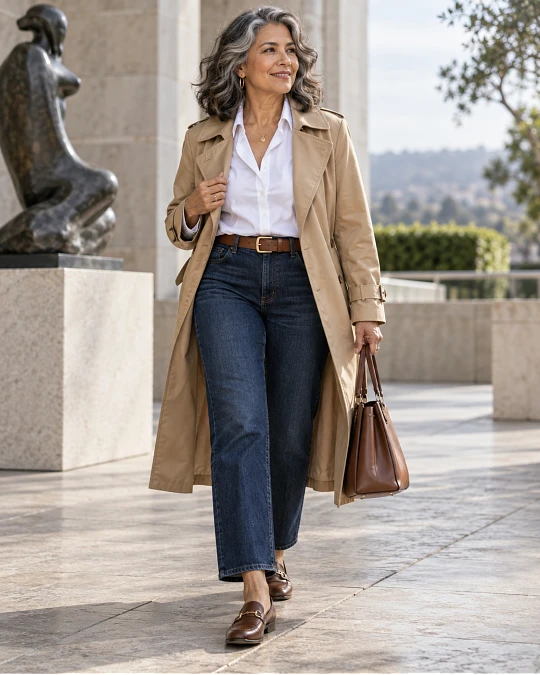
There is a difference between dressing modern and copying every new trend. You can enjoy fashion without rebuilding your wardrobe whenever silhouettes or colors change.
In fact, having an established personal style can make trends easier to wear. You already know the cuts, colors, and fabrics that feel comfortable, so you can be selective about what you add.
A modern pair of relaxed straight-leg jeans might replace an older pair that no longer fits well. A contemporary handbag shape could bring freshness to a coat you have owned for years.
Neither change requires you to abandon your taste.
Use Modern Details With Familiar Classics
Consider a woman who loves tailored trousers, simple knitwear, and loafers. She can update the combination with slightly fuller trousers, a current neckline, or a handbag with a clean geometric shape.
Another woman might prefer feminine dresses and printed blouses. Modernizing her look could mean choosing a different sleeve shape, a more substantial sandal, or a jacket with softer tailoring.
These are adjustments, not complete transformations.
The easiest place to experiment is often with accessories. Shoes, belts, scarves, and jewelry can change the mood of familiar pieces without forcing you into an uncomfortable outfit.
Budget-friendly swap: Before buying a trend, see whether you can create a similar effect with something you own. A different tuck, an open collar, or an updated shoe pairing may be enough.
You also do not need to abandon older pieces simply because they are no longer featured in fashion magazines. Well-fitting clothes with beautiful fabric and balanced proportions can remain useful for years.
A wardrobe looks more personal when it combines established favorites with selective updates. That mix is often more interesting than wearing an entire outfit from one current trend.
Build an Outfit Formula That Makes You Feel Seen Every Day
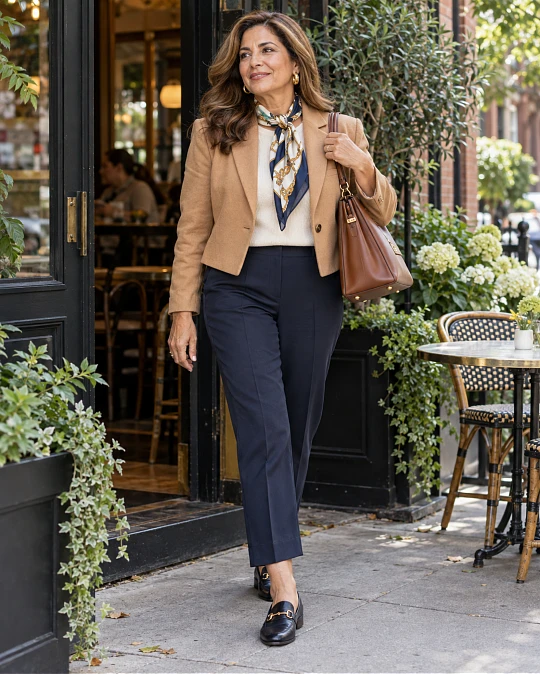
Fashion confidence becomes easier when you stop treating every morning like a completely new styling problem.
A personal outfit formula gives you a familiar starting point. It combines pieces you already trust, then leaves room to change colors, textures, or accessories.
Formula: Well-fitting trousers + a beautiful top + one distinctive finishing piece.
That finishing piece might be a colorful jacket, silk scarf, statement necklace, or structured handbag. The simple base makes the outfit easy to repeat, while the final detail keeps it personal.
For example, black straight-leg trousers, a cream knit top, and a burgundy blazer create a polished outfit for lunch. Replace the blazer with a denim jacket and add white leather sneakers for a more casual afternoon.
Neither look needs complicated styling.
Outfit Formulas for Real Life
You do not need a different wardrobe for every occasion. A few reliable combinations can carry you from errands to dinners with small changes.
| Occasion | Easy Outfit Formula | Finishing Detail |
|---|---|---|
| Running errands | Straight-leg jeans + cotton shirt + comfortable sneakers | Structured crossbody bag |
| Lunch with friends | Tailored trousers + fine-knit sweater + loafers | Colorful scarf or gold earrings |
| Casual evening out | Midi dress + cropped jacket + low block heels | Small leather handbag |
| Travel day | Soft trousers + fitted tee + lightweight cardigan | Polished slip-on shoes |
| Dinner or celebration | Wide-leg trousers + satin blouse + dressy flats | Statement earrings |
Choose one formula that already feels natural, then build two or three versions using different pieces.
For example, if trousers and knitwear are your favorite combination, try black trousers with an ivory sweater, navy trousers with a red knit, and cream trousers with a soft blue cardigan.
You are creating variety without adding unnecessary decisions.
This is also where a small capsule wardrobe can help. When most of your pieces work together, you spend less time worrying about combinations and more time enjoying what you wear.
Style tip: Take photos of three outfits that make you feel particularly good. Keep them on your phone for mornings when you do not want to think too hard about getting dressed.
The more familiar your favorite combinations become, the easier it is to add something new without losing your sense of style.
Stop Saving Your Favorite Clothes for a More Important Day
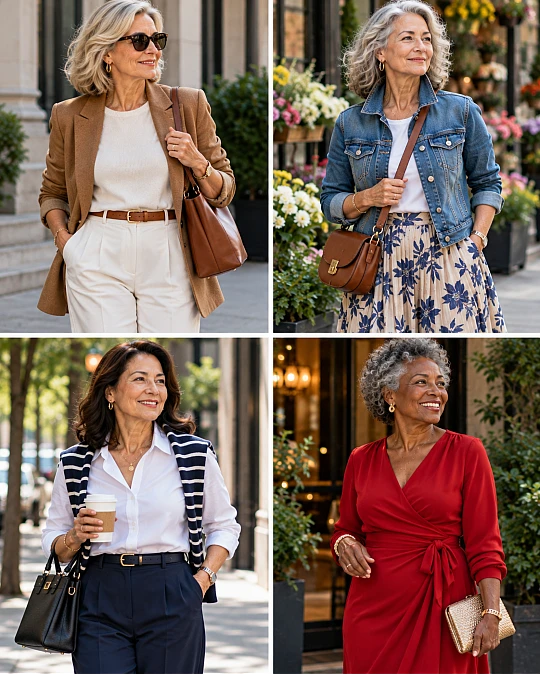
A beautiful blouse that only comes out for special occasions can spend years hanging in a closet. The same happens to statement jewelry, good handbags, and dresses you genuinely enjoy wearing.
Sometimes the hesitation comes from wanting to protect expensive pieces. Other times, wearing something noticeable during an ordinary day feels uncomfortable.
But everyday life is where most of your personal style actually happens.
You do not need an invitation to wear a silk scarf with jeans. A lovely pair of earrings can make a trip to the grocery store feel a little more cheerful.
And there is no reason a well-cut blazer cannot be worn over a simple T-shirt for coffee with a friend.
Try a Small Closet Experiment This Week
Choose an item you love but rarely wear. It might be a colorful cardigan, a printed skirt, a necklace, or a pair of beautiful flats.
Now pair it with two familiar basics. Keep the rest of the outfit comfortable, and wear the combination during a normal part of your day.
Pay attention to how it feels rather than how you think other people might judge it. If one detail feels too much, adjust it instead of abandoning the entire look.
The purpose is not to attract attention everywhere you go. It is to stop treating your favorite clothes as though they belong to a version of you that no longer exists.
You are allowed to change your style, keep your style, or rediscover parts of it that you had put away.
Aging gracefully can include all three.
Frequently Asked Questions
How can I age gracefully through fashion without looking older than I feel?
Focus on clothes that fit well, fabrics that hold their shape, and colors you genuinely enjoy. A modern shoe, neatly tailored jacket, or fresh combination of familiar pieces can help your outfit feel current without trying to make you look younger.
What should a woman over 50 wear to look stylish every day?
Start with reliable basics such as straight-leg trousers, good jeans, fine-knit sweaters, cotton shirts, and comfortable shoes. Add one distinctive detail, such as a colorful scarf or structured jacket, to give an everyday outfit more personality.
Do women over 50 need to stop wearing bright colors or bold prints?
No. Bright colors and prints can look beautiful at any age, especially when balanced with simple pieces. If a bold print feels difficult to style, try wearing it with solid-colored trousers or a jacket that picks up one shade from the pattern.
How do I find my personal style after 50?
Begin by noticing which clothes you wear most often and which outfits make you feel comfortable and confident. Look for repeated patterns in colors, cuts, fabrics, and accessories, then use those preferences to build a few outfit formulas you can depend on.
Can I dress elegantly after 50 without spending much money?
Absolutely. Fit, clean lines, fabric care, and thoughtful combinations often matter more than labels or price tags. Altering clothes you own, caring for shoes, and choosing versatile secondhand pieces can help you build a polished wardrobe on a modest budget.