

Carrying a four-decade argument with a ghost costs you the second half of your own life.
I am a 58-year-old writer, and it took eighteen months of individual psychotherapy, a dedicated journaling practice, and acceptance and commitment therapy to stop fighting a difficult father who passed away six years ago.
The anger I kept active for forty years was never actually protecting me; it was only maintaining an exhausting phantom conflict.
Forgiving an absent parent in late midlife alters deep-seated emotional responses and self-perception. You get to decide how late-stage emotional reconciliation shifts your internal life and bodily tension, finally unburdening the physical frame and anchoring the self in present autonomy.
Quick Tips Before You Start
Keep a journal
Write daily to track internal shifts without judgment.
Find a professional
Acceptance and commitment therapy provides essential structural support.
Pause the blame
Focus entirely on your own physical and mental responses.
0. Somatic Tension Completely Dissolved

We treat forgiveness as a purely moral exercise, assuming the physical body has nothing to do with it. But after eighteen months of clinical work, I learned my armor was not a mechanical problem.
The resentment I carried was a literal posture.
I spent my adult life physically bracing against an absent man. When I finally released that grievance, the holding patterns locked around my collarbones and sternum simply unwound. My shoulders dropped, and my chest wall expansion normalized. Giving up the mental fight translated directly into sustained physical ease.
💡 Tip: Notice where your body clenches when you think of them.
The Physical Toll of Resentment
0. Mental Rewriting Simply Stopped

The heaviest cost of preserving a forty-year resentment is the sheer volume of hours you lose to arguments that will never actually happen. Once the chronic physical tension finally released from my shoulders, the cognitive loops that fed on that bodily anxiety lost their anchor. I suddenly realized how much of my waking life was spent aggressively renegotiating history.
The exhausting cycle of imagining alternative pasts simply collapsed.
In my daily journaling sessions, I used to fill entire pages trying to manufacture a different outcome for cold, dismissive conversations that took place decades ago. I would script the perfect, unassailable response that might finally force a closed-off father to offer a genuine apology. Accepting the unvarnished truth of what happened ended that endless mental loop.
The powerful urge to drag a deceased parent into the present day to answer for old mistakes evaporated entirely. Dropping the bitter grievance acted as an immediate, heavy anchor to my current reality.
Massive amounts of mental bandwidth previously spent managing a phantom conflict rushed back into my actual afternoon routine. Without the exhausting compulsion to constantly revise my memories, I stopped running counterfactual scenarios where he finally understood my perspective and admitted fault. The daily effort of maintaining that invisible defense completely vanished.
Instead of drafting bitter, defensive monologues while making my morning coffee, the quiet kitchen was just a kitchen again. By letting history remain permanently flawed, my daily attention finally belonged solely to me.
Holding the Grievance
- Running mental arguments
- Revising old memories
- Waiting for an apology
- Demanding impossible restitution
Releasing the Past
- Focusing on current tasks
- Accepting the fixed reality
- Reclaiming daily mental energy
- Participating in the present
0. Genuine Autonomy Finally Settled In
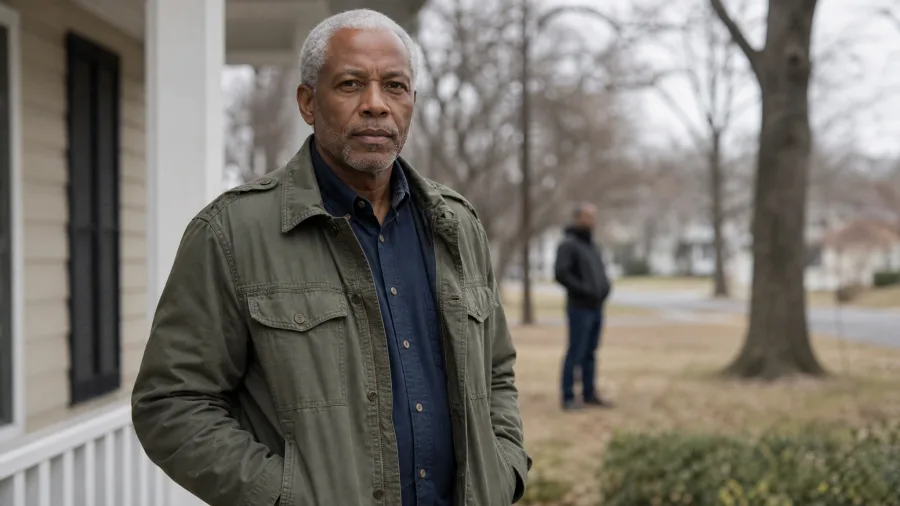
I spent decades believing I made my personal and professional choices entirely on my own terms, fiercely independent of my family's shadow. But ending the daily mental rewrites of our history left a sudden, quiet vacuum that was eventually filled by something unfamiliar: genuine, unforced internal self-validation. I was not as free as I thought.
I had always been measuring my life against a harsh, invisible scorecard. During eighteen months of individual psychotherapy, I realized my adult decision-making was still actively checking his rigid paternal standards before taking risks.
I was continuously seeking posthumous approval from a father who could never offer it while he was breathing. Dropping that endless search changed how it felt to make a simple choice, replacing the desperate need for his external validation with my own internal grounding. The compulsion to win his nod vanished.
A profound sense of emotional independence settled into my daily routine. True autonomy finally replaced the lifelong, exhausting habit of seeking permission from a phantom figure.
The Path to Emotional Independence
0. Boundary Guilt Vanished Permanently

The usual advice says you must fiercely guard your personal space, but genuine autonomy makes those limits feel entirely unremarkable. For years, turning my phone off at eight meant spending the next hour drafting mental apologies. I was resting, but I was bracing for an argument with a phantom critic.
The clinical work finally broke that habit.
I sat at my desk last week, read a late request for a favor I lacked the capacity to do, and simply typed out a polite, one-line refusal. I did not offer a convoluted backstory about my weekend plans or promise to make it up to them. I hit send and walked away to make tea.
There was no heavy feeling in my chest, no sudden compulsion to over-explain my schedule, and no secondary guilt. Stopping the internal defense of those protective limits brought a profound mental quiet.
The psychological lightness replaced the heavy feeling of constantly needing justification. Forgiving the parent removed the perceived need to defend my personal space against his ghost.
⚠️ COMMON MISTAKE
Defending Against Ghosts
Mentally rehearsing your boundaries with someone who is no longer there keeps your nervous system trapped in a defensive state.
0. Professional Imposter Syndrome Faded

"If I can just get this next win, I will finally feel secure," is a lie I told myself every time my career stalled. Ask yourself who you are actually trying to impress when you stare at a blank screen. If the face in your head is a ghost, the anxiety belongs to the past.
Without that demand for paternal redemption, my imposter syndrome faded.
That childhood validation-seeking finally lost its connection to my daily performance pressure. My internal motivation shifted from earning past approval to executing present creative work. Professional self-doubt dissolved because the phantom critic I was trying to satisfy was already gone.
Shifting Professional Motivation
🎯 Past Drive
Earning validation
📈 Current Focus
Executing the work
🧠 Mental State
Quiet confidence
0. Empathy Replaced Lingering Bitterness

It is possible to understand exactly why someone failed you without ever agreeing that their behavior was acceptable. Clearing out my career anxiety finally opened the necessary mental space to view my father contextually, rather than as the lifelong antagonist I constantly had to defeat.
Sometimes, anger is an entirely necessary protective measure.
If you are still living in the blast radius of someone's active chaos, premature empathy is just a dangerous distraction. But six years after his passing, maintaining that thick defensive wall was only keeping me exhausted and tied to the past.
Seeing him as a severely flawed man rather than a calculated villain humanized our shared story. I started examining the few concrete memories I had of his own upbringing, raised by a man who communicated exclusively through demands and disappointment. The contextual understanding of his deep limitations steadily reduced the personal bitterness I had carried for four decades.
I remember sitting in a session, rehearsing my usual list of his parenting failures. The clinician stopped my familiar rant and asked, "What if he gave you exactly what he had, and the account was just completely empty?"
That question broke my defensive spinning once and for all. My childhood anger finally gave way to a sober recognition of his human inadequacies. I stopped asking why he refused to support me, and accepted that he simply lacked the internal machinery to do it. The long personal grievance dissolved into a balanced, quiet view of his life and limitations.
The Shift in Perspective
0. Interpersonal Conflict Became Calm

Three times a week, a minor professional friction tests my patience. An email steps on my toes, or a friend cancels plans at the last minute. For four decades, those daily misalignments felt like personal attacks. They were echoes of the old house, where any slight shift in tone meant the floorboards were dropping out.
Now, the panic simply does not arrive.
Seeing him as a painfully limited person rather than a villain drained the tension from my system. Without that massive grievance acting as a megaphone, minor friction stopped escalating into existential threats.
The hyper-reactivity has been replaced by a quiet security, and my responses require no conscious effort. I catch myself saying, "I see we have different expectations here," or, "Let us regroup on Tuesday," instead of drafting a defensive manifesto. The past stopped dictating my tone, leaving me free to handle only the problem in the room.
Relational Security Check
0. Unexpected Grief Finally Emerged

You are pouring coffee on a quiet Tuesday morning, looking out the window, when a sudden, heavy pressure builds behind your eyes. There is no immediate crisis, just a profound, overwhelming sense of loss washing through the empty kitchen.
That is what happens when the final defense mechanism collapses. Professionals who study chronic resentment observe that anger is highly protective, acting as a rigid shield against vulnerability. Once my daily interactions settled into a steady calm, I no longer needed the armor I had maintained for forty years.
Pure sorrow finally took the floor.
Six years after his passing, I found myself truly mourning the connection we never had, finally allowing the tears to fall. This grief was entirely separated from the bitter energy that used to consume my journaling sessions, and it proved strangely healing. Grieving the absent parent did not break my daily functioning; it quietly completed the reconciliation process.
Frequently Asked Questions
Do I need to forgive them while they are still alive?
No. Forgiveness is an internal process that frees your own mind, completely separate from any external reconciliation with the living person.
How long does acceptance therapy take to work?
In my experience, it took eighteen solid months of dedicated practice to fully rewire decades of defensive holding patterns.
Does physical tension always accompany emotional resentment?
Somatic holding patterns around the chest, neck, and shoulders are incredibly common responses to chronic interpersonal stress and unresolved grievances.
Will forgiving them make me vulnerable to other difficult people?
Releasing old anger actually improves your ability to set calm, effective boundaries in the present without experiencing secondary guilt.
The One Thing Forgiving Him Actually Changed
Forgiving him did not rewrite my childhood, nor did it offer a sentimental resolution to a difficult history. It fundamentally altered my daily self-perception, leaving behind a profound mental and physical quiet.
Six years after his passing, at 58, the exhausting defense loops are simply gone. Releasing a posthumous grievance is never about honoring the parent who failed you.
It is entirely about freeing yourself. You decide whether to keep spending your time fighting a phantom, or to finally take back the rest of your life on your own terms.
Check Your Own Somatic Holding
Review the somatic tension step above and notice where your body clenches when you think about your past.