
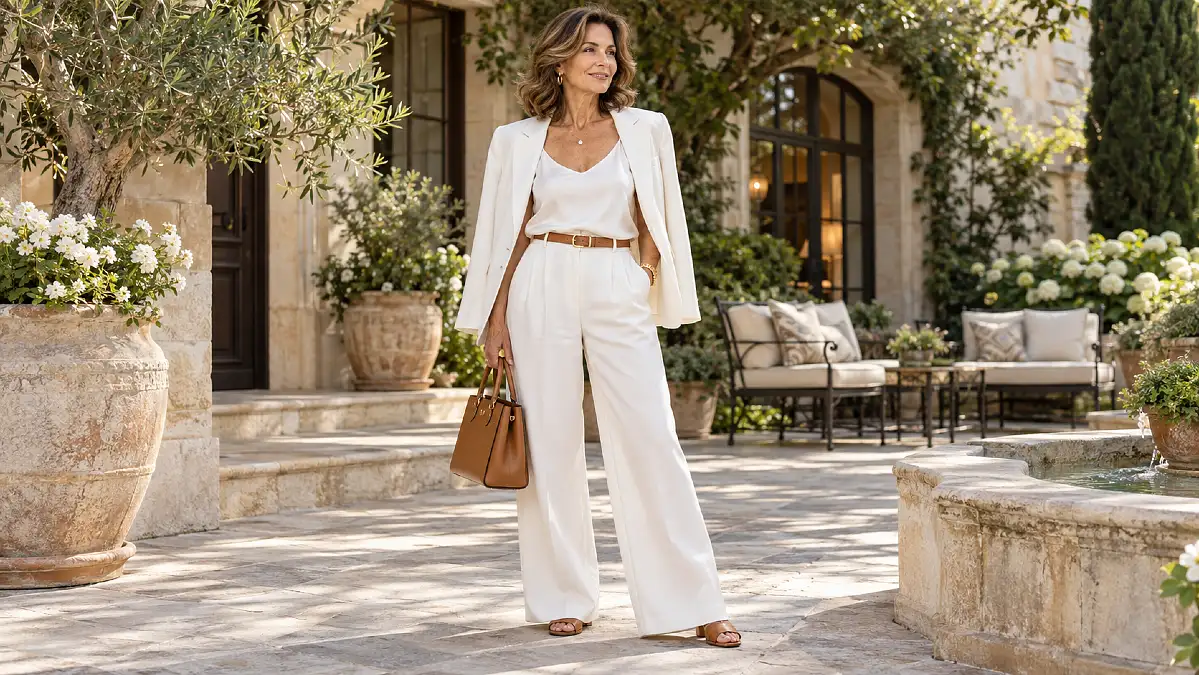
White clothes can look fresh and polished, yet they often come with a mental checklist. Is the fabric too sheer? Will underwear show? Does the color wash you out? And what happens when coffee lands on it five minutes after leaving home?
Those worries can make women over 50 avoid white completely, even when they love how clean and modern it looks. Dressing over 50 should not mean skipping a color simply because it takes a little more thought.
The good news is that most problems with white come down to fabric, fit, underlayers, and the shade you choose. Get those details right, and white becomes surprisingly easy to wear.
White Gets Easier When the Fabric Does More of the Work
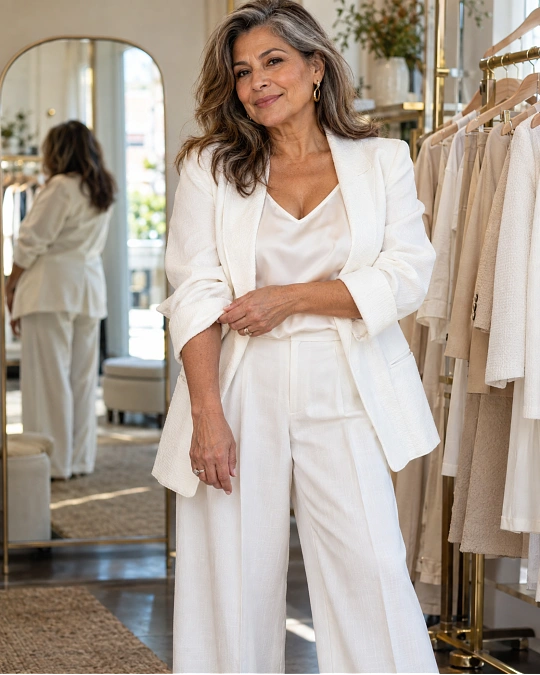
A white garment can reveal things that navy, charcoal, or black easily hide. Thin fabric may show seams, pockets, underwear, or the outline of whatever you wear underneath.
That does not make white difficult to wear. It simply means fabric quality matters more because there is less visual camouflage.
For trousers, skirts, and dresses, look for fabric with enough weight to hang smoothly instead of gripping every layer underneath. Cotton twill, sturdy linen blends, ponte, denim, and lined woven fabrics can all be easier to manage than very thin jersey.
White shirts can be lighter, but hold them toward a window before buying. If you can clearly see your hand through the fabric, you may need a camisole underneath.
Here is a quick way to judge common white fabrics before adding them to your wardrobe.
| White Fabric or Garment | What to Look For | Why It Helps |
|---|---|---|
| White trousers | Medium weight cotton, twill, ponte, or lined fabric | Gives better coverage and a smoother fall |
| White jeans | Substantial denim with a little stretch | Keeps pockets and underwear from showing clearly |
| White blouse | Closely woven cotton, poplin, or soft linen blend | Feels light without becoming overly transparent |
| White T shirt | Dense cotton with a clean neckline | Holds its shape and layers easily |
| White dress | Lining or enough fabric weight through the skirt | Reduces concerns about sunlight and transparency |
Fabric note: White can look especially polished when the fabric has texture. Linen, denim, ribbed knits, embroidery, and woven cotton break up the flat surface and make the outfit feel less stark.
Choose the White That Makes Your Face Look Brighter
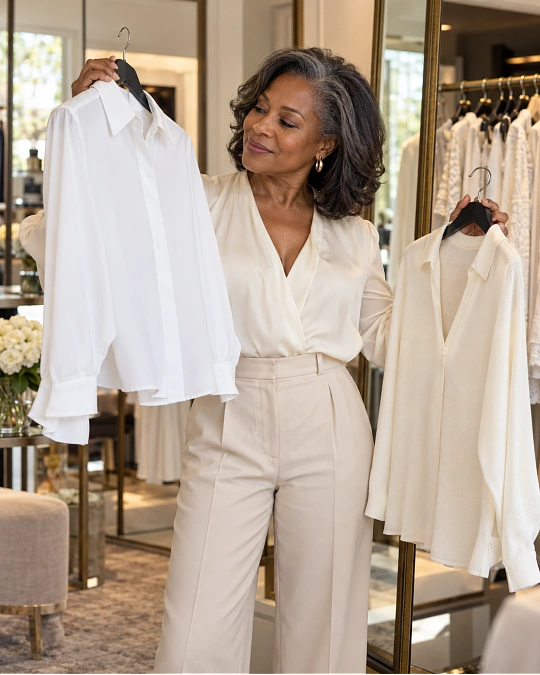
There is no single correct shade of white. Bright optical white can look crisp on one woman, while cream, ivory, soft white, or ecru may feel more natural on another.
Try holding different whites close to your face in daylight. The useful shade is usually the one that makes your complexion look clearer rather than gray, tired, or overly pink.
This small change can make white much easier if you have avoided it because you thought the color was washing you out.
You can also keep bright white farther from your face. White jeans with a navy, sage, burgundy, camel, or denim shirt give you the freshness of white without placing it directly beside your skin.
For an all-white outfit, mixing nearby shades often looks more interesting than matching every item exactly. Cream trousers with an ivory knit and soft white jacket create depth while still reading as a light monochrome look.
Color note: Do not worry if two white pieces are not an exact match. Slightly different whites can look intentional when the fabrics are also different.
Solve the Underwear Problem Before You Get Dressed
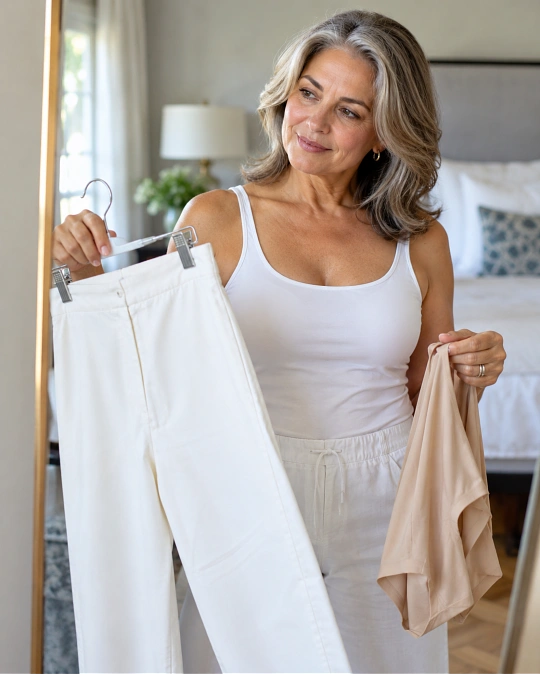
Visible underwear is one of the biggest reasons women hesitate to wear white trousers and dresses. Surprisingly, white underwear is usually not the best solution because it can stand out beneath white fabric.
A nude-to-you shade generally blends more quietly beneath light clothing. Choose a color close to your own skin rather than relying on a generic beige.
Smooth edges can also help under fitted trousers or skirts. If you prefer more coverage, lightweight shorts or a simple slip can create a cleaner layer beneath certain dresses.
Most common worries have fairly simple fixes.
| Common Worry | Try This Instead |
|---|---|
| White underwear shows beneath trousers | Choose underwear close to your skin tone |
| Trouser pockets show through | Look for heavier fabric or pocket lining that lies flat |
| Bra is visible beneath a white shirt | Try a skin tone bra rather than a white one |
| Dress becomes sheer in sunlight | Add a lightweight slip or choose a lined dress |
| Seams show under fitted white clothes | Choose smoother underlayers or a slightly less fitted cut |
Try the outfit near a bright window before leaving home. Check the front, back, and side rather than judging it only in softer bedroom lighting.
That thirty-second test often catches transparency problems before they become an annoyance later.
Give White a Little Room Instead of Making It Too Tight
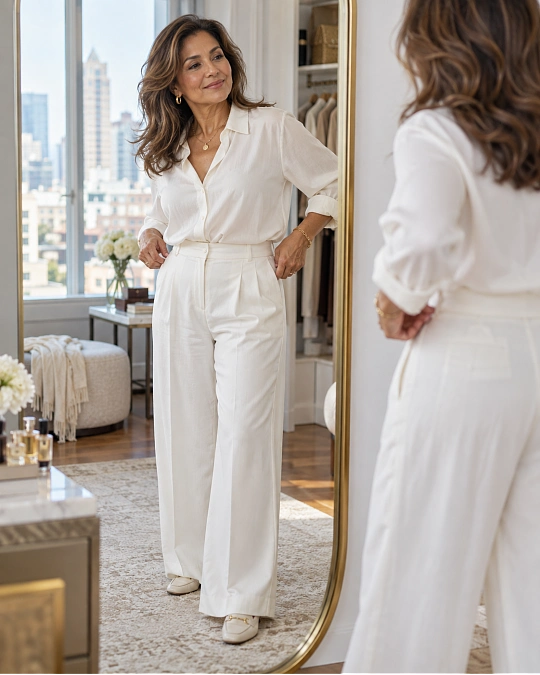
White reflects light, so every fold and pull can be easier to see than it would be in a darker color. That is why fit matters so much.
A garment does not need to be oversized. It simply needs enough room to fall cleanly rather than stretching across the body.
With white trousers, look for fabric that skims through the hips and falls smoothly through the leg. Straight, wide, softly tapered, and relaxed cuts can all work depending on the proportions of the rest of your outfit.
A white button down shirt often looks better when there is enough room through the shoulders, chest, and upper arms to create a soft drape. You can tuck the front slightly, leave it open over a tank, or wear it loose with narrower trousers.
The same idea applies to white dresses. A defined shoulder, clean neckline, useful waist placement, or strong vertical seam can give the dress shape without requiring a tight fit.
This is useful styling logic for dressing over 50 in general: let the garment create the silhouette instead of depending on cling.
Keep White Modern With Contrast and Texture
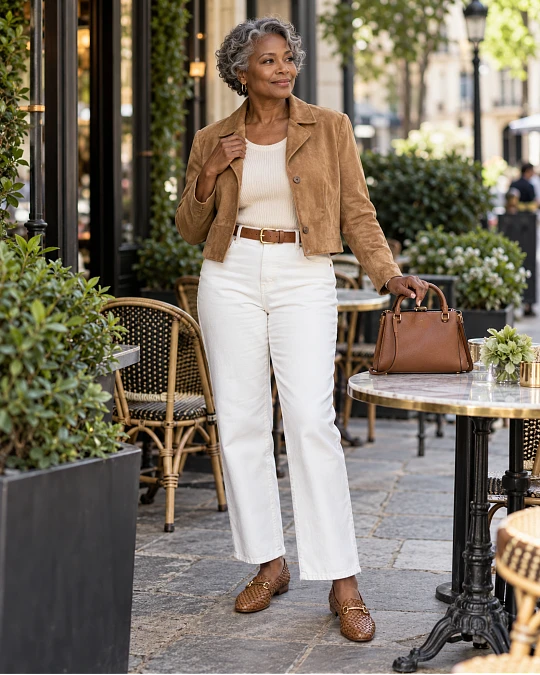
An all-white outfit can look beautiful, but you do not need to dress head to toe in white to get the effect. Often, one white piece is enough to wake up darker or softer wardrobe basics.
A white shirt with blue jeans and tan loafers is simple for errands or lunch. White jeans with a striped knit and leather flats create another easy option that feels relaxed without becoming sloppy.
Texture also keeps white from feeling flat. Pair crisp cotton with denim, linen with leather, or a fine knit with structured trousers.
Accessories can introduce warmth if bright white feels too sharp. Cognac leather, chocolate brown, camel, navy, olive, burgundy, silver, or gold all sit comfortably beside white.
Shoes do not have to match the white clothing. Tan loafers, metallic sandals, black flats, brown ankle boots, white sneakers, or a muted color can all work if they connect naturally with another part of the outfit.
For stylish outfits for women over 50, this balance often feels more wearable than trying to make every piece look formal or perfectly coordinated.
A Few White Outfit Habits That Cause More Stress Than They Should
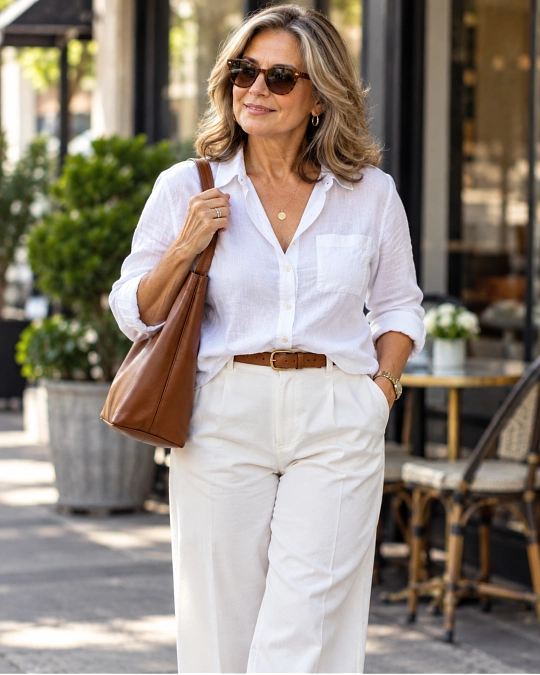
White becomes much easier when you stop expecting it to behave exactly like black. A few small adjustments can remove most of the frustration.
- If very thin white trousers make you self-conscious, switch to denim, twill, ponte, or a lined pair instead of giving up white bottoms completely.
- If bright white feels harsh near your face, try ivory, cream, soft white, or wear white below the waist with a more flattering color on top.
- If an all-white outfit feels too clinical, add texture, warm leather, jewelry, or one deeper color to create contrast.
- If stains make you nervous, save delicate white pieces for lower-risk days and choose washable cotton, denim, or sturdy knits for everyday wear.
There is nothing stylish about spending an entire lunch checking your blouse for spots. Clothes should work with your real life, so choose the type of white you can actually relax in.
Build One White Outfit Formula You Know You Can Trust
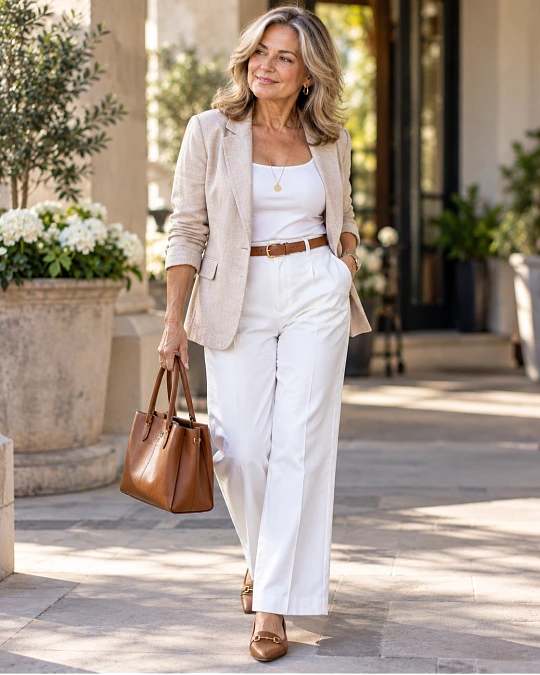
You do not need dozens of white garments. A dependable formula makes it much easier to use one or two white pieces repeatedly.
Formula: white base piece + soft contrasting layer + simple shoe + one warm accessory.
For example, start with white jeans, add a soft blue shirt, tan loafers, and a cognac bag. Change the shirt to a striped knit in spring, an olive cardigan in fall, or a navy blazer when you want a sharper finish.
These formulas give you a few easy starting points.
| Occasion | Easy White Outfit Formula | Why It Works |
|---|---|---|
| Everyday errands | White jeans + relaxed knit + sneakers | Comfortable, bright, and easy to repeat |
| Lunch with friends | White trousers + soft blouse + loafers | Clean shape without feeling overdressed |
| Warm weather | White linen trousers + tank + lightweight shirt + sandals | Layers give coverage while keeping the outfit breathable |
| Smart casual | White shirt + dark straight jeans + flats + structured bag | White brightens familiar wardrobe basics |
| Dinner | Ivory trousers + tonal knit + metallic or leather shoe | Tonal color looks polished while texture adds depth |
Think of these as starting points rather than rules. Swap pieces until the proportions and comfort feel like you.
That is how a white piece becomes part of a real wardrobe instead of something that only gets worn once.
Frequently Asked Questions
Can women over 50 wear all white?
Yes. An all-white outfit can look fresh and modern at any age, especially when you mix different textures or nearby shades such as ivory, cream, and soft white.
Adding a leather accessory, metallic jewelry, or contrasting shoe can give the outfit more depth if solid white feels too stark.
What color underwear should you wear under white trousers?
Underwear close to your natural skin tone is usually less visible beneath white than bright white underwear. Smooth edges can also reduce visible lines beneath lighter fabrics.
Always check the trousers in natural daylight because indoor lighting may hide transparency.
What can I wear under a slightly sheer white blouse?
A simple camisole in a tone close to your skin can provide coverage without creating a strong line underneath. A skin tone bra may be enough when the blouse is only slightly sheer.
If you like a layered look, you can also wear a contrasting tank intentionally and treat it as part of the outfit.
How do you keep white outfits from looking boring?
Mix textures, shades, and finishes rather than using identical white pieces from head to toe. Crisp cotton, linen, denim, knitwear, leather, and jewelry all create visual contrast.
A stronger accessory color such as tan, navy, olive, burgundy, or chocolate brown can also give the outfit a clear focal point.
Are white jeans suitable for women over 50?
Yes. White jeans can be one of the most useful wardrobe basics because they work with many of the same tops you already wear with blue denim.
Look for denim with enough weight for coverage and a leg shape that works naturally with your shoes, jackets, and everyday lifestyle.