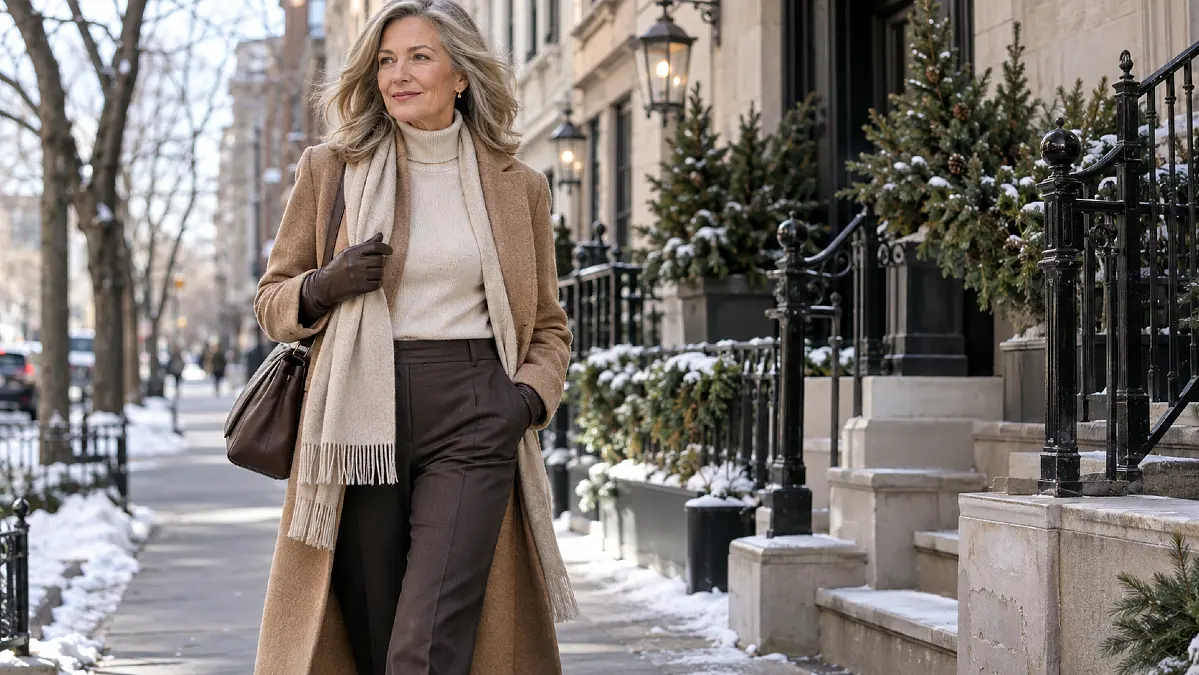
Cold-weather dressing can become frustrating when staying warm seems to mean hiding under three sweaters and a shapeless coat. The outfit may feel cozy, but the mirror can show far more volume than you wanted.
For women over 50, comfort often matters more than it once did, yet that does not mean giving up shape or personal style. Heavy layers can also feel restrictive when you are driving, shopping, traveling, or moving between heated buildings.
The better approach is to make each layer work harder. Stylish outfits for women over 50 can stay genuinely warm by using smart fabrics, closer-fitting base layers, thoughtful proportions, and accessories that trap heat without adding much bulk.
You may already own most of what you need.
Why Winter Outfits Can Start Feeling Bulky So Quickly
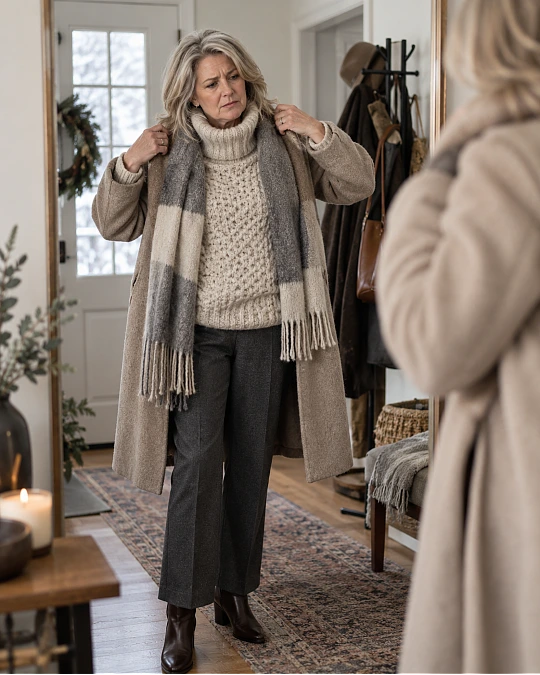
Bulk usually comes from stacking several loose or thick pieces on top of one another. A roomy shirt under a chunky sweater under an oversized coat can create volume before the outfit has even had a chance to take shape.
The problem is not your body. It is often the relationship between the garments.
When every layer has extra fabric around the shoulders, waist, and arms, those layers compete for the same space. Sleeves bunch, coats pull, and your natural proportions disappear.
Warmth also does not come only from thickness. Fabric choice, wind protection, coverage at the neck and wrists, and how closely the first layer sits against the body can make a large difference in how comfortable an outfit feels.
That is why one well-planned winter outfit often feels warmer than several random layers piled together.
Start With Thin Layers That Hold Warmth Close to Your Body
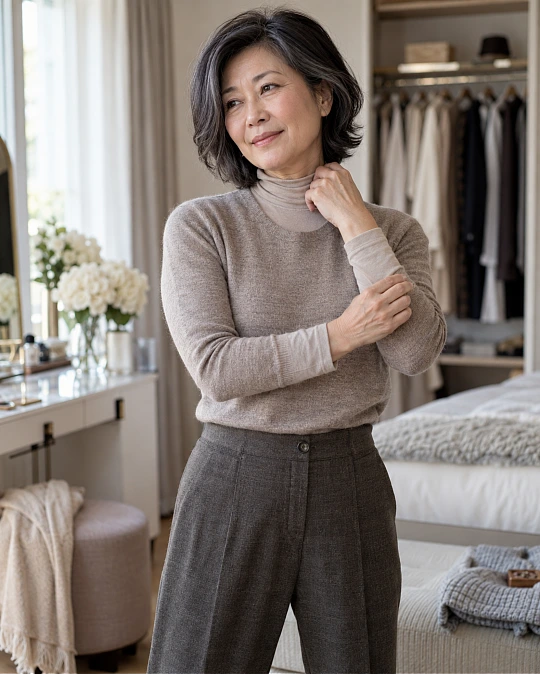
The most useful winter styling change is also one of the least visible: make your first layer thin, smooth, and comfortable.
A lightweight long-sleeve top can sit beneath a sweater without changing the sweater’s silhouette. Look for soft knits that skim rather than cling tightly or create folds beneath your clothes.
A crew neck works beneath most sweaters. A scoop or V-neck base is useful when you do not want the underlayer showing around the neckline.
Fabric matters just as much as thickness. Some materials provide warmth without requiring a heavy garment.
Here is a simple fabric guide for choosing layers that stay streamlined.
| Fabric or Garment | What to Look For and Why It Works |
|---|---|
| Fine merino knit | Warm but relatively lightweight, making it useful beneath jackets and coats |
| Lightweight thermal top | Adds an extra barrier without the volume of a second sweater |
| Fine-gauge cotton blend | Comfortable for mild winter days and easy to layer indoors |
| Cashmere or cashmere blend | Provides warmth in a thinner knit when softness and lightness matter |
| Smooth jersey base layer | Slides beneath sweaters easily instead of creating bunching |
Fit note: Your base layer does not need to be skin-tight. It only needs to sit close enough that another piece can move comfortably over it.
If you already have a thin long-sleeve tee that disappears neatly beneath your sweaters, start there before buying anything specialized.
Choose Sweaters That Give Warmth Without Swallowing Your Shape
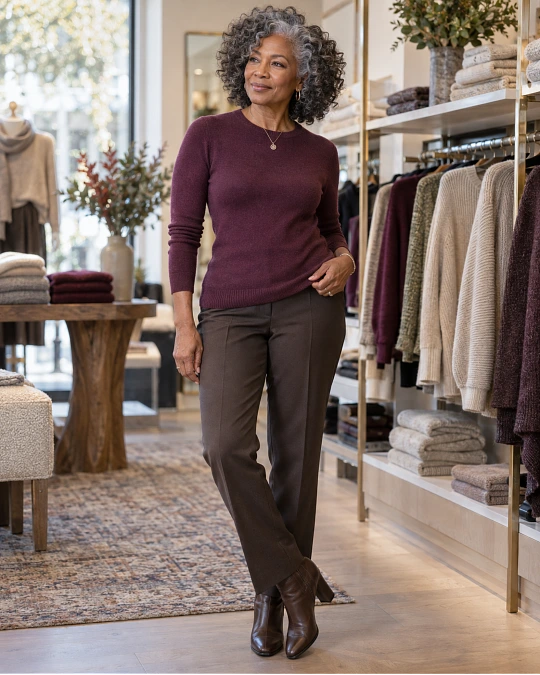
Chunky knits have their place, especially on very cold days, but they are not the only way to feel warm.
Fine-gauge wool, merino, cashmere blends, and dense knitted fabrics can provide substantial warmth with less visual weight. They also slide more easily under a blazer, trench, quilted coat, or wool coat.
Pay attention to where the sweater ends. A very long, loose sweater paired with wide trousers can create one large block of fabric from shoulder to ankle.
If you enjoy relaxed sweaters, balance the volume somewhere else. Try one with straight-leg jeans, slim trousers, or a skirt that falls cleanly rather than adding another oversized shape.
The reverse works too. Wide-leg trousers often look more balanced with a sweater that finishes closer to the body or ends around the hip.
Necklines can help with warmth as well. A soft mock neck gives you more coverage than a scoop neck without requiring a scarf indoors.
A fine turtleneck under a cardigan is another useful combination. You gain two warm layers while keeping both pieces relatively slim.
Comfort upgrade: If heavy wool irritates your neck, wear a soft washable layer beneath it rather than giving up on the sweater completely.
Let Your Coat Provide the Warmth Instead of Adding Another Sweater
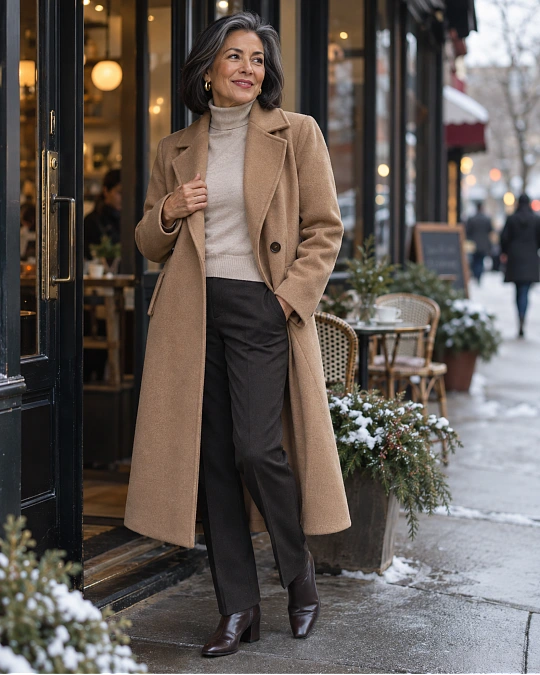
A coat should do more than finish the outfit. In truly cold weather, it should carry much of the responsibility for keeping you warm.
When your outer layer blocks cold air effectively, you may not need a thick cardigan between your sweater and coat.
Look for enough room through the shoulders and sleeves for normal layering, but avoid sizing up so far that the coat loses all structure.
A straight wool coat gives clean vertical lines over trousers and jeans. A belted coat can bring shape back to an outfit when the pieces underneath are relaxed.
For wetter or windy days, a streamlined insulated coat may be more practical than wool. Quilted designs with smaller stitching patterns often look less puffy than very large horizontal baffles.
Length helps too. A coat that covers the hips and upper legs protects more of your body than a short jacket, which can reduce the need for extra layers underneath.
This matters when building stylish outfits for women over 50 because the outer layer is often what people see first during winter.
Choose one that works with the clothes you actually wear rather than saving it only for special occasions.
Use Scarves, Socks, Gloves, and Boots Before Adding Another Full Layer
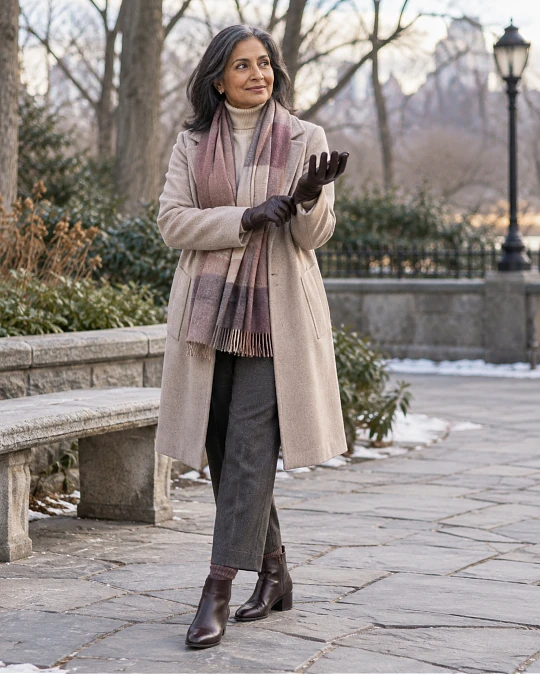
Sometimes the quickest way to feel warmer is not another sweater. It is covering the small areas where cold air keeps getting in.
A scarf around the neck can make a lightweight coat feel noticeably more comfortable. Wool socks can make ankle boots warmer without changing the look of your trousers.
Try these small adjustments before adding another bulky garment:
- Cover the wrists. Gloves and sleeves that meet properly help prevent cold gaps when you move.
- Warm the neck. A soft scarf, mock neck, or turtleneck can replace the need for another cardigan.
- Upgrade your socks. A warm pair inside loafers or boots can make a simple outfit much more practical.
- Choose longer outerwear. Extra coverage around the hips and thighs often gives more warmth without changing your indoor outfit.
- Use a hat when needed. A simple knit beanie can make a lighter winter outfit much more comfortable outdoors.
Accessories also give you more control during the day. You can remove a scarf or gloves in seconds when you enter a warm café or store.
That is far easier than peeling off two sweaters.
Fix the Details That Make Warm Outfits Feel Heavier Than They Are
A winter outfit can contain several pieces and still look clean. Problems usually appear when too many garments create volume in the same place.
Sleeves are a common example. A thick sweater with wide sleeves may fit beautifully on its own but feel uncomfortable beneath a fitted coat.
Long tops can cause another issue. If a shirt, cardigan, sweater, and coat all stop at different places around the hips, the outfit may start looking visually busy.
These simple swaps can make the same wardrobe feel more polished.
| Instead of This | Try This |
|---|---|
| Thick sweater under a tight coat | Fine knit under a properly fitting warm coat |
| Oversized top with oversized trousers | Keep one piece relaxed and the other cleaner in shape |
| Several bulky indoor layers | Thin base + warm sweater + weather-ready coat |
| Long top under long cardigan under long coat | Simplify the middle layer or vary the lengths clearly |
| Heavy sweater just to warm your neck | Try a lighter knit with a scarf or mock neck |
You do not need to stop wearing oversized clothes if you love them. The goal is simply to give the eye one clearer shape somewhere in the outfit.
A relaxed sweater can look wonderful with straight trousers. A roomy coat can work beautifully over a cleaner column of color underneath.
Proportion creates the polish, not how fitted everything is.
Build One Cold-Weather Formula You Can Repeat All Winter
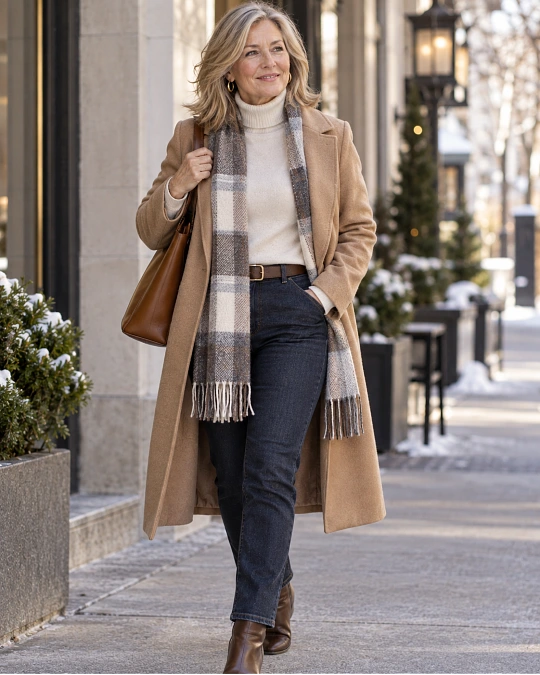
The easiest winter wardrobe is not one with dozens of outfits. It is one where the same few pieces can be rearranged without much thought.
Start with this basic formula:
Formula: thin base layer + fine-knit sweater + straight-leg trousers or jeans + warm structured coat + practical winter shoes
The close first layer traps warmth without affecting the silhouette. The sweater gives insulation, while the coat handles much of the outdoor cold.
Change the shoes, color, neckline, or accessory and the formula can move from errands to lunch to a casual workday.
Here are a few ways to adapt the same idea.
| Occasion | Pieces | Why It Works |
|---|---|---|
| Everyday errands | Long-sleeve base + crew-neck knit + straight jeans + insulated coat + ankle boots | Warm, easy to move in, and simple to remove indoors |
| Lunch with friends | Fine turtleneck + tailored trousers + wool coat + loafers or boots | The clean trouser line balances the extra neck coverage |
| Casual workday | Thin base + cardigan + dark trousers + structured coat + leather boots | Layers can be adjusted easily as indoor temperatures change |
| Weekend walk | Thermal top + fine sweater + practical trousers + weatherproof coat + warm boots | Performance comes from the base and outer layers, not sweater bulk |
Once you know which combination feels comfortable on your body, repeat it.
A personal uniform is not boring. It removes morning guesswork while giving you room to change color, texture, jewelry, shoes, and accessories.
That kind of dressing over 50 often feels much more useful than chasing a completely different winter look every day.
Frequently Asked Questions
How can I layer clothes without looking bulky?
Keep the layers closest to your body relatively thin and let your coat provide most of the outdoor protection. Avoid stacking several loose, thick garments in exactly the same area.
You can also balance proportions by pairing a relaxed top with cleaner trousers or a roomy coat with a streamlined outfit underneath.
What type of sweater is warm without being bulky?
Fine-gauge merino, wool, cashmere blends, and dense lightweight knits are useful choices. They provide warmth while fitting more easily beneath jackets and coats.
A mock neck or fine turtleneck can also give extra coverage without requiring a second heavy sweater.
How do I stay warm when wearing wide-leg trousers in winter?
Wear a thin thermal layer underneath if the trousers have enough room and the weather calls for it. Wool-blend socks and ankle boots can also keep the lower half warmer.
For balance, pair wide trousers with a cleaner sweater or shorter jacket rather than adding several oversized pieces above them.
Can oversized sweaters still look stylish over 50?
Absolutely. The useful question is not your age but how the sweater works with the rest of the silhouette.
Try balancing a roomy sweater with straight jeans, tapered trousers, or a skirt with a clean line. You can also show some structure through the neckline, wrist, or shoe.
What should I wear indoors when stores and restaurants are overheated?
Use removable outer accessories and thinner indoor layers. A lightweight sweater under a warm coat is often easier to manage than two thick sweaters.
Scarves, gloves, and coats can come off quickly without leaving you uncomfortable for the rest of the day.