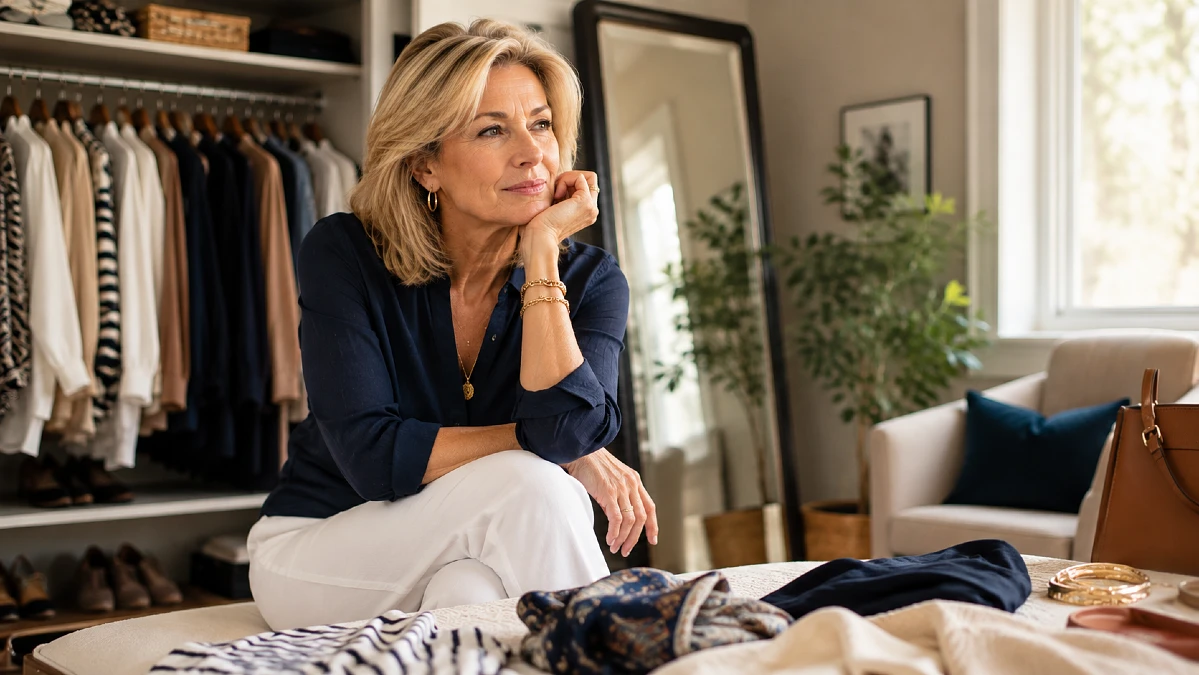
Losing your sense of style can feel surprisingly personal. Clothes that once felt like “you” may suddenly seem wrong, while newer trends can leave you wondering what actually belongs in your closet now.
For many women over 50, the problem is not a lack of taste. Your body, routine, priorities, comfort needs, and even the places you go may have changed, while your wardrobe has not quite caught up.
Rebuilding style confidence over 50 does not require becoming trendier or replacing everything you own. It starts with noticing what feels good now, understanding why certain clothes work better than others, and creating a personal style formula you can trust on ordinary days.
Your Style Is Still There, but Your Life May Have Changed
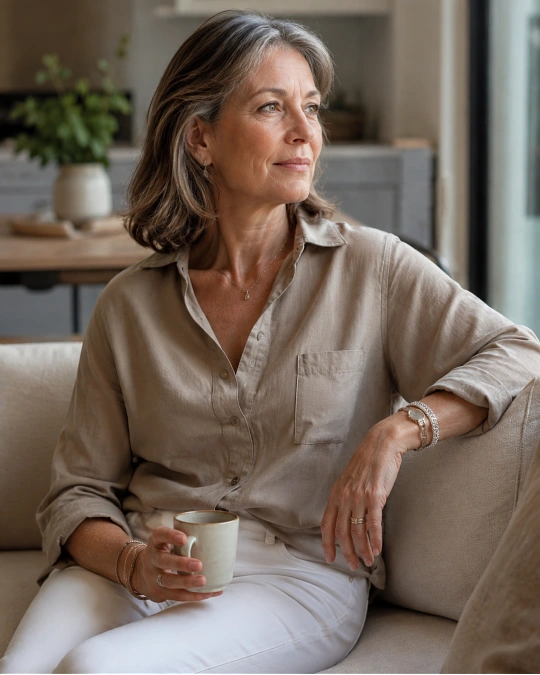
Personal style is rarely lost overnight. More often, there is a gap between the clothes you still own and the person who is actually getting dressed each morning.
Maybe your office routine changed. Maybe you travel more, spend more time working from home, or want shoes you can comfortably wear for several hours. Those changes matter because useful style has to fit your real life.
This is why copying your wardrobe from ten years ago may feel just as wrong as copying every current trend. Neither choice starts with you as you are now.
A better approach is to replace old style rules with questions that reflect your present life.
| Old Rule | What Works Better Now |
|---|---|
| Keep wearing what has always worked | Notice which shapes feel good on you today |
| Dress younger to look current | Use modern cuts, shoes, colors, and proportions |
| Save good clothes for special occasions | Wear your best useful pieces in normal life |
| Follow trends to stay stylish | Choose only trends that suit your personal formula |
| Buy more when your wardrobe feels boring | Style your strongest pieces in new combinations |
This shift can make dressing over 50 feel much less confusing. You are not trying to recover an old version of yourself; you are building clothes around the life you have now.
Start With Clothes That Feel Right on Your Body Now
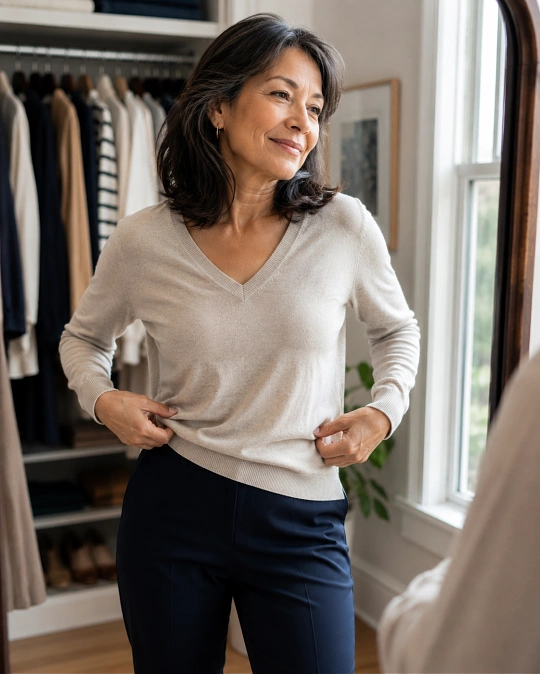
Before deciding what your personal style looks like, pay attention to fit.
A beautifully designed jacket will still feel wrong if the shoulders pull. A lovely pair of trousers will stay in the closet if the waistband becomes uncomfortable after lunch.
Fit also affects how polished an outfit appears. Clothing that skims without clinging often creates cleaner lines, while pieces that are too loose everywhere can hide the shape and proportion of an outfit.
You do not need to chase a certain silhouette. Instead, notice where you like definition and where you prefer ease.
If you enjoy relaxed trousers, for example, you might pair them with a neater knit or tucked shirt. If you love a loose linen blouse, a straighter jean can keep the outfit from feeling overly shapeless.
Fabric matters just as much as size.
| Fabric or Fit Detail | What to Look For and Why |
|---|---|
| Stretch trousers | Enough recovery to hold their shape after sitting |
| Knit tops | Fabric with some weight so it skims instead of gripping |
| Button-down shirts | Room through the bust and shoulders without excess bulk |
| Blazers | Clean shoulder fit with enough space for a light layer |
| Jeans | A rise and waistband you can comfortably wear for hours |
Fit note: If you constantly pull, tug, smooth, or adjust something, that is useful information. The garment may simply not deserve a place in your everyday wardrobe.
A small alteration can sometimes rescue an otherwise good piece. Shortening sleeves, adjusting trouser length, or shaping a jacket slightly can make clothes look much more intentional.
Pay Attention to the Outfits You Already Reach For
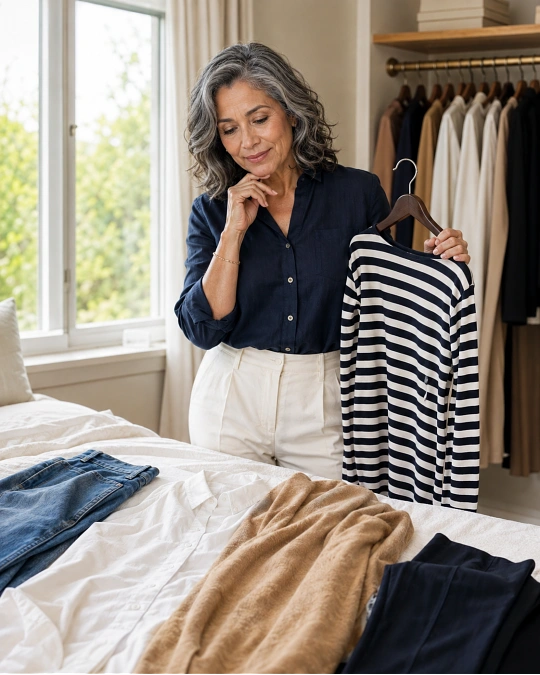
Your existing wardrobe can tell you more about your personal style than a shopping trip can.
Look at the outfits you wear when you need to get dressed quickly. Those choices often reveal the cuts, colors, shoes, and layers that already make you feel comfortable.
Try noticing patterns rather than judging the individual outfits.
- Do you keep reaching for straight-leg jeans instead of skinny or wide-leg styles?
- Do you feel better in open necklines, crew necks, or collared shirts?
- Are your favorite outfits mostly neutral with one stronger color?
- Do loafers feel more like you than sneakers?
- Do you prefer structured jackets or soft cardigans?
- Do you feel most comfortable when one part of the outfit has shape?
These details begin to form your personal style language.
You may discover that your version of chic is relaxed trousers, simple tops, flat shoes, and one structured layer. Someone else may feel most like herself in dark jeans, a soft blouse, a cropped jacket, and ankle boots.
Neither formula is more fashionable. The better formula is the one you will actually repeat.
Try this: Take photos of three outfits you genuinely enjoyed wearing this month. Ignore how “interesting” they look. Instead, study the proportions and repeat pieces.
Build a Personal Uniform From Three Reliable Pieces
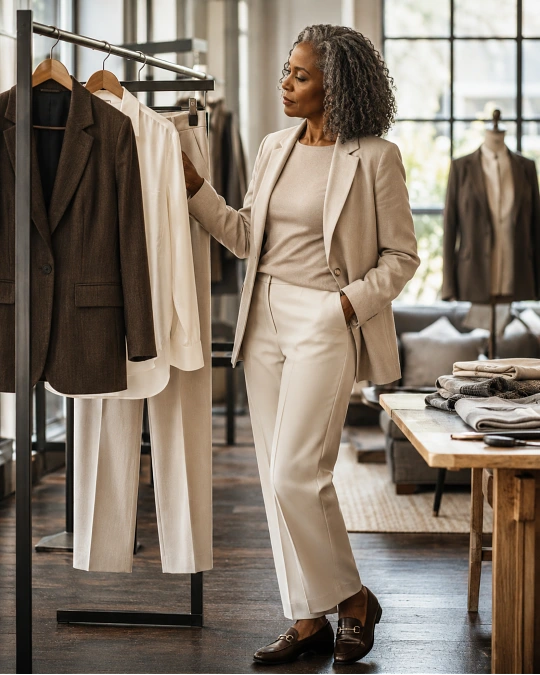
A personal uniform does not mean wearing the same outfit every day. It means having a trusted structure that removes some of the decision-making.
Think of it as a base of two or three pieces that consistently work together.
For example, straight-leg jeans + a relaxed shirt + loafers can become dozens of different casual outfits for women over 50 simply by changing the jacket, jewelry, bag, or color.
The same idea works for dressier days. Fluid trousers + a fine-gauge knit + a structured jacket can move from lunch to an appointment or a casual work setting without feeling stiff.
These formulas show how a small wardrobe can create very different moods.
| Occasion | Easy Outfit Formula | Why It Works |
|---|---|---|
| Errands | Straight jeans + knit top + clean sneakers | Comfortable base with clear proportions |
| Lunch out | Fluid trousers + tucked blouse + loafers | Soft movement balanced by a defined waist |
| Smart casual | Dark jeans + simple top + blazer | The jacket gives structure to relaxed pieces |
| Travel day | Pull-on trousers + soft knit + light jacket | Easy to move in but still pulled together |
| Dinner | Midi skirt + fitted knit + low boot or flat | One fluid piece balanced with a cleaner top |
Once you know your base formula, shopping becomes easier too.
Instead of asking, “Do I like this?” ask, “Will this work with my formula?”
That single question can improve cost-per-wear and reduce the number of beautiful but difficult pieces hanging unused in your closet.
Add Modern Details Without Chasing Every Trend
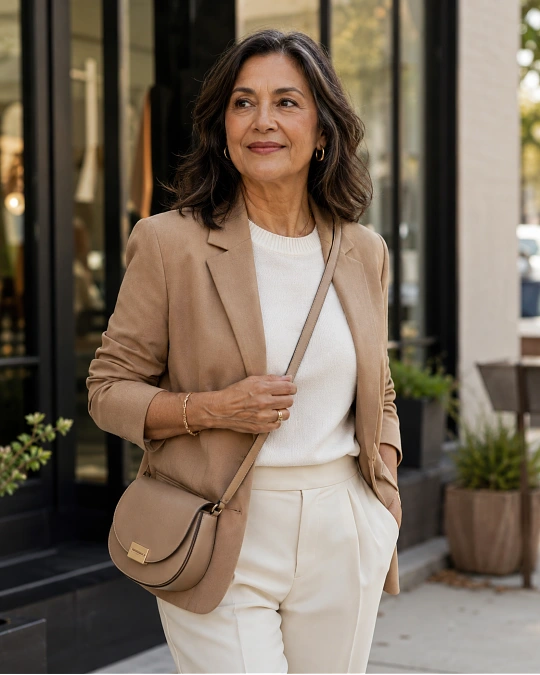
Feeling current does not mean changing your whole wardrobe every season.
Often, one updated detail is enough to shift familiar clothes into a more modern direction. This might be a straighter jean, a slightly shorter jacket, a soft loafer, a simple sneaker, or a bag with a cleaner shape.
Proportion is especially useful here.
If your trousers become wider, try a top that finishes closer to the body or can be partially tucked. If you wear an oversized shirt, pair it with a cleaner trouser or jean rather than making every part of the outfit oversized.
You can also update color without changing your basic wardrobe.
A navy trouser and cream knit may feel familiar, while a rich olive jacket or burgundy bag adds something fresher. Soft blue, chocolate brown, warm camel, deep green, and muted red can all make neutral wardrobe basics feel less predictable.
Color note: You do not need to abandon black if you love it. If black near your face feels harsh, try breaking it up with a softer neckline, scarf, jewelry, jacket, or lighter top.
This is where style confidence over 50 often begins to grow again. You are not wearing a trend because someone told you to. You are choosing the part that makes sense with clothes you already enjoy.
Edit the Pieces That Keep Making You Feel “Off”
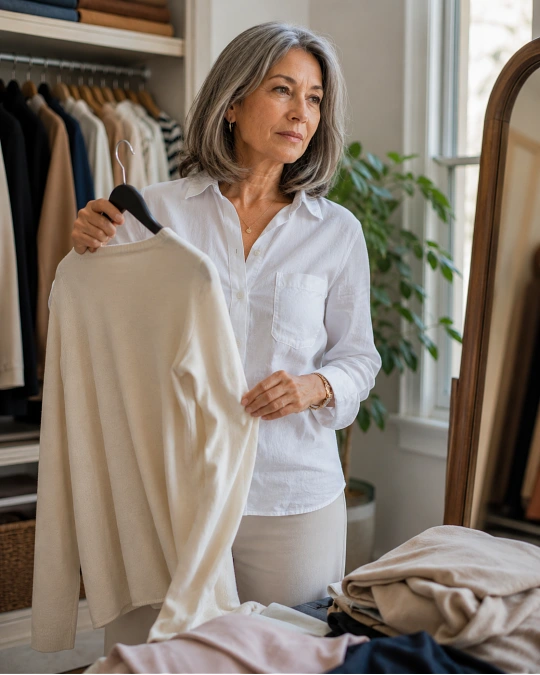
A crowded wardrobe can make personal style harder to see.
When too many pieces are uncomfortable, difficult to combine, or tied to an old version of your life, getting dressed becomes a sorting problem instead of a styling problem.
You do not have to clear everything out at once.
Start with pieces that consistently create frustration. Maybe a blouse always needs the right bra, the right trousers, and the right weather before it works. Perhaps a jacket looks beautiful on the hanger but feels stiff every time you put it on.
Those pieces are taking up more than closet space. They are adding decision fatigue.
Move uncertain clothes into a temporary holding section rather than forcing yourself to get rid of them immediately. Spend a few weeks dressing mainly from the pieces that fit well and work easily together.
You may find that your wardrobe essentials for women over 50 are much simpler than you expected: good trousers, jeans you trust, easy knits, useful shirts, one or two jackets, comfortable shoes, and a few pieces that add personality.
That is the beginning of a capsule wardrobe over 50 that feels personal rather than prescribed.
Let Accessories Show More Personality Than Your Basics
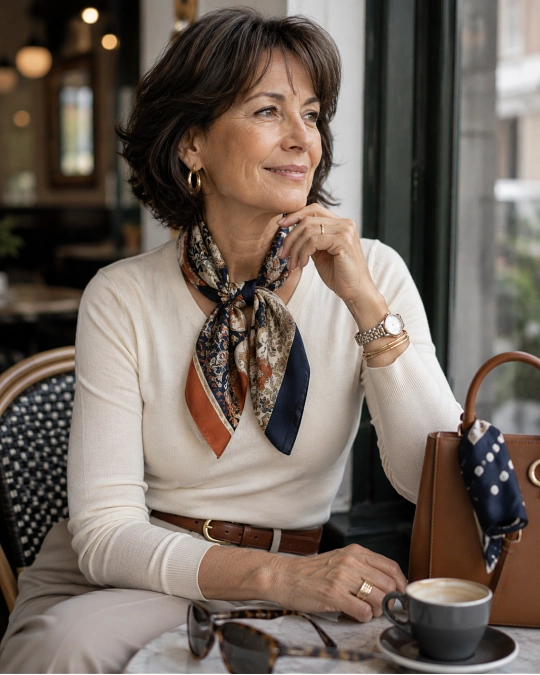
Personal style does not have to come from dramatic clothing.
If you prefer simple outfits for women over 50, accessories can carry much of the personality. A plain white shirt and navy trousers can feel very different with sculptural earrings, a silk scarf, a bold watch, or a textured bag.
Shoes are especially powerful because they can change the mood of an outfit without affecting comfort or fit through the body.
A trouser worn with sneakers feels relaxed. Add loafers and it becomes smarter. A low ankle boot gives it another direction again.
The same applies to glasses, jewelry, belts, and bags.
Choose details because they feel familiar and enjoyable, not because you think you need a “statement piece.” Your signature may be as simple as gold hoops, colorful flats, a leather crossbody, or always wearing a rolled sleeve.
Small repeated choices are often what make a wardrobe feel recognizably yours.
Give Yourself a 20-Minute Style Reset Today
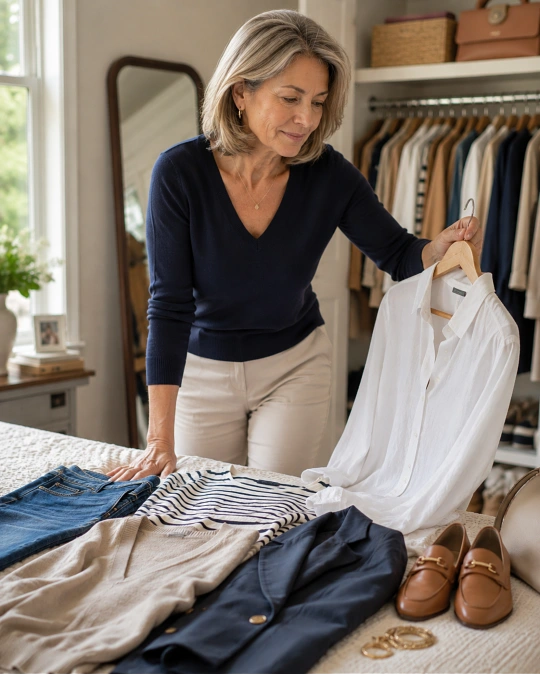
You do not need a weekend closet overhaul to start finding your style again.
Choose one pair of bottoms you enjoy wearing now. Add three tops from your closet, one layer, and two pairs of shoes.
Try the combinations on rather than judging them on hangers.
Pay attention to what changes when you tuck the shirt, roll a sleeve, swap the shoe, or change the jacket. Those small styling moves teach you far more about proportion than collecting outfit inspiration you may never wear.
Then write down one formula that worked.
Formula: favorite jeans or trousers + comfortable simple top + one structured or interesting layer + shoes you can actually live in.
Repeat that formula during the week with different colors or accessories.
Personal style becomes much easier when you stop asking yourself to invent a completely new outfit every morning.
Frequently Asked Questions
How can I find my personal style after 50?
Start with the clothes you already wear most often. Look for repeated shapes, colors, fabrics, and shoes, then build around those patterns instead of starting with trends.
Your personal style should make everyday dressing easier, not give you another set of rules to follow.
How can a woman over 50 look stylish without looking too trendy?
Use current details in small amounts.
A newer trouser shape, modern flat, cleaner jacket, or updated color can make familiar clothes feel fresh without changing your whole look. Choose trends that fit your existing personal uniform.
What clothes should I get rid of after 50?
There is no required list.
Consider moving on from clothes that regularly feel uncomfortable, fit poorly, need constant adjusting, or no longer suit your daily life. Keep pieces that still make useful, comfortable outfits, regardless of when you bought them.
How do I stop looking frumpy after 50?
Start with proportion rather than trying to make everything tighter.
If one piece is loose, give another part of the outfit some definition. Good trouser length, a clean shoulder line, shoes with structure, and fabrics that hold their shape can also make an outfit look more pulled together.
Can I rebuild my style without buying a new wardrobe?
Yes. In fact, starting with your current closet can make your style clearer.
Create several combinations from your most-worn pieces first. Once you see what is missing, you can shop more carefully instead of buying clothes simply because your wardrobe feels uninspiring.
Conclusion
Finding your style again does not mean dressing like your younger self or following every new trend. Good style after 50 comes from knowing which clothes fit your body, your life, and your personality now.
Give yourself permission to edit, experiment, repeat outfits, and change your mind. That is how style confidence over 50 grows. This week, choose one outfit you already like and make one small change to the fit, shoe, layer, or accessory.