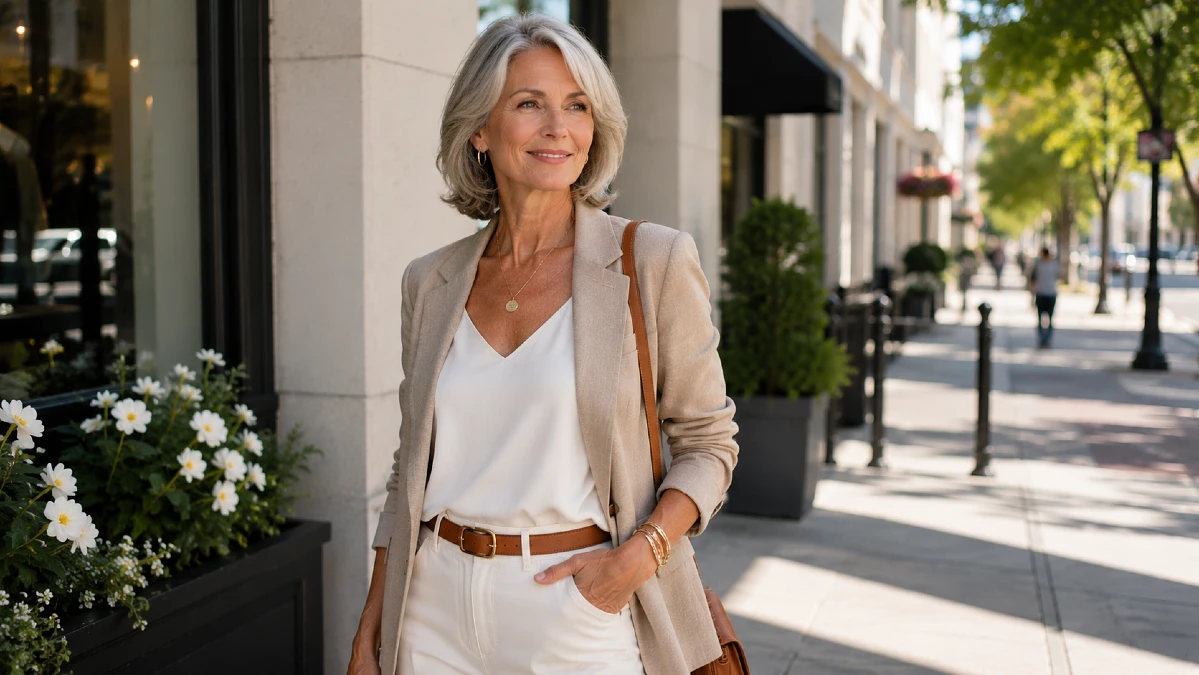
Getting dressed can become surprisingly frustrating when the clothes you once relied on no longer feel quite right. The problem is rarely that you have suddenly lost your sense of style. Your lifestyle, proportions, comfort needs, and idea of what feels like you may simply have changed.
That disconnect can leave women over 50 choosing between clothes that feel dated and trends that feel too forced. Even a packed wardrobe can somehow produce very few outfits you actually want to wear.
The good news is that you do not need a complete closet overhaul. These practical fashion tips can help you create stylish outfits for women over 50 by focusing on fit, proportion, fabric, and repeatable outfit formulas.
1. Dress for the Life You Actually Live Now
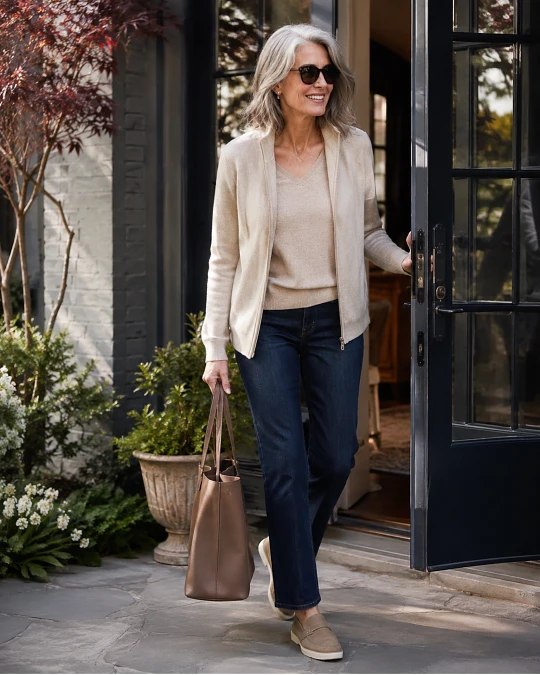
One of the biggest wardrobe problems has nothing to do with fashion. It happens when your closet is still designed for a lifestyle you no longer have.
You may own plenty of office jackets even though you work from home, formal dresses that rarely leave their hangers, or uncomfortable shoes saved for occasions that almost never happen.
Meanwhile, the clothes you need for errands, lunches, travel, family visits, and relaxed weekends may be missing.
Start by thinking about how you spend a normal month. Your wardrobe should give the most space to the activities that fill most of your calendar.
A woman who spends most of her week casually dressed might get more value from great straight-leg jeans, polished trousers, soft knitwear, casual jackets, and comfortable loafers than from another special-occasion dress.
This shift also helps with cost-per-wear. A well-fitting jacket worn twice a week is usually a smarter wardrobe addition than an exciting piece you wear twice a year.
Here is a useful way to rethink some traditional wardrobe rules:
| Old Wardrobe Rule | What Works Better Now |
|---|---|
| Keep clothes because they were expensive | Keep what you realistically wear |
| Save your nicest clothes for special occasions | Wear good pieces in everyday life |
| Build outfits around trends | Build around your actual routine |
| Keep several sizes “just in case” | Prioritize clothes that fit comfortably now |
| Buy another statement piece | Fill the practical gaps first |
Your closet should support your current life rather than constantly reminding you of another version of it.
2. Build a Personal Outfit Formula You Can Trust
Women who always seem pulled together often are not creating completely different outfits every morning. They usually have a few combinations that consistently work.
Think of this as your personal uniform, not a restrictive uniform you are forced to wear. It is simply a reliable starting point that removes some of the decision-making from getting dressed.
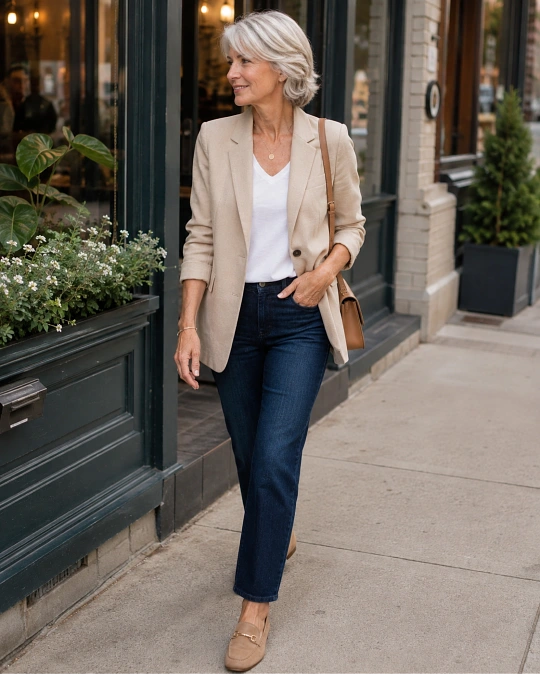
One formula might be straight-leg trousers, a soft knit top, a structured jacket, and loafers. Another could be dark jeans, a relaxed blouse, a lightweight cardigan, and clean sneakers.
Once you know the silhouette suits you, changing colors, fabrics, accessories, and shoes creates plenty of variety without requiring an entirely new wardrobe.
For example:
Formula: straight-leg jeans + simple knit + lightweight blazer + loafers
Wear the knit tucked slightly at the front for more waist definition. Swap the blazer for a cardigan on relaxed days or change the loafers to sneakers when you have more walking to do.
This kind of formula is especially useful for creating everyday outfits for women over 50 because you can get dressed quickly without feeling as though you are wearing the same outfit every day.
3. Let Fit Matter More Than the Size on the Label
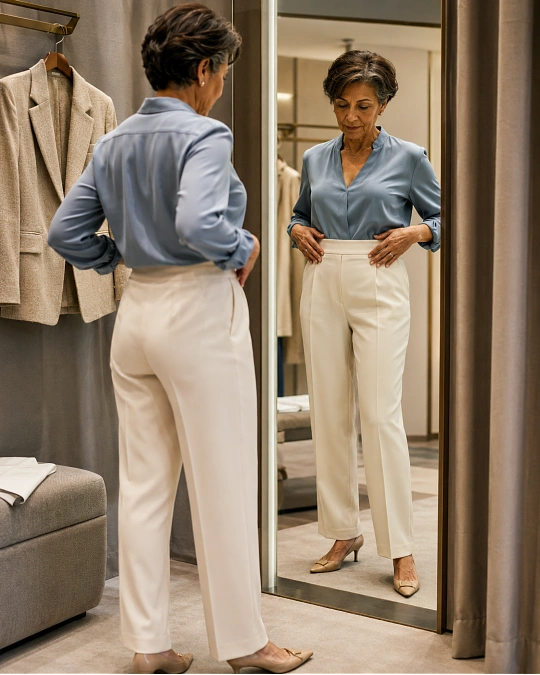
A garment can be beautiful and still look wrong if the fit is fighting your proportions. This is why sizing alone is rarely a useful way to judge whether something deserves a place in your closet.
Different brands cut clothes differently. Even two pairs of trousers labeled with the same size can sit completely differently through the waist, hip, thigh, and rise.
Instead of concentrating on the number, look at what the garment actually does when you move. Sit down, reach forward, walk around, and look at the outfit from the side as well as the front.
Pay particular attention to:
- Shoulder seams that sit close to your natural shoulder.
- Waistbands that stay comfortable when sitting.
- Jackets that close without pulling across the chest.
- Trousers that fall cleanly rather than bunching around the crotch.
- Sleeves and hems that end at intentional-looking points.
Small tailoring changes can also make ordinary clothes look far more polished. Shortening sleeves, adjusting trouser length, or shaping the waist of a jacket can sometimes make an existing piece feel completely different.
A good fit does not mean everything must be tight. Often the most flattering result comes from allowing enough room for fabric to hang properly while keeping some structure in the overall silhouette.
4. Pay More Attention to Fabric Than Trends
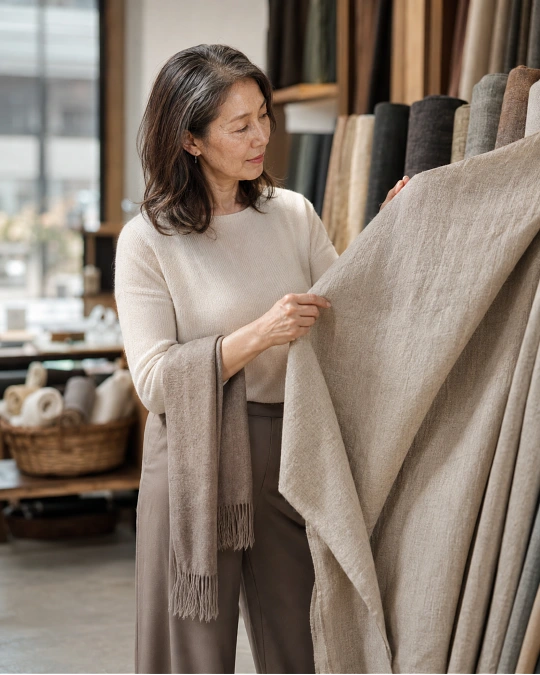
Fabric becomes increasingly important when you want clothing to look polished without sacrificing comfort. Two garments with almost identical shapes can behave very differently depending on what they are made from.
Very thin fabric may cling or lose its shape during the day. Extremely stiff fabric can sometimes create unnecessary bulk. Fabrics with enough weight to skim the body often create cleaner lines.
Soft cotton blends, quality denim, linen blends, fine knits, ponte, wool blends, and fabrics with a small amount of stretch can all be useful depending on the season and garment.
The goal is not to follow one strict fabric rule. It is to notice how the material moves, drapes, wrinkles, and feels after several hours of wear.
This quick guide can help when shopping:
| Garment | What to Look For | Why It Helps |
|---|---|---|
| Trousers | Medium-weight fabric with some structure | Creates a cleaner leg line |
| T-shirts | Cotton with enough density to hold shape | Looks polished instead of flimsy |
| Knitwear | Fine or medium knit with soft drape | Layers without excessive bulk |
| Jackets | Fabric that keeps its shape | Adds structure to simple outfits |
| Dresses | Fluid fabric that moves without clinging | Creates an easier silhouette |
Fabric note: Always check clothing in natural light when possible. Some fabrics that look substantial under fitting-room lighting become surprisingly sheer outdoors.
This is one reason good wardrobe basics often do more for mature style than constantly buying the newest trend.
5. Use Proportion to Make Simple Clothes Look Better
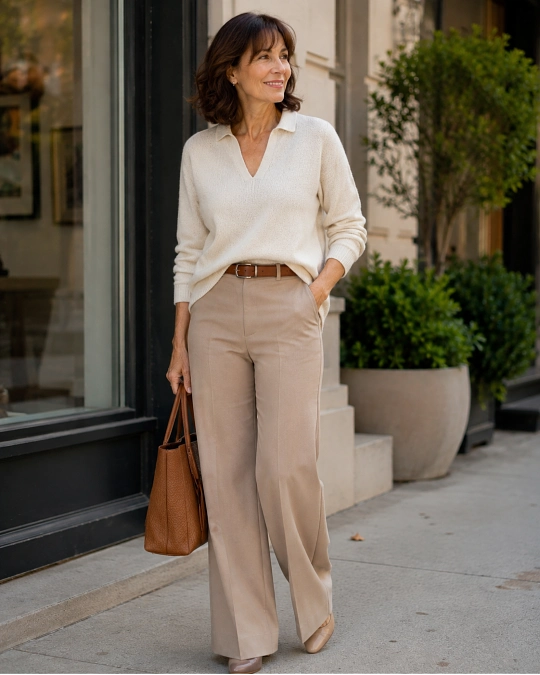
Many outfits that feel “off” are really proportion problems rather than clothing problems.
An oversized top worn with very wide trousers, for example, can sometimes remove too much shape from the outfit. A long tunic combined with a long cardigan may create several competing horizontal lines.
Instead of trying to hide your body, create visual balance.
If you are wearing wide-leg trousers, try a shorter jacket, tucked shirt, or knit that finishes around the hip rather than far below it. With slim or straight trousers, you may enjoy slightly more volume through your top layer.
Sleeve length matters too. Pushing jacket or sweater sleeves slightly upward can expose the wrist and break up a heavier outfit.
Trouser length can make an equally large difference. A wide-leg trouser often looks cleaner when the hem works intentionally with the chosen shoe rather than pooling heavily around the ankle.
Try this: Take an outfit you already like and photograph it. Then change only one proportion, such as tucking the top, shortening the jacket, rolling the sleeve, or changing the trouser hem. The difference can be surprisingly noticeable.
Learning proportion means you can create more chic outfits for women over 50 without buying additional clothes.
6. Add Modern Details Without Chasing Every Trend
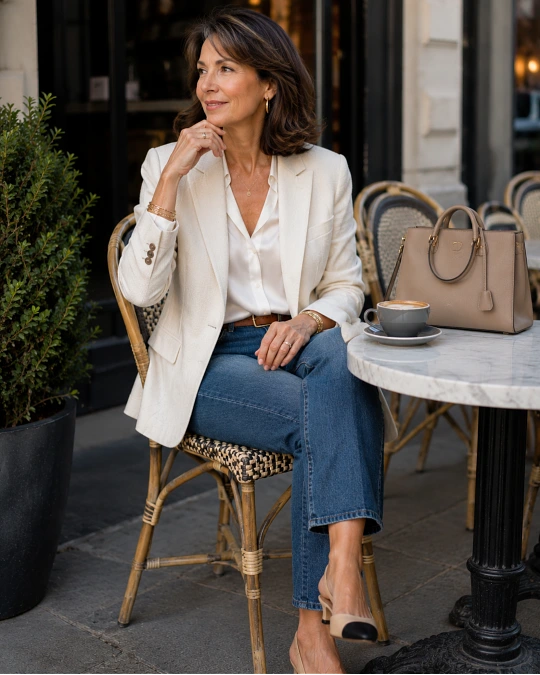
Looking current does not require dressing like someone half your age. In fact, trying to combine several major trends at once can make getting dressed harder.
A better approach is keeping most of the outfit simple and introducing one modern detail.
That could mean switching an older skinny trouser for a straight-leg cut, choosing a relaxed blazer instead of a tightly fitted one, or replacing heavily decorated shoes with a cleaner loafer or sneaker.
Accessories can do the same job. A contemporary handbag shape, interesting sunglasses, simple jewelry, or a modern shoe can change the mood of wardrobe basics without making the outfit feel costume-like.
The easiest formulas often use familiar clothes with one updated element:
| Occasion | Easy Outfit Formula | Modern Update |
|---|---|---|
| Errands | Straight jeans + knit + sneakers | Relaxed cropped jacket |
| Lunch | Trousers + blouse + loafers | Contemporary structured bag |
| Casual dinner | Dark jeans + knit + blazer | Modern earrings or cuff |
| Travel | Pull-on trousers + tee + cardigan | Clean leather sneakers |
| Weekend | Midi skirt + simple sweater | Sleek flat or loafer |
You do not need every fashionable item that appears each season. Choose the details that genuinely fit your wardrobe and ignore the ones that do not.
That is often the difference between wearing trends and letting trends wear you.
7. Edit Your Wardrobe Instead of Constantly Adding to It
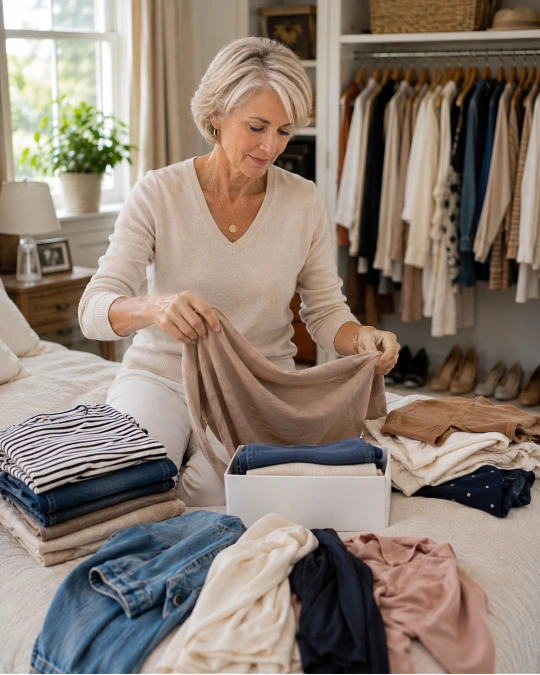
Sometimes the fastest style improvement comes from buying nothing.
A crowded wardrobe makes it harder to see your best clothes. When every hanger contains something competing for attention, even simple dressing decisions can become tiring.
Start with the pieces you repeatedly skip. Instead of immediately throwing them away, ask why you avoid them.
Perhaps the waistband becomes uncomfortable after lunch. Maybe the color makes every outfit harder to coordinate. The jacket might need different trousers, or the dress may simply need its hem adjusted.
This process helps you separate fixable problems from clothes that genuinely no longer serve you.
Then look for wardrobe gaps. If you own ten interesting tops but only one comfortable pair of trousers, buying another blouse will probably not solve your outfit problem.
The same idea applies to shoes. You may have beautiful outfits sitting unworn simply because you do not own comfortable footwear that works with them.
A smaller collection of clothes that cooperate with each other can produce far more stylish outfits for women over 50 than a large wardrobe filled with disconnected purchases.
Your aim is not minimalism for the sake of having fewer things. It is having enough useful pieces that getting dressed feels simple again.
Frequently Asked Questions
How can a woman over 50 look more stylish without buying new clothes?
Start with fit and proportion. Try tucking or half-tucking tops, pushing up sleeves, changing shoe styles, adjusting trouser lengths, and creating new combinations from clothes you already own.
Removing pieces you never wear can also make your useful clothes easier to see.
What clothes should every woman over 50 have?
There is no universal list that works for everyone. Useful wardrobe essentials often include comfortable trousers or jeans, versatile tops, knitwear, an easy jacket, practical shoes, and one or two polished outfits for social occasions.
The best essentials depend on your real lifestyle.
Can women over 50 still wear fashion trends?
Absolutely. The key is choosing trends you genuinely like rather than feeling pressured to follow all of them.
Adding one updated silhouette, shoe, accessory, or color to familiar wardrobe basics is usually enough to make an outfit feel current.
How do I stop looking frumpy after 50?
Start by checking fit, fabric, and proportion rather than assuming you need younger-looking clothes. Clothes that are too shapeless, worn out, poorly fitted, or difficult to style together can make an outfit feel less intentional.
A simple outfit with clean proportions often looks more polished than something complicated.
How can I find my personal style again after 50?
Notice which outfits make you feel comfortable and pulled together, then look for patterns. You may discover that you repeatedly prefer straight trousers, relaxed shirts, structured jackets, or certain colors.
Use those preferences to create two or three reliable outfit formulas.