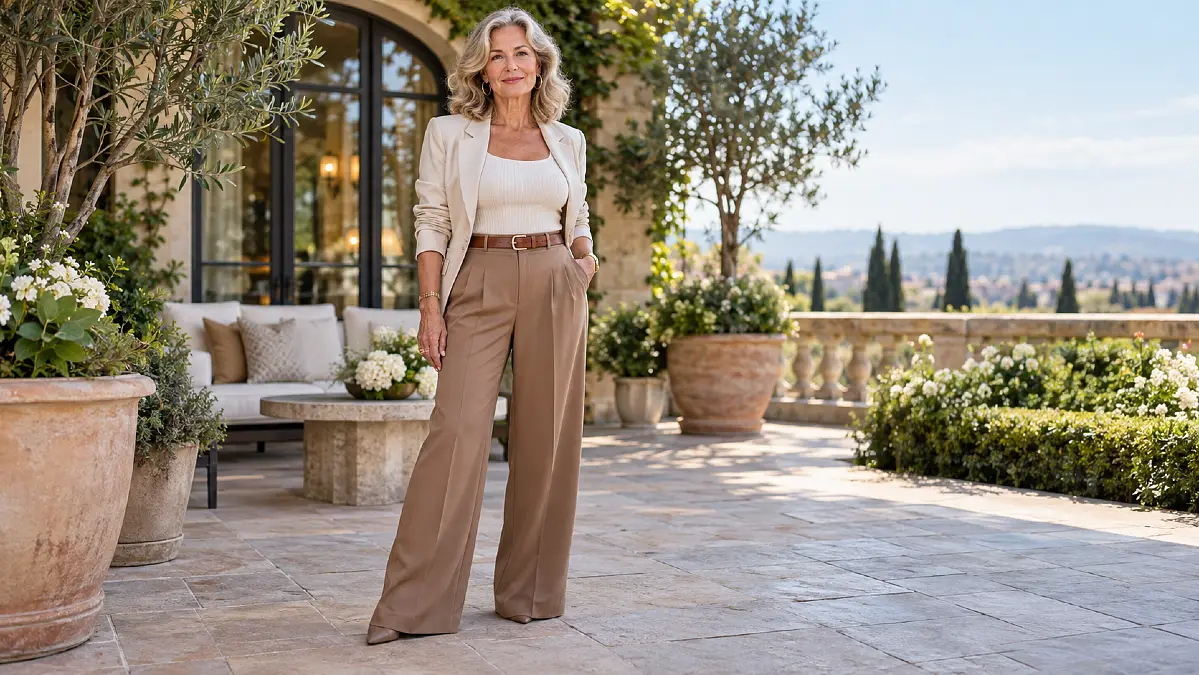
An hourglass shape can be surprisingly easy to hide when clothes get looser, longer, or more layered. If your shoulders and hips feel fairly balanced and your waist is naturally more defined, oversized cuts can make you look straighter than you are.
That can be frustrating, especially when dressing over 50 already comes with new questions about comfort, fit, coverage, and what still feels current. The answer is not tighter clothing or showing more skin.
For women over 50, the most flattering approach is usually to follow the body’s natural line without squeezing it. A few changes in waist placement, fabric, jacket length, and trouser shape can make your clothes feel polished, modern, and much more like you.
Why an Hourglass Shape Can Disappear Under the Wrong Clothes
An hourglass shape is less about a clothing size and more about proportion. Your shoulders and hips may look fairly balanced, while your waist creates a visible change in line between them.
The trouble starts when clothing removes that change in line.
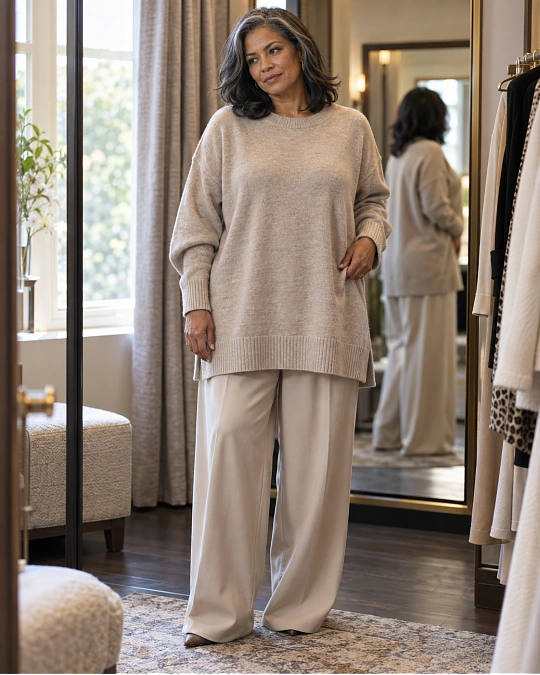
A long boxy sweater may fall from the bust straight over the waist and hips. A wide tunic can do the same thing. Add wide trousers underneath, and the entire outfit becomes one large shape.
None of those pieces is automatically wrong. The issue is how much volume is happening at the same time.
You can still wear relaxed clothes. The key is giving the eye one clear point of structure.
That might be a visible waistband, a tucked knit, a shaped jacket, a wrap detail, or trousers that sit cleanly at your natural waist.
This is especially helpful when creating stylish outfits for women over 50 because it allows comfort without making the whole outfit feel loose or unfinished.
Let Your Waist Show Without Cinching It Too Tightly
You do not need a tight belt or a fitted dress to make an hourglass shape visible.
Often, gentle waist definition looks more modern.
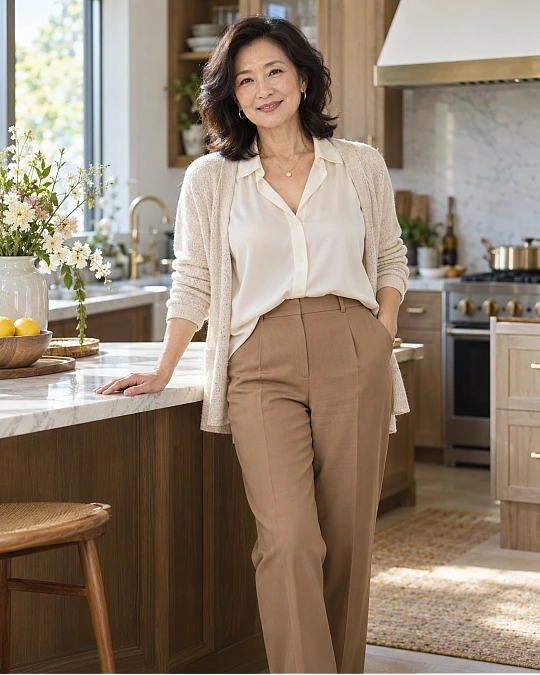
Try a sweater that finishes close to the waistband of your trousers. Tuck a soft blouse fully into higher-rise jeans. Leave a cardigan open over a fitted base layer so the waistline underneath can still be seen.
A wrap-style top can work beautifully because the diagonal line moves toward the waist without creating a stiff horizontal break.
Shaped seams are another useful detail. Princess seams, subtle darts, and jackets with a little curve through the middle can follow your shape without feeling restrictive.
The goal is not to make your waist look as small as possible. It is simply to stop your clothes from hiding the natural difference between your waist and hips.
This quick guide can help when checking pieces already in your wardrobe.
| Detail | What to Look For | Why It Works |
|---|---|---|
| Waistbands | Mid or higher rise that sits smoothly | Gives the outfit a clear center point |
| Tops | Hip-skimming or easy to tuck | Keeps fabric from pooling around the waist |
| Jackets | Light shaping through the middle | Follows your natural line without squeezing |
| Knits | Fine to medium weight with soft drape | Moves with curves instead of standing away from them |
| Dresses | Wrap, belted, seamed, or gently fitted shapes | Keeps shoulders, waist, and hips visually connected |
Fit note: If a garment pulls across the bust or hips but feels loose at the waist, sizing up is not always the best answer. A little tailoring through the waist may give you a cleaner fit without making the rest of the garment too large.
Choose Tops and Jackets That Stop at a Useful Length
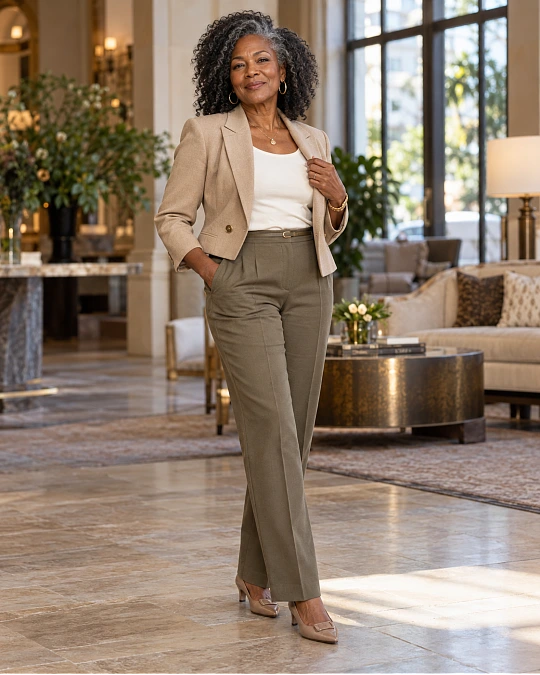
Top length can change the whole balance of an hourglass outfit.
A shirt that stops at the fullest part of the hip can sometimes make the body look wider because it creates a strong horizontal line exactly where there is already volume.
You do not have to avoid longer tops. Look at where the hem lands.
A shirt that finishes just below the waistband can show more of your natural shape. A longer blouse may work better when it has side slits, a curved hem, a soft tuck, or enough drape to move rather than hang like a box.
Jackets deserve the same attention.
A cropped jacket worn with higher-rise trousers can make the waist look clear and intentional. A longer blazer can work just as well when it has some shaping and stays open enough to show the outfit underneath.
Very stiff, oversized blazers can be harder to style because they add width through both the shoulders and middle.
If you love that look, pair the blazer with a cleaner base such as a fitted knit and straight-leg trousers. The contrast keeps the oversized layer from taking over.
Comfort upgrade: You do not need a structured jacket every day. A soft knit blazer, fine cardigan, or lightweight jacket with waist shaping can give you the same visual effect with less stiffness.
Balance Your Jeans, Trousers, and Skirts With the Waistline
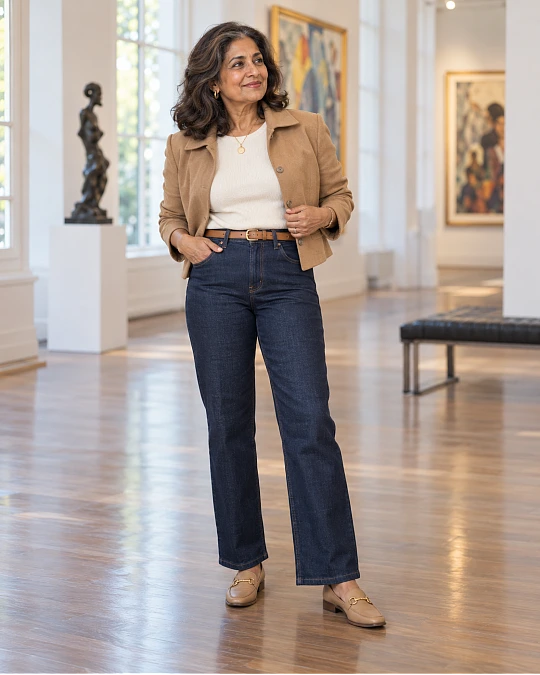
Bottoms work best when they support your natural proportions instead of fighting them.
For many hourglass figures, a clean waistband is more useful than an extremely low rise. A mid-rise or higher rise creates a natural place for tops to finish and helps separate the torso from the hips.
Straight-leg jeans are an easy place to start. They give the hips room while creating a clean line below.
Bootcut jeans can also work well because the small amount of width at the hem balances the hip line. Wide-leg trousers are another option, especially when the waist and upper hip fit neatly before the leg widens.
If trousers fit your hips but gap at the back of the waist, do not assume that style is wrong for you. The waistband may simply need altering.
Skirts can follow similar logic.
An A-line skirt gives the hips room while keeping the waist visible. Bias-cut skirts can skim the body with less structure. A pencil skirt can also work when you enjoy a closer fit and the fabric has enough movement for sitting and walking.
The main question is not, “Can an hourglass body wear this?”
A better question is, “Where does this piece create shape, and where does it create volume?”
Use Fabric to Skim Curves Instead of Fighting Them
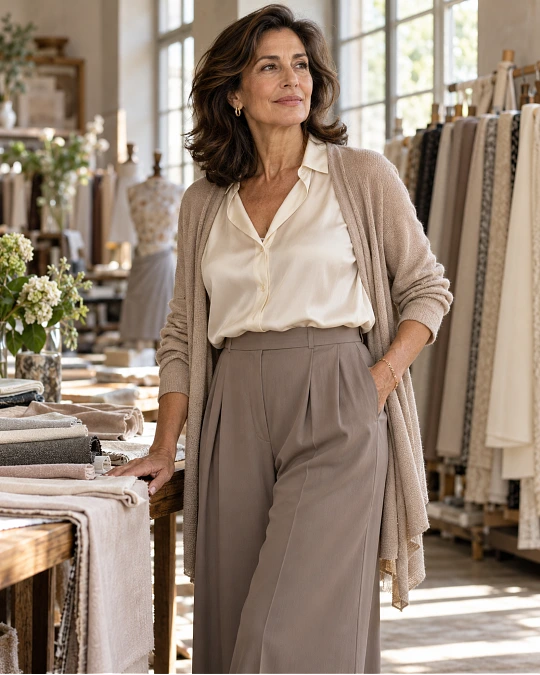
Fabric matters just as much as cut.
Very thin clingy material can settle into every line of the body, which may feel more revealing than you want. At the other extreme, thick stiff fabric can stand several inches away from the body and erase your shape.
The sweet spot is often somewhere between the two.
Medium-weight jersey, soft denim, ponte, fluid crepe, fine knits, and fabrics with a little stretch can follow curves without gripping them.
Shirts in soft cotton, viscose blends, or lightweight woven fabrics can also work well when they have enough movement to tuck cleanly.
Texture can help too.
A smooth fitted knit under a textured cardigan creates more depth than two bulky layers. A fluid blouse with structured trousers creates contrast without adding extra fuss.
This matters for dressing over 50 because comfort and polish do not need to compete. A fabric can feel soft against the body and still hold enough shape to make an outfit look finished.
Fabric note: Before buying a top or dress, pinch a small section of fabric and let it fall. If it springs back into a soft fold, it will usually follow the body more easily than fabric that stays stiff and flat.
Keep Volume in One Main Place at a Time
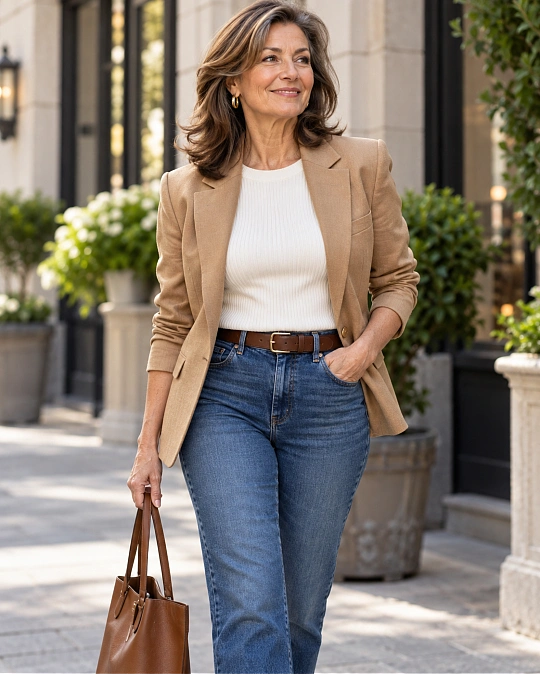
Hourglass dressing becomes much easier when you stop trying to make every part of an outfit dramatic.
If your trousers are wide, let the top have a cleaner line. If your blouse has full sleeves, keep the lower half calmer. If your coat is oversized, make the outfit underneath easier to read.
This does not mean everything has to be fitted.
It means the eye needs some contrast.
A fitted crew-neck knit with wide-leg trousers works because the top shows the torso while the trousers create movement below.
A loose blouse with straight-leg jeans works for the opposite reason. The jeans give the softer upper half a stronger base.
When an outfit feels heavy, these small changes can often fix it:
- If both your top and trousers feel oversized, try tucking the top or switching one piece to a straighter cut.
- If a long cardigan hides your waist, wear it open over a shorter top and visible waistband.
- If a belt feels too tight or formal, use a half-tuck, wrap detail, or shaped seam instead.
- If several layers feel bulky, choose one light fitted base layer underneath them.
Small adjustments usually do more than replacing the whole outfit.
When an Hourglass Outfit Feels Frumpy, Check These Details First
An outfit can contain good pieces and still feel slightly off.
Usually, one proportion is doing too much work.
Instead of treating these as strict mistakes, think of them as useful places to experiment.
| If This Feels Off | Try This Instead |
|---|---|
| Long boxy top hides your waist | Add a partial tuck or choose a slightly shorter hem |
| Oversized blazer feels heavy | Wear it open over a close-fitting knit |
| Wide trousers overwhelm the outfit | Pair them with a simpler, more defined top |
| Tight belt feels uncomfortable | Use a wrap shape, seam, or visible waistband |
| Dress looks shapeless | Add gentle waist definition with a tie, cropped layer, or tailoring |
Color can help create shape as well.
If your top, trousers, and outer layer are all similar in tone, the outfit creates one long visual line. That can look elegant, but it may also soften your waist definition.
You can keep a tonal outfit and still show shape by changing texture or fit. Try a fine knit tucked into fluid trousers, then add a longer jacket worn open.
The outfit stays calm, but the waist remains visible.
Build Your Personal Hourglass Outfit Formula
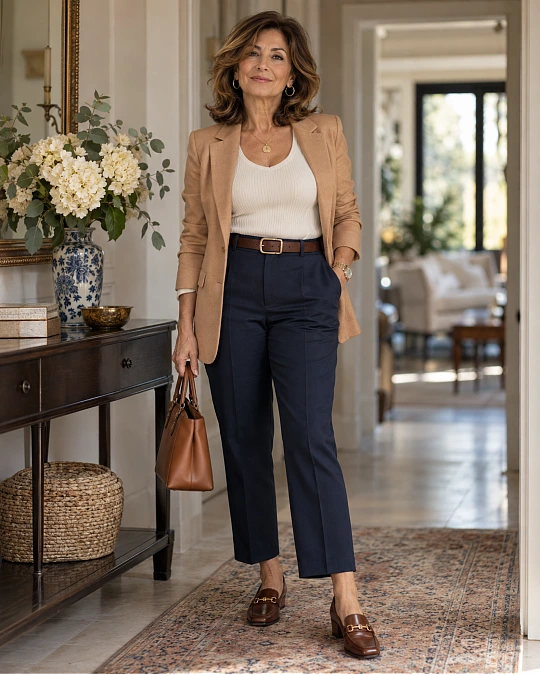
A reliable outfit formula saves time because you are solving the proportion problem once instead of starting from scratch every morning.
For an hourglass shape, a useful formula is:
Formula: defined top + visible waist + balanced bottom + clean shoe
The exact pieces can change with your plans.
Here are a few ways to use the same formula in real life.
| Occasion | Pieces | Why It Works |
|---|---|---|
| Everyday errands | Tucked knit + straight jeans + loafers | Shows the waist while keeping the whole look relaxed |
| Lunch with friends | Soft blouse + wide-leg trousers + low heel | Fluid pieces feel polished without adding bulk everywhere |
| Smart casual | Fine knit + A-line midi skirt + ankle boots | Keeps the waist clear and gives the lower half gentle movement |
| Travel day | Fitted tee + open cardigan + straight trousers + sneakers | Comfortable layers still let your natural proportions show |
| Dinner | Wrap top + dark trousers + pointed flat | The diagonal neckline draws the eye inward toward the waist |
Once you find a version that feels like you, repeat it.
Change the color, sleeve length, shoe, jacket, or fabric rather than rebuilding your style each time.
That is how a personal uniform becomes useful rather than boring. It reduces decision fatigue while giving you a reliable base for chic outfits for women over 50.
You may find that your favorite version is a tucked knit with straight jeans and a short jacket. Someone else may prefer a wrap blouse with wide trousers.
Both can follow the same proportion logic.
Frequently Asked Questions
What styles look best on an hourglass body over 50?
Clothes that show some waist definition while allowing room through the bust and hips often work well. Wrap tops, shaped jackets, mid or higher-rise trousers, straight jeans, A-line skirts, and dresses with waist seams are useful places to start.
The best choice is the one that follows your proportions without feeling tight or restrictive.
Can women over 50 with an hourglass shape wear loose clothes?
Yes. Loose clothing works best when the whole outfit does not have the same amount of volume.
Try wide trousers with a cleaner top, or wear an oversized jacket open over a more defined base layer. You keep the relaxed feel without completely losing your shape.
Should an hourglass figure always wear a belt?
No. A belt is only one way to create waist definition.
A tuck, wrap top, shaped jacket, waistband, cropped layer, or dress seam can create the same effect. If belts feel uncomfortable, there is no reason to force them into your wardrobe.
Are high-waisted jeans good for an hourglass body?
They can be, especially when the waistband sits smoothly and gives enough room through the hips.
You do not need the highest rise available. Choose the rise that feels comfortable when sitting and creates a clean transition between your top and jeans.
How can I look modern without dressing too young?
Focus on current proportions rather than chasing every trend. A wider trouser, updated straight jean, relaxed blazer, modern flat, or clean sneaker can refresh familiar wardrobe basics.
That approach keeps dressing over 50 connected to current fashion while still feeling natural to you.