
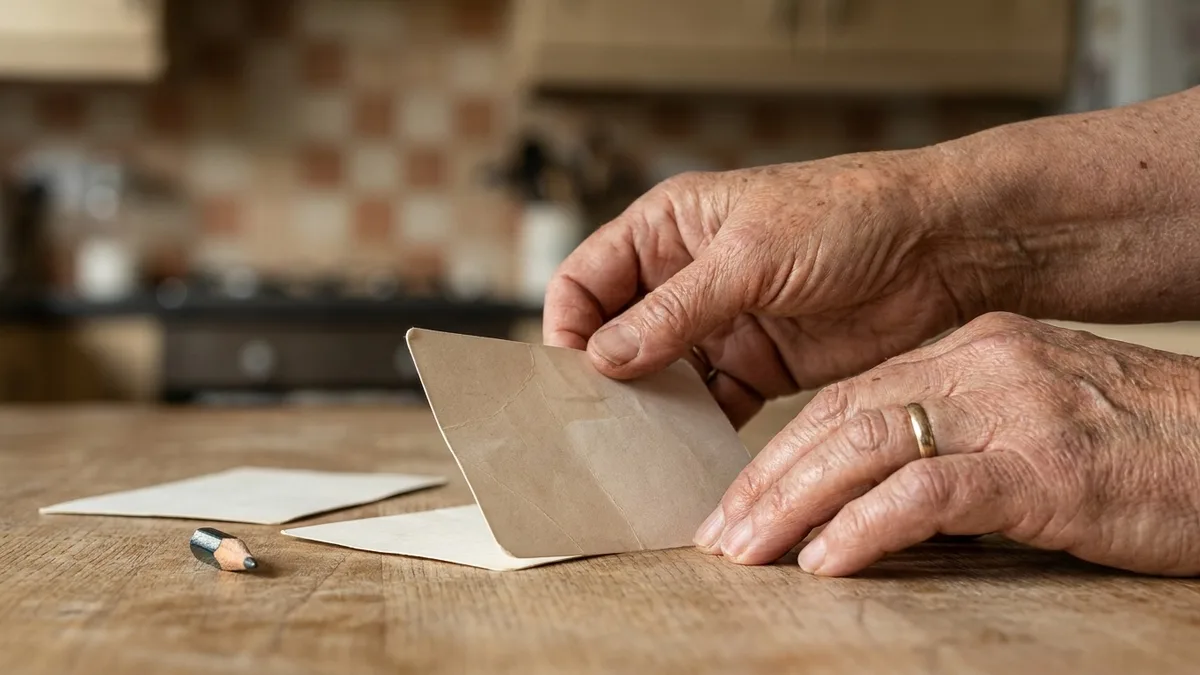
The surprising part of dementia caregiving isn't the forgetting. It's that patience runs out not because you don't love her, but because you've been running the day on a plan that was never going to work.
Joan and I have been married 52 years. She was diagnosed with Alzheimer's six years ago, and I've been her primary caregiver at home in Ohio for four years — no live-in help. I'm 78, a retired high school teacher. I still teach, just a different class now.
What I've learned is that patience isn't a deep well you draw from. It's ten moves that make the moment smaller before you have to be a bigger person. I'll give you each one, exactly as I use it.
Quick Tips Before You Start
Same words, every time
Use the exact same sentence each time she asks, at the same speed.
One hard thing a day
Plan only one demanding task per day, and let the rest wait or drop.
Sit before you redirect
Lower yourself to her eye level before you speak; it changes your tone.
Put it on the fridge
Post the morning routine where you both can see it; fewer negotiations save your voice.
Book the break first
Schedule the paid help or family visit before you think you need it.
When the same day repeats
The day doesn't repeat for Joan the way it repeats for me. That's the first thing to understand. Each time she asks, it's the first time — and if I answer like it's the tenth, I'm the one who starts the argument.
These three moves are about shrinking the repeated moment so it doesn't require willpower. They cost nothing but a change in how I answer, and they came before any of the harder work on my own temper.
1. The tenth question is still the first for her
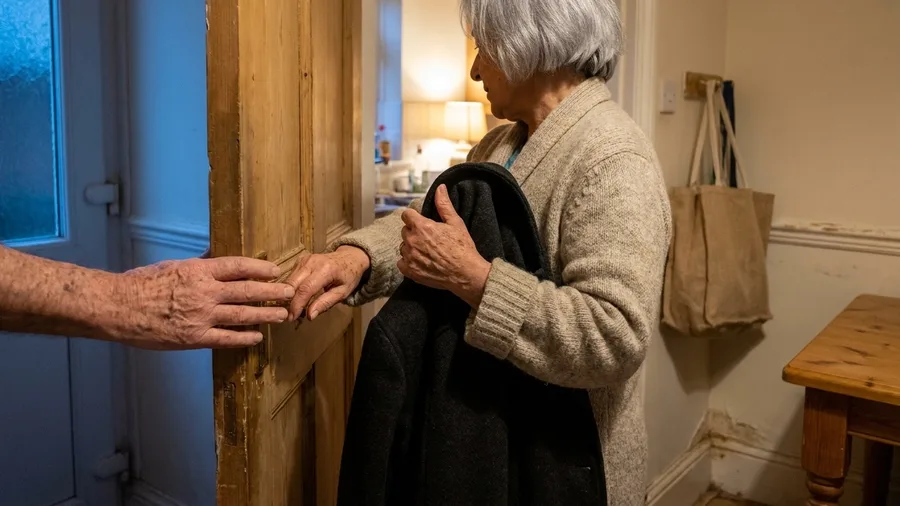
She asks where we are going, and I answer, and ninety seconds later she asks again.
The van comes at nine on Tuesdays and Thursdays, the days Joan goes to the day program. The county runs it out of a church basement twelve minutes from the house, and we pay ninety-five dollars for each of those days. Six years into Alzheimer's, those are the two mornings a week I am not alone with her, and they are also the two mornings the question comes at me like a woodpecker. It starts around seven-forty and it does not stop until I hear the van in the drive. Ten times, some mornings eleven.
The first few times are easy. By the fifth I can feel my jaw setting and by the eighth I catch myself introducing a little edge into my voice. The tenth time I want to say something true and useless: I already told you. I told you at breakfast, then the second time, then the third, and she has not forgotten. She has no memory of ever having asked. The question is new each time it arrives in her mouth, and what she is checking is whether this morning is safe and whether I am still in the room.
What the day asks is one calm answer, spoken again and again as if for the first time. 'You are going to the day program. The van comes at nine.' Same words, same order, every single asking. Not shortened, not rearranged. I do not say 'I told you already.' I have tried that version and it does something ugly. Her face falls, her shoulders lift, and she starts explaining herself to me, and then the question comes back faster than before, because now she is unsettled on top of uncertain. Proving she already heard me is a small victory that costs me the whole morning.
By the tenth run on a bad day I sometimes need a reset. I lay a hand flat on her shoulder and slow down, the way I would have explained a tricky line in a poem to a tired class. Half speed. One phrase, then a pause to let it land, then the next. It buys me about an hour before she asks again, and it costs me nothing.
The thing I would have told myself at the start, and what I tell anyone who is where I was: the question is not a test of my authority and it is not a failure of her memory that I need to catch out. It is a small nervous check, repeated, and each one is asking for the same short answer. Give it, and the morning is a morning again.
💡 Tip: Set a timer for the van so you're not the one watching the clock. The timer answers for you.
What Actually Bought Me Patience
2. Correcting her story makes the day harder
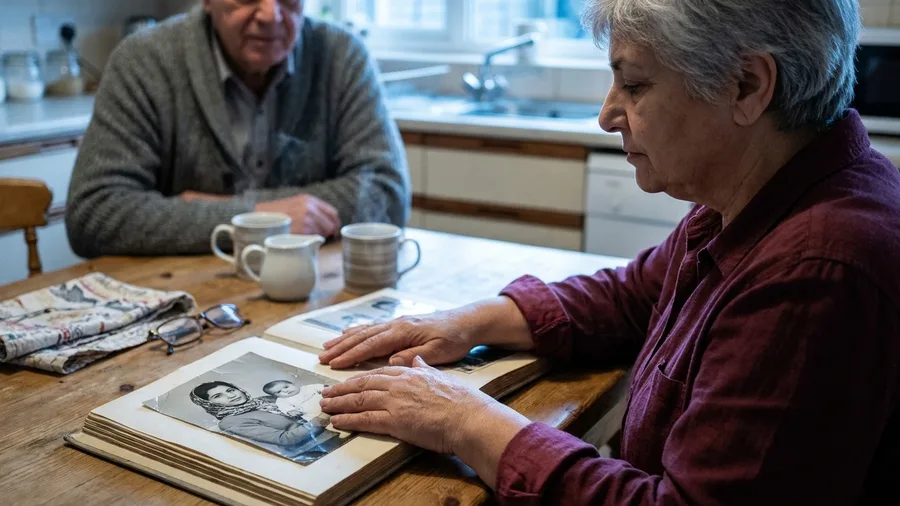
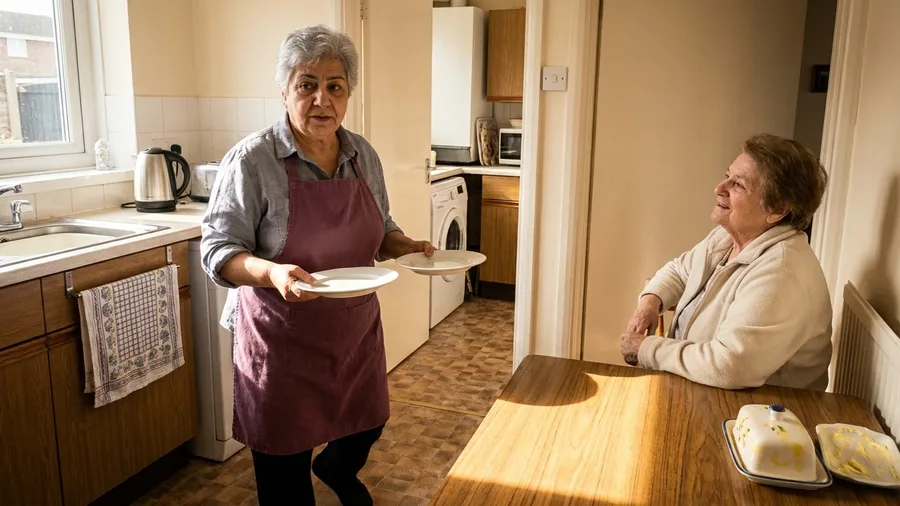
Twenty years. Joan's mother has been gone twenty years, and on a Tuesday in March Joan packed a canvas bag for her mother's house, folding a sweater and a hairbrush the way she used to before a visit.
The belief is fixed, and a fact check doesn't move a fixed thing. When I said 'Your mother died, honey,' Joan looked at me as if I were a stranger telling her a cruel lie. Then came the tears, then the suspicion that lasted the rest of the afternoon, then an hour of going over it again and again with nothing settled. I won the argument and lost the day.
The redirect that works joins her weather before it turns the wheel. 'You miss her,' I say. 'Let's have tea and look at the album.' Then I take her to the table and open the book, and we look at the woman on the page together. I'm not pretending her mother is alive. I'm meeting the feeling underneath the words instead of arguing with the words.
There is a line here, though. Not arguing with a fixed belief is not the same as lying about everything. If Joan asks whether the stove is on or whether a stranger is at the door, she gets a straight, direct answer, because safety is not a story to be steered.
💡 Tip: Keep the photo album on the table, not in a closet. You can't steer her toward what you have to go find.
🗂️ Your Fifteen-Minute Future Plan
Make the one call
Call the elder-law attorney's office and ask what documents to bring.
Start a folder
Put advance directive, medication list, respite program contact, and the children's phone numbers in one place.
Check your area
Ask the Area Agency on Aging what respite programs they actually run and what they cost.
Close the folder
Put tomorrow's one thing on top and leave the rest for another day.
3. A written routine saves your voice
You're standing in the kitchen at 7:40 with a wife half-dressed and a head full of decisions, and every one of them has to be made out loud before you've had your coffee. That's where the temper starts, long before anyone raises a voice.
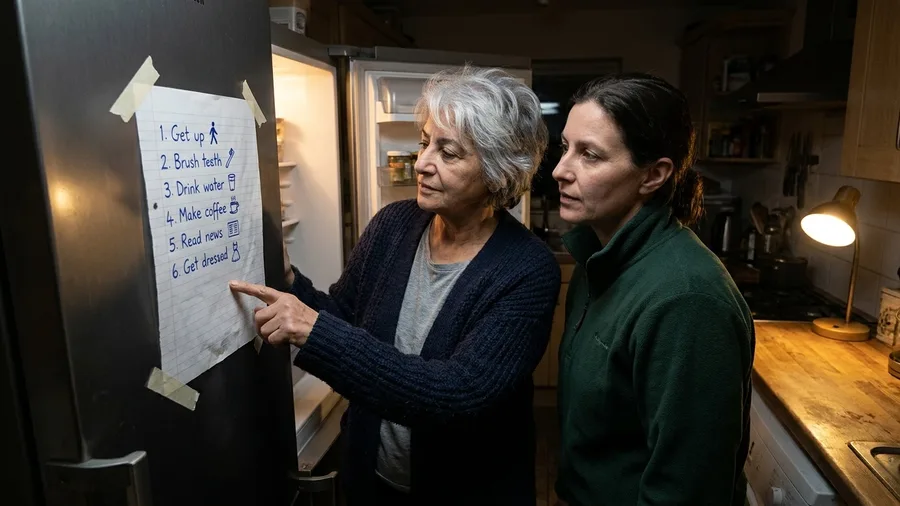
The counterintuitive part is that the fix isn't more stamina. It's less deciding. I wrote the morning down, start to finish – wake, bathroom, dressed, breakfast, walk to the mailbox, van at 9 – and posted it on the fridge at eye level, with one-word pictures beside the words for the steps she can't read anymore.
A posted schedule takes dozens of small negotiations off the table, and fewer negotiations means fewer chances for me to lose my temper. If the van runs late, we go to the chair by the window and set a timer, rather than me announcing the delay four times and winding us both up. One caution: a wife who is still quick with words may find a picture chart insulting – for her, plain numbered steps on a card. And the routine assumes the grab bars, ramp, door alarms and hospital bed are already in, about $3,800 I paid before any of this helped.
💡 Tip: Write the steps in the order they actually happen, not the order you wish they happened. The chart is only useful if it matches the morning.
Two Ways to Answer the Same Question
What each approach buys you by 9 a.m.
Your own fuse
I used to think losing patience was a character problem. It isn't. It's a planning problem and a blood-sugar problem and a sleep problem, and those are things you can change today.
The next three moves are about the caregiver's fuse — the one that burns down before lunch if you're not careful about what you put on the day.
4. Patience begins with a smaller plan

The cost of the old plan arrived before breakfast. I had written down bank, pharmacy, and haircut all before noon, and Joan came down the hall at 7:40 already confused about what day it was, and by a quarter to nine we were both shouting in the kitchen. A plan built for the woman who could do three errands in a morning guarantees a morning that breaks.
The revised plan fits on one line: shower, toast, sit on the porch. Errands wait or get delivered. One hard thing per day, and on Thursday the hard thing is the shower and the hair wash, not the bank, the pharmacy, and the haircut stacked on top of each other. That is the move planners in dementia care repeat: shrink the demand, do not ask the caregiver to hold a bigger morning together by willpower alone.
It does not apply to everyone. If a paid aide is on a fixed schedule in your house, you may keep two outings, but you still do not keep four.
💡 Tip: Write down tomorrow's one hard thing the night before. If you can't name it, you've already made the plan too big.
5. Your fuse burns down when you skip lunch

"I'm fine in the morning. I don't know what happens by dinner." I said that to our daughter on the phone, and it was true and also useless.
What happened was a short night, lunch I never ate because Joan would not sit down, and no bathroom break since six that morning. At four in the afternoon a glass of milk went over on the counter and I shouted at a 76-year-old woman about a spill. The thing that broke was not my character; it was an empty body running on nothing since breakfast. The fix is physical and it is small: a sandwich at 11:30 whether she eats or not, a full water bottle beside my chair, and a bathroom stop before the aide leaves.
The four-hour aide slot at $30 an hour is for sleep or for leaving the house, not for scrubbing the kitchen. That one afternoon a week is mine and I keep it, and the plan for the day is built to survive an empty tank, not to test it.
If the anger is constant, or it frightens you, call your doctor. This is not always a lunch problem.
⚠️ COMMON MISTAKE
Don't wait until you feel patient
Patience doesn't arrive before the hard moment; it arrives after you've eaten, slept, and peed. Treat those three things as part of the care plan, not as indulgences.
6. Resentment is a signal, not a sin

Everything I read told me the resentment was a failure of love, and that a good spouse would simply feel grateful for one more day. I believed that for a while. Then I sat in the parking lot of the pharmacy and realized I had not seen my own doctor in fourteen months, because three times in a row I had canceled the appointment when there was no one to sit with Joan.
That is the gap. Resentment does not announce that the love is gone; it announces that something in the arrangement is missing. For a closer look at how love itself changes under the strain of caregiving, one husband's account of ten lessons about love may help. For me it was a missing break, missing help, and a lot of missing sleep. A sour feeling after a hard afternoon is not proof of a bad heart. It is a reading, and the reading is usually accurate about the schedule and wrong about the person.
So I started translating it. The trapped feeling after a blow-up meant look at the calendar, not look at your soul. I called the adult day program and asked whether a third day was possible, and I asked even though I did not book it. The asking alone changed the week, because I stopped treating my own tiredness as a moral problem to be solved by trying harder.
I am not angry at Joan. I am angry that there is no hour in the day that belongs to me. That sentence points somewhere I can act.
One limit, and it is not a small one. If the resentment has turned into thoughts of hurting her or of hurting yourself, put the article down and call a crisis line or your doctor now. That is beyond a missing break, and it needs a person, today.
💡 Tip: Make your own doctor appointment at the same time as Joan's next one. You're a patient too.
Repair and relief
You will yell. I have, more than once. The question isn't whether it happens, but what you do in the ten minutes after. Repair is a skill, and it can be learned.
Relief is the other half. Help that isn't scheduled is help that doesn't exist, and unscheduled help is the most common way caregivers end up alone with the job.
7. A plain apology beats a perfect record
You apologize in plain words, fast, and go back to the routine. The relief and self-honesty of admitting you needed a break only pay off if the moment after the blow-up gets repaired, not buried. I stood in the kitchen the afternoon I lost my temper over spilled milk and said the short version: 'I'm sorry I yelled. That was my fault. I'm going to make us lunch now.'
Minutes matter more than eloquence. Say it before Joan carries the mood into the next hour, and skip the long explanation, because a promise never to snap again is one you cannot keep and she cannot follow. What never helps is re-litigating why she made you angry or waiting for an apology back; she is not tracking the argument, only the tone.
Then tend your own side of it. I leave a note for the aide, or call one of the children, so the shame is not something I sit with alone until it hardens into something worse.
The 60-Second Repair Window
What closes it
- Go back within about a minute – after an hour she reads the tone, not the words.
- Two sentences max: the sorry, then what happens next like 'Lunch is coming.'
- Say it standing level with her, not from the doorway.
- Write the blow-up in the aide's notebook that night – one line, dated.
What keeps it open
- Waiting until you feel calm – the calm arrives after the apology, not before.
- Explaining the reason twice; the second telling is for you, not her.
- Adding 'but you' to the sorry – it turns repair back into the argument.
- Carrying it alone past bedtime; shame at 11pm is heavier than shame at 3pm.
8. Unscheduled help is imaginary help

An apology gets you back to even. It doesn't stop the next blow-up, and for three years I managed to confuse being sorry with being covered. Every Sunday my son would call and say, "Let me know if you need anything," and every Sunday I said I was fine, because the offer had no edges on it, nothing to say yes to.
So I made it smaller and put a date on it: "Could you take her the first Saturday of the month, ten to four." He said yes in about four seconds. Now three Saturdays are written on the wall calendar in ink, and those are the days I sleep past six or leave the house. An hour also opens up on Wednesdays with the neighbor across the street, and she has my scribbled list of what to do when Joan starts asking for the car at dusk.
If your people are nine hundred miles away, their help is a check or a call to the insurance company, and that still counts. The point is not that they show up. It is that something in the week is theirs and not yours to wonder about.
💡 Tip: Write the dates on a shared calendar before the conversation ends. A promise without a date is a wish.
The long goodbye
Joan is here, and she is also going. That's the hardest sentence in this article, and it took me three years to be able to say it without flinching.
The last two moves are about grief for someone still in the room, and about the future that arrives whether you plan for it or not.
9. You can miss her while she is here
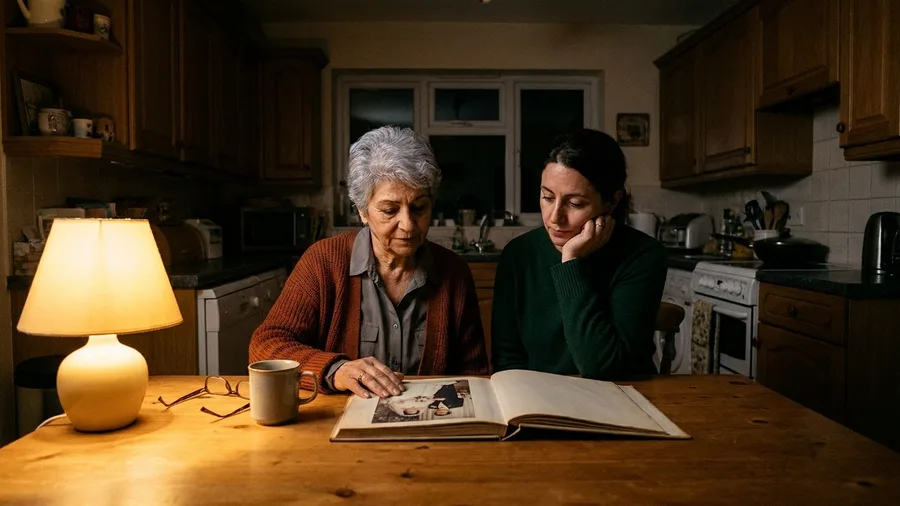
You are standing at the kitchen counter with the checkbook in your hand, and it occurs to you that no one has balanced it in months, because that was always her job. Once the calendar has real relief on it, the sadness that has been waiting behind all the caregiving finally has room to surface, and it does not get fixed by correcting it away.
This is the loss nobody warns you about. Many people who reach this stage find comfort in naming the common regrets at seventy-five before they harden into something permanent. Joan no longer plans the Sunday drive or argues with me about the route, and the wife who could travel and hold her own in an argument has been receding for years, well before any funeral. The grief arrives early and stays. I keep the photo album open on the kitchen table, and some mornings I say 'I miss you' out loud without expecting the old answer back. Letting that sadness in makes me more patient, not less, because it is honest about what the day actually holds.
Tears are welcome here. Losing sleep and appetite for weeks on end is a different thing, and a reason to call the doctor.
The one thing not to do is correct the grief with 'at least she is still here.' She is, and you miss her anyway, and both can be true at once.
💡 PRO TIP
Say the missing out loud
Once a week, tell someone who isn't Joan one specific thing you miss about the life you had. Naming it out loud keeps it from coming out as anger later.
10. Plan the future in fifteen-minute pieces

I did not decide about the house, the will, or the move nobody wants to name. I made one call, wrote the answer on a sticky note, and hung up.
That call was the first thing in the folder on the shelf by the back door. Now it holds the advance directive, a medication list in large print, the contact sheet for the day program, and both children's numbers written out in ink because my handwriting is worse than my memory. Nothing in it answers the future; the folder just means I am not carrying it around in my head at 2 a.m.
I do not invent the legal or financial rules. When the attorney's office tells me a document is needed, I ask the Area Agency on Aging whether they have seen the same thing, and if the two disagree I ask again. The paperwork belongs to people who do it daily, not to me.
Frequently Asked Questions
How do I stop snapping at my wife with dementia?
You stop by shrinking the demands on the day and fixing the physical causes of a short fuse. Eat lunch at 11:30, sleep when you can, and plan only one hard thing a day. When you do snap, apologize within minutes and return to routine.
Should I correct my wife when she says her dead mother is coming?
No. A fixed false belief doesn't move with a fact check. Join the emotion and redirect: "You miss her. Let's have tea and look at the album." Real safety questions still get a direct answer.
How do I get family to actually help instead of saying 'let me know'?
Give them a specific job with a date. "Cover Saturday from 10 to 4, once a month." Put the next three dates on a shared calendar before the conversation ends. Family far away can pay for the aide or handle insurance calls.
Is it normal to resent my wife for needing care?
It's common, and it's a signal pointing at a missing break, missing help, or missing sleep. Treat it as information rather than a character flaw. If it turns into thoughts of hurting her or yourself, call a crisis line or your doctor right away.
How do I miss my wife when she's still here?
You let yourself miss the person she was, out loud, once a week. Keep the photo album where you can reach it. Tears are welcome; losing sleep and appetite for weeks is a reason to call the doctor.
Write the Morning, Then Book the Break
Start today. Write the morning sequence on paper and tape it to the fridge, wake, bathroom, dressed, breakfast, walk to the mailbox, van at 9, a word and a picture for each. Then book the four-hour break before you think you need it, the aide at $30 an hour or the weekend your children cover. Patience is built by shrinking the day, not by summoning more willpower.
The next morning, when the tenth question comes before the van, you can give the same calm answer at half speed, hand on Joan's shoulder. The measure is not a perfect record. It is a day small enough to get through, and a repair ready for the next moment.
That morning I got the tenth answer wrong, and her face folded. Tomorrow I will have the routine on the fridge and the break on the calendar, and I will say it slower.
Start With the Next Morning
Take five minutes now to write the six steps of your morning on a sheet of paper. Then call one person and book one break. That's the whole plan.

