

The cheapest mistake costs $45 and a season. I know because I almost made it. Last September I walked into a church hall in Tucson believing a weekly group at 71 meant stepping into a room where everyone already knew each other, and that the awkward first month was just the price of finding out it wouldn't work. I'm 71, a retired high-school librarian. I sang alto in a 60-voice chorus, Tuesdays 7 to 9, September through January, and I kept a notebook.
Week 1 I sat alone in the back row. Week 3 I nearly quit. Week 6 Ruth saved me a seat. The first invitation to anything outside rehearsal came in week 11. By the twentieth rehearsal I could put a name to about 20 of the 60.
What paid off was repetition and a 14-person alto section, not charm. $45 dues, about 20 rehearsals, the 8 p.m. break with coffee and cookies, and a diner table of eight afterward that ended near 10 p.m. The social payoff was seasonal and slow, and it came from keeping one night fixed.
Quick Tips Before You Start
Protect one night
Pick a single weeknight and treat it like a shift you cannot cancel.
Ask about a trial
Find a choir that lets you sit through one rehearsal before dues are due.
Write down names
Keep a small notebook and add every name you catch, even if you have to ask twice.
Stay for the break
The 8 p.m. coffee is where the actual socializing happens, not the singing.
Say yes to the diner
Take the first post-rehearsal invitation, even if you are tired.
Give it eight weeks
Judge the group at rehearsal eight, not rehearsal two.
The Part Nobody Warns You About
Every article about joining a group skips the first month, which is the only month that decides whether you get a second one.
I want to start there, because the awkward stretch is what stops most people. Here is what it looked like from the alto row, and what I would tell anyone standing in the doorway in week two.
1. The first six weeks were the lonely part
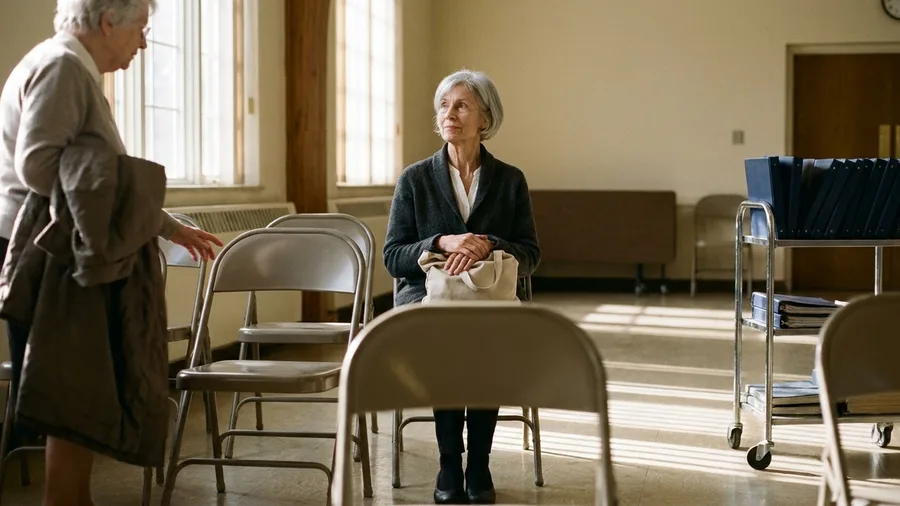
Everyone tells you to just walk in, be yourself, and the room will open. It didn't open for me. Week one I sat alone in the back row, forty minutes before anyone spoke to me. Week three I sat in my car with the engine off and nearly drove home.
The turn came in week six, and it was not a grand gesture. Ruth, an alto, moved her coat off the chair beside her and said two words: "Sit here." Before the end of that rehearsal I had been greeted by name twice. That was the whole thing.
What I'd tell someone sitting in week two, deciding it's not working: give it eight rehearsals. The awkward stretch is normal – it's not evidence. The first invitation to something outside rehearsal reached me in week eleven, months after the singing started. Until then, the only test was whether the same night would keep coming back.
💡 Tip: Judge the choir at rehearsal eight, not rehearsal two. Put the date in your calendar so you have something specific to measure against.
⚠️ COMMON MISTAKE
Do not audition for friends
The mistake in the first weeks is trying to be interesting. I asked three people where they were from and forgot the answers by the second number. Show up, sing, learn one name a week. The friendships arrived later, and they arrived sideways.
2. One fixed night a week did the work

I spent my first weeks trying to be interesting. Preparing an anecdote for the break, asking the woman beside me precise questions about her garden, working the hall like a party. It earned me pleasant nods and nothing else.
What actually turned the room familiar was duller and out of my hands: about twenty rehearsals, Tuesdays from 7 to 9 in the same church hall, the same 60 people, five months, $45 for the season, the social habits that keep people invited laid down week by week. By week eight I could nod at thirty people. By week twenty I had twenty names, and I never once made anyone like me on purpose.
The night has to stay nailed down. I missed two rehearsals and felt the gap – names went quiet for a while when I came back. A protected Tuesday does the slow work; a Tuesday you keep moving for a better offer does not.
| Before choir | Five months in |
|---|---|
| Tuesdays 7-9 p.m. spent at home, television on by six | Tuesdays 7-9 p.m. in a church hall, alto row, second from the end |
| Names known in the room: none | About 20 of the 60 names, learned on purpose |
| $0 a season to sing | $45 a season, plus roughly $12 each time I stayed for the diner |
| Weekends open and unused | Two concerts with $10 tickets and five people I invited sitting in the seats |
| Coffee at 8 p.m. alone in my kitchen | Coffee and cookies at 8 p.m. beside Ruth, who saved me a seat |
What Actually Built It
Once the night was fixed, the social part stopped depending on me. It depended on the room being small enough and the break being long enough.
Two things did most of that work, and neither of them was the singing.
3. The alto section was the small room
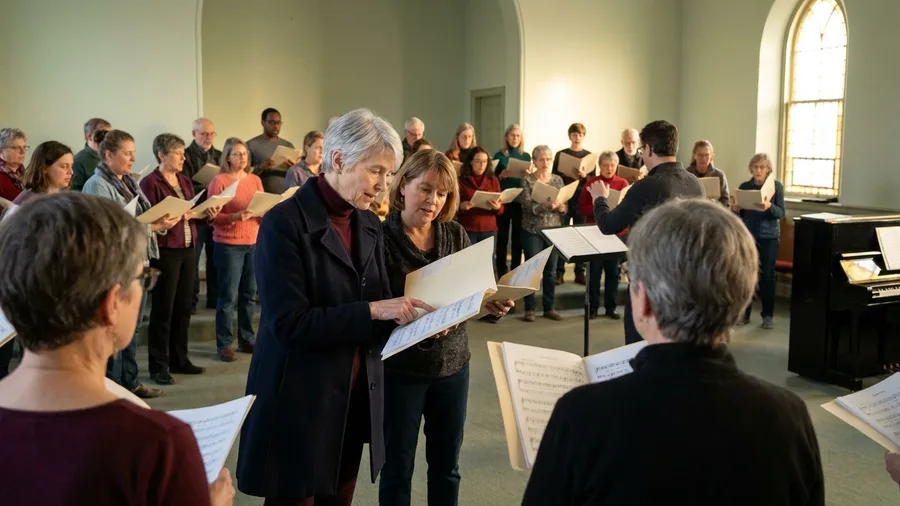
"I don't want to walk into a big room where everyone already knows each other." That was the first thing I said to my daughter, and the room I feared was sixty people – the whole 60-voice chorus, filed in two blocks, all of them singing and none of them mine.
The reframe is that the room was never sixty. I am an alto. That is fourteen of us in two rows, and the fourteen is where the choir actually lives. The section leader ran a name game in week one – everyone saying her name with a gesture to go with it – and I had six names before I sang a note. Six names, from a game I'd have felt silly doing at 25 and needed at 71.
Inside a group of fourteen, repetition has something to grip. Sixty is a crowd. Fourteen is a thing you can warm up, one Tuesday at a time, until the woman on your left is not a soprano in the building but Louise from the row behind.
This is also where the honest limit sits. By the final rehearsal I knew about twenty of the sixty names, and I stopped feeling bad about the other forty. The alto row turned out to be plenty of room to build a life inside.
If you are sizing up a group and it feels enormous, look for its sections before you decide – the row, the table, the three people who always sit together. That is the unit you are really joining.
The full choir made the sound. The fourteen made it social.
Where the 60 Voices Split
My notebook, counted at the final rehearsal
Counts from my own notebook, not a survey of anyone else's choir.
4. The break mattered more than the singing

Of the two hours I spent in that church hall every Tuesday, ten minutes did the social work: the break at 8 p.m.
The singing was the excuse that got all 60 of us into the room. The talking happened around the coffee urn, with the bad coffee and the cookies someone had brought from the supermarket, the good names I'd learned in the alto row turning into actual conversation. My one rule was to stay in the room and leave the phone in my bag. The singers who drifted to the hallway to check messages were the ones I never got to know.
After rehearsal came the diner: eight regulars, about $12 each, roughly 45 minutes, wrapping up near 10. That table is where acquaintances became people I text.
If you plan to leave at 9 sharp and drive straight home, be honest with yourself: the music alone won't do it. The repetition that matters includes the pause after rehearsal, not just the notes.
Two Ways to Spend the Same Tuesday
Stay in the room
- $45 a season, about $2.25 a rehearsal — the diner adds roughly $12, once a month is $144 over the season
- Week 11 is the realistic first outside invitation if you show up to the break and one diner a month
- Aim for 20 names in 20 rehearsals; I got 20 of 60 by the final one
- Miss two rehearsals max — the section notices an empty chair before it notices a new face
Leave at 9 sharp
- $45 buys the singing only; the ten-minute break is where the $45 starts paying you back
- Skip the diner every week and the first invitation may not arrive before the season ends
- Two missed rehearsals are fine; five turns you into a visitor, not a member
- Twelve invitations across two concerts yielded five yeses — expect a low hit rate and send them anyway
5. A shared task skipped the small talk
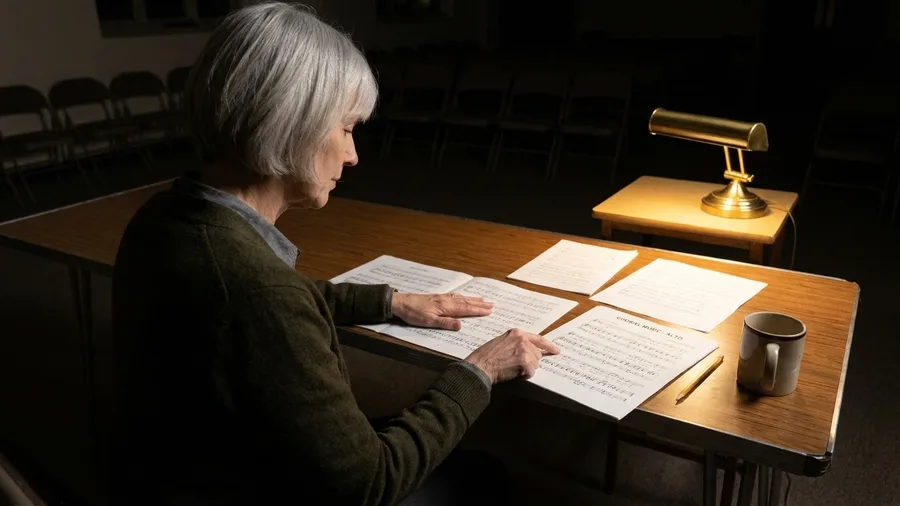
The cost comes first: after the last concert, the group went quiet. No rehearsals, no diner table, and the phone went back to being mostly silent until the next season opened. The silence was real, and it is worth knowing about before you sign up.
What you get in exchange is that you never open a conversation cold. Singing together handed us a topic before we had anything else in common. The tricky alto entry in the second movement, the conductor's tempo that drifted faster each week, the soprano who kept coming in early, all of it was right there to talk about in the break and at the diner, with no effort at all. I never once stood in that room hunting for something to say.
Researchers who study how friendships form keep landing on the same finding: closeness tends to grow from repeated contact around a shared activity, not from how good you are at small talk. The activity does the introducing.
So treat the shared task as a seasonal scaffold. It carried the social weight while the season lasted, and it came down when the season did. The people you liked, you keep through the winter yourself. That part falls to you.
💡 PRO TIP
Trade the phone for a name
Nobody remembers a person who was pleasant. They remember the one who asked their name in week two and used it again in week four. Two names a week gets you through a season with 20.
What It Did and Didn't Fix
I want to be honest about the size of the change, because the version I read before joining promised more than a choir delivers.
The concerts did one thing and the Tuesdays did another, and neither of them touched the parts of my life that were already set.
6. The concerts gave my old friends a reason
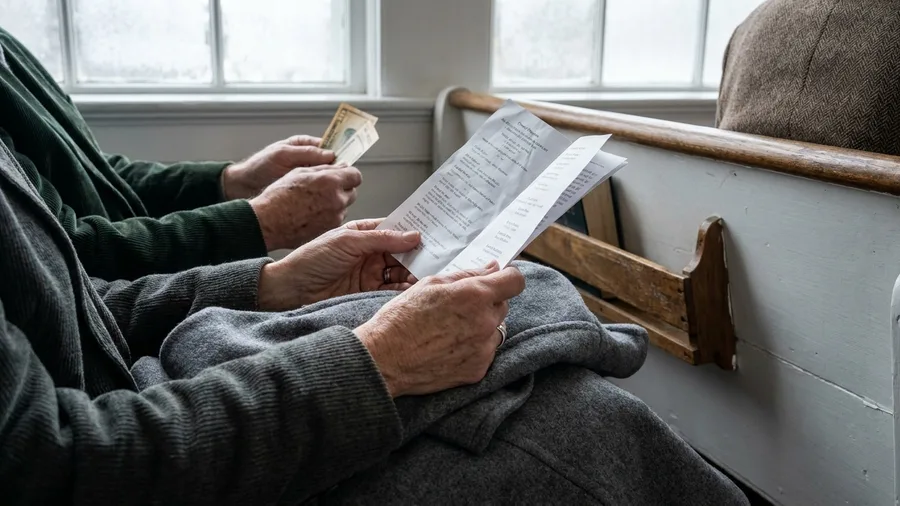
The question I hear from people my age is whether any of this reaches past the church hall. The answer is yes, but not the way you would hope: the season put the choir in front of people who already belonged to me.
There were two concerts, one just before the holidays and one in January, and tickets were $10 at the door. I bought a small stack myself and handed them out like a woman with something to sell, and across both nights I asked 12 people to come. Five came. My daughter drove down from Phoenix for the second one, the pair of neighbors from across the street came to the first, and two men I had taught alongside at the high school sat together near the back.
Four years ago not one of those people could have said what I do on a Tuesday. At intermission my daughter ran into a woman with a watering-can habit and then found me in the alto row.
Two of the five still bring it up. One neighbor stopped me by the mailboxes in February and asked when the spring season starts, whether the tickets are the same price. That question, small as it is, is the shift: I stopped being the retired librarian across the street and became a woman with a night and a concert and a row.
if the only reason they would turn out to watch you do something is a favor, inviting them will feel like pushing water uphill. If two of them are the kind of people who ask what you are doing with your week and mean it, buy the tickets early and keep your expectations small. A third of them is a fine turnout.
That is what the concerts did. They made the choir visible outside the hall, and visible was worth having. But the two nights were a byproduct of a season already running, the proof of the thing and not the thing itself, and no one should join a choir for the tickets.
🌱 GROWING TIP
Invite early, not at the last minute
Send the concert invitation four weeks out, not four days. The five who came all had the date on a calendar before the program was printed, and the ones I asked late had something else already booked.
7. It fixed one night, not my social life

The choir did not make me a joiner. I still skip the neighborhood parties – the block one in October, the holiday one in December, both invitations on the counter where I could see them and both passed over. I am still the person who means to call and doesn't. If the concerts made me visible for an evening, this is the quieter truth underneath: what changed was narrower than a personality, and it is worth saying plainly because the narrow version is the one you can actually get.
What carried over was one habit, and it was small enough to fit in a pocket. I started saying yes to the diner table. Eight of us, roughly $12 apiece, about 45 minutes, ending near 10 p.m. Some Tuesdays I was tired and the honest answer was no, and I said yes anyway, because a 45-minute commitment at a table I already had a seat at is not the same as pledging to become a social person. It was the smallest yes on offer and I could still say it. That habit is the whole carryover, and I do not want to dress it up as more than it is.
Here is who should hear the other side. If what you want is a drop-in hobby, more like volunteering after retirement – something you show up to when the mood takes you and skip without consequence – a choir season will disappoint you honestly and early. The payoff lives entirely in the repetition. Miss the rehearsals and the names don't form, and no amount of being charming in week one will build the thing the same hour built for me.
The season worked because it was one protected weeknight. Not seven. Not a new me everywhere else – just Tuesday, 7 to 9, kept.
💡 Tip: Before you pay dues, ask the director one question: can I sit in on a single rehearsal first? A choir that says yes is telling you it expects people to be unsure.
The Season at a Glance
Frequently Asked Questions
How long before I stop feeling like an outsider at a choir?
For me it was about six rehearsals, and the turn was small — being greeted by name twice in one night. Week three was the low point, not week one. Put rehearsal eight on a calendar and judge it then, not before.
What does a community choir actually cost?
My season dues were $45 for five months, September through January. Concert tickets were $10 each. The extra spending was the post-rehearsal diner, about $12 a head if I stayed, which I did most weeks once I had a table to sit at.
Do I have to be a good singer to join?
No. I had not sung since a college glee club and I stood in the alto row with 13 other people, which means my wobbles got absorbed. What you have to do is show up on the same night for long enough for the room to become familiar.
How many people in a 60-voice choir will I actually get to know?
About 20 by name after five months, and roughly eight I would text. The section — 14 altos in two rows — is where the names stuck. The rest became faces I could find in a crowd, which is its own kind of comfort.
What happens after the season ends?
It gets quiet. The shared task of learning the program disappears for a few weeks and so does the social scaffolding around it. Plan for that gap: put one diner night on the calendar in the off months, or ask two people from your row to meet before the spring season starts.
What if I miss a few rehearsals?
I missed two and felt both. Nothing dramatic — a small coolness at the next rehearsal, as if I had to be re-introduced to the room. Protect the night where you can; that is the entire mechanism doing its work.
What I'd Do With Your Tuesday
The verdict is plain: the choir worked because it was one protected Tuesday, a 14-person section, and the same break every week, not because I turned charming somewhere in October. The payoff was seasonal and slow.
So start small. Find a choir that lets you sit in on one rehearsal before dues are due, go to that single night, then give it eight weeks before you decide anything. Week 11 is a realistic first invitation to something outside the hall, not a sign you chose wrong.
Who this won't suit: anyone who can't protect one fixed weeknight for five months, and anyone who wants a drop-in hobby rather than a season that ends. I began alone in the back row in week 1 and closed the season with about 20 names by week 20. The room changed because I kept the night.
Pick Your Weeknight Tonight
Open your calendar, choose one weeknight, and mark eight rehearsals on it before you call any choir. Then check the Quick Tips above and make the first call.

