
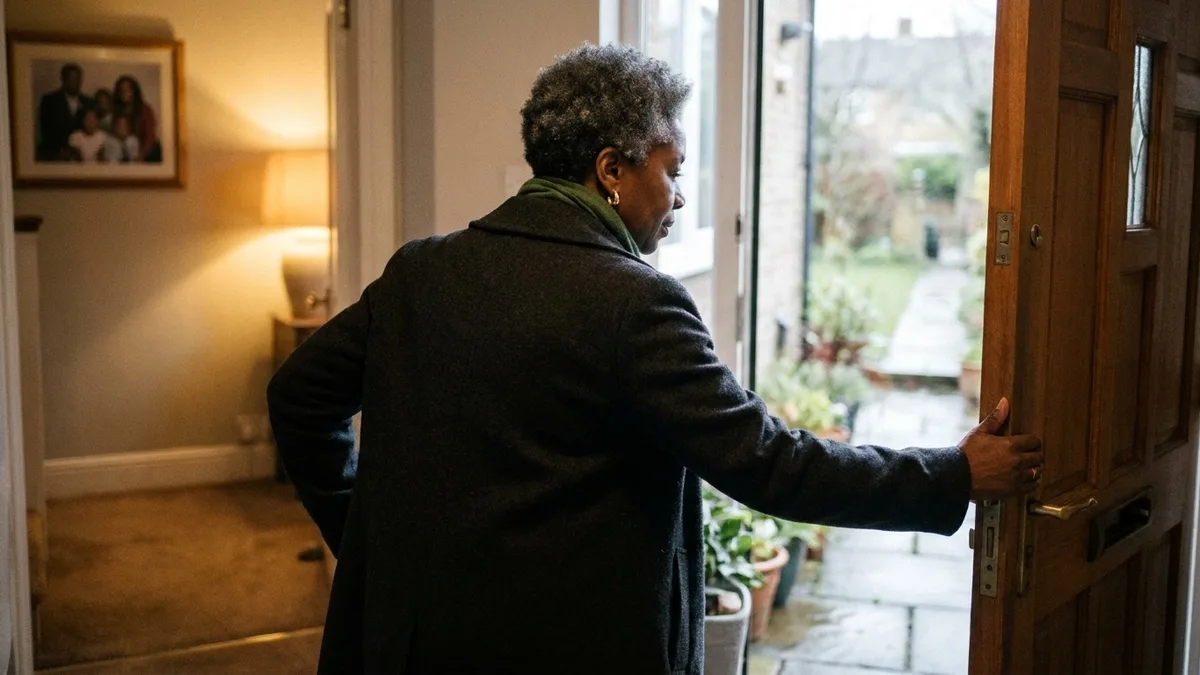
The calendar is the thing nobody warns you about. A grudge that started over an inheritance split, a divorce, a humiliation at work, or a family secret kept too long does not fade in a season. Ten years, fifteen, twenty-five – and the argument is still running in the shower, on the drive to work, at 3 a.m. Holidays get avoided, or attended on edge.
The people who put one down are 52 to 78, often near or past retirement, with aging parents, adult children, and grandchildren in the picture. Most of them get no apology and no reunion. They keep the truth of what happened and drop the daily prosecution of it. Quiet, not closeness, is what they are after, and some of these relationships stay small while some end.
So the aim here is not to decide the harm was fine. It is to reach the point where self-respect and fairness survive without the 3 a.m. replay – where an apology is optional, contact is chosen rather than defaulted, a smaller relationship can still be civil, and a ritual gives the memory a place to sit other than your head.
By the end you can start with one trait, write a thirty-second fact account of what happened, set contact terms as low, structured, or none, schedule a slot for the memory, and fix three sentences and an exit time for the next funeral, phone call, or holiday.
Quick Tips Before You Start
Write the 30-second version
Fact account, not story: date, what was done, what it cost. No adjectives, no motive guesses. Read it when the long version starts.
Schedule the replay
Pick a fixed 15-minute slot, same day and time weekly. Outside it, write the thought down and tell yourself 'not now.' Inside it, replay freely.
Pick your exit time
Set a hard leave time and a code word with one ally at the event. Exit on the time, not on the tension. Leave while it still feels early.
Name the value, not the vigil
Finish this sentence: 'What I will not accept again is ___.' That is your boundary. The replay is not protecting it; it is just replaying.
Reframing the Harm
Before you can change how you relate to someone, you have to change how you hold the story of what they did. That does not mean softening the facts. It means separating the harm itself from the machinery you built around it—the daily replay, the prosecution, the demand for an admission that may never come. The first four traits all live in that internal work.
People who let go in their 50s and beyond are not more forgiving by nature. They have simply learned to keep the truth and the value while dropping the enforcement.
1. Name What the Grudge Protects and It Loosens

For a long time I thought the way to put a grudge down was to decide the harm didn't matter that much after all. That worked for roughly a week. Then the whole case would come back with interest, and I'd be in the shower re-arguing a conversation from years ago. The field that studies this keeps landing in the same place: the memory is only half the problem. The other half is everything the memory is quietly guarding.
Ask someone what a twenty-year grudge is protecting and the answers cluster. A belief that they are a person who does not let themselves be treated badly. A conviction that fairness matters and was not served. Loyalty to a parent or a sibling who came out of the same inheritance split with less than they should have. And underneath all of it, the plain fear that setting it down is the same as signing off on what happened.
So the question worth sitting with is not whether to forgive. It is narrower, and harder. If I put this down, what exactly am I afraid of losing in the handoff?
Take a brother who got the house in an estate division fifteen or twenty years ago. The grudge holds a value – I was not treated fairly, and I am someone who notices that. You can keep the value and lose the vigil. Say it out loud once, then guard it a different way: the boundary that money is never discussed without a paper trail, the refusal to co-sign anything. 'I still believe what happened was wrong' fits in a single sentence. The daily replay is a separate decision.
One thing this does not cover. If the harm is still running – current abuse, an open financial dispute – the job is safety and getting help, not reframing what is underway.
💡 Tip: If the harm is ongoing—current abuse, an active financial dispute—the task is safety, not reframing. Get help first.
2. The Story Shrinks When the Verdict Is Dropped

Because the version being told is not a report. It is an argument, and each retelling is a rehearsal of it.
There is a short account and a long prosecution. The short account is one sentence: my brother got the house. The prosecution adds the character verdict, the imagined moment he gets what is coming, and the roll call of relatives who agree with you. Only the first sentence is a fact.
Each time the full version runs, the anger gets practiced, and a practiced response is quicker to fire next time. The memory becomes a thing that is easy to reach for, and then it is reached for in the car, in the shower, at 3 a.m.
The practical version has a length: 30 seconds, told once to one person. Not the 20-minute rendition at every gathering with the same audience and the same gasps. One trusted listener gets the fact and the wrongness, and that is the whole account.
There is a fair exception, and it is writing. In a private page, not in a room, unedited anger is useful and costs nobody. The rule about length is for the kitchen table, not the journal.
The test of whether the prosecution is still running: count the people who have heard the long version this year. Above one, it is a performance. One or fewer, and the fact is being kept without the courtroom.
⚠️ COMMON MISTAKE
Mistake: Rehearsing the Long Version
Every time you tell the full 20-minute story, you practice being angry. The short version keeps the fact; the long version keeps the wound open.
3. Fairness Can Be Named Without Being Enforced

The cost of needing an admission is that the release is handed to someone who may never give it. Someone can want the acknowledgment and still move on. Needing it is the trap.
Ten seconds, one question: if this person never admits what they did, can I still have a quiet week? A yes means the fairness needs a place to go that is not their mouth. A no means keep looking for the admission, and put it in writing or in a conversation with someone trustworthy alongside a boundary.
A father who kept a family secret too long and is now dead will never concede, and the account goes in a written page with the boundary set with the living. Where an admission is still required for safety, money, or legal accountability, that need stays.
4. A Finite Calendar Makes the Grudge Look Expensive

The hall smells of coffee and wet coats, your brother is across the room, and you have already checked the exit twice. You came late on purpose and you will leave before the cake, which is how another Christmas gets spent at the edge of the room instead of in it. People past seventy describe the worries they stopped carrying and what took their place.
That edge has a price, and people near or past retirement can count it more honestly than anyone: the summers left, the birthdays with an aging parent, the gatherings where a sibling's grown children still cannot pick you out of a crowd. The grudge does not stay one memory. It sends out runners, so a neutral comment at a wedding lands as another thing they got away with, and the account compounds by the month.
A 68-year-old doing this math sees the sibling charging rent on every event skipped and every visit cut short, and can name the figure without drama. If caregiving or shared money keeps you entangled with the other person, this is not a time audit yet. It is a practical plan.
What a 20-Year Grudge Charges You
Redrawing the Relationship
Once the internal work is underway, the next traits are about the relationship itself. People who let go do not necessarily reconcile. They redraw the terms—deciding what contact looks like, whether an apology is required for their own peace, and how civil they can be without being close. That redrawing is where many people get stuck, because they confuse forgiveness with re-entry.
5. An Apology Is Optional; the Release Is Not

"I'll let it go when they say sorry." That sentence can carry a person for a decade and a half, and it sounds like patience when it is actually a transfer of authority.
Forgiveness and apology are two separate events. One is yours to schedule; the other depends on someone who may never concede, may genuinely remember the day differently, or may be gone. When the release is assigned to the other person, the account cannot close, and the arrangement stays open for years. Fifteen years after a divorce, the ex-spouse has never said sorry, and waiting for the words has kept the whole thing on the books.
Release without an apology is quieter than it sounds, and it looks like a decision rather than a feeling: I know what happened, I am not waiting on them, and I am not re-entering the same arrangement. One man's account of forgiving an absent father shows what that decision actually changes inside you.
There are rooms where the apology still does real work, and they deserve saying plainly: a workplace that needs a record, a legal or financial matter, a family where acknowledgment is the condition for any contact at all. Everywhere else, the missing words are not the gate. They are the story the gate got mistaken for.
Waiting for an Apology vs. Releasing Without One
Waiting for an Apology
- Your peace depends on their words.
- You rehearse the confrontation.
- Years pass with no change.
- You stay in the same arrangement.
Releasing Without One
- You decide you're not waiting.
- You set boundaries for yourself.
- You stop re-entering the same dynamic.
- You keep the truth without the vigil.
6. Boundaries Decide Contact; Forgiveness Doesn't

Three settings cover almost every case: low contact, structured contact, no contact. Low contact is cards and funerals. Structured contact is a fifteen-minute call on birthdays, with a reason to end it written down beforehand. No contact works too, as long as there is a plan for the shared family event where you will both be present.
Before any of them becomes something warmer, run one test. Has anything actually changed, or has only time passed? A sibling who split an inheritance unevenly and has never once acknowledged it has not changed, even if the anger has cooled. Forgiveness is not a re-entry requirement. A person can be entirely at peace and still decline Thanksgiving.
Consider the sibling handled with low contact at funerals and a separate arrival time at the family event. That is not a truce. It is a set of terms, and it keeps the visit civil without putting you back in the room for the old argument.
The exception is worth knowing. Co-parents and business partners need a working arrangement regardless of what has settled inside them, and for those people the terms have to be negotiated, not just chosen.
💡 PRO TIP
The Readmission Test
Before you agree to see them again, ask: has anything actually changed, or is it just that time has passed? If nothing has changed, you can stay at peace without re-entering.
7. The Relationship Can Shrink and Still Be Civil

The standard advice is to repair the relationship, to get back to where you were. That advice fails more often than it works, and it was never the point.
When contact terms are set, what usually forms is smaller than what came before. A holiday card with a signature and no note. A five-minute catch-up at a wake, standing near the coffee urn. A group text where you both reply to the same photo of a grandchild. A seat at the same table at a cousin's wedding, one chair between you, passing the bread without comment. These are not consolation prizes. They are the shape civility takes when intimacy is gone, and civility does not require intimacy to function.
This is the realistic outcome in most sibling and in-law grudges, because the same aging parent, the same inheritance, the same family calendar keep putting you in the same room whether or not the relationship has warmed. The signal it is working is not warmth. It is that you drive home from the gathering and realize, halfway there, that you never rehearsed the old argument in the car.
Keep the truth of what happened and keep the civility. Drop the demand for full restoration, which was never yours to schedule.
Contact Settings at a Glance
📬 Low contact
Cards, funerals
📞 Structured contact
15-min birthday calls
🚫 No contact
With a plan for events
🤝 Working arrangement
Co-parents, business
Key
Forgiveness is not a re-entry requirement; choose the setting that keeps you civil and safe.
Making It Hold
The final traits are about keeping the change in place when the old feelings resurface. People who let go do not stop feeling angry; they build structures so the anger does not run the day. Ritual and a clear plan for the next encounter are what make the release stick.
8. A Ritual Gives the Grudge a Place to Rest

The ritual is a scheduled appointment with the memory, kept at a time you choose rather than the one it picks.
Civility at a wake or across a holiday table does not stop the date from arriving again next year, and a mind with no slot for that date will keep improvising one at 3 a.m. So you give it a slot. The person who split the inheritance twenty years ago gets one walk a year, on the date of the reading of the will, and one unsent letter written in a notebook the same week and never mailed. Someone else takes two minutes in the car before walking into a family event, hands on the wheel, one slow breath, then the door.
Containment works because a memory with a time and a place on the calendar stops presenting itself as an emergency. The mind is not filing it away, it is checking a box, and a checked box does not wake you at three in the morning to make sure the work was done. It is clumsy at first. Most things are.
When it surfaces in the middle of a Tuesday, name it, tell it when it will be handled, and go back to the shopping list. "Not now. Saturday, on the walk." Then do the walk. If Saturday comes and goes without it, the memory learns the same thing an unpaid bill teaches a creditor: this one does not answer to threats.
What the ritual doesn't do is replace a decision. If the unfinished business is a will that still names the wrong person, a care plan nobody has written down, or a boundary you have not said out loud, the walk will not discharge it and the letter will not answer for it. That is not a memory asking for a slot. That is a task asking for a Thursday afternoon, and no amount of anniversary walking will do the work of a phone call.
A grudge without a container spreads into everything. A grudge with one takes up an hour a year and leaves the rest of the calendar, and most of the nights, free.
🕯️ Build Your Release Ritual
Anchor it to a fixed date
Same day every year, not the day it resurfaces. Log it like a dental appointment and hand the date to the calendar, not the mood.
Write, then close the notebook
One sitting, one page, then shut it. Rereading it midyear turns the ritual into a reopenable case file.
Walk the same route
Twenty minutes out and back on the same loop. Repetition is the point: the body learns the time limit before the mind does.
Rehearse the exit line
Before the event, pick your two sentences for leaving early and say them aloud once in the car. An exit you have spoken is one you will use.
9. The Next Encounter, Not the Feeling, Is the Test
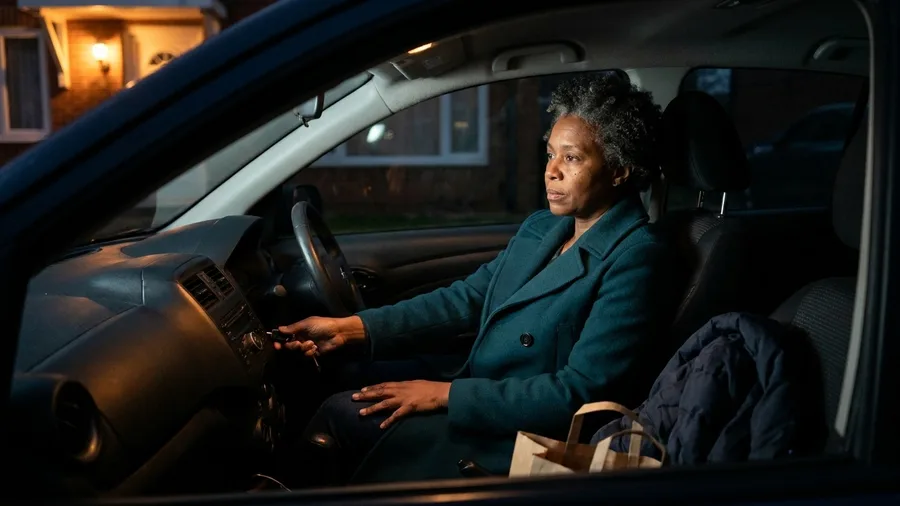
You are in the car outside the house, thirty minutes early, because you always are, and you are running the old argument in your head for the fourth time this week.
You will know you have let it go not by how calm you feel in that car, because you may not feel calm, but by what you do when you walk in. You go. You are civil. You do not bring up the split. You leave at the time you said you would leave. That is the measure. Before the next event, write three sentences to say if it comes up, starting with "I'm not doing this today," and pick the exit time in advance.
Feelings lag. The anger may spike for years. The change is in what you do with it.
What Letting Go Actually Looks Like
Frequently Asked Questions
Do I have to forgive someone who never apologized?
No. Forgiveness and apology are separate. You can release the grudge without an apology. Waiting for one keeps your peace in their hands.
How do I stop the 3 a.m. replay?
Give it a scheduled slot—a ritual—so it has a place to rest. When it comes up outside that slot, postpone it and return to what you were doing.
What if the person is dead?
The fairness can still be named. Write an account, talk to a trusted person, or set a boundary with the living. The admission is impossible, but the value can be kept.
Does letting go mean I have to see them again?
No. You can choose low contact, structured contact, or no contact. Forgiveness is not a re-entry requirement.
How will I know I've actually let it go?
The test is behavior at the next encounter: you go, you're civil, you don't bring up the old grievance, you leave on time. Feelings may lag.
Keep the Value, Drop the Grudge
Start this week with the first trait: name what the grudge is protecting. Self-respect, fairness, loyalty to someone else who was hurt, or a fear that letting go means saying it was fine. Write the answer down, then keep that value while dropping the daily vigil. When the old argument starts in the shower or on the drive, the sentence is: "I still believe what happened was wrong, and I am not arguing it again today."
Letting go is not an endorsement of what happened. It is a refusal to keep prosecuting the case at 3 a.m. for another decade. Quiet is available without reunion – some relationships stay small, some end, and the next holiday can be attended civil and on time rather than avoided or spent checking the exit.
So the calendar is where this gets decided. Put one entry in it this week: a thirty-minute slot, a chair, the old argument allowed to run its course and then dismissed until next time. Then close the book and go and do something with the afternoon.
Name What Your Grudge Protects
Take five minutes now to answer: what is this grudge protecting? Write it down. That is the first move toward quiet.

