

A will takes an afternoon to sign and about six years to go stale.
Consider one widowed parent, a $380,000 house, $70,000 in savings, and household contents, split equally among three adult children. The document says nothing about the $30,000 that went to the out-of-state child for a down payment, or about the two years of weekday appointments the nearby child has handled. Equal shares count assets. Siblings count transfers and care.
That asymmetry is where the trouble starts, and it is why families fracture over paperwork that was never wrong, only silent.
As an adult child or an aging parent, you can name the eight predictable flashpoints and raise each one before the will is signed, rather than argue later over what it was supposed to mean. By the end you can inventory the estate, say which one applies to your family, and bring it to the table. A will does not break families. It exposes the unspoken ledger they never balanced.
Quick Tips Before You Start
Write down every transfer
Log any gift over a few thousand dollars with the date, amount, and who knew about it.
Talk before the signing
Raise the awkward topics at least once before the document is drafted, not after.
Make a personal-property list
Name an owner for the watch, tools, and albums; the will's equal-share language won't.
Check your state's rules
Signing, witnesses, and probate vary; the state bar or a local estate attorney can confirm.
Money, care, and fairness
1. Unequal gifts before death feel like secret inheritance

The mistake worth naming first is the belief that fairness means every check came out even. A parent hands the out-of-state child $30,000 for a down payment and thinks nothing of it, because the help was real and the moment was right. Then the will splits a $380,000 house, $70,000 in savings, and the household contents equally among three children, and the parent cannot understand why anyone would object to a document that divides everything cleanly.
Siblings do not audit only the final shares. They run a running total of every transfer they saw, heard about, or guessed at over the years, and one undiscussed $30,000 reads as a head start the whole family paid for. Secrecy is what turns a gift into a suspicion: an open check is one parent's decision, while a quiet one is a discovery, and discoveries feel like concealment.
The out-of-state child remembers the down payment as a difficult year survived. The nearby caregiver, who drove to appointments and spent lunch hours on hold with the clinic, sees an equal will that quietly ignores the earlier check. The estranged child sees the same thing from farther away. The document records final shares and never the transfer history, which is exactly the gap the three of them will argue about at the table.
So the exception runs the other direction from what people expect. Small gifts, or gifts the family already discussed, or money treated as a documented loan, rarely become the grievance. What binds is the undisclosed transfer, and the fix is to say it out loud while the parent can still explain the intent: the $30,000 named as deliberate help, a letter about the reasoning, or a short conversation at the table, so the child who received it hears a gift and the others hear a decision.
💡 Tip: Put the date, amount, and who knew about it in the letter, not just the amount.
2. The caregiver's unpaid sacrifice goes unacknowledged

You are the one whose phone rings on a Tuesday morning because the cardiologist wants a follow-up, and it is you who drives her, sits in the waiting room with the clipboard, and reschedules your own afternoon. Two years of those mornings. That is the work an equal split of the $380,000 house and $70,000 in savings will not count, because the will sees property and never sees a calendar.
The bitter arithmetic starts here. The child who lives nearby tallies every appointment and every shift lost. The out-of-state sibling counters with a title deed divided three ways, sees nothing to discuss. The third sibling, long estranged, watches a caregiver put proximity forward as a claim and hears a sibling reaching for more before the funeral.
None of them are wrong about what they see. The document was drafted to divide assets equally, not to weigh missed wages and two years of weekday help, and where no payment or acknowledgment was ever discussed, the default is silence and the split lands evenly.
Write it down while the parent is still alive. Whether the caregiver is paid now, reimbursed later, or simply thanked in a letter everyone reads, the arrangement needs to exist as words before it is tested – and if the parent wants to favor the caregiver, an estate attorney should say how.
Not every family needs this conversation. Siblings who shared the load roughly evenly, or who already agreed on money for time, are not carrying a wound that silence will open later. The rest should say it out loud now, not wait for the will to say it for them.
⚠️ COMMON MISTAKE
Equal shares don't mean equal history
A will that splits everything three ways can still feel unfair to the child who did two years of weekday care or received a $30,000 gift. The document records final shares; it doesn't record the ledger your family actually lived.
3. A verbal promise about the house creates conflict

The obvious move is to trust the promise. Everyone is at the table, Mom or Dad says the house will stay with the child who cared for them, and the room nods – as if the promise were already signed. That faith is the trap: a sentence spoken over a kitchen table never becomes real inheritance, and the will that follows does not know the promise was made.
Picture the house. The will splits the $380,000 equally. The nearby child heard something years ago about the house, carries two years of care to back it up, and the out-of-state sibling sees only an equal three-way share with a sibling hovering to claim more; the estranged sibling reads open favoritism. The child who heard the promise feels bound by it. The other two never heard it, or heard the same sentence as passing comfort.
If a promise has already been made, raise it while the parent is alive. Sit together, the parent in the room, and ask for written clarity, not a reminder of the old conversation – either an updated will or the parent saying plainly that the split stays equal. Ask, before death, that the words be spoken in daylight.
The Estate at a Glance
🏠 House
$380,000
🏦 Savings
$70,000
⌚ Contents
Watch, tools, albums
✍️ Will signed
Six years ago
👥 Beneficiaries
Three adult children
Gap
The will splits everything equally but names no backup executor and no owners for the watch, tools, or albums.
The will's weak spots
A will can be perfectly legal and still leave the family fighting over a watch. The document settles shares. It rarely settles the small, specific questions that grief turns into arguments.
These three flashpoints live inside the paperwork itself: vague bequests, an executor picked for geography, and a document that has not been reviewed in years.
4. Vague bequests turn household contents into a contest

The house sells without a fight, the savings split cleanly, and then three siblings stop speaking over a watch, a set of tools, and two photo albums nobody has priced. A will that says contents or divide equally names a category, not an owner, so the moment the estate is settled each object sits unassigned and grief starts negotiating.
It is worth asking yourself one honest question: if the parent died tomorrow, could you name out loud who gets the watch? If the answer is a shrug, or two siblings saying different names, that gap is already there. Pull out a signed personal-property memorandum, list who takes what and a backup for each, and check your state's rules on that separate list, since a will with equal shares does not assign specific items on its own. Then have an attorney look it over, because this fixes families with meaningful, low-value objects, not the legal work itself.
The tools matter because they were the parent's hands, not because of resale. The document counts price; a signed list is the only place the family's meaning gets written down.
💡 Tip: Ask the parent to name a second choice for each item; the backup prevents a second round of negotiation.
Proximity vs. temperament
What the executor pick actually weighs
5. The executor is picked for proximity, not temperament
Six years of medical appointments, most weekday care, and then the probate paperwork lands in the same lap. That is what the document does when it names the nearby child as executor: it takes the person already carrying the care role and hands her an authority role she never agreed to, with no alternate named if she cannot or will not serve.
Estate attorneys tend to say the same thing about who should hold the job: organization and communication matter more than geography. Researchers who study family conflict over estates keep finding that disputes cluster around process and trust, not the size of the estate, and an executor who was chosen because she lives twenty minutes away carries no automatic authority in a room with two siblings who chose nothing.
So the role is paperwork and suspicion in equal measure, and nobody warns her. She handles probate filings, tracks expenses, answers the out-of-state brother's questions about the timeline, and wonders whether she is allowed to pay herself; the answer lives in state rules and the will, which is why she should ask an attorney about reimbursement before she spends a dollar of her own.
Choose for temperament instead. Name an executor who is organized and can pick up a phone, name an alternate in writing, and sit the whole family down before the signature so the job is discussed and not discovered. A proximity pick turns care into command; the document should match how the person actually works.
6. An outdated will no longer fits the family

"We did the will years ago, we're fine." It is the most common sentence in estate planning, and it is usually said by someone whose family has changed since the ink dried. The nearby child is still named executor in a document signed six years ago, the estate still splits equally, and one sibling has since stopped speaking to the family entirely.
The reader hears an old but valid will and assumes it still fits. What it actually signals is a document frozen at signature while the family kept moving underneath it: an estrangement nobody planned for, two years of care nobody wrote down, no backup executor named in case the first one dies or moves away. The will settles the family that existed six years ago.
Watch how the mismatch plays out. The nearby child opens the probate file and calls the estranged sibling about a signature, and why siblings drift apart starts with a name they have not used in years, then a question about why they are only hearing from her now. Nothing in the will addresses this, because the will predates the silence.
The fix is a review schedule, not a rewrite every year. After a death, a birth, a marriage, a divorce, a move, an estrangement, or a major health change, take the document back to an attorney and update it. Rules for signing, witnesses, and revoking an old version vary by state, so start with the state bar or a local estate attorney before touching a pen.
The document does not know the family changed. A standing review is how the record catches up with the people it is meant to protect.
💡 Tip: Put a review date on the calendar every three years, even if nothing has changed.
What the will records vs. what the family lived
On paper, six years old
- Three equal shares, one signed version
- Executor named; if she predeceases, the court picks
- Contents divided by whoever gets there first
- Gift absent, so it reads as an advance to some
Off paper, still running
- Care hours stack up with no rate, no record
- The $30,000 surfaces only at the reading
- One sibling expects the house; the will says split
- Each assumes the others already know
Secrecy and symbols
The last two flashpoints are the quietest. One is what happens when the parent keeps the plan private; the other is what happens when the family pretends the watch has no price.
Both turn a document into a reveal, and a reveal into a verdict about who was loved.
7. Secrecy lets assumptions harden into betrayal

A will kept private makes room for every sibling to write their own version of it. The parent here has never told the three children what the document says, and while the will splits the house equally, the nearby child has spent six years assuming it will go to the caregiver. Privacy and silence are not the same thing, and the gap between them is where trust quietly spends itself.
The privacy is real and the cost is slow. Not knowing protects the parent from arguments now, but it hands each child a blank page and years to fill it: the nearby child builds a case from proximity and two years of weekday care, the out-of-state child holds an equal split, the estranged child half-expects to be cut out entirely. Surprise, at the reading, is read as deception even when nothing was hidden on purpose.
What closes the gap is the logic, not the ledger. The parent can say plainly that the estate divides equally, that the two years of care are seen and will be addressed, and why the house is treated as one asset among three. A letter or a short family meeting does this; every dollar does not need to appear. Families with safety concerns or a history of coercion should get professional advice on what to disclose, and disclose less.
Where the conflict actually comes from
Three sources, one document
8. Sentimental items carry more weight than their price
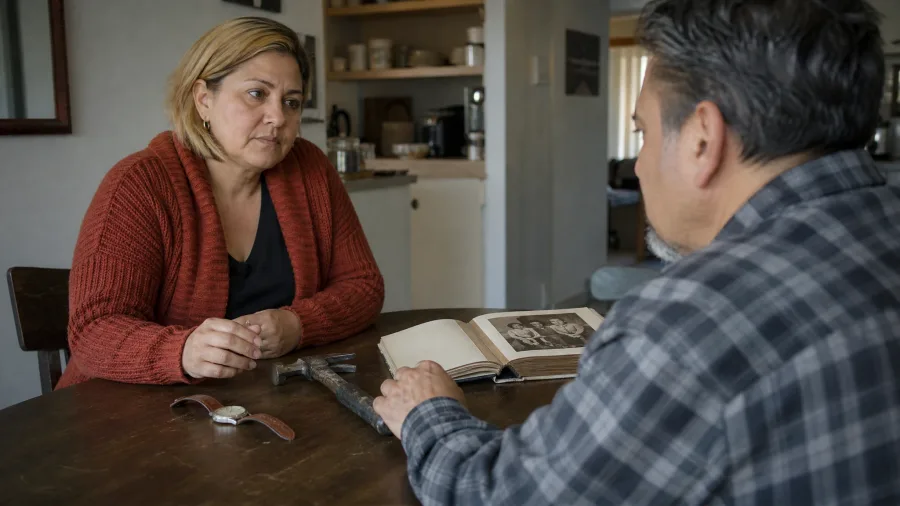
You stop dividing by price and start dividing by story. Silence has already let each person's assumptions harden, and the assumptions that attach to objects cut deepest, because the watch can stand for the parent, the tools for a working life, the albums for a family history nobody wants to lose.
Ten dollars at a resale counter buys almost nothing here, yet the child who wanted the watch will not be soothed by an even share of the house. A market split settles dollars and leaves meaning untouched. One sibling offers cash for the tools; two others argue over which albums go where; the document counts price while the family counts memory.
Say it plainly, before anyone gets attached. "Before we divide anything, I want each of us to write down the two things that matter most to us and why." Then: "Let's take turns choosing, oldest to youngest, one item at a time." Then: "Whatever we agree goes on a signed list the attorney attaches to the will." Write the reasons down alongside the items so the choices can be explained later.
Keep the list where everyone can see it and revisit it if someone changes their mind before the parent dies.
🗓️ The conversation before the signature
Inventory the estate
List the house, savings, and the specific contents — watch, tools, albums — and note any gifts over the last decade.
Name the flashpoints
Mark which of the eight patterns apply: secret gifts, unpaid care, verbal promises, vague bequests, executor choice, outdated will, secrecy, or sentimental items.
Hold a short family meeting
Bring the parent and all three children together, share the plan's logic, and let each person name one thing that matters.
Write down the decisions
Record the personal-property list, any care agreement, and the reasons for the executor choice in a signed document.
Take it to an attorney
Have a local estate attorney review the will, the backup executor, and the state's signing rules before anyone signs.
Frequently Asked Questions
Does an equal split automatically mean a fair split?
No. An equal split divides the final assets evenly, but it ignores the $30,000 gift one child already received and the two years of care another provided. The document records shares, not the history that makes those shares feel fair or unfair.
Should parents tell their children what the will says?
They should share the logic of the plan, even if not every dollar. Secrecy lets each sibling build a private assumption, and a surprise at the reading feels like deception. A family meeting or a short letter does most of the work.
Can a verbal promise about the house be enforced?
Usually not. A spoken promise is hard to prove and often conflicts with the written will. If a promise exists, raise it with the parent present and ask for written clarification — either an updated will or a clear statement that the split stays equal.
Who should be the executor?
Choose for organization and communication, not proximity. The nearby child may already handle care, but the executor needs to manage paperwork and family suspicion. Name a backup executor and discuss the role before the signing.
How often should a will be reviewed?
Review it after any death, birth, marriage, divorce, move, estrangement, or major health change, and at least every three years. The six-year-old will in this family still reflects the old family, not the current one.
The Conversation That Has to Happen Before the Signature
A will cannot fix a family that has never talked. An equal split will not correct the undocumented $30,000 gift, or the two years of care no one acknowledged, or a watch and a set of tools with no name on them, or a backup executor that was never named, or assumptions that have sat untouched for six years.
So start with the inventory: the house, the savings, the contents, written down. Name the flashpoints that fit. Then hold a short family meeting with the parent in the room, before anyone drafts or revises anything. After that, a local estate attorney or your state bar handles the legal steps, because signing, witnesses, probate, personal-property lists, and revoking old versions vary by state.
Go back to the equal split for a moment. On paper it divides property equally, and it always will. What decides whether it feels fair is the history standing behind it. A will can divide assets. Only the conversation divides meaning.
Name the flashpoint before the ink dries
Pick the one pattern your family already recognizes, and put the conversation on the calendar this week. The will can wait; the talking cannot.

