

Black and navy can become more than wardrobe basics. After years of reaching for them because they feel polished, slimming, familiar, and easy to match, a bright sweater or colorful jacket can suddenly feel like far too much.
That does not mean women over 50 need a wardrobe full of bold shades to look current. Color works best when it feels connected to the clothes you already trust, rather than like a completely new version of you.
Building style confidence over 50 can start with one softened shade, one accessory, or one colored layer worn with your usual dark basics.
The goal is not to stop wearing black and navy. It is to make them the foundation for a little more color.
Black and Navy Feel Safe Because They Remove Decisions
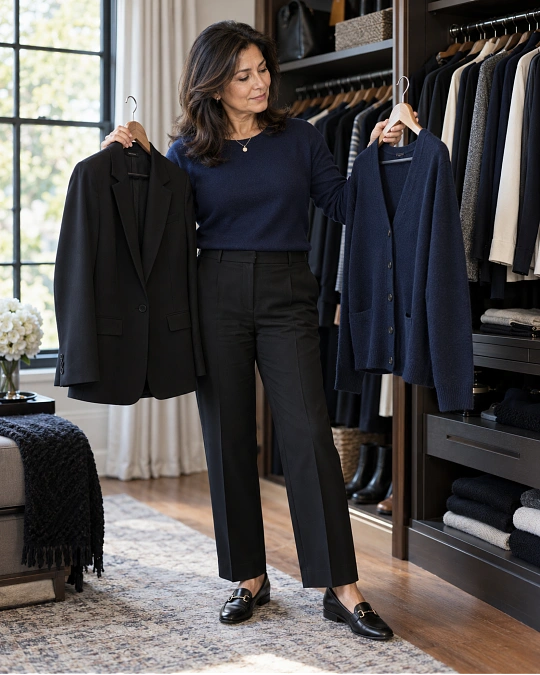
A mostly dark wardrobe makes mornings easy. Black trousers work with a black knit, navy jeans work with almost every neutral top, and nothing feels particularly risky.
Color introduces another decision: Does this shade suit me? Is it too bright? What do I wear with it? Will I still feel like myself?
The easiest answer is to stop treating color as the opposite of a neutral wardrobe. Instead, think of it as one additional ingredient.
You can still wear the black trousers, navy blazer, dark denim, loafers, and simple shirts you already love. Color simply changes one part of the equation.
Some older style rules also make color seem harder than it needs to be.
| Old Rule | What Works Better Now |
|---|---|
| Bright colors should be saved for special occasions | A colored knit or shirt can work perfectly for an ordinary Tuesday |
| Black must be replaced to make a wardrobe more interesting | Keep black and add one softer or richer shade beside it |
| Every color in an outfit has to match | Colors only need to look balanced together |
| Wearing color means making a statement | Muted teal, burgundy, sage, rust, or dusty blue can feel very understated |
| You need to know your exact color season first | Start by noticing which shades make your face look fresh and which make you feel comfortable |
There is no prize for wearing the boldest color in the room. A successful change is simply one you actually want to wear again.
Start With Colors That Behave Almost Like Neutrals

Going straight from head to toe navy into electric orange can make color feel like a costume.
A gentler approach is to choose shades with enough depth to sit comfortably beside black, navy, gray, cream, denim, or camel.
Good bridge colors include:
- Burgundy with black trousers, denim, charcoal, or cream
- Forest or olive green with navy, beige, white, or dark denim
- Deep teal with navy trousers, jeans, or gray
- Rust with cream, chocolate brown, denim, or navy
- Dusty blue with charcoal, cream, or navy
- Plum with black, gray, soft beige, or denim
These colors have personality without demanding attention.
If you normally wear a navy crewneck with straight leg jeans, try the exact same outfit with a muted teal knit. Nothing else has to change.
Color note: When a shade feels intimidating on a large garment, test it on a smaller piece first. A scarf, camisole, handbag, shoe, or cardigan gives your eye time to adjust.
Let Your Face Decide Where the Color Should Go

Not every color has to sit directly beside your face.
This matters because women sometimes try one bright blouse, dislike what they see in the mirror, and decide that color itself is the problem. Often, it is simply that particular shade or placement.
If a strong mustard yellow feels overwhelming as a sweater, it might work beautifully as a handbag. If emerald green makes your complexion look lively, bring it closer with a blouse, scarf, cardigan, or earrings.
Natural daylight is useful here. Hold different tops or fabrics beneath your face and look at your skin before looking at the garment.
A good color often makes your complexion appear clearer and your eyes more noticeable. A less helpful shade may make shadows or redness seem stronger.
You do not need a complicated color system to notice the difference.
Another useful trick is to separate a difficult color from your face. Wear the bright skirt with a cream blouse, colored trousers with a navy knit, or a vivid bag with an otherwise neutral outfit.
This lets you enjoy color without asking it to do all the work.
Use One Colored Piece and Keep Everything Else Familiar
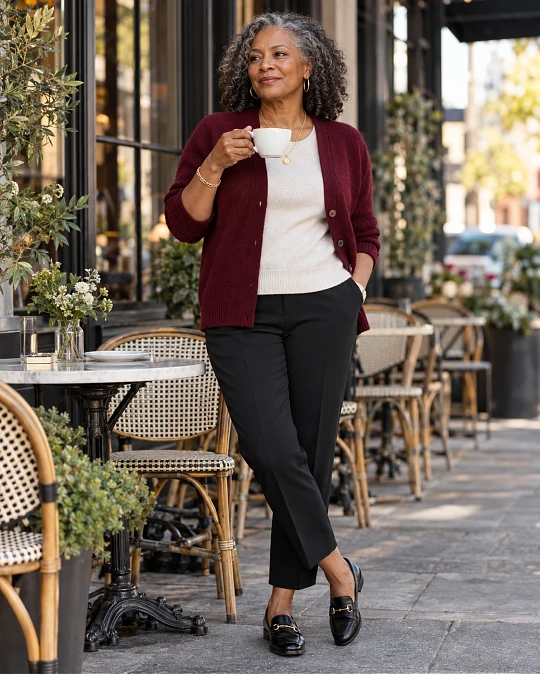
When you are learning to wear color again, repetition is helpful.
Choose one colored piece and surround it with the shapes and neutrals you already know. The outfit still feels like your personal style, just with a slightly different focal point.
Here are a few formulas that work without requiring an entirely new wardrobe.
| Occasion | Easy Color Formula | Why It Works |
|---|---|---|
| Errands or coffee | Dark jeans + burgundy knit + simple sneakers | The jeans keep the richer color casual |
| Lunch with friends | Navy trousers + soft blue blouse + loafers | Similar color families make the change feel subtle |
| Smart casual day | Black trousers + ivory top + forest green cardigan | The cardigan adds interest without changing the base |
| Evening dinner | Black dress + deep teal jacket + simple metallic earrings | One colored layer breaks up the black while keeping the look polished |
| Travel day | Navy jeans + gray tee + rust cardigan + comfortable flats | The dark base stays practical while the knit adds warmth |
The easiest formula to remember is:
Formula: familiar dark base + one colored piece + quiet accessories.
Once that feels natural, you can experiment with a second shade. There is no reason to rush.
This approach also makes style confidence over 50 easier to build because you are changing one decision at a time instead of rebuilding your identity every morning.
Fabric and Proportion Can Make Color Feel More Sophisticated
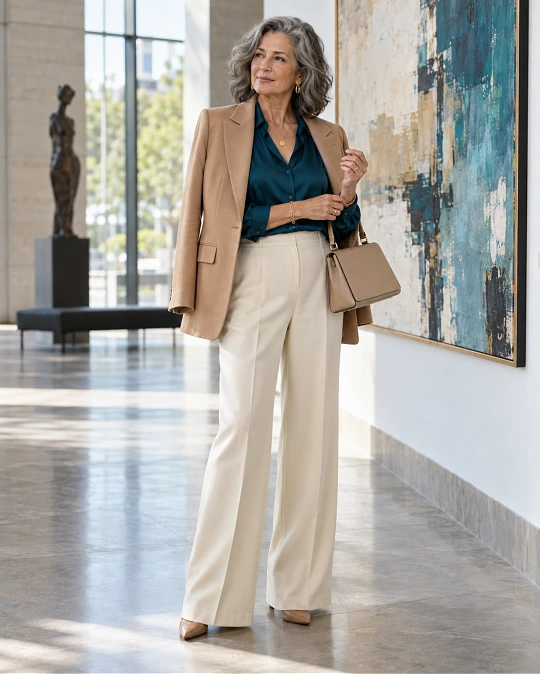
Color does not exist separately from the garment.
A bright pink oversized sweatshirt creates a very different effect from a raspberry silk blouse or fine knit cardigan. The shade may be similar, but fabric, shape, and proportion change how polished it feels.
If you prefer understated clothes, look for color in fabrics you already enjoy wearing. Fine knits, linen shirts, cotton poplin, soft wool, suede, satin, and structured jackets often make richer shades feel more intentional.
You can also balance a colored garment with a cleaner silhouette. A loose cobalt blouse may feel more controlled with straight black trousers than with equally voluminous bottoms.
Here are a few easy adjustments when color feels slightly wrong.
| Instead of This | Try This |
|---|---|
| Bright top with several colorful accessories | Let the top be the only strong color |
| Bold oversized top with very loose bottoms | Pair it with straighter or cleaner trousers |
| Buying a bright shade in an unfamiliar silhouette | Try the color in a cardigan, shirt, or knit shape you already wear |
| Matching shoes, bag, scarf, and top exactly | Repeat the color once at most, or keep accessories neutral |
| Wearing a shade you dislike because it is trendy | Choose a related tone that feels more natural on you |
This is where dressing over 50 becomes much more personal. You can borrow a current color without borrowing the entire trend around it.
Build a Small Color Palette Instead of Collecting Random Shades
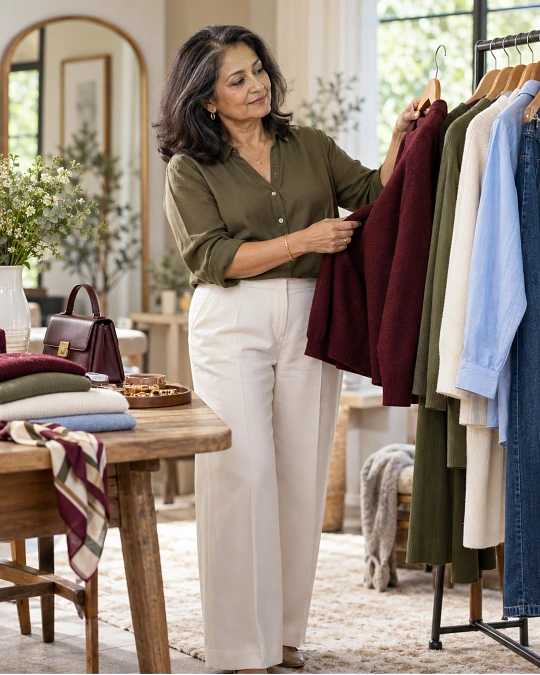
A wardrobe becomes easier when its colors know how to work together.
Rather than buying isolated colorful pieces because they look attractive on the hanger, choose two or three accent shades that cooperate with your existing neutrals.
For example, someone with plenty of navy, denim, ivory, and gray might build around dusty blue, berry, and forest green.
Someone with a mostly black, cream, camel, and chocolate wardrobe might prefer burgundy, olive, rust, or muted coral.
Repeating these shades has another advantage. A burgundy cardigan can work with several trousers. A coordinating scarf works with your coat. A handbag suddenly belongs with more than one outfit.
That repetition creates a wardrobe that looks considered without requiring perfect matching.
Budget-friendly swap: Before shopping, look through scarves, jewelry, cardigans, handbags, and shirts you already own. You may already have the beginnings of a color palette hiding behind your black basics.
Try the Five-Minute Color Test Before Buying Anything
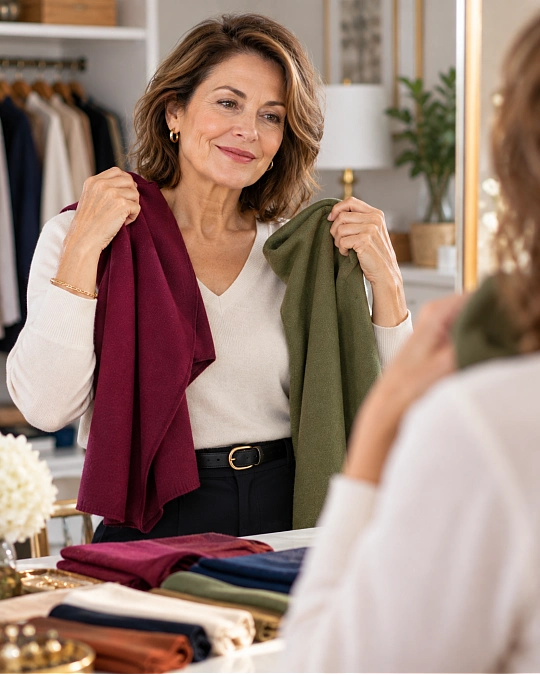
You can start today without buying a single piece.
Take one outfit you wear often, such as black trousers with a cream shirt or dark jeans with a navy knit. Put it on exactly as usual.
Then add one colored item from your wardrobe.
It might be a scarf, cardigan, jacket, necklace, handbag, shoe, or shirt.
Look at the full outfit rather than staring only at the colorful piece. Sometimes a shade feels dramatic when you hold it in your hand but completely normal once it becomes part of an outfit.
If it still feels too loud, reduce the amount of color rather than abandoning it.
A bright blouse can become a camisole under a navy blazer. A patterned scarf can be replaced with solid burgundy. Colored trousers can become a handbag instead.
The point is to find your own level of color, not somebody else’s.
Frequently Asked Questions
What colors look good on women over 50?
There is no universal color that works for every woman over 50. Skin tone, hair, contrast, personal taste, and even lighting can change how a shade looks.
Instead of choosing colors by age, test richer or softer versions of shades you already like and notice which ones make your complexion look fresh.
Can I still wear black after 50?
Absolutely. Black can remain one of the most useful colors in your wardrobe.
If an all black outfit feels too severe, soften it with cream, camel, burgundy, denim, a textured knit, jewelry, or a colored jacket.
How do I start wearing bright colors if I am used to neutrals?
Start small. Wear one colorful piece with an otherwise familiar outfit rather than combining several new colors at once.
A knit, blouse, scarf, handbag, or pair of flats is often easier than starting with a bright coat or dress.
Should women over 50 avoid very bright colors?
No color needs to be avoided simply because of age. The better question is whether the shade suits your taste and works with the rest of your wardrobe.
If neon or highly saturated shades feel too strong, try a deeper or softer version such as raspberry instead of hot pink or teal instead of vivid turquoise.
How many colors should I have in my wardrobe?
You do not need a large number. Two or three accent colors alongside dependable neutrals can create dozens of combinations.
Keeping a smaller palette also makes shopping easier because you can quickly see whether a new piece will work with what you already own.