
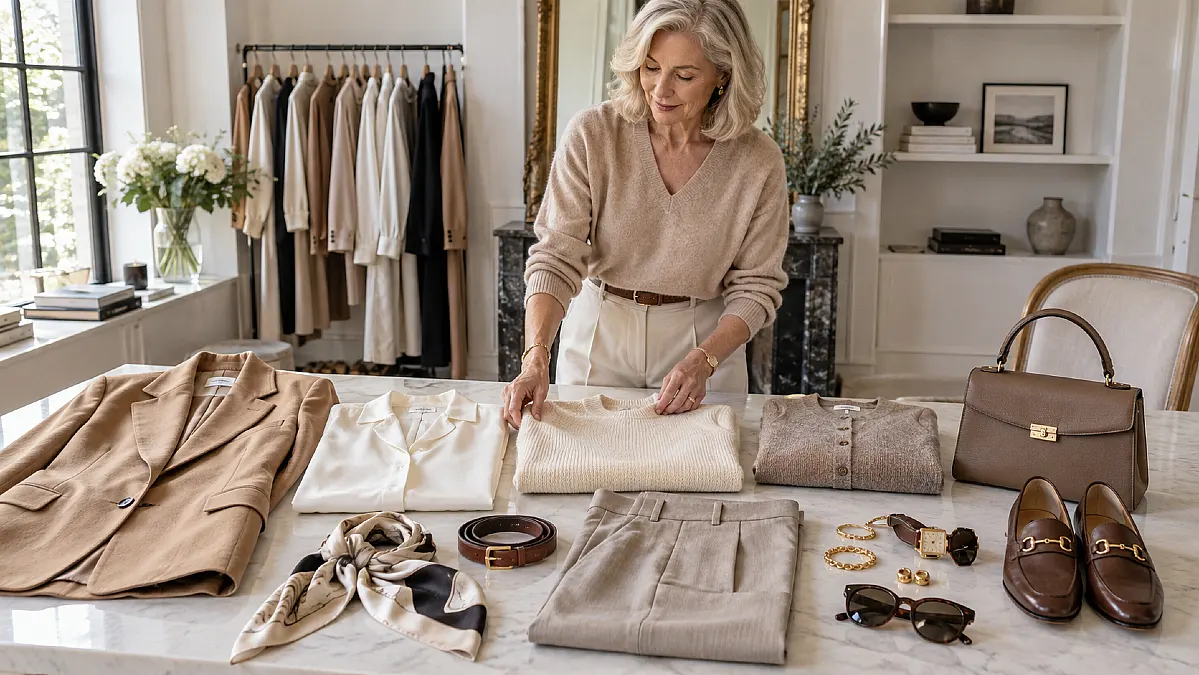
Quiet luxury can look expensive in photos, which makes it easy to assume the style requires cashmere coats, designer handbags, and a wardrobe full of luxury labels. It does not.
For women over 50, the bigger challenge is finding clothes that feel polished without becoming stiff, boring, or too formal. You may also be working with pieces that fit differently than they once did or wondering which newer trends are worth paying attention to.
The good news is that stylish outfits for women over 50 can capture the same quiet-luxury mood using good proportions, thoughtful fabrics, simple colors, and clothes you may already own. The goal is refinement, not a shopping spree.
Quiet Luxury Looks Expensive Because the Details Are Calm
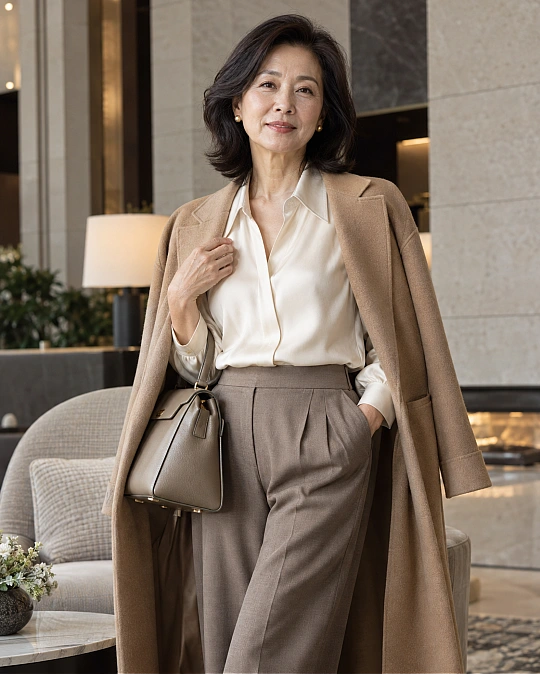
Quiet luxury is less about owning expensive things and more about removing visual noise.
Instead of large logos, busy prints, obvious trend pieces, and complicated layering, the look relies on clean shapes, controlled color, good fabric movement, and pieces that sit properly on the body.
That distinction matters when you are shopping on a budget. A $40 pair of trousers that hangs beautifully can look far more refined than a much more expensive pair that pulls across the hips or collapses around the ankles.
The same applies to jackets, knitwear, shirts, and dresses. How the garment sits often matters more than the label sewn inside it.
Quiet luxury also tends to leave breathing room around an outfit. You might wear cream trousers, a navy knit, simple loafers, and small gold earrings rather than adding a printed scarf, statement necklace, embellished bag, and decorative belt all at once.
That restraint creates much of the expensive-looking effect.
Let Fit and Fabric Do the Work Before You Buy Anything New
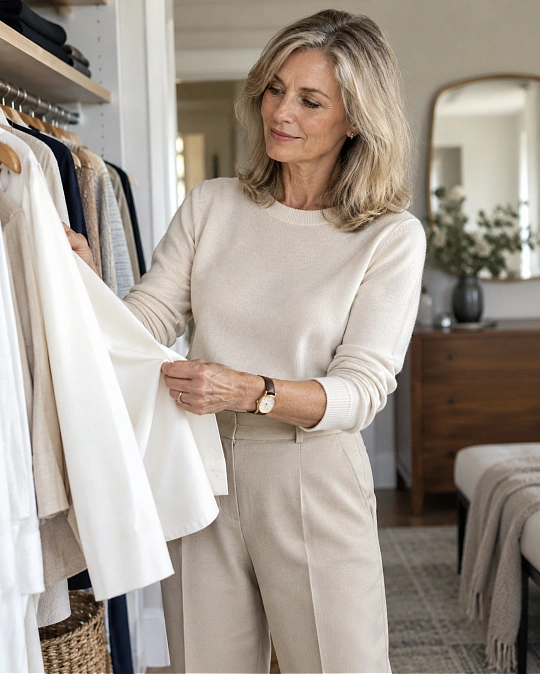
Before adding quiet-luxury pieces to your wardrobe, look closely at what you already have.
A plain white shirt, dark straight-leg trousers, soft crewneck knit, simple blazer, or clean leather loafer may already fit the look. The question is not whether the piece is fashionable enough. The question is how it fits, hangs, and works with everything around it.
Clothes tend to look more polished when fabric has enough substance to hold its shape without becoming rigid.
A blazer that collapses through the shoulders can make an outfit feel tired. One with a lightly structured shoulder and clean lapel creates definition even over a basic T-shirt.
The same principle works with trousers. Fabric that skims instead of gripping creates a longer, calmer line.
Here is a useful fabric and fit guide when you are assessing pieces you already own or shopping for replacements.
| Piece | What to Look For | Why It Works |
|---|---|---|
| Trousers | Smooth waistband, clean front, fabric with some weight | Creates a longer line without clinging |
| Knitwear | Fine or medium knit, soft structure, tidy cuffs | Looks refined without needing decoration |
| Shirt | Crisp cotton or fluid fabric with a clean collar | Adds structure around the face and neckline |
| Blazer | Light shoulder definition, simple lapels, good sleeve length | Gives inexpensive basics a more finished shape |
| Skirt | Fluid midi shape or clean straight cut | Moves well without adding unnecessary bulk |
Fit note: Do not let the size on the label decide whether something belongs in your wardrobe. The correct size is the one that gives the garment the shape it was designed to have.
If a jacket looks much better one size up with the waist lightly altered, that is the better choice.
Build the Look Around Soft Neutrals Instead of Matching Everything
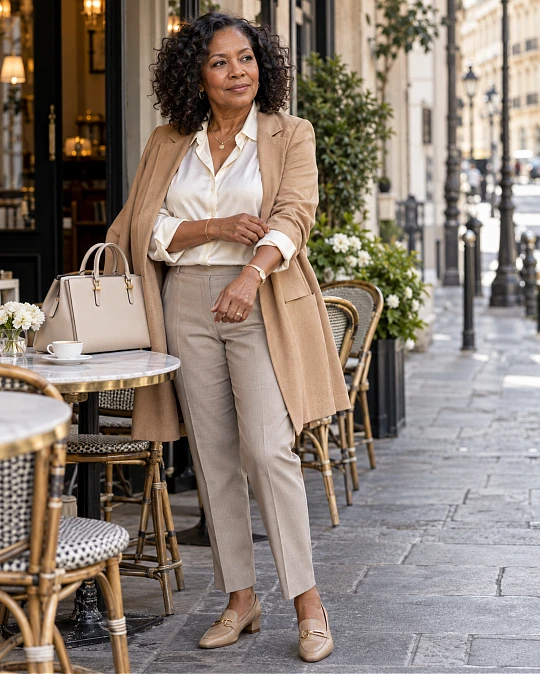
Beige is often treated as the unofficial uniform of quiet luxury, but you do not need to dress head to toe in oatmeal.
Navy, ivory, charcoal, chocolate brown, camel, olive, cream, soft gray, and black all work beautifully. Deep burgundy or muted blue can also sit comfortably within the same aesthetic.
What matters more is controlling the number of competing colors.
Try using two main shades with perhaps one small accent. Chocolate trousers with a cream knit and dark brown loafers will usually look more polished than the same trousers paired with several unrelated colors.
Tonal dressing is another useful shortcut.
You might combine an ivory blouse with stone trousers and a warm beige jacket. The colors do not need to match exactly. Slight differences actually make the outfit more interesting.
This approach is especially useful when building a capsule wardrobe over 50 because neutral pieces can move between workdays, lunches, travel, errands, and evenings without requiring a separate outfit for every situation.
You can also use your strongest colors close to your face. Quiet luxury does not mean washing yourself out for the sake of a trend.
Make Ordinary Wardrobe Basics Look More Refined
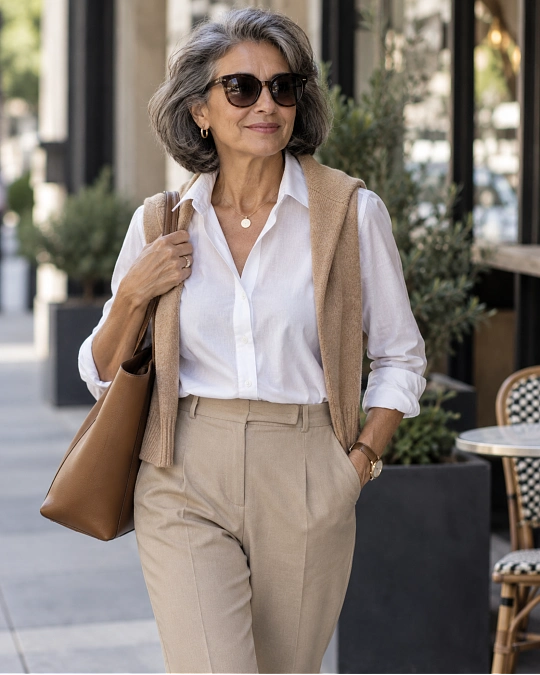
You do not need specialty pieces to create quiet-luxury outfits. Most of the effect comes from how familiar clothes are combined.
A T-shirt looks more polished when it has a substantial neckline, a smooth finish, and enough room through the torso. Jeans look more refined when the wash is clean and the hem works with the shoes.
Try building around pieces such as:
- Straight or softly wide trousers with a clean waistband
- Dark straight-leg jeans without heavy distressing
- A crisp or fluid button-front shirt
- A fine-knit crewneck, polo knit, or V-neck sweater
- A simple midi skirt or column-style dress
- A softly structured blazer or longline cardigan
- Loafers, ballet flats, sleek sneakers, or low ankle boots
You do not need all of them.
Choose the shapes you already enjoy wearing and repeat them. That is much more useful than building a so-called luxury wardrobe filled with pieces that do not suit your daily life.
For example, a woman who rarely wears blazers may get far more use from a well-cut cardigan jacket or structured knit.
Comfort upgrade: Look for trousers with a little stretch, softer waistbands, lightweight jacket linings, and shoes with cushioned insoles. Comfort does not make an outfit less sophisticated.
Use Shoes, Bags, and Jewelry to Create a Cleaner Finish
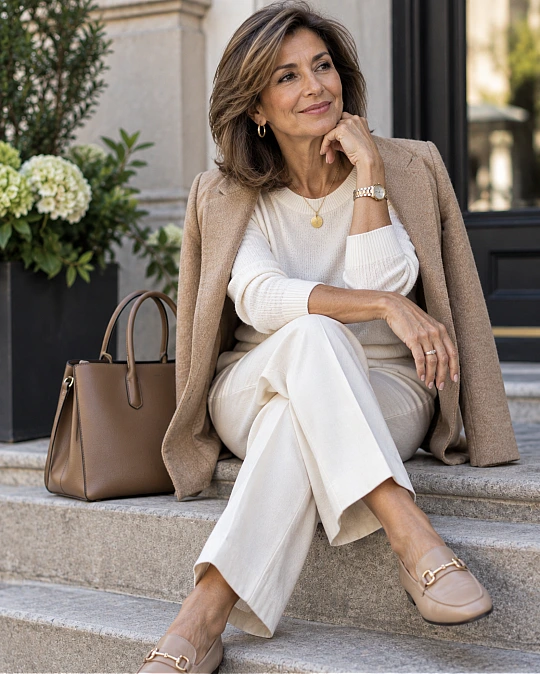
Accessories have a surprising amount of influence over quiet-luxury dressing.
You do not need a designer handbag. A simple bag with a clean shape, minimal hardware, and a tidy surface often works better than something covered in obvious branding.
Shoes benefit from the same restraint.
A sleek loafer, pointed or almond-toe flat, clean leather sneaker, simple slingback, or low boot can finish stylish outfits for women over 50 without competing with the clothes.
Jewelry can stay small but visible. Think hoops, simple studs, a watch, slim bangles, a short chain, or one sculptural pendant rather than several statement pieces fighting for attention.
The useful shift is from decoration to intention.
This comparison makes the difference easier to spot.
| Instead of Relying On | Try This Instead |
|---|---|
| Large visible logos | Clean shapes and subtle hardware |
| Several statement accessories | One noticeable piece plus quieter extras |
| Very distressed footwear | Simple shoes with a neat finish |
| Bags covered in buckles and charms | Structured or softly structured bags |
| Constant trend accessories | A few pieces you repeat often |
None of these are strict rules.
If you love a bold bag or oversized necklace, wear it. The quiet-luxury approach simply works best when you allow that item to be the focus instead of surrounding it with several other focal points.
Fix the Small Details That Can Make a Simple Outfit Feel Cheap
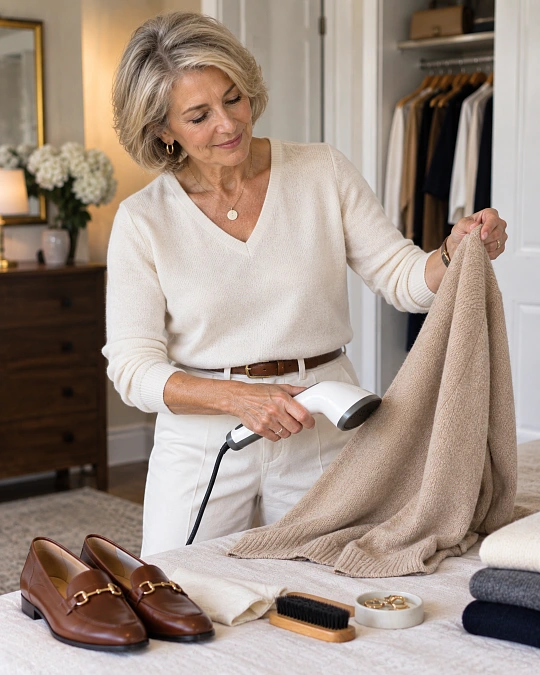
Budget clothes do not automatically look inexpensive. Small finishing details usually have more influence.
Pilling on knitwear, dragging trouser hems, twisted seams, wrinkled collars, scratched shoes, and loose buttons can distract from an otherwise lovely outfit.
That is useful news because many of these problems cost very little to fix.
A fabric shaver can refresh knitwear. Replacing flimsy buttons can change the feel of a coat or cardigan. Shortening trousers can improve the entire silhouette.
If a simple outfit still feels slightly wrong, check these areas before buying something new:
- If trousers bunch heavily at the shoe: try a shorter hem or a shoe with a different height.
- If a sweater looks shapeless: use a small front tuck or choose a slightly shorter length.
- If a blazer feels boxy: push or alter the sleeves before replacing the whole jacket.
- If an outfit feels too plain: add texture through leather, suede, a soft knit, or simple jewelry rather than adding more color.
Tailoring deserves particular attention here.
You do not need to tailor everything you own. Save alterations for hardworking pieces such as trousers, jackets, skirts, and dresses that you plan to wear regularly.
The better the cost-per-wear, the easier that expense is to justify.
Use One Quiet-Luxury Formula When You Do Not Know What to Wear
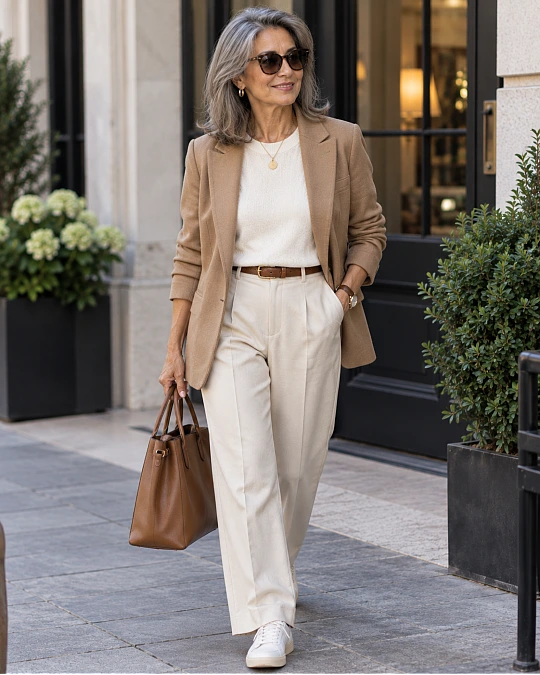
One reason this style works so well for everyday outfits for women over 50 is that it can become a personal uniform rather than another set of fashion rules.
Start with three parts.
Formula: clean base + polished layer + simple finishing shoe.
That might mean straight trousers + fine-knit sweater + loafers.
It could just as easily mean dark jeans + white shirt + ballet flats, or a column dress + long cardigan + low boots.
Here are a few versions you can keep in rotation.
| Occasion | Outfit Formula | Why It Works |
|---|---|---|
| Errands or coffee | Dark jeans + cream knit + leather loafers | Comfortable, simple, and pulled together |
| Lunch with friends | Fluid trousers + tucked shirt + ballet flats | Soft proportions keep it relaxed but polished |
| Smart casual event | Column dress + blazer + low slingbacks | The long line looks clean while the jacket adds structure |
| Travel day | Straight trousers + T-shirt + cardigan jacket + sleek sneakers | Easy layers keep the outfit practical without looking sloppy |
Once you know your preferred version, change only one piece at a time.
Swap the cream sweater for navy. Trade loafers for boots. Add a scarf in cooler weather or roll the shirt sleeves when it is warm.
That consistency is what turns a collection of wardrobe basics into a personal style.
Frequently Asked Questions
Can you do quiet luxury without buying expensive clothes?
Yes. Quiet luxury depends heavily on fit, fabric, color coordination, and restraint rather than price alone.
Start with simple pieces you already own, then improve the weakest link when something truly needs replacing.
What colors make clothes look more expensive?
Cream, navy, camel, chocolate brown, charcoal, olive, black, and soft gray are easy to combine because they create calm color palettes.
But you do not have to avoid color. Deep red, muted green, dusty blue, or another favorite shade can work beautifully when the rest of the outfit stays simple.
What fabrics work best for quiet-luxury outfits?
Cotton poplin, linen blends, wool blends, fine knits, smooth denim, soft twill, viscose blends, and fabrics with enough weight to drape cleanly can all work.
Fiber content matters less than how the fabric feels, hangs, wrinkles, and holds its shape.
Does quiet luxury work for casual outfits?
Very well. Dark jeans, a good T-shirt, a cardigan jacket, and clean loafers can capture the look without feeling dressed up.
The key is keeping the shapes intentional and avoiding too many competing details.
How can I make inexpensive clothes look more polished?
Start with fit. Adjust hems, remove pilling, press collars, clean shoes, and keep bags in good condition.
Then simplify the outfit so your best pieces have room to stand out.