Clothes can suddenly feel unfamiliar when your body changes, even if your sense of style has not changed at all. A favorite pair of jeans may pull differently, a fitted jacket may feel restrictive, and outfits that once felt easy can leave you second-guessing yourself.
That frustration can make dressing over 50 feel far more complicated than it needs to be. The problem is often not your body. It is that the proportions, fabrics, and fits in your wardrobe may still be serving an earlier version of it.
You do not need to hide yourself or replace everything you own. A few thoughtful changes can rebuild style confidence over 50 while helping your clothes feel comfortable, modern, and genuinely like you again.
Stop Dressing for the Body Your Wardrobe Remembers
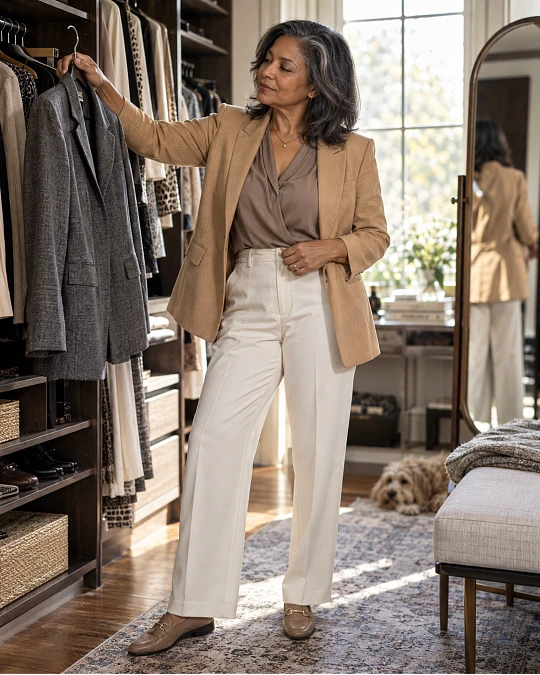
One of the hardest wardrobe shifts happens when you keep judging new outfits by how old clothes used to fit. You may automatically reach for the same rise, jacket length, neckline, or trouser shape because it once worked beautifully.
That does not mean those pieces are suddenly forbidden. It simply means your best proportions may have changed, and your wardrobe needs permission to change with them.
Start judging clothing by what happens when you put it on today. Does the fabric fall smoothly? Can you sit comfortably? Does the outfit create a shape you enjoy instead of making you tug, pull, or adjust?
This mindset is far more useful than trying to squeeze yourself back into a familiar formula.
Here is a healthier way to rethink a few common style rules.
| Old Rule | What Works Better Now |
|---|---|
| Keep buying your usual size | Choose the size that gives the cleanest fit today |
| Loose clothes hide everything | Use relaxed pieces with some visible structure |
| Fitted clothes always look smarter | Choose skim rather than squeeze |
| Dark colors are always more flattering | Use color wherever it makes you feel brighter |
| Certain styles are “too young” | Judge the cut, fabric, and styling instead of the label |
A clothing size is only information printed on a tag. The way a garment hangs on your body tells you far more.
Start With Clothes That Fit Without Negotiation

A confident wardrobe starts with pieces that do not demand constant attention. Waistbands should not dig when you sit, shirts should not pull across the bust, and sleeves should let you move normally.
When clothing fits comfortably, your posture often changes too. You stop adjusting your top or wondering if your trousers are slipping, which makes the entire outfit feel more natural.
Try on your most-used trousers, jeans, jackets, knitwear, and dresses before buying anything new. Keep the pieces that feel good and identify exactly what is bothering you about the others.
You might discover that the problem is surprisingly specific:
- A trouser rise sits several inches too low for your preferred shape.
- A jacket ends at the widest point of your hip.
- A shirt is roomy everywhere except across the bust.
- A dress fits the torso but feels restrictive through the arms.
- A waistband works standing up but becomes uncomfortable while sitting.
These details are useful because they tell you what to search for next.
Fit note: If you are between sizes, choose the garment with the better fit through the hardest area to alter. A tailor can often refine a waist or sleeve more easily than completely rebuild a shoulder or hip.
Let Fabric Skim Rather Than Cling or Collapse
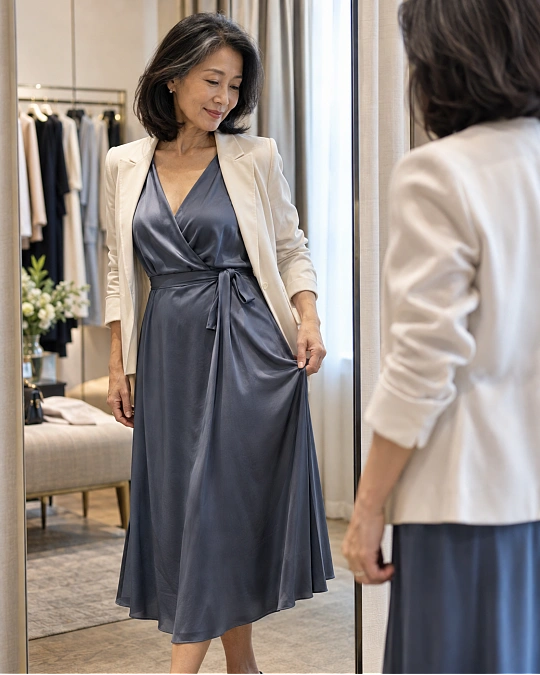
Fabric becomes increasingly important when you want clothing to feel polished without feeling stiff. Very thin fabric can cling to every layer underneath, while extremely heavy material can add bulk where you do not want it.
Look for fabrics with enough weight to hold a clean line while still moving with you. Soft denim, ponte, substantial jersey, fine-gauge knits, linen blends, and fluid woven fabrics can all work well depending on the garment.
Stretch is helpful when it supports movement rather than replacing proper fit. If a garment only feels comfortable because the fabric is stretched to its limit, trying the next size or another cut may give you a cleaner silhouette.
This quick guide can help when you are checking fabrics in a fitting room.
| Garment or Fabric | What to Look For and Why |
|---|---|
| Jeans | Denim with a little stretch that moves without sagging |
| Trousers | Fabric with enough weight to fall cleanly from the hip |
| Knit tops | Fine or medium knits that skim instead of gripping |
| Dresses | Fluid fabrics with movement and enough structure at seams |
| Jackets | Soft tailoring that defines the shoulder without stiffness |
Try this: Sit, walk, bend your arms, and raise them while trying something on. Clothes should work during your real day, not only while you stand still in front of a mirror.
Use Proportion to Create Shape Without Hiding Yourself
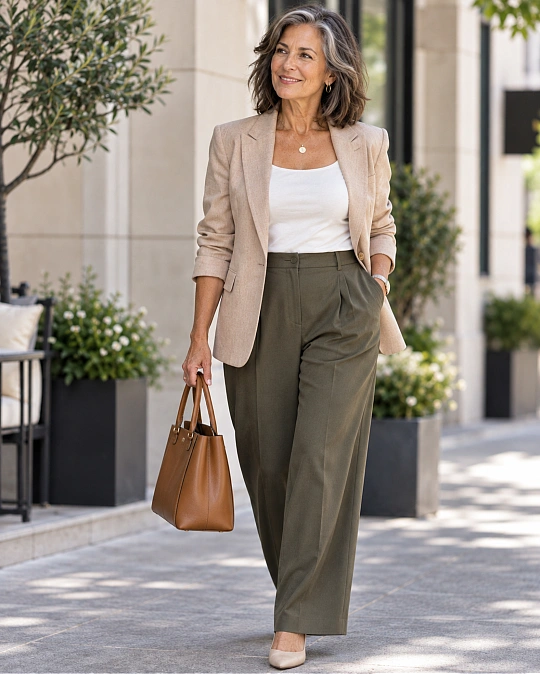
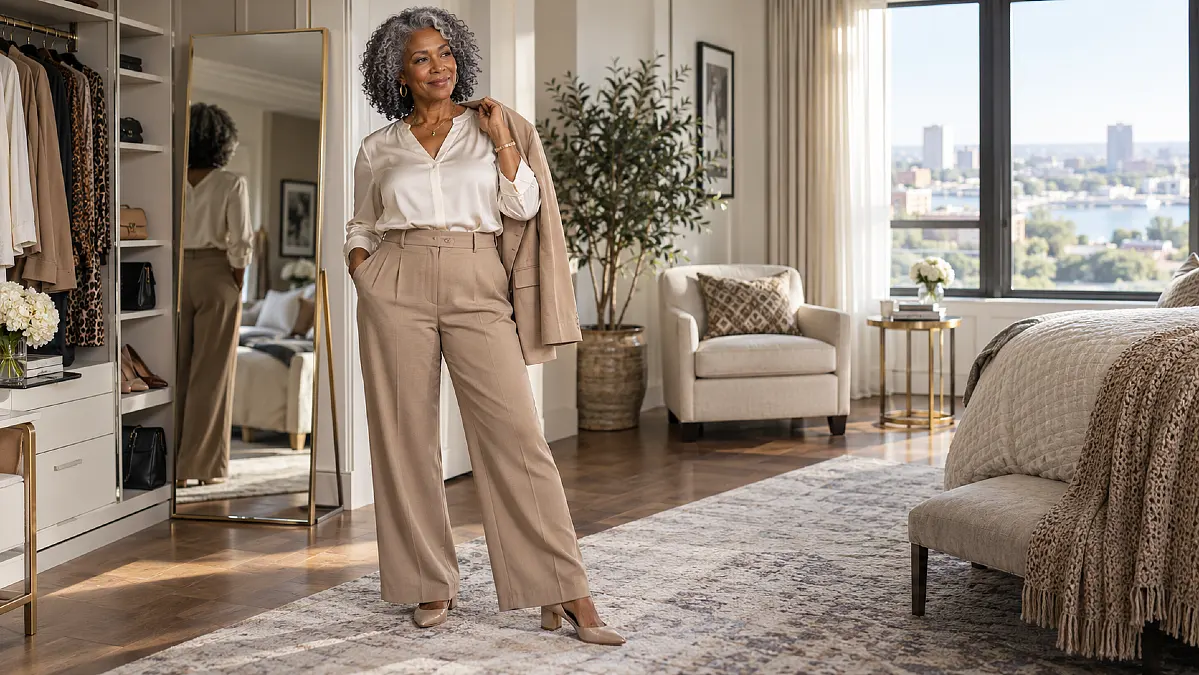
When outfits begin to feel frumpy, the issue is often proportion rather than age, weight, or body shape. Too many long, loose pieces worn together can remove definition from an outfit.
The opposite can also happen. Several fitted pieces worn together may make you feel overly exposed or restricted when you simply wanted to look polished.
A useful approach is to balance volume with structure.
If you wear wide-leg trousers, try a neater knit, tucked shirt, or shorter jacket. If you prefer an oversized shirt, pair it with straight jeans or a trouser that gives the lower half a cleaner line.
Length matters as much as width. A jacket that ends slightly higher or a top with a partial tuck can change an outfit without requiring anything tight.
You can also create definition without emphasizing the waist. An open jacket, vertical shirt placket, long necklace, contrasting layer, or clean trouser crease can guide the eye through the outfit.
There is no single “correct” silhouette for women over 50. The useful question is whether your outfit has enough contrast between relaxed and structured elements to look intentional.
Build a Personal Formula Around the Clothes You Actually Wear
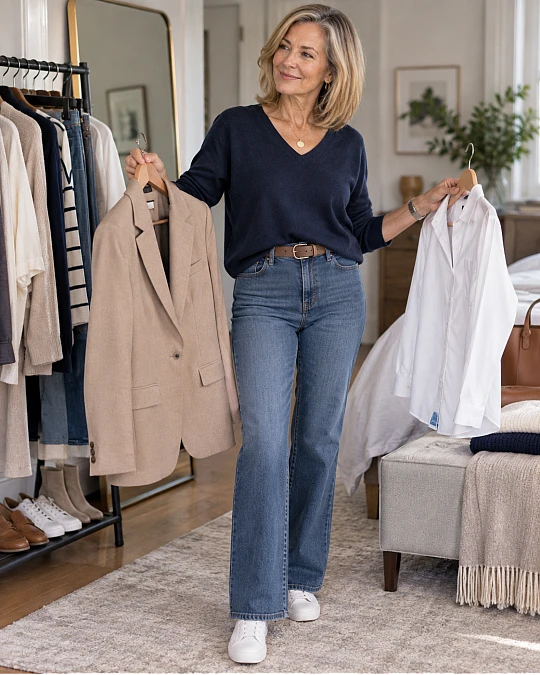
The easiest way to rebuild style confidence over 50 is not to create dozens of new outfits. It is to find one reliable combination that already feels good, then make small variations.
Your personal formula might begin with straight jeans and a knit top. Another woman may feel most herself in fluid trousers and a button-front shirt.
Neither formula is better. What matters is that the proportions work, the pieces are comfortable, and you can repeat the structure without thinking hard every morning.
Here are a few formulas that work across ordinary life.
| Occasion | Pieces | Why It Works |
|---|---|---|
| Errands | Straight jeans + relaxed knit + clean sneakers | Comfortable base with a simple, neat shape |
| Lunch | Fluid trousers + tucked blouse + loafers | Soft movement balanced by a defined waistline |
| Casual workday | Dark jeans + knit top + soft blazer | Familiar basics gain structure from the jacket |
| Travel | Pull-on trousers + fine knit + light jacket + supportive shoes | Easy movement without looking overly sporty |
| Dinner | Midi dress + cropped jacket + low heel or sleek flat | One clean silhouette with a defined outer layer |
Think of these as frameworks rather than uniforms you must follow exactly.
Change the neckline, color, shoes, jewelry, or outer layer while keeping the proportions that already make you feel good. That is how a capsule wardrobe over 50 becomes personal instead of restrictive.
Use Tailoring Where It Makes a Visible Difference
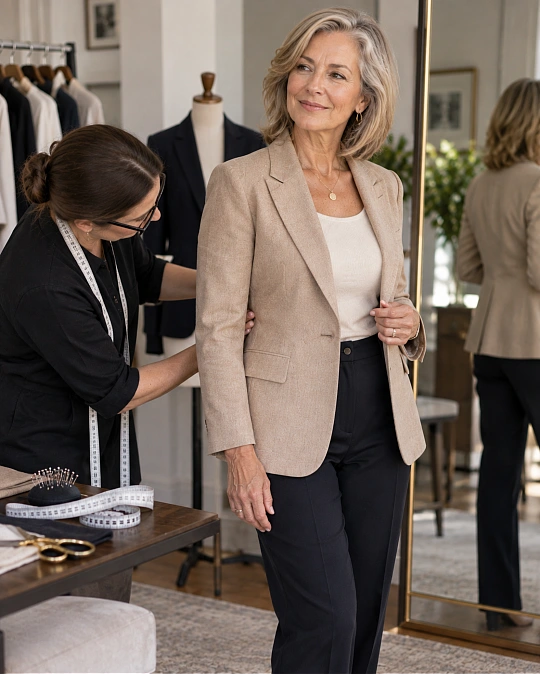
You do not need every garment tailored. But a small alteration can sometimes rescue an item that feels almost right.
Trouser hems, sleeves, jacket waists, and shirt lengths can often be adjusted without changing the character of the garment. Even moving a button can improve how a piece sits.
Tailoring is especially useful when your body proportions do not match standard clothing patterns. You may need more room in one area while needing less fabric somewhere else.
That is normal. Ready-to-wear clothing is produced around standardized measurements, not around one individual body.
Before giving away an expensive jacket or pair of trousers, ask whether the problem is the whole garment or one fixable area. Altering something you already own may offer better cost-per-wear than replacing it.
Make One Small Wardrobe Change Today
You do not need a shopping trip to begin dressing differently.
Choose one outfit you regularly wear and stand in front of a full-length mirror. Instead of asking whether you look thinner or younger, ask whether the outfit looks balanced, comfortable, and intentional.
Then change only one thing.
You might swap a long cardigan for a shorter jacket, replace tight jeans with a straighter pair, tuck part of your shirt, roll a sleeve, change the shoes, or add a more defined neckline.
Small adjustments teach you what works faster than buying an entirely new wardrobe.
The goal is not to disguise a changed body. It is to understand how your clothes can work with it now.
Frequently Asked Questions
How can I look stylish after 50 if my body has changed?
Start with fit rather than trends. Clothing that skims comfortably, creates balanced proportions, and allows natural movement will usually look more polished than something fashionable that pulls or requires constant adjusting.
Once you have a reliable base, add current touches through shoes, jewelry, color, denim shapes, or outerwear.
Should women over 50 wear loose or fitted clothes?
Neither is automatically better. A polished outfit usually combines some ease with some structure, such as relaxed trousers with a neat knit or an oversized shirt with straight jeans.
Choose pieces that follow your shape without gripping or overwhelming it.
How do I stop feeling frumpy after 50?
Check proportion before replacing your wardrobe. Long tops, roomy bottoms, bulky shoes, and oversized layers worn together can make an outfit feel heavier than intended.
Changing one length, adding structure, or showing a little more shape through the shoulder, wrist, ankle, or neckline can make a noticeable difference.
What clothes should I buy first after my body changes?
Begin with the pieces you wear most frequently. Well-fitting jeans or trousers, a comfortable knit or shirt, useful shoes, and one strong outer layer usually offer more value than buying special-occasion clothes first.
Build around real life rather than an imaginary lifestyle.
Do I need a whole new wardrobe after 50?
Usually not. Many existing pieces can still work once you identify better combinations, update proportions, or make simple alterations.
Replace items gradually when they repeatedly feel uncomfortable, difficult to style, or no longer suit how you want to dress.