

Winter dressing can become frustrating when staying warm starts to mean bulky layers, stiff fabrics, heavy shoes, and outfits that no longer feel like you.
Many women over 50 find that clothes they once relied on do not layer as comfortably anymore. Thick sweaters bunch under coats, trousers fight with boots, and practical winter pieces can make an outfit feel heavier than intended.
The answer is not a bigger closet. The most useful wardrobe essentials for women over 50 are pieces that layer easily, feel good for hours, and work together without much thought.
With the right fabrics, proportions, and repeatable combinations, you can build a winter wardrobe that feels warm, polished, modern, and genuinely useful.
Winter Essentials Should Earn Their Space in Your Closet
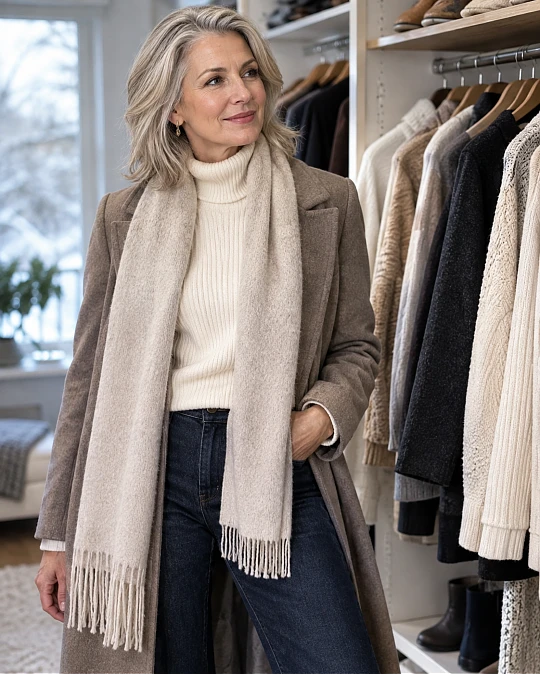
A winter essential is not simply something basic or neutral. It should solve a real dressing problem and work with several other pieces you already own.
A merino sweater that works under a coat, with jeans, and over a shirt earns more closet space than a dramatic knit that only works with one pair of trousers.
Fit matters just as much. Winter clothing already adds visual weight, so pieces with clean shoulders, controlled volume, and fabrics that drape instead of balloon usually make layering easier.
The best wardrobe essentials for women over 50 also make sense for your actual week. Someone working from home may need softer knit layers, while a woman commuting or traveling may get far more use from weather-friendly boots and a structured coat.
Fabric choice can make the difference between warmth and unwanted bulk. This quick guide helps narrow down what works well for everyday winter dressing.
| Winter Fabric | What to Look For and Why It Works |
|---|---|
| Merino wool | Fine, smooth knits that add warmth without thick layers |
| Cashmere or cashmere blends | Soft, lightweight warmth for sweaters and scarves |
| Cotton jersey | Comfortable for indoor base layers and casual outfits |
| Wool blends | Useful for coats and trousers when you want structure with warmth |
| Ponte knit | Holds its shape well in trousers while allowing comfortable movement |
You do not need every fabric in the table. Think about which one solves the problem you face most often, then build from there.
Start With Warm Base Layers That Do Not Add Bulk
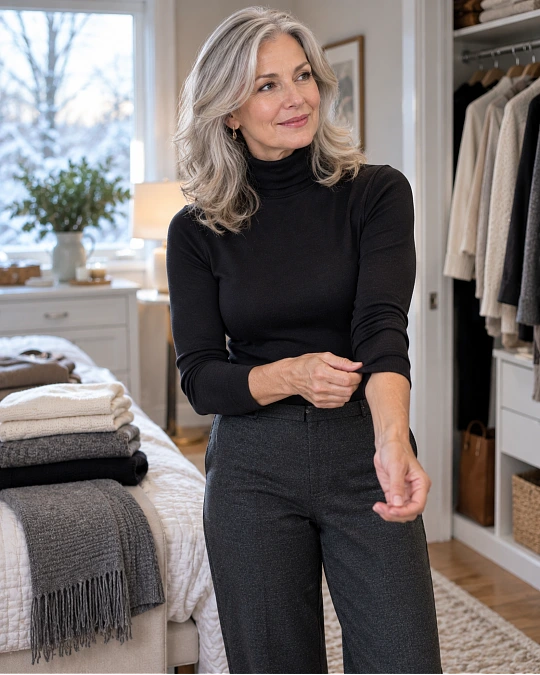
The easiest winter outfits usually begin with a thin first layer rather than a heavy sweater.
A fitted long-sleeve tee, fine merino top, ribbed knit, or soft mock neck traps warmth while leaving enough room for a cardigan, blazer, or coat.
The goal is not tight clothing. Look for a layer that follows your shape without pulling across the chest, shoulders, or waist.
A neckline also changes how useful the piece becomes. Crew necks work easily under sweaters, V-necks create more openness around the face, and mock necks give warmth without the extra volume of a folded turtleneck.
Try this: If your sweaters always feel bulky under coats, replace one thick inner layer with a thinner wool or cotton knit. You may feel just as warm while gaining much more movement.
Color can help these simple pieces work harder too. Black, navy, cream, charcoal, chocolate, olive, and soft gray are easy foundations, but there is no requirement to stay neutral.
A berry, teal, rust, or deep green base layer can make winter dressing feel far less dull.
Build Around Trousers and Jeans That Work With Winter Shoes
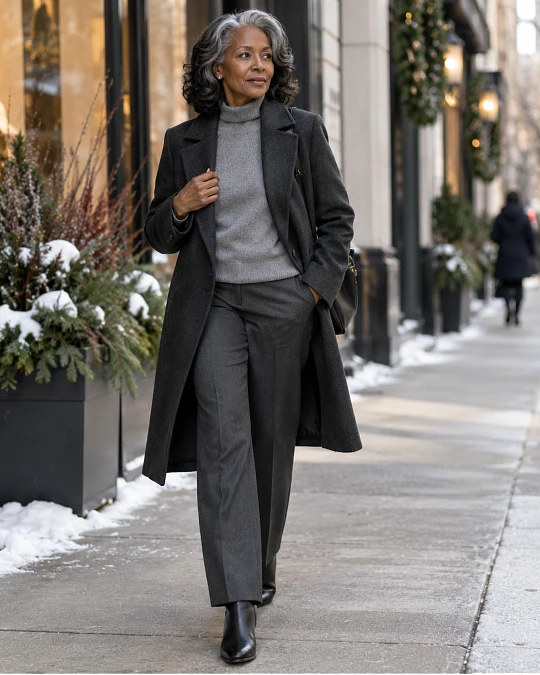
Winter bottoms need to work with more than the top half of your outfit. They also need to fall correctly over boots, sneakers, loafers, or weather-resistant shoes.
Straight-leg jeans are especially useful because they create enough room for many ankle boots without producing the extra fabric of a very wide leg.
A dark wash can look polished with a sweater and loafers, while a medium wash keeps everyday outfits relaxed.
For trousers, look for fabrics with enough weight to hang cleanly. Ponte, brushed twill, wool blends, and thicker stretch fabrics tend to work better in cold weather than thin materials that cling or wrinkle quickly.
Length deserves attention too. A trouser that looks elegant with a flat shoe may bunch awkwardly over an ankle boot.
Before buying new pants, try them with the winter shoes you wear most. That simple test tells you far more than judging the trousers barefoot in front of a mirror.
A slightly higher rise can also help sweaters and jackets meet the waistband more smoothly, especially when you like wearing shorter jackets or partially tucked knits.
Choose Knitwear That Holds Shape Instead of Swallowing You
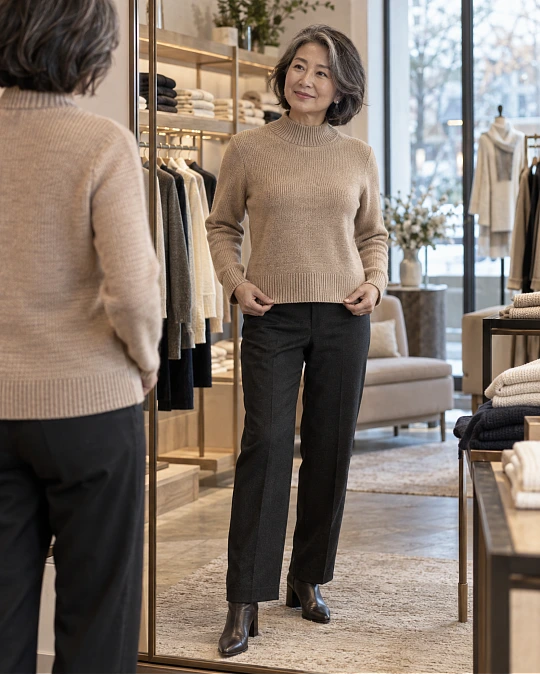
Winter wardrobes need knitwear, but more thickness does not automatically mean more warmth or better style.
A sweater with a defined shoulder, neat sleeve, and controlled hem is often easier to style than an oversized knit with volume everywhere.
You can still wear relaxed sweaters. The trick is balancing where the volume sits.
A roomy knit often looks cleaner with straighter trousers, while a more fitted sweater gives you freedom to wear a wider-leg pant or fuller skirt.
When trying on winter knitwear, check these details:
- Shoulders: seams should sit intentionally rather than drooping without shape.
- Sleeves: slightly relaxed is comfortable, but very wide sleeves can bunch under coats.
- Hem: hip-length and slightly cropped shapes are often easier to pair with trousers.
- Texture: fine ribs and smooth knits layer more easily than very chunky cables.
- Neckline: choose one that feels comfortable around your neck and leaves room for scarves or jewelry.
If a sweater feels shapeless, you do not always need a new one. Try a small front tuck, roll the cuff once, or wear a longer pendant to create a clearer vertical line.
These tiny changes can make simple outfits for women over 50 feel much more intentional without adding another garment.
Let One Good Coat and Practical Shoes Carry Most Outfits
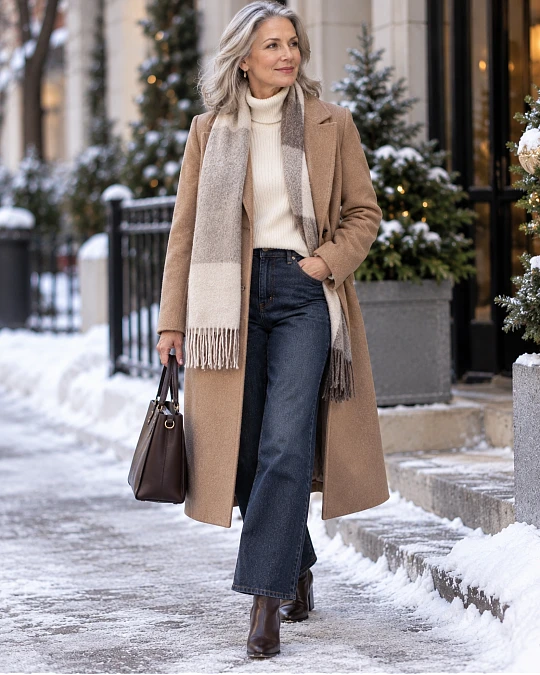
A coat is often the first part of your winter outfit anyone sees. That makes fit and proportion more important than chasing a particular trend.
A knee-length wool coat works well over trousers, denim, dresses, and skirts. A shorter structured jacket can be useful for driving, errands, or milder winter days.
If you live somewhere with rain, wind, or snow, function should come first. A warm puffer with a clean silhouette can look just as polished as wool when the fit is right.
Shoes need the same realistic thinking. Winter footwear should feel secure enough for your normal day rather than forcing you to choose between comfort and looking pulled together.
Ankle boots, sleek weather-resistant boots, supportive leather sneakers, and sturdy loafers can all earn their place depending on your climate.
You can also change the mood of the same winter base simply by changing outerwear and shoes.
| Base Outfit | Casual Day | Smart Casual | Colder Weather |
|---|---|---|---|
| Straight jeans + merino sweater | Leather sneakers | Ankle boots + wool coat | Weatherproof boots + puffer |
| Black trousers + knit top | Loafers + cardigan | Ankle boots + structured coat | Flat boots + long wool coat |
| Knit dress | Clean sneakers | Knee-high boots | Tall boots + warm coat |
| Dark denim + button-down | Sneakers + quilted jacket | Loafers + blazer | Boots + wool coat |
This is one reason a small winter wardrobe can feel surprisingly flexible. The outer layer and shoes often do more to change an outfit than replacing everything underneath.
Build a Small Winter Capsule Around Your Real Week
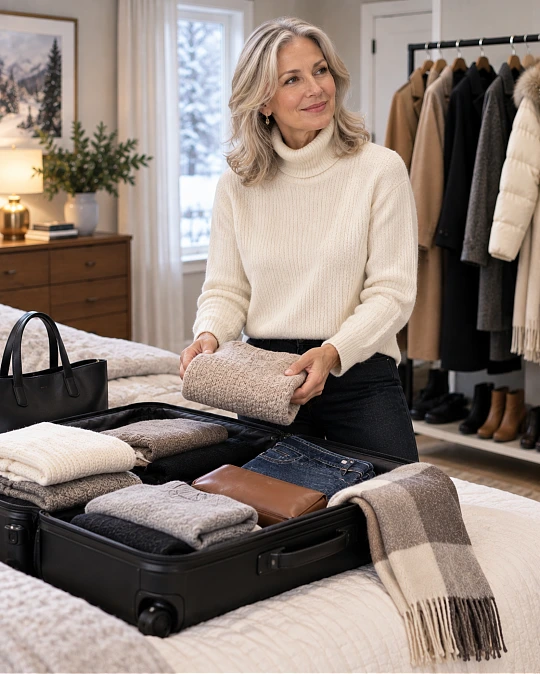
A useful capsule wardrobe over 50 does not need a fixed number of garments. It needs enough combinations to cover the situations you actually repeat.
Start by thinking about your most common winter days. You may spend more time running errands, meeting friends for lunch, working from home, attending appointments, traveling, or going out for casual dinners.
Build around those days first.
For many women, a strong winter base could include dark jeans, comfortable trousers, two or three fine knits, a cardigan, a coat, ankle boots, and a comfortable everyday shoe.
Then add personality through scarves, earrings, color, texture, or one stronger jacket.
These formulas show how a small group of pieces can move through different parts of your week.
| Occasion | Formula | Why It Works |
|---|---|---|
| Errands | Straight jeans + fine knit + short jacket + sneakers | Warm without feeling overdressed |
| Lunch with friends | Trousers + V-neck sweater + ankle boots + wool coat | Clean proportions create an elegant casual look |
| Travel day | Ponte trousers + soft knit + cardigan + supportive sneakers | Flexible layers adjust easily between temperatures |
| Casual evening | Dark jeans + mock neck + structured coat + boots | Simple pieces feel more polished through contrast and structure |
One repeatable personal uniform might be:
Formula: straight trousers or jeans + fine knit + structured outer layer + comfortable shoes
The formula works because the lower half stays clean, the knit keeps bulk under control, and the outer layer gives the outfit shape.
Change the knit color, swap jeans for trousers, or switch sneakers for ankle boots and the same idea can cover much of winter.
Buy Less by Fixing the Weakest Part of Your Winter Wardrobe
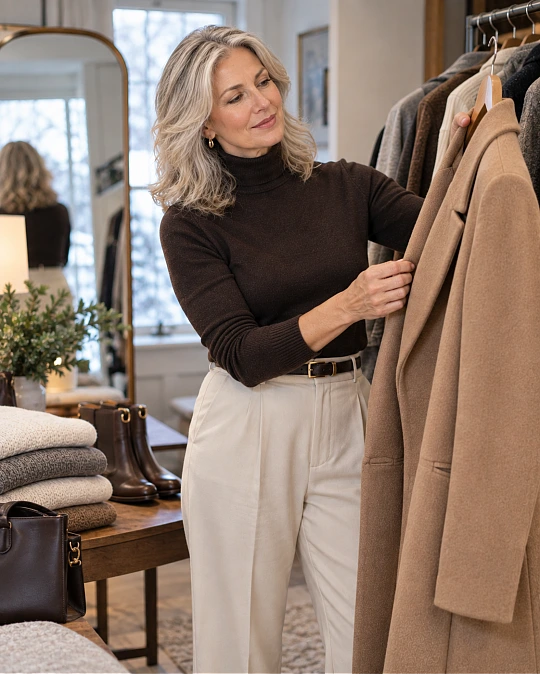
You may already own most of what you need.
Before buying anything, pull out the pieces you wear repeatedly and notice where getting dressed becomes difficult.
Perhaps your trousers work well but none of your sweaters fit comfortably under your coat. Maybe your clothes are fine, but your only winter shoes feel too formal for daily life.
Fix that gap first.
Cost-per-wear matters more than having a large selection. A coat worn four days a week deserves more attention than a party top worn twice all winter.
The same is true for boots, trousers, knitwear, and base layers.
You can also refresh older winter pieces through tailoring. Shortening sleeves, adjusting trouser hems, replacing worn buttons, or slightly shaping a coat can make clothing you already own feel far more current.
Dressing over 50 becomes much easier when your closet supports your routine instead of asking you to create a completely different outfit every morning.
Frequently Asked Questions
What are the most important winter wardrobe essentials for women over 50?
Start with fine knit base layers, comfortable jeans or trousers, one or two good sweaters, practical winter shoes, and a coat suited to your climate.
These pieces create the foundation. Accessories, color, skirts, dresses, and stronger fashion pieces can be added once the everyday basics work together.
How can I stay warm without looking bulky in winter?
Use several thin layers instead of relying on one very thick garment. Fine wool, smooth knitwear, close-fitting base layers, and a properly sized coat create warmth with less volume.
Keeping only one area of the outfit relaxed can also help the proportions feel more balanced.
Are oversized sweaters flattering after 50?
They can be, if you enjoy wearing them. The key is making the volume look intentional rather than letting every part of the outfit become oversized.
Try pairing a roomy sweater with straight jeans, slim trousers, or another clean lower-half silhouette.
What winter colors look chic on women over 50?
There is no required winter palette. Navy, charcoal, chocolate, cream, camel, olive, burgundy, teal, and deep green are easy to combine, but brighter shades can work beautifully too.
Wear colors that make your face look lively and that combine easily with your existing coat and shoes.
How many pieces do I need for a winter capsule wardrobe?
There is no magic number. You need enough pieces to cover your normal week without constantly doing laundry or creating outfits you rarely wear.
A smaller group of compatible tops, bottoms, layers, and shoes is usually more useful than a closet full of unrelated pieces.