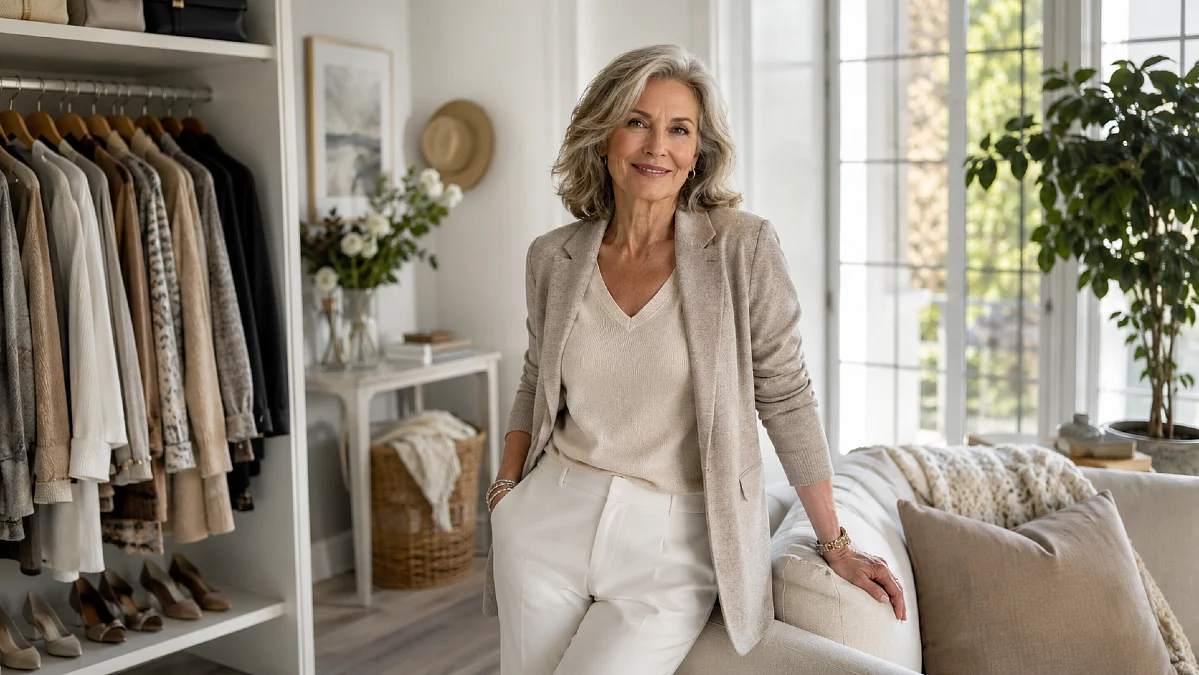
Getting dressed can feel strangely unfamiliar when the clothes you once relied on no longer look or feel quite right. Your taste may still be there, but changing proportions, shifting trends, and a wardrobe collected over many years can make even a simple outfit feel harder than it should.
That frustration can chip away at confidence. Women over 50 are often told to dress younger, dress safer, hide certain areas, or buy an entirely new wardrobe, which only creates more confusion.
The answer is not becoming a different version of yourself. Stylish outfits for women over 50 begin with understanding what fits your life now, finding proportions that feel balanced, and building a few combinations you genuinely enjoy wearing.
You Haven’t Lost Your Style, You’ve Lost Your Starting Point
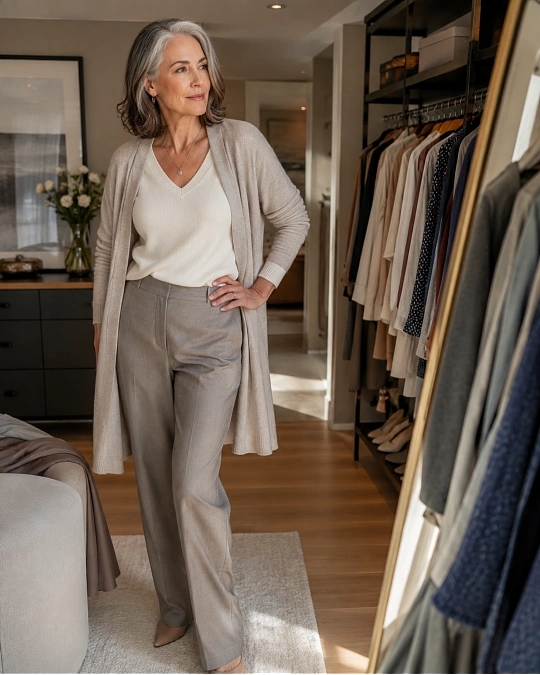
Most women do not suddenly stop having good taste. What often disappears is the reliable starting point that used to make getting dressed easy.
A favorite jean shape may fit differently. Shoes you once wore all day might no longer suit your routine, while an old blazer may technically fit but feel too stiff for the life you live now.
Trends also move quietly. You do not need to follow all of them, but changes in trouser width, jacket length, footwear, and layering can make an older outfit formula feel slightly disconnected.
The goal is not to chase fashion. It is to rebuild your own visual language using clothes that suit your body, comfort needs, personality, and actual schedule.
That shift becomes easier when old style rules are replaced with more useful questions.
| Old Rule | What Actually Works Now |
|---|---|
| Dress younger to look current | Choose modern proportions while keeping your own taste |
| Hide every area you dislike | Create balance with shape, structure, and strategic drape |
| Buy more clothes for more options | Build fewer combinations that work together |
| Avoid trends after a certain age | Borrow only the trends that suit your wardrobe |
| Comfort means dressing casually | Use soft fabrics, supportive shoes, and polished shapes together |
You are allowed to keep what still feels like you. A personal style refresh works best when it feels like editing, not erasing.
Start With What Actually Fits Your Life Now
Before buying anything new, look at the clothes you reach for during a normal week. The useful wardrobe is rarely the wardrobe you wish you wore.
If most days involve errands, casual lunches, working from home, appointments, travel, or time with family, those situations should shape your closet. Ten occasion dresses will not solve a daily dressing problem if what you really need is a comfortable pair of trousers.
Pay attention to how your clothes feel after two or three hours. Waistbands that dig, jackets that require constant adjusting, and shoes that only work while sitting are unlikely to become dependable wardrobe basics.
Fit note: Ignore the size printed on the tag when deciding what looks good. What matters is where the shoulder sits, how the fabric falls from the hip, where the trouser breaks, and whether you can move naturally.
A garment can fit without being skin-tight. In fact, a little controlled ease often creates a cleaner silhouette because the fabric hangs rather than clings.
This is one of the most useful shifts in dressing over 50: stop asking, “Can I still wear this?” and start asking, “Does this piece work for me now?”
Build a Personal Uniform You Can Trust
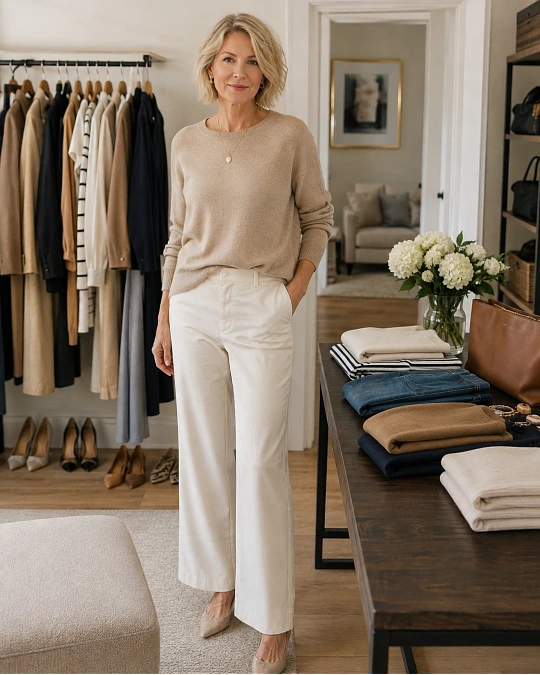
A personal uniform is not about wearing the same outfit every day. It is a dependable combination of shapes you know work, which removes much of the morning guesswork.
Your formula might be straight-leg jeans, a soft knit, and loafers. Another woman may feel more like herself in wide-leg trousers, a tucked shirt, and clean sneakers.
Start by noticing which combinations already make you feel pulled together.
Try looking for:
- one trouser or jean silhouette you trust
- two or three tops that work with that shape
- one useful third layer, such as a blazer, cardigan, overshirt, or jacket
- two comfortable shoe styles that change the mood of the outfit
- one simple finishing detail, such as earrings, a belt, scarf, or structured bag
Once you have the base, small swaps create plenty of variety.
Here are a few easy outfit formulas that work across real-life situations.
| Occasion | Pieces | Why It Works |
|---|---|---|
| Everyday errands | Straight jeans + soft knit + clean sneakers | Relaxed pieces with a clear shape look comfortable but intentional |
| Lunch with friends | Wide-leg trousers + fitted knit + loafers | The closer top balances the volume of the trouser |
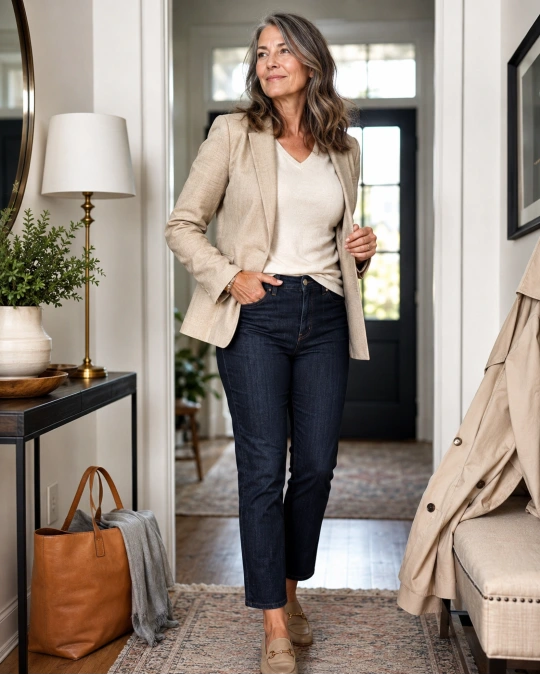
| Smart casual day | Dark jeans + blouse + relaxed blazer | Structure around the shoulders makes denim feel more polished |
| Travel day | Pull-on trousers + tee + cardigan + supportive sneakers | Soft layers allow movement without looking like lounge clothes |
| Casual evening | Midi skirt + fine knit + ankle boots | A simple top lets the shape of the skirt carry the outfit |
These formulas are starting points rather than uniforms you must follow exactly. Change the colors, neckline, footwear, or layer until the combination feels recognizably yours.
Let Fit, Fabric, and Proportion Do More Work Than Trends
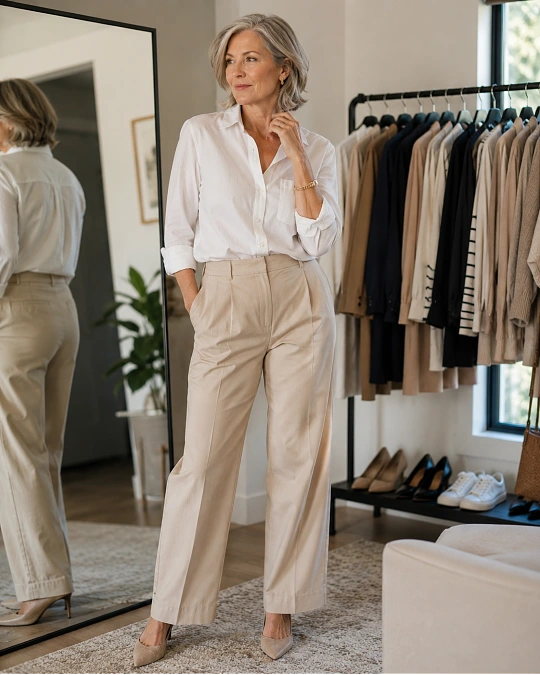
Many outfits that feel “off” are not actually missing a trendy piece. The proportions simply need adjusting.
If your trousers are loose, a top with some definition at the shoulder or waist can create balance. If you prefer a longer relaxed shirt, a straighter or narrower trouser may keep the outfit from feeling overwhelmed by fabric.
You can also use small styling changes instead of replacing a garment. A partial tuck, pushed-up sleeve, open neckline, shorter jacket, or visible wrist can change the visual balance immediately.
Fabric matters just as much.
Very thin jersey can sometimes cling where you would rather have it skim. Extremely stiff fabrics may create bulk, while fabrics with enough weight to fall cleanly often make simple outfits for women over 50 look much more considered.
This quick fabric guide can make shopping easier.
| Fabric or Garment | What to Look For and Why |
|---|---|
| T-shirts | Medium-weight cotton or cotton blends that skim instead of cling |
| Knitwear | Fine or medium knits with enough structure to hold their shape |
| Trousers | Fabric with drape plus a little stretch for movement and cleaner lines |
| Shirts | Cotton blends, linen blends, or soft woven fabrics that can tuck without bulk |
| Jackets | Light structure through the shoulder with enough room for layering |
Fabric note: More expensive does not automatically mean better. Hold a garment up, move the fabric with your hands, and look at how quickly it returns to shape.
A useful piece should work when you are standing, sitting, walking, and living in it.
Add Modern Details Without Feeling Like You’re Trying Too Hard
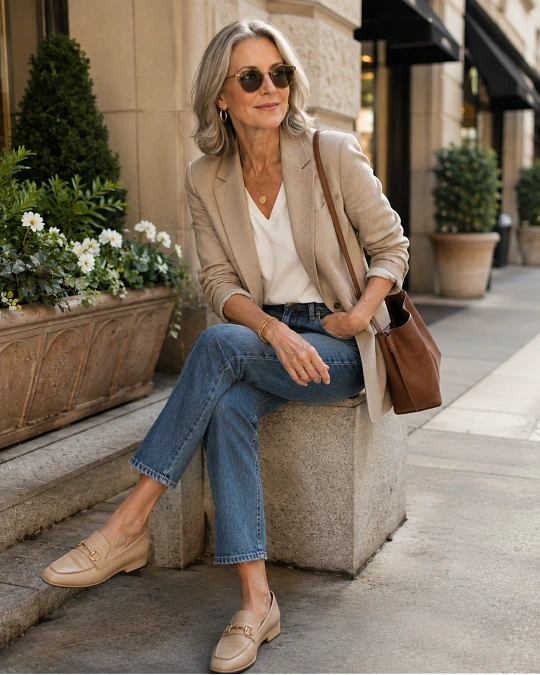
Feeling current does not require rebuilding your wardrobe every season. Usually, one updated proportion or accessory is enough to make familiar clothes feel fresh again.
A wider trouser paired with your favorite knit can change the whole mood of an outfit. So can switching an older, very delicate shoe for a modern loafer, streamlined sneaker, simple ankle boot, or low block heel.
Look at the small details first:
- Try a cleaner trouser shape. Straight, gently wide, tapered, and relaxed styles can all work depending on the rest of the outfit.
- Update your jacket proportion. A relaxed blazer, cropped jacket, or neat hip-length layer may feel fresher than an overly fitted shape.
- Simplify accessories. One strong pair of earrings or a structured bag can have more impact than many competing details.
- Use color near your face. A knit, scarf, blouse, or jacket in a shade you enjoy can make basic trousers feel completely different.
- Change the shoe before changing the outfit. Footwear often decides whether an outfit reads casual, polished, sporty, or dated.
You do not need every new trend. Choose the ones that make clothes you already own easier to wear.
That is the difference between following fashion and developing style confidence over 50.
Edit Your Wardrobe With Compassion, Not Panic
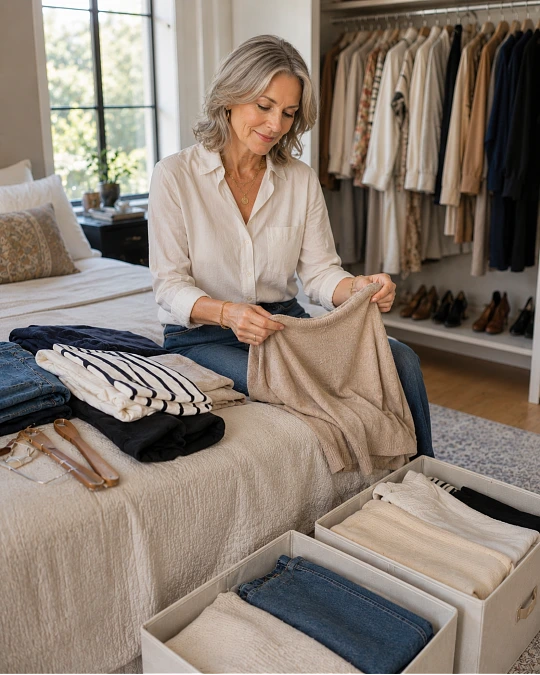
A closet clean-out can easily become an emotional project. Clothes carry memories, old identities, money spent, former sizes, and versions of ourselves we may still feel attached to.
There is no need to throw everything away because your style is changing. Start by separating clothes according to usefulness rather than judging them as good or bad.
Keep the garments you wear comfortably and enjoy seeing on yourself. Put sentimental pieces somewhere separate if you want to preserve them without expecting them to function as everyday clothes.
Then look at the items that almost work.
A jacket with beautiful fabric but overly long sleeves may only need tailoring. Trousers that feel dated with one shoe might look completely different with another.
Budget-friendly swap: Before replacing a garment, try it with three different pieces from your closet. Changing the shoe, tuck, sleeve, belt, or layer can sometimes solve the problem for free.
When you do buy something, think about cost-per-wear rather than excitement alone. A pair of trousers worn twice a week can be more valuable than a dramatic dress worn once.
A smaller wardrobe that works together usually creates more usable outfits than a crowded wardrobe full of unrelated pieces.
A Small First Step You Can Take Today
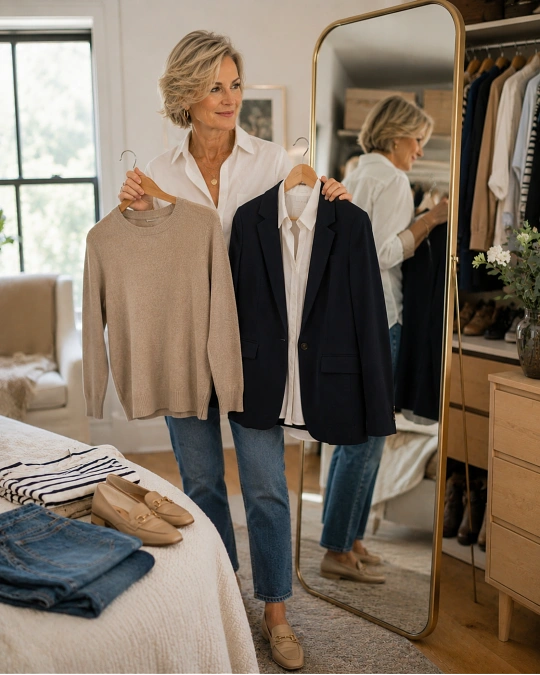
You do not need to find your entire style in one afternoon. Start by creating one outfit that feels like the version of yourself you want to see more often.
Choose a bottom you already like, then add a top that balances its shape. Finish with a comfortable shoe and one detail that makes the outfit feel intentional.
Formula: favorite trousers or jeans + simple top + useful third layer + comfortable modern shoe
Take a quick photo before changing. Clothing can look surprisingly different in a photograph, and seeing several outfits side by side makes patterns easier to spot.
You may notice that you consistently like open necklines, shorter jackets, monochromatic colors, wide trousers, structured bags, or certain shoes. Those patterns are the beginning of your personal style formula.
The best everyday outfits for women over 50 come from repeating what works and changing just enough to keep it interesting.
Frequently Asked Questions
The Ageless Edit
How can a woman over 50 look stylish without dressing too young?
Focus on modern fit and proportion rather than trying to copy a younger person’s wardrobe.
A current trouser shape, clean shoe, good fabric, and balanced silhouette can make familiar basics look fresh. Choose trends selectively: if it works with clothes you already enjoy, use it; if it feels like a costume, leave it.
What clothes should every woman over 50 have?
There is no universal checklist, because lifestyle matters more than age.
Most wardrobes benefit from reliable trousers or jeans, comfortable tops, a useful jacket or cardigan, versatile shoes, and at least one outfit suitable for slightly dressier occasions. The best essentials are pieces you can comfortably wear in real life.
How do I stop looking frumpy after 50?
Start with proportion rather than adding more accessories.
Check trouser length, shoulder fit, sleeve length, shoe shape, and where your jacket ends on the body. One small adjustment such as a front tuck, shorter layer, or more structured shoe gives an outfit clearer shape.
How do I find my personal style again after 50?
Look at the outfits you already feel good wearing and identify what they share (colors, necklines, shapes, or fabrics).
Use those patterns to build two or three repeatable outfit formulas. Personal style becomes clearer through repetition, not through finding one magical item.
Can I still wear trends after 50?
Yes. Trends have no age limit, but you do not need to wear every one.
A simple approach is to add one updated element to familiar clothes. Try a newer trouser shape, shoe, jacket proportion, color, or accessory while keeping the rest of the outfit recognizably yours.