Weight gain can make getting dressed feel strangely unfamiliar, especially when the clothes you once loved no longer fit the same way. A favorite pair of jeans feels tight, a dress pulls across the middle, and suddenly your wardrobe seems to belong to someone else.
For many women over 50, the hardest part isn’t the change in size. It’s the feeling that their personal style has somehow disappeared along with their old fit.
You might start reaching for loose clothes, avoiding certain outfits, or putting off shopping because nothing feels quite right.
Start Dressing for the Body You Have Right Now
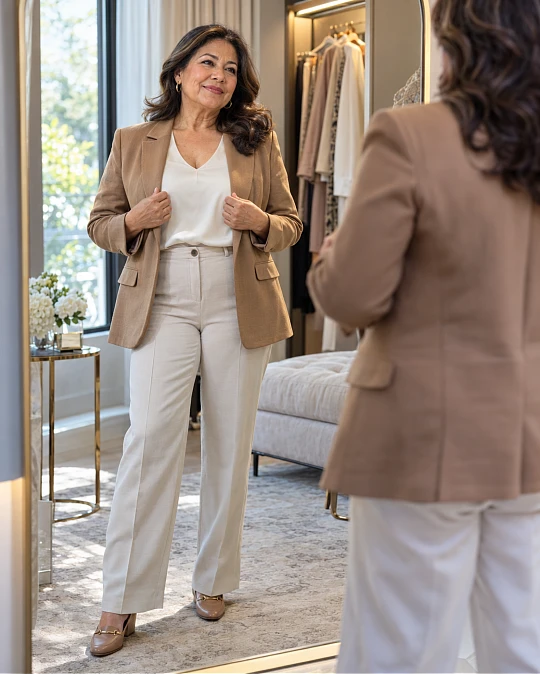
One of the biggest frustrations after weight gain is trying to make familiar clothes work when they no longer fit comfortably. You might keep pulling down a shirt, adjusting a waistband, or avoiding a favorite jacket because it feels restrictive.
The answer isn’t necessarily to buy an entirely new wardrobe. It’s to stop expecting every old piece to fit exactly as it did before.
Clothing sizes are simply labels, and sizing varies from one brand to another. A larger size that sits smoothly across your shoulders, waist, and hips will usually look more polished than a smaller one that pulls or bunches.
Fit Note: When trying on pants, sit down before deciding they fit. A waistband that feels comfortable while standing may press into your stomach when seated.
You can also separate your wardrobe into clothes that fit comfortably today, pieces that need small alterations, and items you’d rather store for now.
This gives you a clearer picture of what you can actually wear. It also makes getting dressed less frustrating because you’re no longer sorting through clothes that don’t feel good.
Choose Fabrics That Follow Your Shape Without Clinging
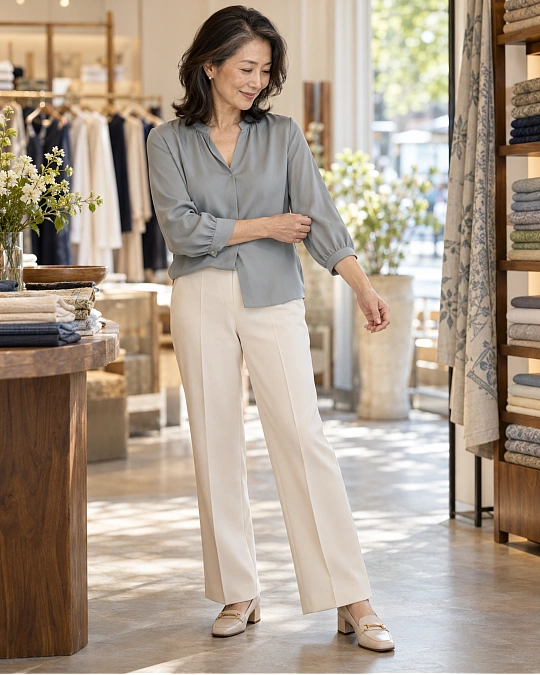
After weight gain, fabric choice can make as much difference as clothing size. Some materials grip areas you would rather skim, while others hang stiffly and add volume where you don’t want it.
The most useful fabrics offer a balance of movement and structure. They allow you to sit, bend, and walk comfortably while keeping the outfit looking intentional.
Soft woven fabrics, substantial jersey, ponte knit, and stretch denim can be especially useful. They move with your body without forcing you to choose between comfort and shape.
Here’s how common fabrics behave when you’re adjusting your wardrobe after weight gain.
| Fabric | What to Look For | Why It Helps |
|---|---|---|
| Ponte knit | Medium weight with gentle stretch | Holds its shape without feeling stiff |
| Stretch denim | Comfortable stretch with good recovery | Allows movement while reducing bagging |
| Viscose or rayon blends | Fluid fabric that falls smoothly | Creates soft movement around the body |
| Cotton poplin | Crisp but not overly rigid | Gives shirts a clean, defined shape |
| Substantial jersey | Soft knit with enough weight | Skims rather than showing every clothing line |
Very thin knits can sometimes emphasize the waistband, underwear seams, or folds in the fabric. If that bothers you, try a slightly heavier material rather than automatically choosing a looser size.
A softly structured shirt over comfortable trousers, for example, can create a relaxed look without losing definition.
Adjust Your Proportions Instead of Hiding Your Figure
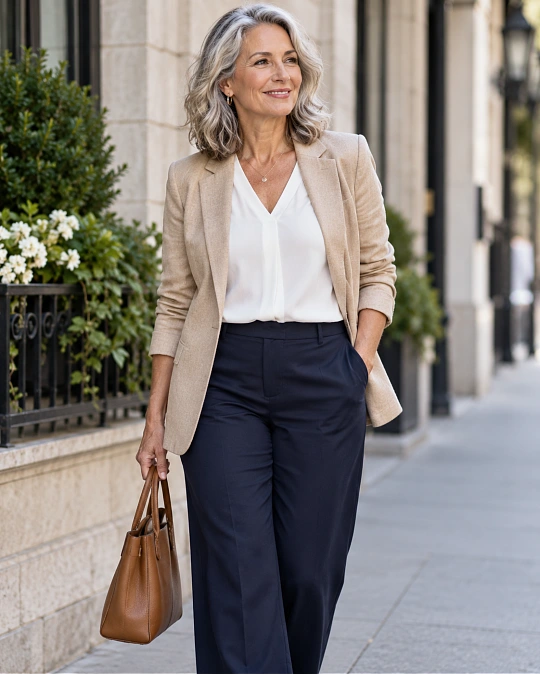
Weight gain can change how familiar outfits sit on your body. A blouse may finish at an awkward point, your usual trouser rise may feel restrictive, or a jacket may no longer close comfortably.
These changes don’t mean you need to abandon your favorite silhouettes. Often, adjusting the length or placement of one piece makes the whole outfit feel better.
Pay Attention to Where Your Tops End
An untucked top that finishes at the widest part of your hips can create a strong horizontal line. If you prefer a softer transition, experiment with tops that finish slightly above or below that point.
A relaxed button-down with a curved hem is one useful option. It gives you room through the middle while keeping the outfit neat.
You can also try a small front tuck when the waistband is comfortable enough. This creates a little shape without requiring a tight or fully tucked top.
Rethink Your Trouser Rise
High-rise pants aren’t automatically the best choice for every changing figure. Some women feel more comfortable with a mid-rise waistband, especially when sitting for long periods.
Others prefer high-rise trousers because they stay in place and create a smooth line under tops.
Try different rises with the same shirt to see how the proportions change. The right waistband should feel secure without digging into your stomach.
Keep Some Shape in Your Jackets
Oversized clothing can be stylish, but a very loose top paired with an equally oversized jacket may hide the outfit’s structure.
A blazer with a clean shoulder line or a softly tailored cardigan can add definition without feeling tight.
Wear the jacket open if that feels more comfortable. The vertical lines can give your outfit a longer, more balanced appearance while allowing the clothes underneath to move naturally.
Keep the Colors, Prints, and Details That Feel Like You
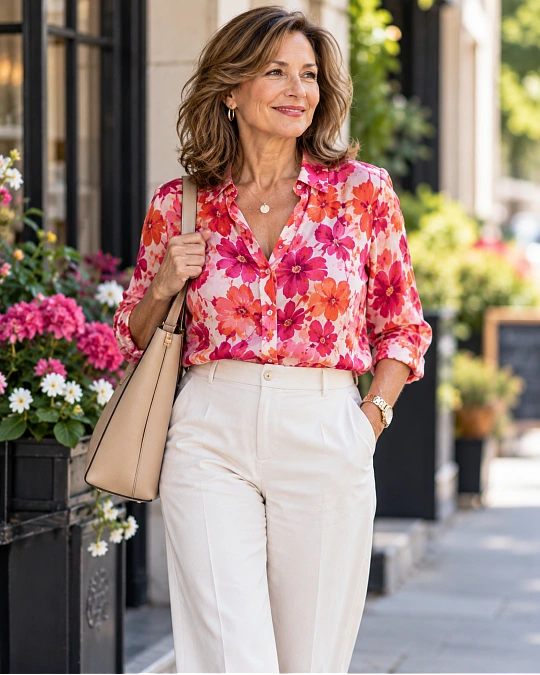
One thing that often gets lost after weight gain is personal style. Women who once loved color, fitted jackets, pretty dresses, or interesting accessories sometimes begin wearing only plain, oversized basics.
Comfort matters, but it doesn’t need to come at the expense of everything that makes your wardrobe personal.
If you always loved colorful scarves, keep wearing them. If you feel most like yourself in a crisp white shirt, find one with a more comfortable cut rather than giving up the look.
Small details can help reconnect your current wardrobe with the style you’ve always enjoyed.
- If you love feminine dressing: Try a softly shaped midi dress, a printed blouse, or a flowing skirt with a defined waistband.
- If you prefer classic clothes: Choose straight-leg trousers, a neat cardigan, a button-down shirt, and simple loafers.
- If your style is relaxed: Wear comfortable jeans, a quality knit top, a casual jacket, and clean sneakers.
- If you enjoy bold outfits: Keep your favorite bright colors, statement earrings, patterned scarves, and interesting shoes.
There’s no reason to replace your personality with a different style just because your clothing size has changed.
Color Note: Wearing a favorite color near your face can make an ordinary outfit feel more familiar. A colorful blouse or scarf is often an easier place to begin than rebuilding your whole wardrobe.
Build Comfortable Outfits That Still Look Put Together
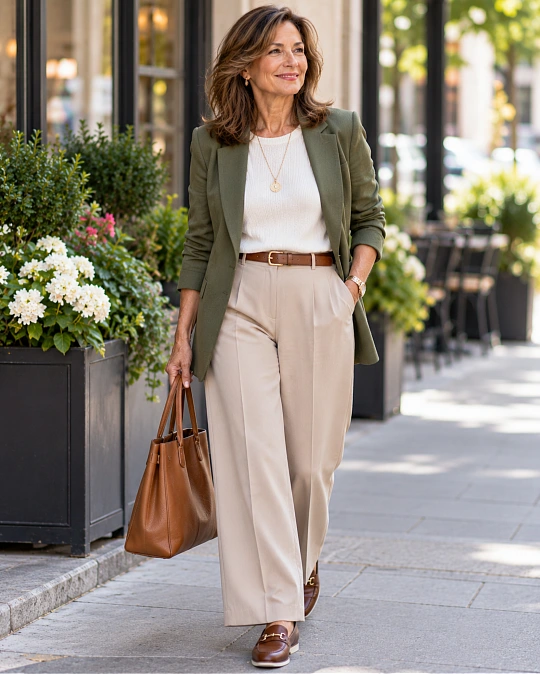
When your body changes, having a few dependable outfit combinations can make mornings much easier. You don’t need dozens of new clothes, but you do need pieces that work together without constant adjustment.
A useful approach is to combine one comfortable foundation piece with a softly structured layer and a finishing detail.
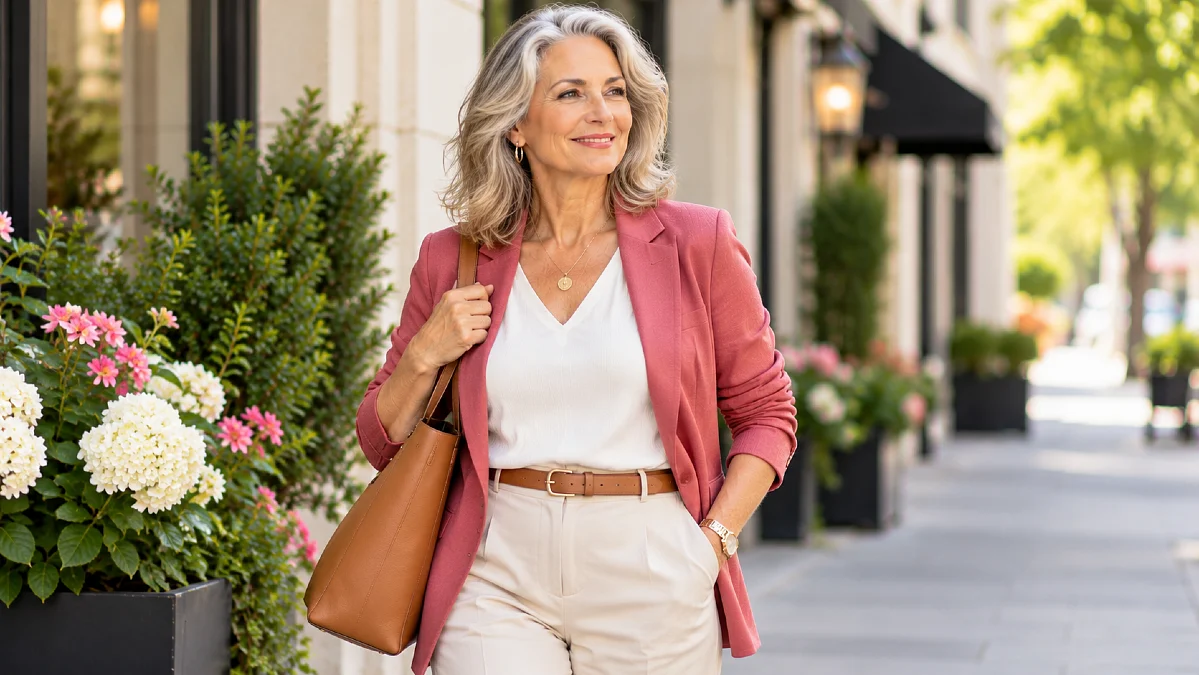
For example, straight-leg trousers, a relaxed blouse, and an open blazer create a smart casual look that doesn’t depend on a closely fitted waist.
Here are a few outfit combinations worth trying with clothes you may already own.
| Occasion | Outfit Formula | Why It Works |
|---|---|---|
| Everyday errands | Straight-leg jeans + relaxed knit + sneakers | Comfortable movement with a neat shape |
| Lunch with friends | Midi skirt + soft blouse + loafers | Combines gentle movement with definition |
| Casual workday | Ponte trousers + button-down + open blazer | Adds structure without restrictive layers |
| Weekend outing | Knit midi dress + denim jacket + ankle boots | Balances a soft dress with a shaped jacket |
These combinations are starting points, not rules. The goal is to find two or three outfits you can repeat without feeling that you’re wearing the same thing every day.
One particularly helpful formula is:
Formula: Comfortable straight-leg trousers + softly draped top + open structured jacket.
This combination works because the trousers provide a smooth foundation, the top allows comfortable movement, and the jacket adds shape.
Change the jacket color, switch to loafers, or add a printed scarf to make the same foundation feel different.
For stylish outfits for women over 50, having a reliable combination that fits well often matters more than owning the latest trends.
Stop Using Clothes to Apologize for Weight Gain
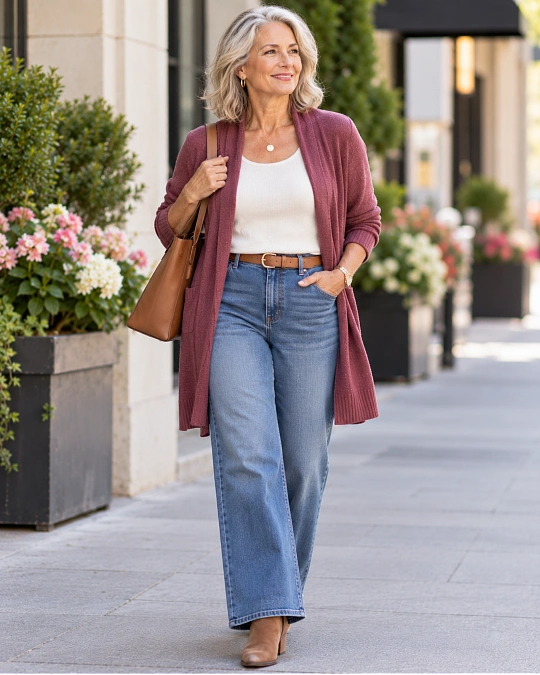
It’s easy to develop new dressing habits when your body changes. Some seem practical at first, but they can make shopping and daily outfits more frustrating.
One common habit is buying everything oversized because fitted clothes suddenly feel uncomfortable. Another is keeping clothes that don’t fit at the front of the wardrobe and hoping they’ll somehow work again.
Neither approach is necessary for looking good.
The goal is not to disguise every change in your figure. It’s to wear clothes that fit comfortably and reflect your taste.
A few small changes in approach can make a noticeable difference.
| Old Dressing Habit | A More Helpful Approach |
|---|---|
| Buying everything two sizes larger | Choose a fit that allows movement without excess fabric |
| Wearing only dark, loose clothing | Keep favorite colors and balance loose pieces with structure |
| Avoiding dresses because the waist feels different | Try shift, wrap-style, or gently shaped dresses |
| Keeping uncomfortable jeans in daily rotation | Find denim with a better rise and comfortable stretch |
| Waiting to buy clothes until your size changes | Build a small wardrobe that fits and serves you now |
You can still wear black, oversized sweaters, or flowing dresses if you genuinely enjoy them. The important difference is choosing them because you like the look, not because you feel you must hide.
Comfort Upgrade: If you constantly adjust an outfit, check the fit before blaming the style. Sometimes a longer top, a softer waistband, or a different bra is all that’s needed.
Rebuild Your Wardrobe Without Buying Everything Again
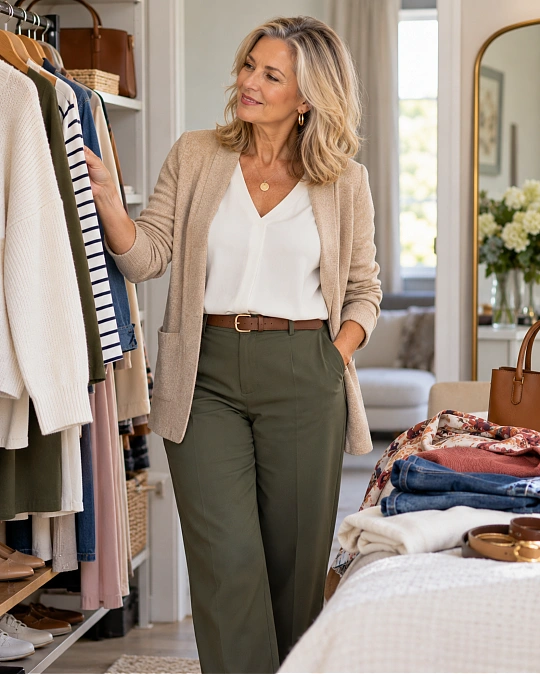
A changing body can make an entire wardrobe feel unusable, even when many pieces are still perfectly good. Before shopping, spend a little time identifying what still fits and what could work with small adjustments.
Start with three outfits you would genuinely wear during an ordinary week. They might be jeans and a sweater, trousers and a blouse, or a simple dress with a jacket.
Try each outfit on and pay attention to how it feels while sitting, walking, and reaching. Notice which pieces stay comfortable and which ones need constant fixing.
From there, make a short shopping or alteration list based on actual gaps rather than frustration.
For example, if your trousers fit but several tops pull across the bust, you may only need a couple of better-fitting shirts. If your blazers feel tight in the shoulders, that might be the area worth updating first.
A small capsule wardrobe over 50 can begin with pieces you already own. Keeping your most useful colors and shapes makes it easier to add new clothes without losing your familiar style.
Don’t overlook alterations, either. A tailor may be able to adjust hems, release available seam allowance, or improve the fit of a garment that is close to working.
Budget-Friendly Tip: Buy for your current measurements and daily activities. One pair of comfortable trousers you wear twice a week is more useful than several bargain pieces that stay in the closet.
Frequently Asked Questions
How can I dress after gaining belly weight over 50?
Choose tops that skim your middle without pulling, and experiment with mid-rise or high-rise trousers that feel comfortable when seated. Ponte fabrics, softly draped blouses, and open jackets can create a polished look without requiring tight waistbands.
What clothes are flattering after weight gain over 50?
Well-fitting straight-leg trousers, relaxed button-down shirts, structured cardigans, midi dresses, and softly tailored jackets are useful options. The most flattering choice depends on your proportions, comfort, and personal taste rather than a particular clothing size.
Should I wear loose or fitted clothes after gaining weight?
You don’t have to choose one or the other. A relaxed top with straight-leg pants or a fitted knit with wider trousers can create balanced proportions while keeping the outfit comfortable.
How can I look stylish over 50 without buying a new wardrobe?
Start by building outfits around clothes that already fit comfortably. Update the proportions with different tucks, layers, shoes, or accessories, and buy replacements only for the pieces that are genuinely missing.
Can I still wear jeans and dresses after gaining weight?
Absolutely. Jeans with a comfortable rise and flexible denim can work beautifully, while shift dresses, soft A-line styles, and adjustable wrap-style dresses offer different levels of definition and ease.