
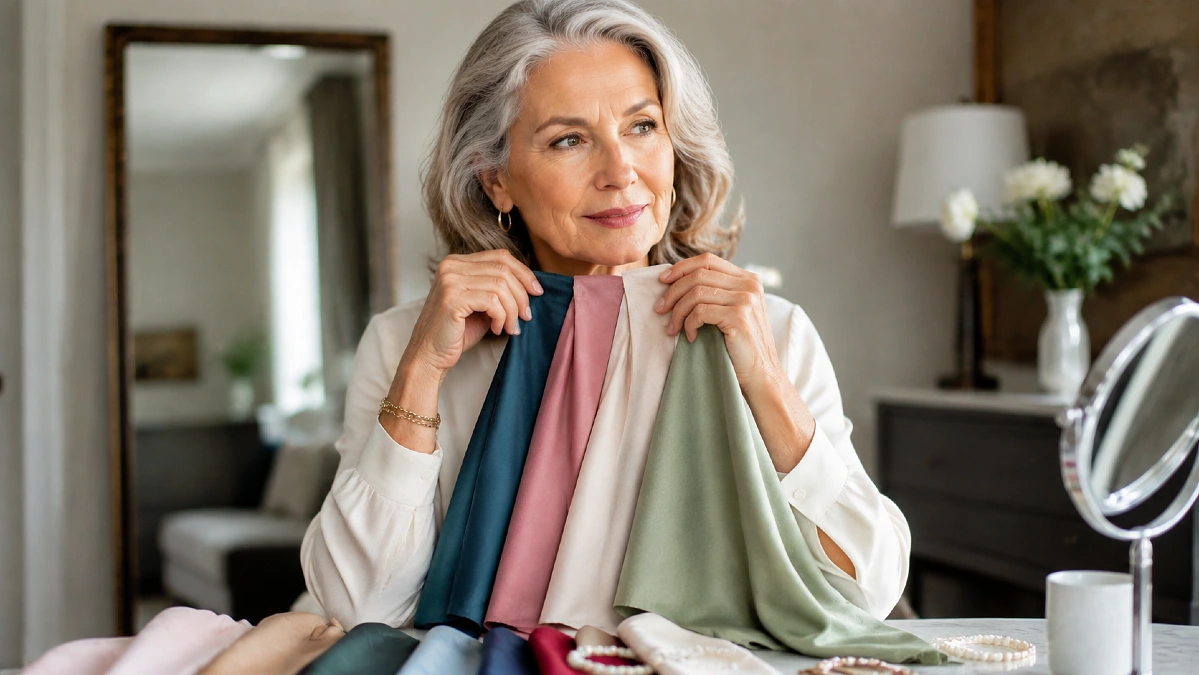
Finding colors that look good after 50 can feel confusing when shades that once worked suddenly seem too harsh, dull, or disconnected from your natural features.
The challenge is not that your style has changed for the worse. Skin tone, hair color, and contrast can shift over time, making your best shades worth exploring again.
Learning your undertone can make choosing stylish outfits for women over 50 much easier. With a few simple checks, you can build a color palette that feels modern, flattering, and completely personal.
Why Your Best Colors Can Change Over Time
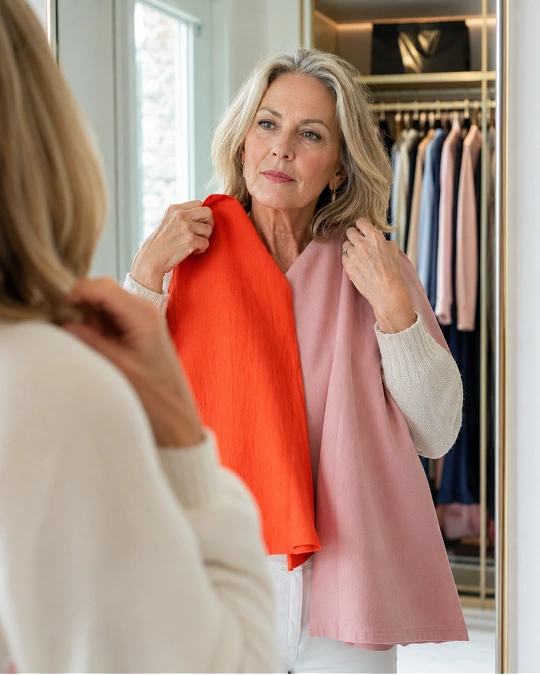
Many women assume that finding their colors means choosing a seasonal palette and following strict rules. In reality, your relationship with color is much more personal.
As we get older, natural changes in hair, skin, and overall coloring can affect how certain shades appear near your face. A bright color that once created energy may now compete with your features, while a softer shade may bring more harmony.
This does not mean you need a completely new wardrobe. Often, a few small adjustments in tone, contrast, and fabric finish can make existing pieces feel more current.
Color is also connected to confidence. When your clothes work with your natural coloring, getting dressed often feels simpler because fewer pieces feel “almost right.”
Understanding Undertone: The Key to Choosing Better Colors
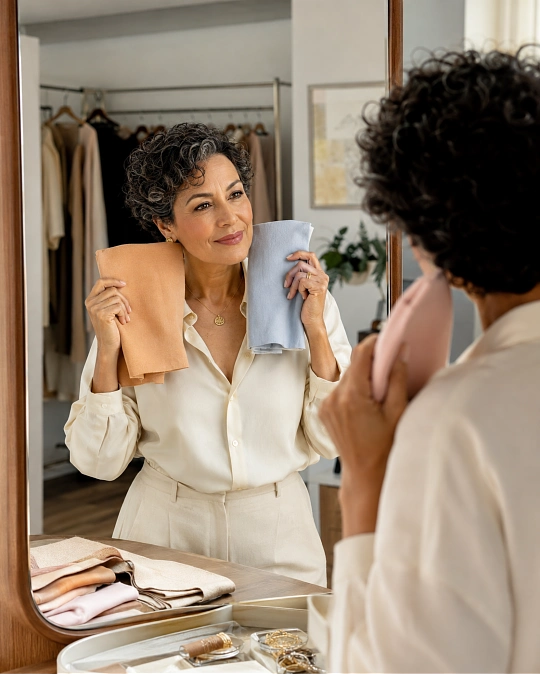
Your undertone is the subtle color beneath the surface of your skin. It is usually grouped into three categories: warm, cool, or neutral.
Your undertone is different from your skin shade. Someone with fair skin can have a warm undertone, while someone with deeper skin can have a cool undertone.
The goal is not to limit yourself to certain colors. It is to understand which shades create balance around your face.
A useful starting point:
- Warm undertones: often look balanced with earthy shades like camel, olive, cream, warm navy, and peach.
- Cool undertones: often pair beautifully with jewel tones, crisp white, berry shades, blue-based reds, and cooler grays.
- Neutral undertones: often have flexibility and can wear both warm and cool shades depending on the exact tone.
A small color experiment can reveal a lot. Hold different fabrics near your face in natural light and notice which ones make your skin look brighter and more rested.
This quick guide can help you compare what you see.
| Undertone Clue | What You May Notice | Colors to Test |
|---|---|---|
| Warm undertone | Golden, peach, or olive hints | Cream, camel, rust, olive |
| Cool undertone | Pink, rosy, or blue hints | Navy, berry, charcoal, sapphire |
| Neutral undertone | A balance of warm and cool qualities | Soft white, teal, blush, balanced neutrals |
The Simple Tests That Reveal Your Undertone
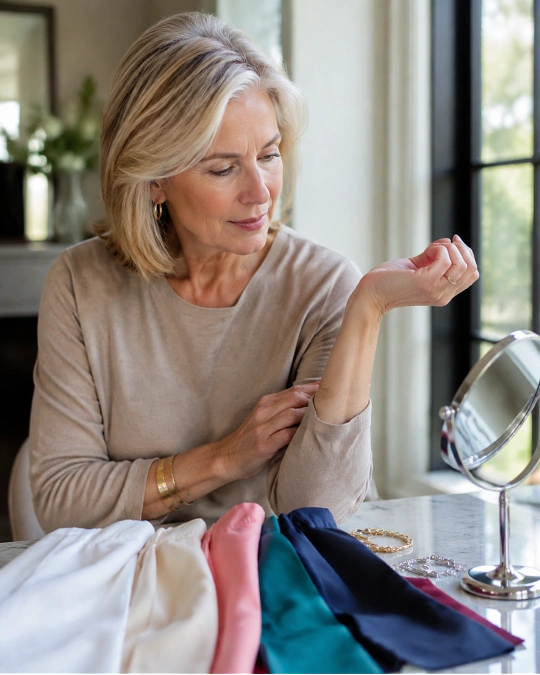
You do not need expensive consultations to start exploring your colors. Your own wardrobe can provide useful clues.
Try these simple checks:
- Look at the veins on your wrist in daylight. Blue or purple tones may suggest a cooler undertone, while green tones may suggest warmth.
- Compare silver and gold jewelry near your face. Notice which one makes your skin appear brighter and more refreshed.
- Test pure white versus cream clothing. One may create a more harmonious effect.
- Look at old photos where you loved your outfit. The colors you repeatedly chose may reveal patterns.
Fit note: Color works similarly to clothing fit. The right choice does not change who you are; it simply creates better balance.
The table below shows how to test colors in everyday situations instead of treating undertone as a complicated fashion rule.
| Test | Try This | Look For |
| Jewelry test | Wear silver and gold separately | Which one makes your face look brighter |
| White test | Compare bright white and cream tops | Which shade softens your complexion |
| Fabric test | Hold scarves or shirts near your face | Less shadow and more natural glow |
| Makeup test | Compare warmer and cooler lipstick tones | Which looks more balanced |
Building a Wardrobe Around Colors That Support You
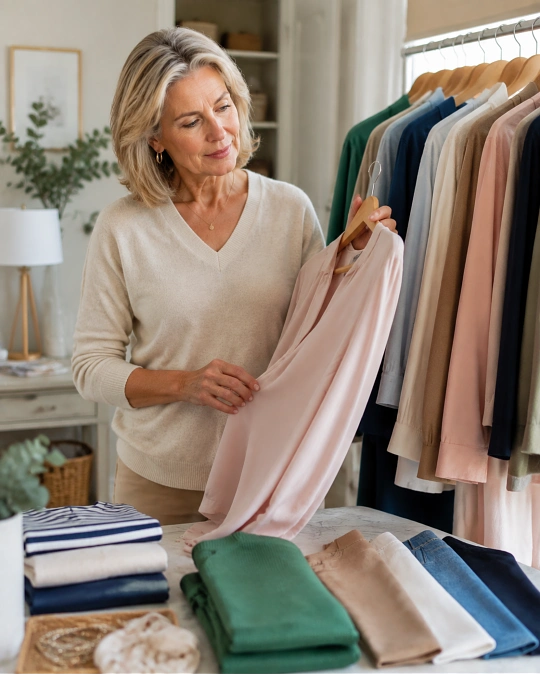
Once you have a better idea of your undertone, the next step is creating a wearable color system.
A good wardrobe does not need dozens of colors. Many women find that a small collection of reliable shades makes daily dressing easier.
This is where a capsule wardrobe over 50 becomes useful. Instead of buying random pieces, you can choose colors that mix naturally together.
Start with:
- Two or three neutral base colors for pants, jackets, and skirts.
- Several tops near your face in your most flattering tones.
- One or two accent colors that add personality.
- Accessories that repeat your favorite shades.
The colors closest to your face usually have the biggest impact. A blouse, sweater, scarf, or jacket can change how your whole outfit feels.
Budget-friendly swap: Before replacing clothing, try moving less flattering colors away from your face. A jacket, cardigan, or scarf can create distance between the shade and your complexion.
How Fabric and Texture Affect Color After 50
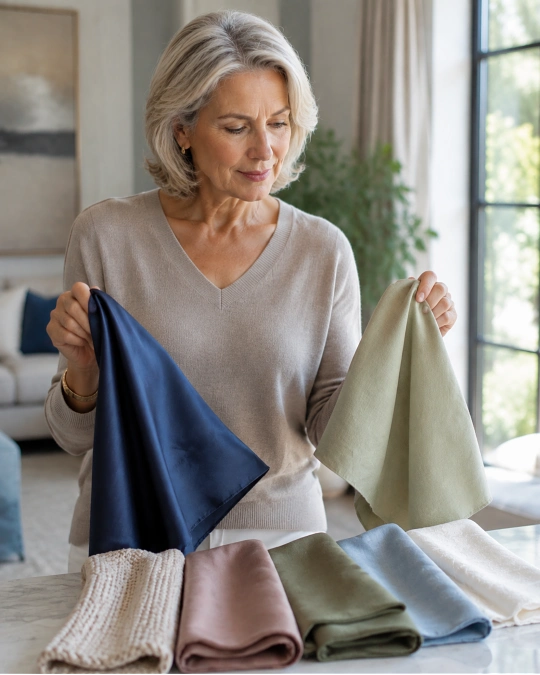
Color is not only about the shade itself. Fabric texture changes how color reflects light.
A matte fabric like cotton or linen creates a softer appearance, while shiny materials can make certain colors look stronger near your face.
This matters because mature style often benefits from balance. A rich color in a soft fabric may feel elegant, while the same shade in a highly reflective material may feel too intense.
| Fabric Choice | Color Effect | Styling Tip |
| Soft cotton | Creates a relaxed color appearance | Great for everyday tops |
| Linen blends | Gives colors a natural look | Works well for casual layers |
| Silk or satin | Adds shine and intensity | Use stronger shades carefully |
| Knit fabrics | Softens bold colors | Useful for sweaters and cardigans |
A beautiful color does not need to be loud. Often, the most polished outfits come from shades that quietly support your features.
Creating Easy Color Formulas for Everyday Dressing
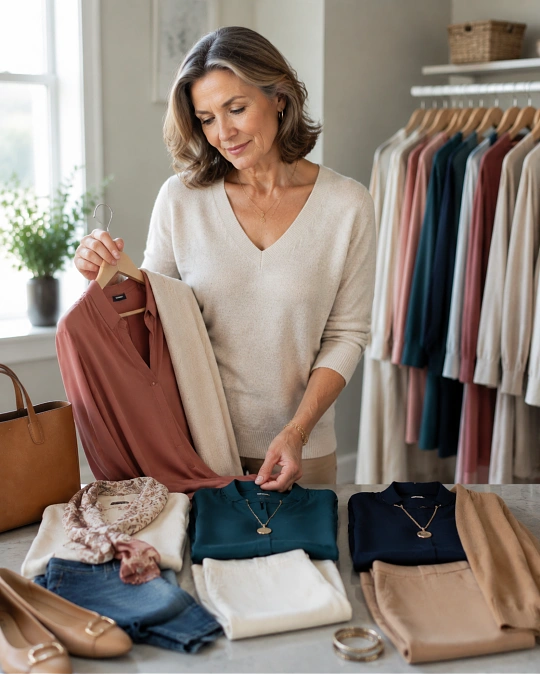
Finding your undertone becomes most useful when it helps you get dressed faster.
Instead of asking, “What color should I wear today?” create a few personal formulas you can repeat.
For example:
Formula: flattering neutral + comfortable layer + one personal color
A cream sweater with olive pants and gold accessories creates warmth. A charcoal cardigan with a berry blouse and dark denim creates cooler contrast.
These formulas work because they balance simplicity with personality.
| Occasion | Pieces | Why It Works |
| Coffee with friends | Soft sweater + straight-leg jeans + matching scarf | Comfortable with intentional color |
| Work or meetings | Blazer + neutral trousers + colored blouse | Professional without feeling plain |
| Travel day | Knit layer + relaxed pants + comfortable shoes | Easy movement with a pulled-together look |
| Weekend errands | Casual top + denim + accent accessory | Simple but still polished |
Common Color Mistakes and How to Adjust Them
Finding your colors is about experimenting, not following strict rules. Small changes can make a big difference.
| Common Approach | Better Adjustment |
| Wearing only black because it feels safe | Add softer neutrals or color near your face |
| Choosing trendy shades without testing them | Try the color in a scarf or top first |
| Keeping colors from your younger years only | Revisit similar shades in updated tones |
| Buying a full outfit in one color | Mix your best shades with reliable basics |
Some colors may still work, but the version of that color may need to change. A bright pink might become a softer rose. A strong black may become charcoal. A bright white may become cream.
The idea is not to remove personality from your wardrobe. It is to make your clothes feel more connected to you now.
How to Find Your Personal Color Style Without Overthinking It
Your best colors should make dressing easier, not create another set of rules.
Start by noticing what you naturally reach for. The clothes you wear often usually tell you something about your preferences.
A few questions can help:
- Which tops make you feel refreshed when you see yourself in the mirror?
- Which colors receive compliments or feel especially “like you”?
- Which shades work across several seasons?
- Which pieces do you avoid because something feels slightly off?
Over time, these answers create your own color story.
This is especially helpful when building everyday outfits for women over 50 because your wardrobe begins working together instead of feeling like separate purchases.
Frequently Asked Questions
How do I know if I have a warm or cool undertone after 50?
Look at how different colors, metals, and neutrals appear near your face in natural light. The shades that make your complexion look balanced and refreshed often point toward your undertone.
Can my undertone change as I get older?
Your basic undertone usually stays similar, but changes in hair color, skin appearance, and contrast can affect which shades look best on you. The colors you prefer may need small updates.
Should women over 50 avoid certain colors?
No color is completely off limits. If a shade feels too strong, try a softer version, wear it away from your face, or balance it with a flattering neutral.
Do I need a whole new wardrobe after finding my undertone?
Not at all. Start with pieces you already own and add new colors slowly. A few well-chosen updates can refresh your existing wardrobe.
Are neutral colors better after 50?
Neutral colors are useful because they mix easily, but they do not need to be your only choice. Personal colors and accents often make an outfit feel more expressive.