

Jeans can feel strangely personal after 50 because the pair you used to trust may not sit, stretch, or flatter the same way anymore.
That does not mean denim has stopped working for you. It usually means the cut, rise, fabric, or styling needs to catch up with your life now.
The best jeans outfits for women over 50 are not about chasing trends or hiding your body. They are about creating shape, comfort, and polish in a way that feels current but still like you.
Once you understand fit, proportion, and what to wear with denim, jeans become one of the easiest pieces in your wardrobe again.
Why Jeans Feel Trickier After 50
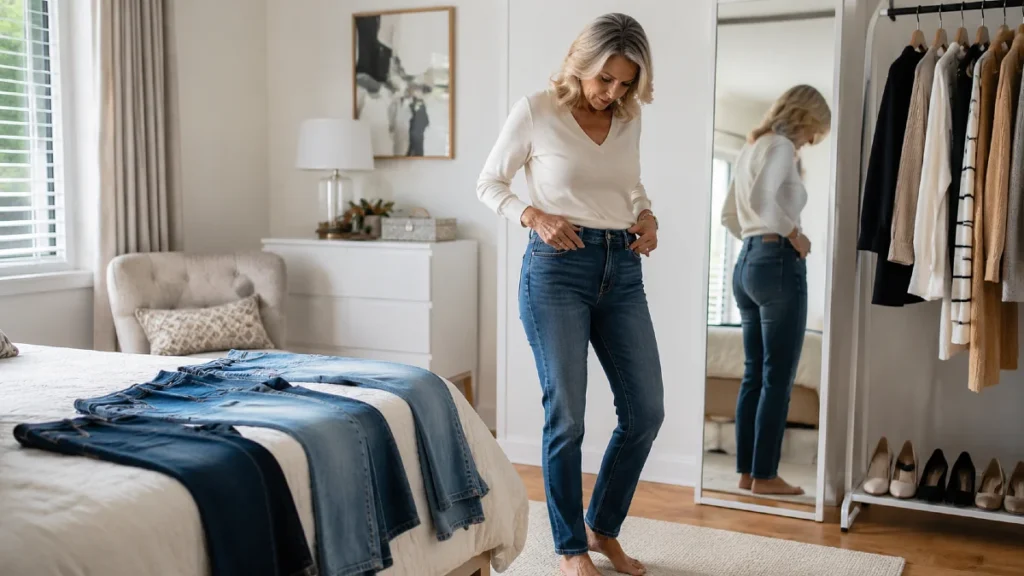
Denim has changed. Bodies change too. That is a normal part of dressing, not a style failure.
Many jeans today are cut for stretch, speed, and trend cycles. Some are too thin, some cling in odd places, and some lose shape after one wear. That can make even a nice outfit feel sloppy by lunchtime.
The other issue is memory. You may still be judging jeans by an old favorite pair from years ago. But the rise, pocket placement, leg shape, and fabric weight all affect how jeans look on you now.
A good pair of jeans should not ask you to tug, squeeze, or keep checking the mirror. It should support your day.
The Fit Principle That Changes Everything

The real secret is this: choose structure over tightness.
A jean does not have to be stiff, but it needs enough body to hold its shape. Thin, overly stretchy denim can collapse around the hips, thighs, knees, and waist. That is when jeans start to look tired instead of polished.
A slightly structured denim gives the body a cleaner line. It skims instead of clinging. It also helps tops, jackets, and shoes look more intentional.
This is why many chic outfits for women over 50 start with simple jeans that fit well. The jeans are not loud. They are just doing their job.
Look for a pair that feels secure at the waist, smooth through the hip, and relaxed enough through the leg that you can sit, walk, and move without adjusting all day.
Choose Denim That Supports Without Squeezing

The right jean is less about the size on the tag and more about how the garment behaves on your body.
A mid-rise or high-rise jean often gives a cleaner line because it connects the top and bottom half of the outfit. Low-rise jeans can still work, but they are harder to style if you want comfort and polish together.
Straight-leg, slim-straight, gentle bootcut, and relaxed tapered jeans are often easier than very skinny or very wide cuts. They give shape without making the whole outfit depend on one extreme silhouette.
Here is a quick guide to what to look for before you buy or keep a pair.
| Jeans Detail | What to Look For | Why It Works |
|---|---|---|
| Rise | Mid-rise or comfortable high-rise | Creates a smoother line under tops and jackets |
| Fabric | Denim with some structure and light stretch | Moves with you but does not sag quickly |
| Leg shape | Straight, slim-straight, bootcut, or soft taper | Balances the body without clinging |
| Length | Full length, ankle length, or a clean crop | Lets your shoes look intentional |
| Wash | Dark blue, medium blue, white, black, or soft gray | Easy to dress up or down |
Fit note: sit down in the jeans before deciding. Standing in front of a mirror only tells half the story.
If the waistband digs when you sit, the jeans are not comfortable enough for real life. If the back gaps badly, tailoring or a different rise may serve you better than sizing down.
Balance Proportion From Waist to Shoe

Jeans look best when the outfit has a clear shape.
That does not mean everything needs to be fitted. It means one part of the outfit should give structure while another part can relax.
A longer tunic with wide jeans can feel heavy because both pieces move outward. A boxy sweater with baggy denim can blur your shape. The fix is often small: a front tuck, a shorter jacket, a cleaner shoe, or a top that stops around the hip bone.
With straight-leg jeans, try a soft blouse, fine knit, button-down shirt, or neat tee under a blazer. The straight leg keeps the base calm, while the top adds polish.
With bootcut jeans, let the hem nearly meet the shoe. That slight flare works well with ankle boots, loafers with a small heel, or pointed flats because the shoe continues the line.
With relaxed jeans, add one sharper element. A crisp shirt, leather belt, structured cardigan, or sleek loafer can keep the outfit from drifting into “just errands” territory.
Color note: low contrast often looks refined. Medium blue jeans with a navy sweater, soft gray tee, or ivory jacket can look more expensive than a busy mix of colors.
What to Wear With Jeans So They Look Polished
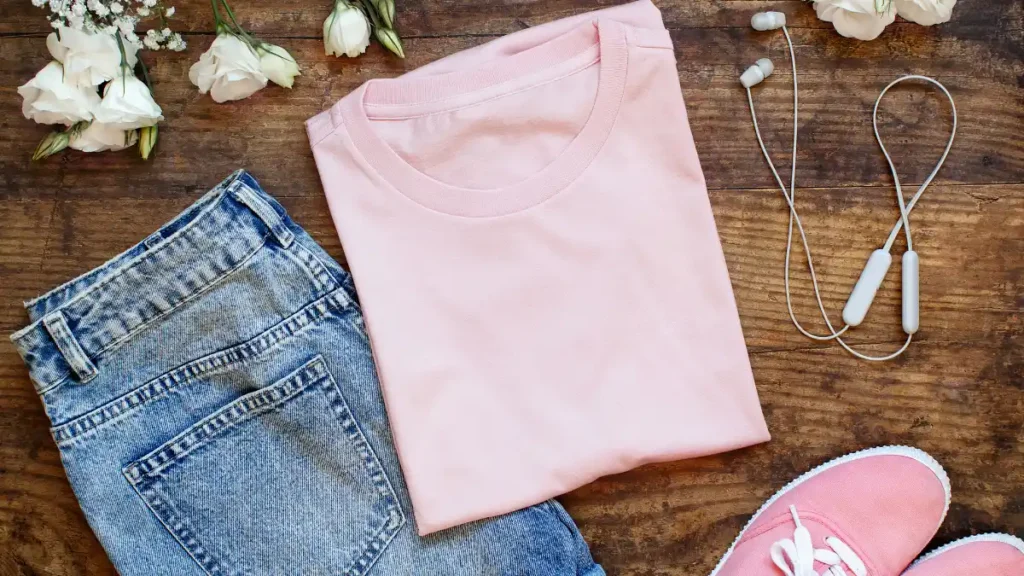
Jeans become more flattering when the surrounding pieces have purpose.
A plain tee can look chic when the neckline is good, the fabric is not flimsy, and the length works with the rise of the jeans. A blazer can look relaxed when the shoulders fit and the fabric has movement.
The goal is not to make denim formal. It is to make it look considered.
| Occasion | Pieces | Why It Works |
| Errands | Straight jeans + cotton tee + open cardigan + clean sneakers | Comfortable, simple, and still pulled together |
| Lunch with friends | Dark jeans + soft blouse + cropped jacket + loafers | Adds polish without feeling overdressed |
| Travel day | Relaxed jeans + fine knit + trench or utility jacket + slip-on shoes | Easy to move in, but not messy |
| Casual dinner | Bootcut jeans + silky shirt + ankle boots + simple earrings | The shoe and shirt dress up the denim |
| Work-from-home meeting | Dark jeans + knit top + blazer | Looks smart on camera and comfortable off camera |
Comfort upgrade: swap a stiff belt for a leather belt with a little give, or choose jeans with a contoured waistband. Small changes make a long day feel easier.
Accessories also matter. A simple hoop, watch, scarf, or polished tote can turn jeans from basic to finished.
What to Avoid and What to Try Instead
Nothing is banned. The better question is: does this choice give you the shape, comfort, and mood you want?
Some jeans outfits feel dated because the proportions are fighting each other. Others feel flat because every piece is casual at the same time.
Use this table as a gentle reset.
| Instead of This | Try This |
| Very thin jegging-style denim with a long shapeless top | Slim-straight jeans with a hip-length knit or shirt |
| Jeans that gap at the back waist | A contoured waistband, tailoring, or a different rise |
| Heavy distressing for every casual outfit | Clean denim with texture added through knitwear, shoes, or jewelry |
| Skinny jeans tucked into bulky boots | Straight jeans over ankle boots or slim jeans with sleeker boots |
| Oversized top and oversized jeans together | Relaxed jeans with a sharper jacket or neater neckline |
Shoe swap: when jeans feel dull, check the shoes first. A loafer, ballet flat, pointed flat, sleek sneaker, or ankle boot can change the whole outfit.
A hem that puddles over the shoe can make even good jeans look tired. A clean hem gives the eye a stopping point and makes the outfit look more current.
A Simple Jeans Formula to Copy

Formula: straight-leg jeans + soft structured top + third layer + polished flat shoe.
This formula works because each piece has a job. The jeans create the base, the top gives shape near the face, the third layer adds structure, and the shoe finishes the line.
You can vary it all year. In spring, wear straight jeans with a striped tee, cropped trench, and loafers. In fall, try dark denim with a merino sweater, long cardigan, and ankle boots.
For simple outfits for women over 50, this kind of formula is more useful than owning a closet full of one-off pieces. Once the base works, you can change the color, texture, and accessories without starting over each morning.
The denim reset that makes jeans feel fabulous again
When the old trusted pair stops working, denim is not the problem. The cut, rise, fabric, length, and styling just need to catch up with your life now.
- 1
Start with denim that holds its shape
A slightly structured jean skims instead of clinging and keeps the outfit polished by lunchtime.
Tap for detailLook for denim with some body and light stretch, not thin fabric that collapses at the hip, thigh, knee, or waist. - 2
Choose a rise that feels secure
Mid-rise or comfortable high-rise jeans often create a cleaner line under tops and jackets.
Tap for detailSit down before deciding. If the waistband digs or the back gaps badly, try tailoring, a contoured waistband, or a different rise. - 3
Pick an easy leg shape
Straight, slim-straight, gentle bootcut, and relaxed tapered jeans give shape without relying on an extreme silhouette.
Tap for detailThese cuts balance the body better than very skinny or very wide jeans when comfort and polish matter together. - 4
Balance proportion from waist to shoe
One part of the outfit should give structure while another part can relax.
Tap for detailTry a front tuck, shorter jacket, cleaner shoe, or top that stops around the hip bone when denim starts to feel heavy. - 5
Polish the pieces around the jeans
A good neckline, non-flimsy tee, fitted shoulder, simple jewelry, or polished tote makes denim look considered.
Tap for detailFor shoes, try a loafer, ballet flat, pointed flat, sleek sneaker, or ankle boot. A clean hem also keeps jeans current. - 6
Build denim around real life
Most women can do a lot with two or three great pairs that work with the tops and jackets they already wear.
Tap for detailStart with one dark straight-leg, one relaxed everyday pair, and one dressier option like black, white, or trouser-style denim.
Simple formula to copy
Build Your Denim Wardrobe Around Real Life

A strong denim wardrobe does not need ten pairs of jeans.
Most women can do a lot with two or three great pairs: one dark straight-leg, one relaxed everyday pair, and one dressier option like black, white, or trouser-style denim.
Think about the life you actually dress for. If you walk a lot, shoe-friendly lengths matter. If you travel, stretch recovery matters. If you meet friends often, darker denim and polished layers may earn more wear.
Cost-per-wear is a better guide than excitement in the fitting room. A simple pair you wear twice a week is worth more than a dramatic pair that only works with one top.
Try this: pull out your most-worn tops and jackets before buying jeans. The best pair should work with what you already reach for.