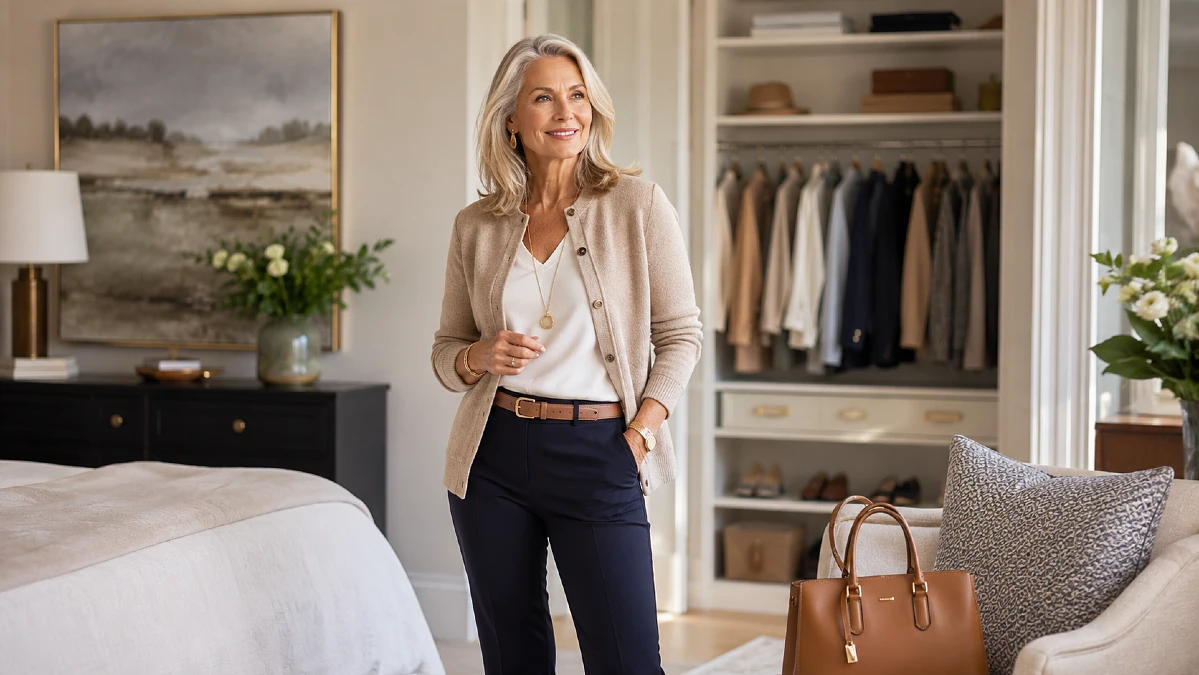
The hardest part of dressing over 50 is not style. It is knowing where to start when your old outfits no longer feel like you.
A closet can be full and still feel useless. Jeans pull in odd places. Tops look boxier than they did before. Trends move fast, and no one wants to look like she is trying too hard.
That is where smart fashion tips for women over 50 make a real difference. Not rules. Not a full wardrobe purge.
You Have Not Lost Your Style, You Have Lost Your Starting Point
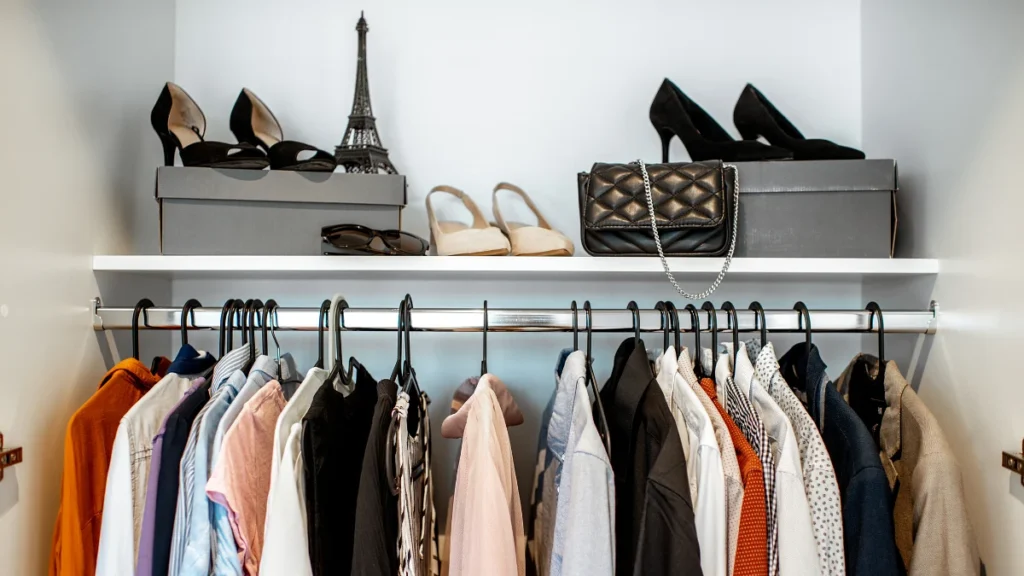
Style confidence over 50 often drops because the old starting point stops working.
That does not mean your taste is gone. It usually means your clothes, proportions, or daily life changed before your wardrobe caught up.
A jacket that once gave shape may now feel tight across the chest. A long tunic that used to feel safe may now make an outfit look heavy. A favorite shoe may still be pretty but too stiff for a full day.
The fix is not to chase a younger look. It is to rebuild your eye around what feels good now.
Start by asking one better question in front of the mirror: “Does this support the woman I am today?” That one question is more useful than asking if something is still “allowed.”
1. Start With Fit Before You Think About Style
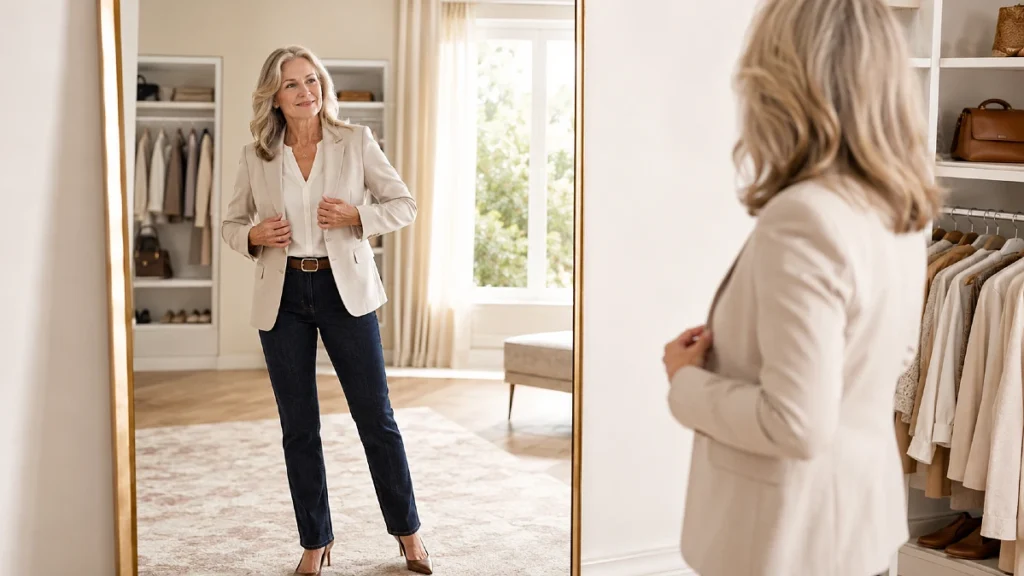
Fit is the quiet detail that makes simple clothes look expensive.
A plain white shirt, dark jeans, and loafers can look polished when the shoulder seam sits right, the waistband does not dig, and the hem hits cleanly. The same outfit can look tired when every piece is just slightly off.
Size labels are not reliable. They change across stores, cuts, and fabrics. Fit is what matters.
A good fit gives the body shape without squeezing it. You should be able to sit, walk, reach, and breathe. Clothes that only look good while standing still are not real-life style.
Use this quick table when an outfit feels “almost right” but not quite there.
| Fit Problem | Try This Instead |
|---|---|
| Pants pull across the hips | Try a higher rise or a straight-leg cut with a little stretch |
| Tops cling at the midsection | Choose a heavier knit, woven cotton, or relaxed button-front |
| Blazers feel tight when closed | Wear them open, or size for the shoulder and tailor the waist |
| Dresses feel shapeless | Add a soft belt, cropped jacket, or defined shoulder |
| Sleeves look bulky | Push or tailor sleeves to show the wrist |
Fit note: showing a little wrist, ankle, or collarbone can make an outfit feel lighter without showing more than you want to.
2. Build a Personal Uniform You Can Trust
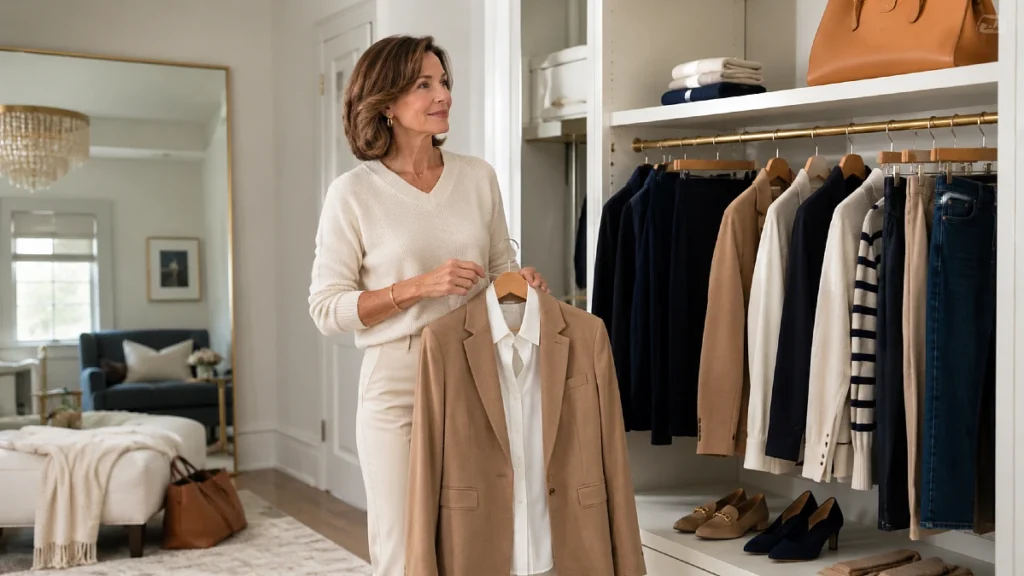
A personal uniform is not boring. It is freedom.
It means you know the shape of outfit that works for your life, then you repeat it in different colors, fabrics, and shoes.
For some women, that formula is straight-leg jeans, a soft knit top, and a long cardigan. For others, it is wide-leg trousers, a tucked tee, and a cropped jacket.
The point is not sameness. The point is less morning stress.
When you know your base formula, stylish outfits for women over 50 become much easier to build. You stop buying random pieces and start choosing clothes that work together.
Here are a few easy formulas that suit real days, not styled photoshoots.
| Occasion | Easy Outfit Formula | Why It Works |
| Errands | Straight jeans + knit top + lightweight jacket | Comfortable, but the jacket adds shape |
| Lunch out | Pull-on trousers + blouse + loafers | Soft waist, polished finish, easy movement |
| Travel day | Dark jogger-style pants + long tee + open cardigan | Relaxed without looking sloppy |
| Casual dinner | Midi skirt + fine knit sweater + low block heel | Feminine, balanced, and simple to repeat |
Formula: straight-leg pants + soft top + structured third piece.
That third piece can be a blazer, denim jacket, utility jacket, cardigan, or vest. It adds a clean outer line, which helps the whole outfit look more intentional.
3. Let Fabric Do More of the Work
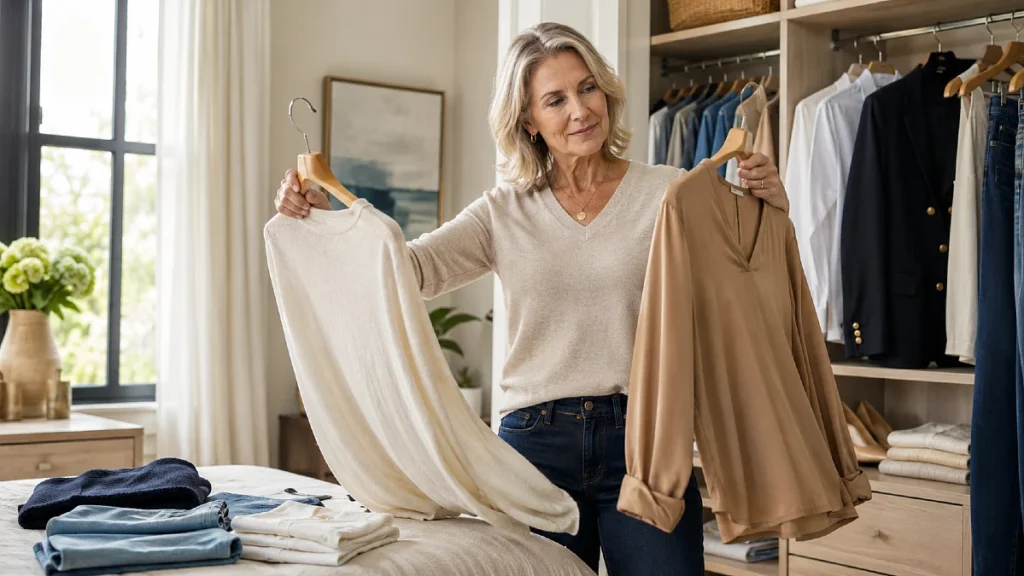
Fabric can make or break an outfit after 50 because it controls drape, comfort, and shape.
Thin jersey can cling where you do not want attention. Stiff fabric can feel harsh and boxy. Very stretchy pieces can lose shape by lunch.
Better fabrics do not have to be fancy. They just need enough weight to skim the body instead of grabbing it.
Cotton poplin, ponte knit, denim with light stretch, soft linen blends, and fine-gauge knits often work harder than flimsy tees or thin leggings.
This guide can help you choose pieces that feel comfortable and still look pulled together.
| Piece or Fabric | What to Look For | Why It Works |
| Ponte knit pants | Smooth, midweight fabric with stretch | Holds shape better than thin leggings |
| Cotton button-down | Slight structure, not too crisp | Frames the upper body without clinging |
| Dark denim | Straight or slim-straight cut with mild stretch | Gives shape while staying comfortable |
| Fine knit sweater | Smooth finish, no bulky seams | Layers well under jackets |
| Linen blend | Soft drape, not too sheer | Feels relaxed but still neat |
Fabric note: if a fabric wrinkles the second you touch it, it may not earn its place in your everyday wardrobe. Low-maintenance clothes get worn more.
4. Use Proportion Instead of Hiding
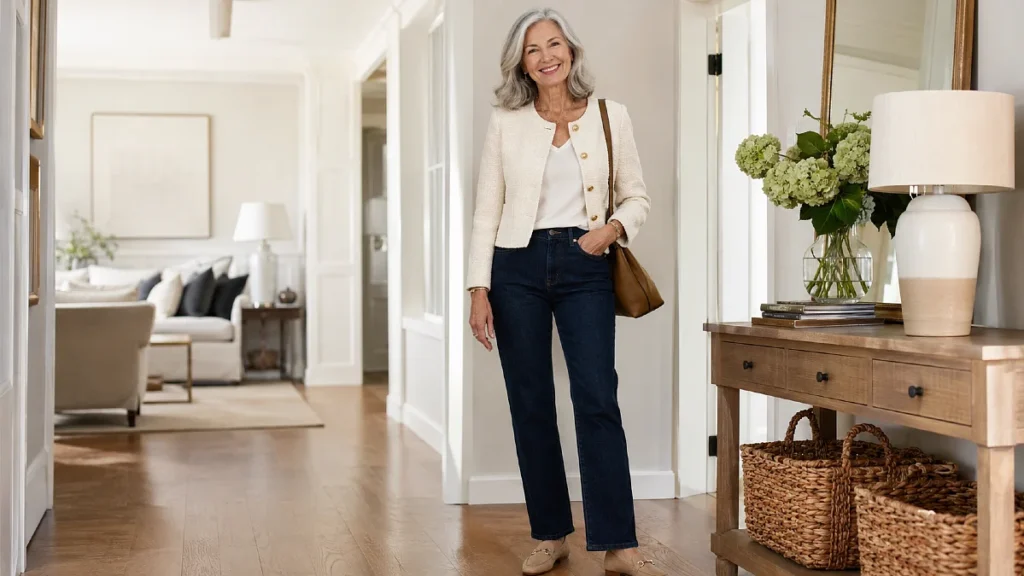
A lot of women are told to “hide” parts of their body. That advice rarely creates chic outfits.
Proportion works better.
If your top is long and loose, pair it with a slimmer or straighter bottom. If your pants are wide, try a shorter sweater, a half tuck, or a jacket that ends near the hip.
Shape gives the eye a path. That is why a simple outfit can suddenly look more modern when the lengths are adjusted.
Try this with clothes you already own: put on your usual top and pants, then change only the length of the top. Tuck it, half tuck it, knot it softly, or swap to a shorter layer.
The best version is usually the one that shows where the body has shape, without forcing anything tight.
Color note: lower contrast can also help. A navy top with dark denim, or a cream sweater with beige trousers, creates one long line that feels calm and elegant.
5. Modernize One Detail at a Time
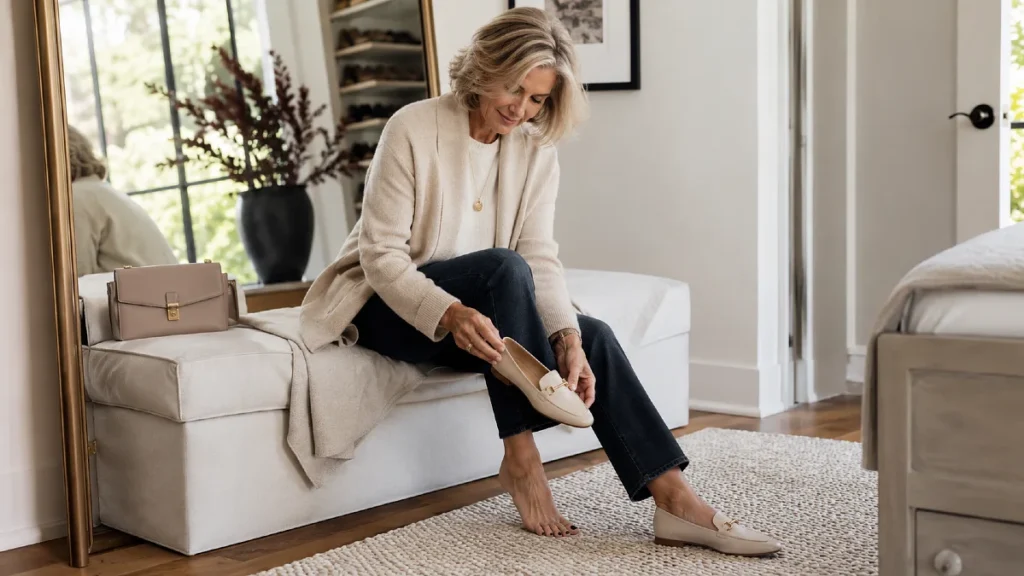
Trendy outfits for women over 50 do not need to be loud.
Most of the time, one current detail is enough. A fresh shoe shape, updated jeans, a cleaner bag, or a modern neckline can shift the whole outfit.
This is especially useful if you like classic clothes but do not want to look stuck.
Try one of these small updates:
The Modern Refresh
Elevating everyday silhouettes
Structural Denim
Swap skinny jeans for straight-leg, relaxed-straight, or bootcut denim to modernize your lower-half proportions immediately.
Clean Outer Layers
Trade a long waterfall cardigan for a shorter jacket or clean longline cardigan to maintain crisp, intentional body lines.
Statement Hardware
Replace a tiny pendant with a bolder chain or sculptural earring to anchor your outfit with confident, modern hardware.
Polished Footwear
Try loafers, sleek sneakers, ballet flats, or low block heels instead of dated comfort shoes for an effortless finish.
Elevated Palette
Choose a modern neutral like ivory, chocolate, olive, navy, camel, or charcoal to make your pieces infinitely interchangeable.
Shoe swap: footwear changes the mood fast. Dark jeans with athletic sneakers feel casual. The same jeans with loafers feel smart casual. With ankle boots, they feel sharper.
6. Keep Wardrobe Essentials Simple, But Not Plain
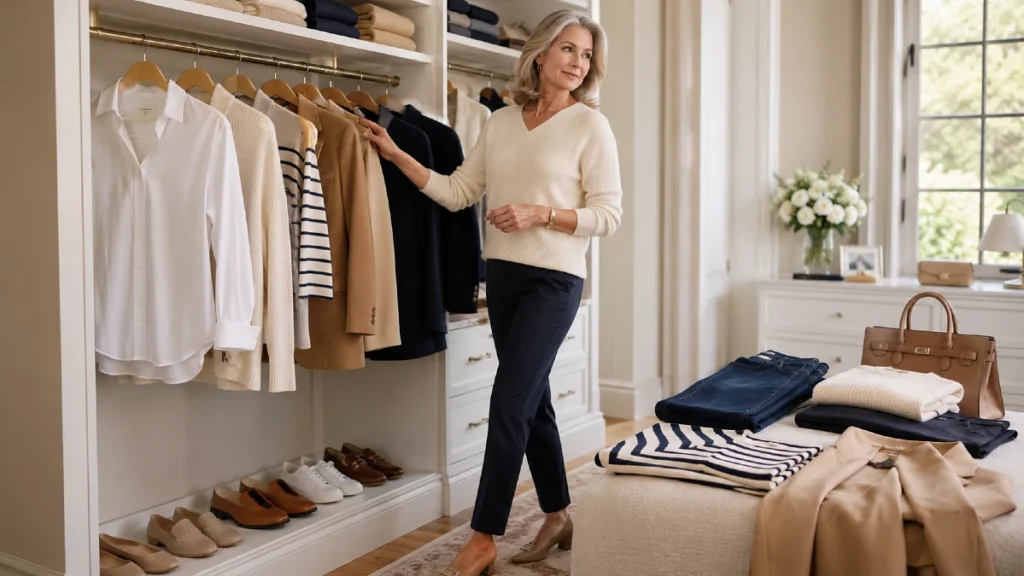
Wardrobe essentials for women over 50 should earn their space.
A good essential works with several outfits, feels good for hours, and does not need constant adjusting. It should also match the life you actually live.
You do not need a closet full of “must-haves” that sit untouched. A capsule wardrobe over 50 works best when each piece has a job.
A useful base might include dark straight-leg jeans, comfortable trousers, a white or ivory shirt, a soft knit, a blazer or jacket, a midi dress, and two pairs of shoes you can walk in.
The magic comes from how they mix.
A blazer should work with jeans and trousers. A knit should work with skirts and denim. A dress should stand alone, then change with a jacket or belt.
Cost-per-wear note: the piece you wear 40 times is often the smarter buy than the dramatic one you wear once.
7. Dress for the Life You Actually Have
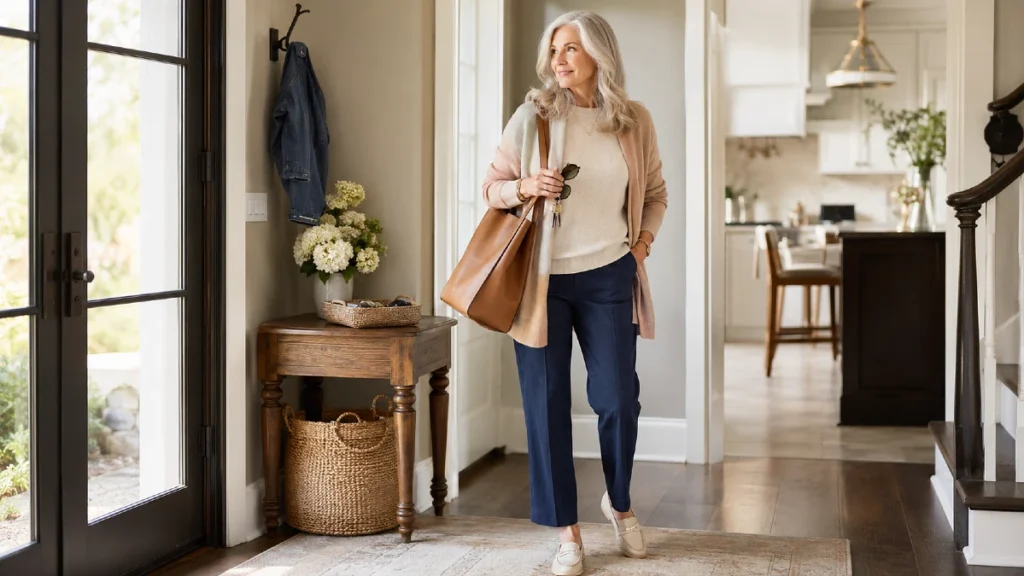
Good style has to survive the car, the grocery store, a long lunch, a suitcase, a warm afternoon, and a cold restaurant.
That is why elegant casual dressing matters so much. It lets you feel ready without feeling overdressed.
A polished everyday outfit might be as simple as dark jeans, a striped knit, loafers, and a trench-style jacket. Nothing fussy. Nothing stiff. Still chic.
Comfort is not the opposite of style. The problem is usually not comfort itself. It is comfort pieces with no shape, no finish, and no plan.
Comfort upgrade: choose pull-on pants with a flat front, sneakers with a clean shape, and knits with a smooth surface. You get ease without losing polish.
Dressing over 50 becomes much easier when your clothes match your real calendar, not someone else’s highlight reel.
The “not trying too hard” outfit formula
Start with comfort, then add shape. The easiest way to look current is not a strict avoid list — it is better fit, cleaner lines, and one polished piece that finishes the outfit.
- 1
Start with good fit
Simple clothes look more finished when they sit well on your body.
Tap for detailFit check: keep the outfit comfortable, then add polish through shape and fabric. - 2
Add one structured piece
A blazer, cropped jacket, crisp shirt, or neat cardigan gives casual outfits a finished line.
Tap for detailStyle move: one sharper layer can lift pants, jeans, and everyday tops without feeling dressed up. - 3
Skip strict avoid lists
The better question is not “Can I wear this?” but “Does this help me feel current and confident?”
Tap for detailBetter swap: if thin fabric clings, try a heavier knit. If long tops feel frumpy, try a shorter jacket or half tuck. - 4
Make casual less frumpy
Casual looks fall flat when every piece is soft, loose, and rounded.
Tap for detailShape fix: try straight-leg pants, a better shoe, a jacket, a sharper neckline, or a small front tuck. - 5
Keep jeans in rotation
Jeans can be one of the best everyday pieces after 50.
Tap for detailDenim note: look for a secure rise, light stretch, and leg shapes like straight, slim-straight, relaxed-straight, or bootcut. - 6
Build repeatable outfits
A good capsule wardrobe should match your real week, not chase a tiny closet for its own sake.
Tap for detailCapsule base: pants, jeans, tops, layers, shoes, and one dress or skirt if you wear them.
Frequently Asked Questions
How can I look stylish after 50 without trying too hard?
Start with good fit, clean shoes, and one structured piece. A blazer, cropped jacket, crisp shirt, or neat cardigan can make simple clothes look more finished. Keep the outfit comfortable, then add polish through shape and fabric.
What clothes should women over 50 avoid?
You do not need strict avoid lists. Instead, notice what bothers you. If thin fabric clings, try a heavier knit. If long tops feel frumpy, try a shorter jacket or half tuck. The better question is not “Can I wear this?” but “Does this help me feel current and confident?”
How do I make casual outfits look less frumpy?
Add structure. Casual outfits often look frumpy when every piece is soft, loose, and rounded. Try straight-leg pants, a better shoe, a jacket, a sharper neckline, or a small front tuck to give the outfit shape.
Are jeans still a good choice for women over 50?
Yes, jeans can be one of the best everyday pieces. Look for a rise that feels secure, denim with light stretch, and a leg shape that balances your proportions. Straight-leg, slim-straight, relaxed-straight, and bootcut styles are often easy to wear.
How many clothes do I need for a good capsule wardrobe over 50?
You need fewer than most people think. Start with pieces that mix across your real week: pants, jeans, tops, layers, shoes, and one dress or skirt if you wear them. The goal is repeatable outfits, not a tiny closet for the sake of it.
Conclusion
Style after 50 is not about shrinking yourself, chasing every trend, or following old rules that no longer serve you.
It is about fit, proportion, comfort, and knowing what makes you feel like yourself now.