

The money request is almost never the opening move. The opening move is making sure you never check.
An 'I love you' arrives in days, often before a single video call, and after a divorce or a bereavement that can feel like late-life luck – or, to an adult child, like a parent changing very fast. Both readings are worth taking seriously.
A real late-life courtship can move quickly too. The warning is speed plus a refusal to meet or to verify, not speed on its own. That combination is what separates a person who is eager from a person who is managing you.
The eleven flags below are one system applied to different parts of a new relationship: keeping you from checking who someone is, whether a meeting will actually happen, and where money goes. Name each flag as it appears and you will know the first move – stop the money, stop the secrecy, then verify through someone who does not answer to them.
Quick Tips Before You Start
Insist on live video
Ask for a live video call within two weeks. No recording, no still photos, just a real-time conversation.
Reverse-search the photos
Use Google Images or TinEye on any photo they send. Stolen photos almost always match another profile.
Keep the chat on the app
Stay on the dating platform until you have met in person. The app keeps a record and offers warnings.
Tell one trusted person
Name one friend or family member who knows the basics. Secrecy is the scam's best tool.
Never send money
No loans, no gift cards, no crypto, no packages. A real partner will understand a no.
Theme 1: The relationship moves faster than real life
Speed is not the problem by itself. Plenty of late-life romances move quickly, and two adults who have been around the block can fall hard in a month. The problem is speed plus refusal: a fast intimacy that arrives with excuses preventing the one thing that would confirm the person is real.
The first four flags all do the same job. They make the reader feel deeply connected to someone they have never checked, and they make checking feel like a betrayal of the romance. Watch for the pattern, not the passion.
1. Fast love before you've ever met
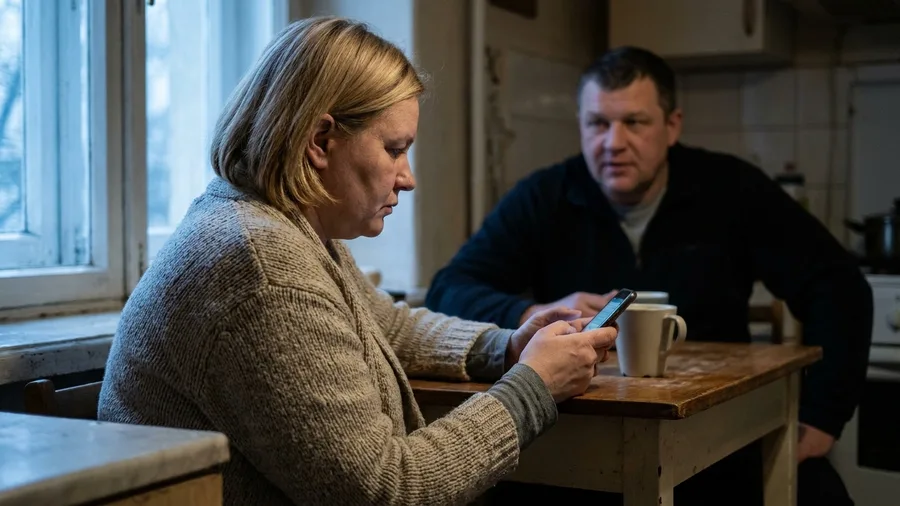
An "I love you" that shows up days after the first message is worth looking at closely. It is not the feeling that should concern you. It is the timing, because the words land before you have ever watched the person's face move on a live call.
The pressure that follows the declaration is the part to notice. A message on day nine says "I love you" and then asks you to delete the dating app, call this exclusive, start planning a shared future. Each request asks you to close a door before you have opened the next one, and none of them survives a simple question: when do we meet?
Here is the ten-second self-test. Can you name the date, the time, and the place of a confirmed meeting with this person? If yes, fast affection may simply be fast affection. If no, and every attempt to set one gets a reason it cannot happen yet, you are being held at arm's length while being asked to come closer.
The person who is genuine will not flinch at a live video call, and will not mind that you slowed things down. The one who needs to keep the contact unverified will find a way to make patience feel like a betrayal. Insist on the call before you share anything you cannot take back.
💡 Tip: Say: "I'd like to do a video call this week before we go further." A real partner says yes or offers a time. A scammer offers a reason.
| Red flag | What it sounds like | Safe next step |
|---|---|---|
| Fast love before meeting | "I love you" on day nine, and please delete the app | Slow the pace; insist on a live video call |
| Moving off the app fast | "This app is clunky; text me at this number" | Stay on the app until you have met or verified |
| Canceling every plan to meet | A sick parent, a work trip, a posting overseas | A second canceled meeting needs a new firm date |
| Video calls that always fail | Broken camera, poor signal, military rules | Ask for a live gesture like touching the left ear |
| Secrecy from family | "Let's keep this just for us" | Introduce them to one trusted person early |
| Story changes with details | The daughter is 12, then 9; the town changes | Keep notes and ask the same question later |
| Isolation from friends | Friends who ask questions are "bitter and jealous" | Talk to one trusted friend before any decision |
| Money troubles after trust | A $700 hospital bill and a promise to repay | Never send money to someone you have not met |
| Guaranteed returns | "Risk-free" or "insider" investment, act fast | Verify the investment independently; never let them manage it |
| Receiving their money or packages | A box with a prepaid label and a $200 thank-you | Refuse, keep the messages, report it |
| Urgency and crisis | Hospital needs $1,500 by morning | Impose a 24-hour rule before any money or info |
2. Moving off the app keeps their history hidden
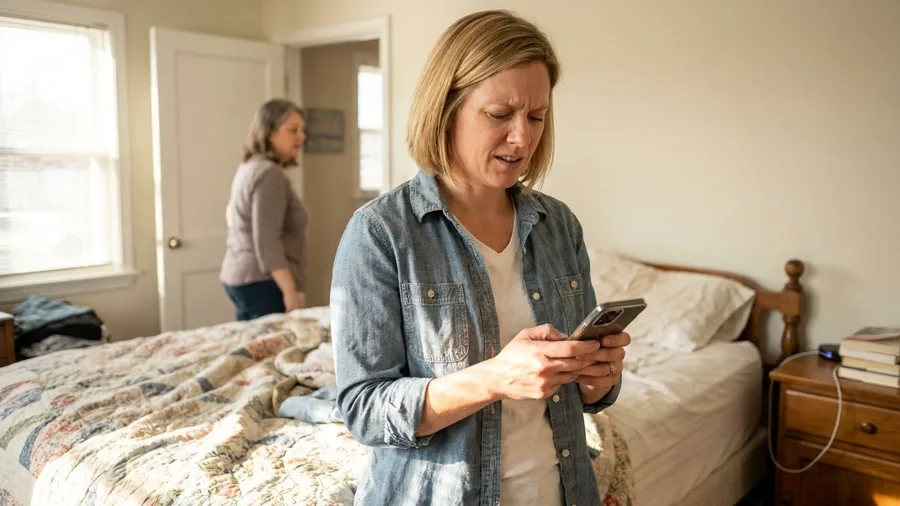
You are three messages in. The profile is charming, the questions are warm, and then it arrives: "This app is clunky on my phone. Text me at this number instead." It sounds like a small convenience, the kind of thing anyone might say.
The request is rarely about the texting. It is about what stays behind on the app when the conversation leaves it: the record of how the profile reached you, the report history, the safety prompts that appear when a message crosses a line. Move to a personal number and none of that follows you.
Watch what happens if you suggest staying put for now. "I would rather keep chatting here a little longer." A person with nothing to hide usually shrugs and carries on. A person who needs the history out of sight will push, or go quiet, or find a reason the app is suddenly a problem – and the push, not the request, is the thing worth marking.
What you lose off the platform is the part nobody sees until it is too late. On the app, if this profile has been reported before, the warning sits where other people can find it. Off the app, you are the first and only person checking.
So the move is simple. Stay on the app until you have met in person or verified who you are talking to some other way. You can give the number later.
3. Every plan to meet gets canceled
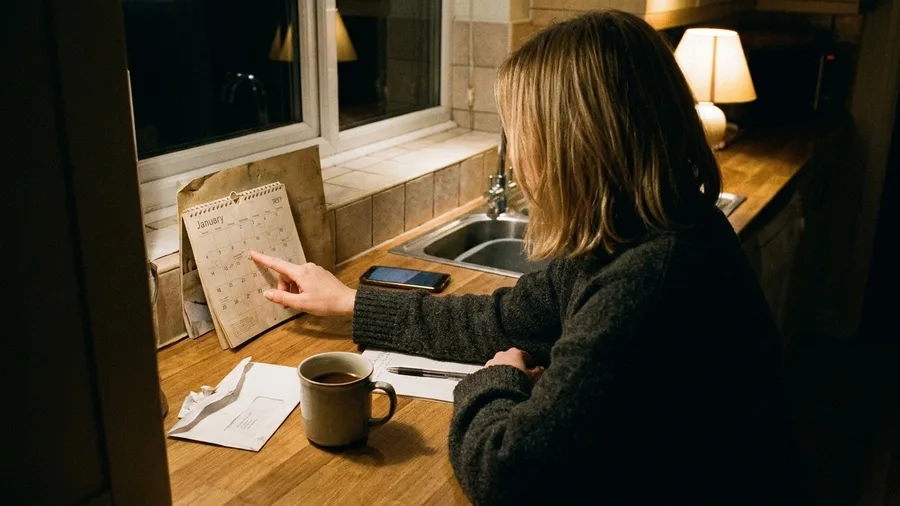
"I was posted overseas tomorrow morning – I'm so sorry, I'll make it up to you." The message arrives the night before the coffee you had finally pinned down.
People who study romance fraud describe the same shape again and again. A meeting is promised, then softened, then broken, and the reasons are always concrete enough to be hard to argue with: a sick parent, a sudden work trip, a deployment that forbids leave. A firm date that keeps getting broken is a pattern, not bad luck.
Treat a second canceled meeting with no new date attached as a stop sign. Staying connected only matters if a meeting is actually possible.
4. Video calls that always fail
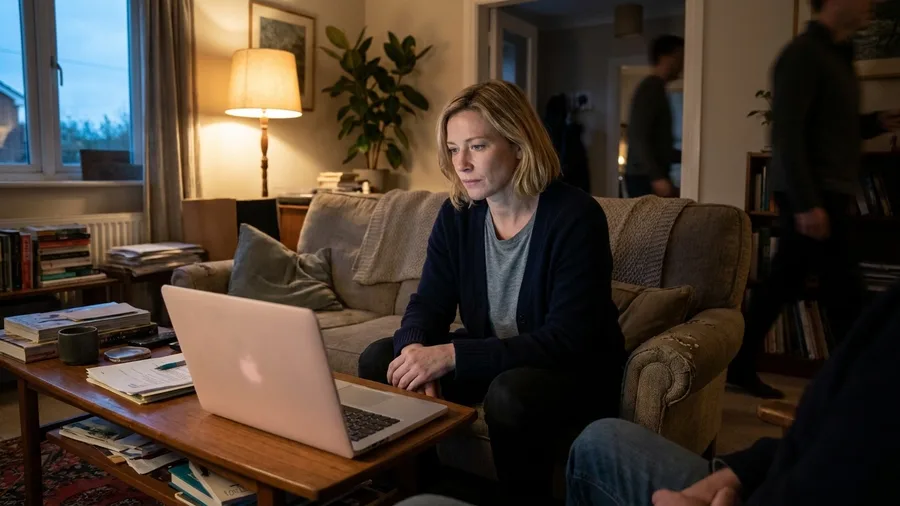
The standard advice says a technical excuse is just bad luck. Bad luck does not schedule itself around the one thing you have asked for twice.
Picture the same three reasons coming back in rotation. A camera that has been broken since spring. A signal that drops right as the picture would load, though the texts arrive perfectly. A posting that forbids live video for security. Still photos keep coming, sharp and new and always of the same face, and the live call never does.
A live call asking for one small gesture, a hand touching the left ear or today's newspaper held up, is nearly impossible to fake with a stolen photograph. This is the identity cross-check, and what you should notice is the effort spent keeping it from happening.
⚠️ COMMON MISTAKE
Don't confuse intensity with intimacy
The most common mistake is treating a flood of affection as proof of connection. Scammers are trained to be intense because intensity feels like closeness. Real closeness survives a pause and a question.
Theme 2: The relationship is kept hidden and inconsistent
First comes the fast love, then comes the wall around it. The next three flags describe how a scam keeps you from comparing notes with anyone who might spot the seams.
Secrecy and inconsistency are not romantic quirks. They are the conditions that make a false identity sustainable, because they stop the story from ever being checked by a second pair of eyes.
5. Secrecy from family protects the scam

When a man I was seeing suggested we keep things quiet for a while, I thought he was protecting something tender. It took a friend asking one flat question about where he lived to show me the quiet was doing different work.
The request usually arrives dressed as romance. Let's keep this just for us. Your daughter will be jealous, she will ruin it. Then your daughter asks a simple question, what town he is from or what he does, and the answer comes back quick: don't tell her yet. What sounds like a private garden is really a locked door, and the people on the other side of it are the ones who would look twice at the story.
A partner who only wants what is best for the two of you can survive being seen. If being known to one trusted friend counts as a threat, that is the sign worth reading. Introduce him to that friend early, while the relationship is still cheap to check.
💡 Tip: Tell one person the basics: first name, where they say they live, and how you met. If you can't, ask yourself why.
6. Their story changes when you ask again

Three conversations is usually enough. Ask the same small question each time and listen for the town, the job title, the daughter's age. First call she is 12; a week later she is 9 and starting college.
That drift in specifics is what separates an invented identity from an ordinary forgetful one. Real forgetting stays vague; a story built to hold up shifts exactly where it is checked. Note the details down, then ask again later.
When the person has been met and the story holds across months, a reshuffled detail is just a tired memory. The pattern to act on is a story that changes plus irritation that you asked twice.
7. They isolate you from friends who ask questions
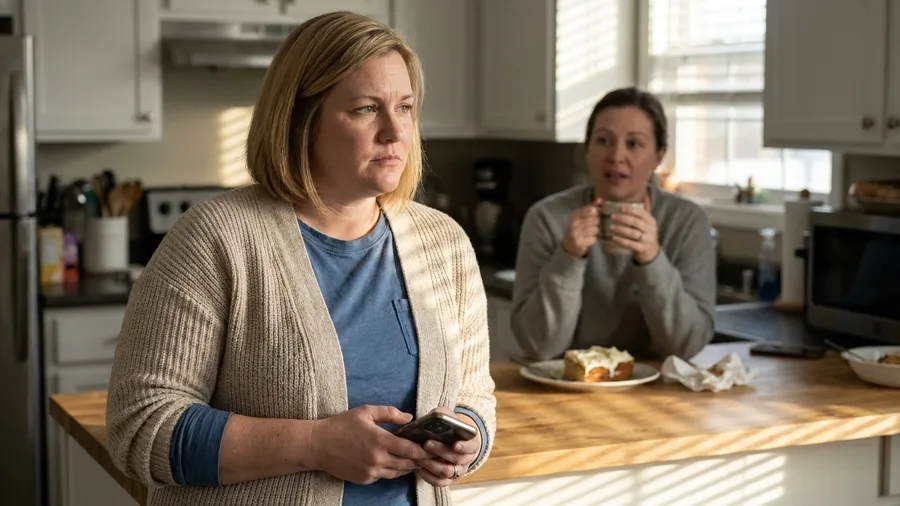
Because the people who ask questions are the ones who can catch an inconsistent story, and removing them is easier than keeping the details straight. Criticizing a concerned friend is not jealousy you have to manage. It is a way to take the reviewer out of the room.
Picture the birthday lunch. You have gone to it every year, and a friend mentions it and asks, plainly, where your new partner actually lives. He hears about it later and calls her bitter and jealous, then wonders aloud why you still go. No one asked him to explain anything. The label is the whole reply.
The words are almost always the same set: jealous, controlling, negative. Friends who ask a real question become people who don't support the relationship, and a partner who is a little less contact, a little more distance, does not sound like much when it is phrased as protecting what you have. What it removes is the person who would have said wait.
That loss of outside perspective is the point. A story is far easier to keep steady when only one person is hearing it. Before a decision about money, a trip, or moving in, say it out loud to one trusted friend or family member, and notice whether you would rather not.
Healthy privacy vs. isolating secrecy
Healthy privacy
- You choose together when to tell family
- You can still talk to friends about the relationship
- Friends' questions don't cause a fight
- The relationship is public to at least one person
Isolating secrecy
- They ask you to keep it secret for now, repeatedly
- Friends who ask questions are criticized
- You feel you have to choose between them and your family
- No one in your life has ever seen their face
Theme 3: The hidden trust is converted into money
The first two themes build a relationship that is fast, hidden, and unverified. The third theme is what that structure is for. Once you are isolated and invested, the requests begin, and they are designed to feel like small steps rather than a leap.
Each request is a test of whether you will send something to someone you have never met. The first one is usually small, because it is not about the amount. It is about establishing the pathway.
8. Money troubles appear right after trust
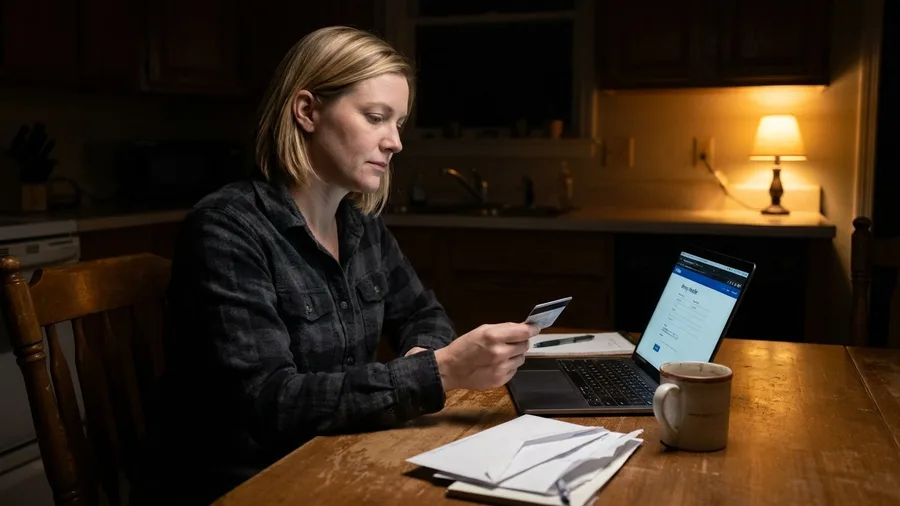
The amount is small on purpose, and small is the trap. Once money has moved once between you and a person you have not sat across a table from, the asking has a precedent and your own judgment has a precedent, and undoing either is harder than keeping the first request from landing. So the cost arrives before the ask: a hospital bill, a customs charge, a phone account about to be cut off.
Every emergency in these exchanges shows up after weeks of good-morning messages and talk of where the two of you might live. The relationship gets steady and warm, and then the first number appears. Around the sixth week it is $700 for a hospital bill, framed as a stopgap, repaid the moment a pension clears the bank. Note what the frame does: it makes the money a detail of a shared future, not a transaction between strangers.
The reason you are the only one who can help is always rehearsed and always unavoidable. An account is frozen until a signature clears. A relative is unreachable. A military salary is held up somewhere in a system you cannot call. Each explanation is built so that checking it would be rude, and so that nobody has to be named who could confirm it.
There is a version of this you can say on the phone that costs nobody anything. 'I don't send money to anyone I haven't met in person, so I'll need us to get that meeting on the calendar first.' Then: 'If this is real, it can wait until we've met and I can see the paperwork.' If the emergency is genuine, a short wait changes nothing. If it cannot survive the wait, that is your answer, and you have it without calling anyone a liar.
A request for money is not a request for a loan, whatever the wording, because the person asking is doing it before any meeting could make the repayment a thing you could collect. The emergency itself may be real; the payment going to someone unverified is not. Verify nothing they send you, and send nothing while any part of the story is still theirs alone to confirm.
💡 Tip: If you have already sent money, stop all payments now and call your bank's fraud line. Speed matters more than embarrassment.
Every red flag in this list is the same move: it stops you from checking through anyone but them.
— What fraud-prevention counselors keep repeating
9. Guaranteed returns from a partner

Often, yes, and the reliable sign is not the size of the number but who controls the screen that shows it.
Early requests are small and reversible. The larger pitch is the one where the relationship itself is the sales channel: the platform is one the partner recommends and can access, the vocabulary is guaranteed or risk-free or insider, and the push is to start small and act fast. A link then shows $12,000 in her account after your $500 goes in.
The obvious move is to trust the balance you can see. That is the mistake. A figure on a platform your partner has a hand in is not a check on anything. Verify independently, through your bank or a licensed adviser, and keep the account in your hands.
The discomfort of pausing is the price of getting this right, and it is a small one.
Numbers worth knowing
10. Receiving their money or packages makes you a mule
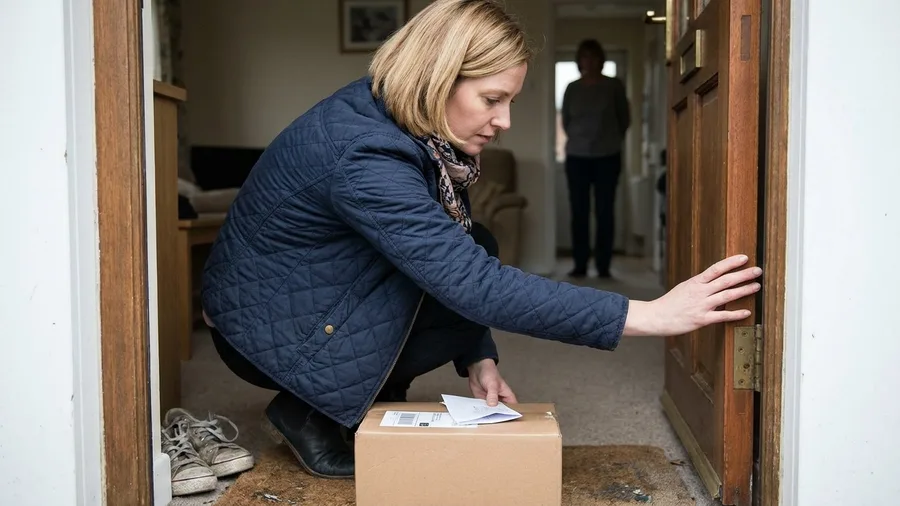
"Just let the box come to your place, then send it on. I'll make it worth your while." That line rarely arrives early. It lands after months of affection, after the investment pitch has quietly stalled, and it asks for something the reader's own name and address will carry.
A request to receive packages, forward funds, or let money move through your bank account is a request to put your own account and home on the route. The offer sounds small and generous: a cut, a gift, a thank-you. What it actually does is make you the visible party in a scheme that runs on someone else's stolen goods and other people's lost money, and the trail stops at your front door.
Picture the box arriving with a prepaid label and a note asking you to reship it for a $200 thank-you. The goods may be bought with stolen cards; the transfers may be cleaned money from people who will never see it again. Over the months, what this quietly spends is your name, your address, your account history, and your ability to explain any of it later.
The check-blocking move is making your bank and your home the hidden funnel, so no one upstream is ever seen. Refuse, keep the messages and labels, and report it to the bank's fraud line and the local elder-protection agency. That refusal costs you a thank-you, not a relationship worth keeping.
11. Urgency and crisis stop you thinking
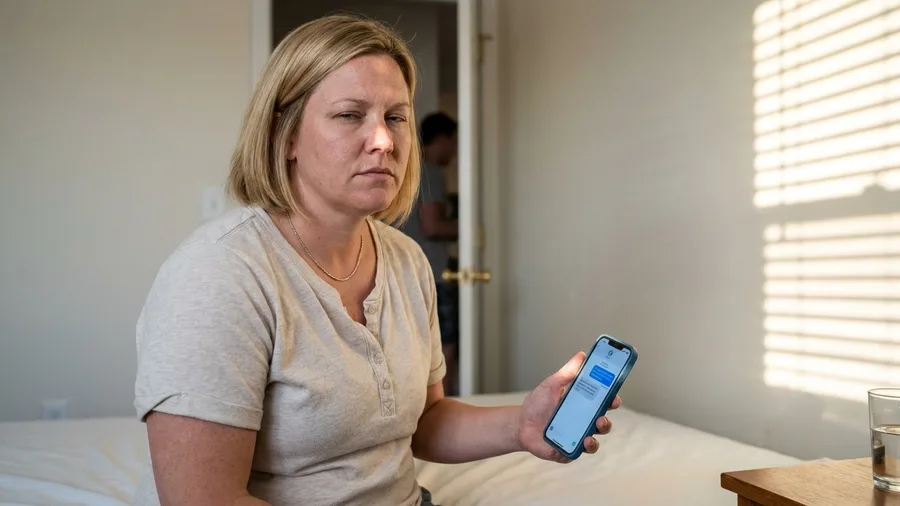
Urgency is a deadline attached to a feeling, and its job is to get a decision made before a check can happen.
A refusal to receive a package for someone occasionally arrives with a clock already running, but the clock itself is the last and most patient move in the whole set. Researchers who study fraud and the people who train negotiators both describe the same mechanism: pressure narrows attention to the immediate threat, and the ordinary caution that would send you to a bank or a daughter gets crowded out by the fear of what happens if you wait.
So there is always a reason it cannot wait. A flight leaves tonight. A surgery is scheduled for morning. A deal expires at midnight. The message comes at 11 p.m.: the hospital needs $1,500 by then or there will be no operation. Ask for a day to think and the tone changes. They panic, go cold, or say the hesitation itself proves you never really cared. The cost of checking, in other words, has been made the relationship.
That is the design. If you pause, you can compare the story to yesterday's version, call the hospital, or ring the one friend who asks questions. None of that is possible inside a deadline measured in hours.
What the field keeps reporting is that scammers build these windows deliberately, because a closed window is where verification dies. The plain counter is a 24-hour rule: nothing involving money or personal information gets decided tonight, no matter what is at stake. Say it once, in your own words. A real emergency can usually survive a day, and a story built on a clock often cannot.
💡 Tip: Say: "I don't make financial decisions after 8 p.m." It gives you a neutral reason to pause without accusing anyone.
Three mistakes that make a scam easier
Frequently Asked Questions
How do I know if an online romance is a scam?
You cannot know for certain from a single message, but you can watch the pattern. A scam usually combines fast intimacy with a refusal to verify: no live video, no meeting, secrecy from family, and eventually a request for money or goods. If you see two or more of those together, treat it as a serious warning and verify through an independent channel.
Is it rude to ask for a video call?
No. Asking for a live video call is a normal step in online dating. A person with nothing to hide will say yes or suggest a time. If the request is met with irritation, excuses, or a sudden crisis, that reaction is information about the person, not about your manners.
What should I do if I have already sent money?
Stop all payments immediately and call your bank's fraud line. Report the profile to the dating platform and to the police. You can also contact the local elder-protection agency if you are unsure where to start. Speed matters more than embarrassment, and there is no shame in being targeted.
Can a real relationship start fast and still be genuine?
Yes. Some late-life romances move quickly and are entirely real. The difference is that a genuine fast relationship does not block verification. It survives a video call, a meeting, an introduction to a friend, and a question about the town they live in. Speed alone is not the flag; speed plus refusal is.
Who can I call for help if I suspect a scam?
Start with your bank's fraud department if money is involved. Report the profile to the dating app. In the US, you can contact the AARP Fraud Watch Network or the local Adult Protective Services. In the UK, Action Fraud takes reports. A family member or a trusted friend can also help you check the facts.
Stop the Money Before the Next Call
One flag is enough to stop, not to accuse. Stop the money and stop the secrecy before the next conversation, then call a channel the other person does not control: a family member, your bank's fraud line, or your local elder-protection agency, often called Adult Protective Services. To the family member: 'This is an online relationship moving toward money or secrecy; look at it with an independent eye before the next conversation.' To the bank: 'This account may be the target of a romance scam; hold outgoing transfers and review recent activity.' To elder-protection: 'This is a late-life online relationship with a request for money or secrecy; help me verify before anything is sent.'
That first 'I love you', arriving before you had ever seen the face on a working call, was never the verdict. The verdict is the refusal to let anyone check it. A real relationship can survive a 24-hour pause. A story built on a deadline usually cannot, and the pause is the one test you can run today.
Read the list again with your own situation in mind
Scan the eleven flags and pick the one that made you pause. That is the one to check first, with one trusted person, before the next conversation.