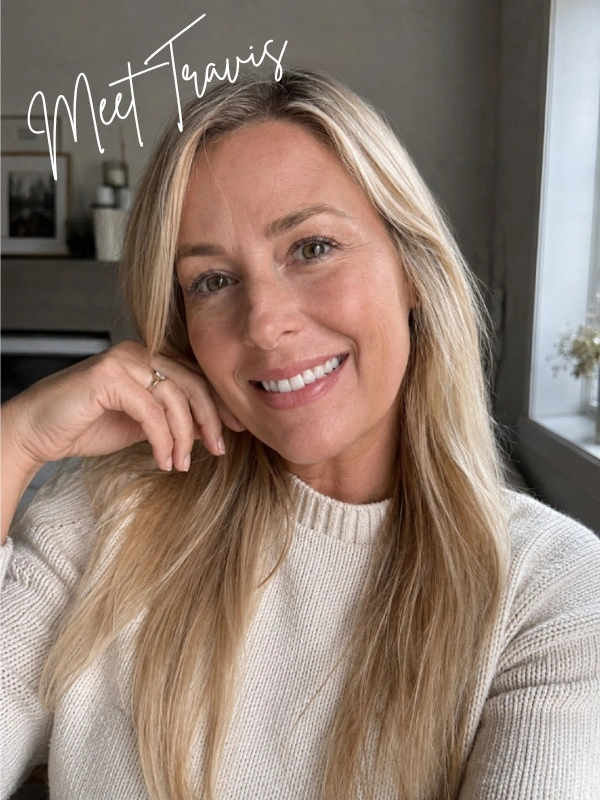
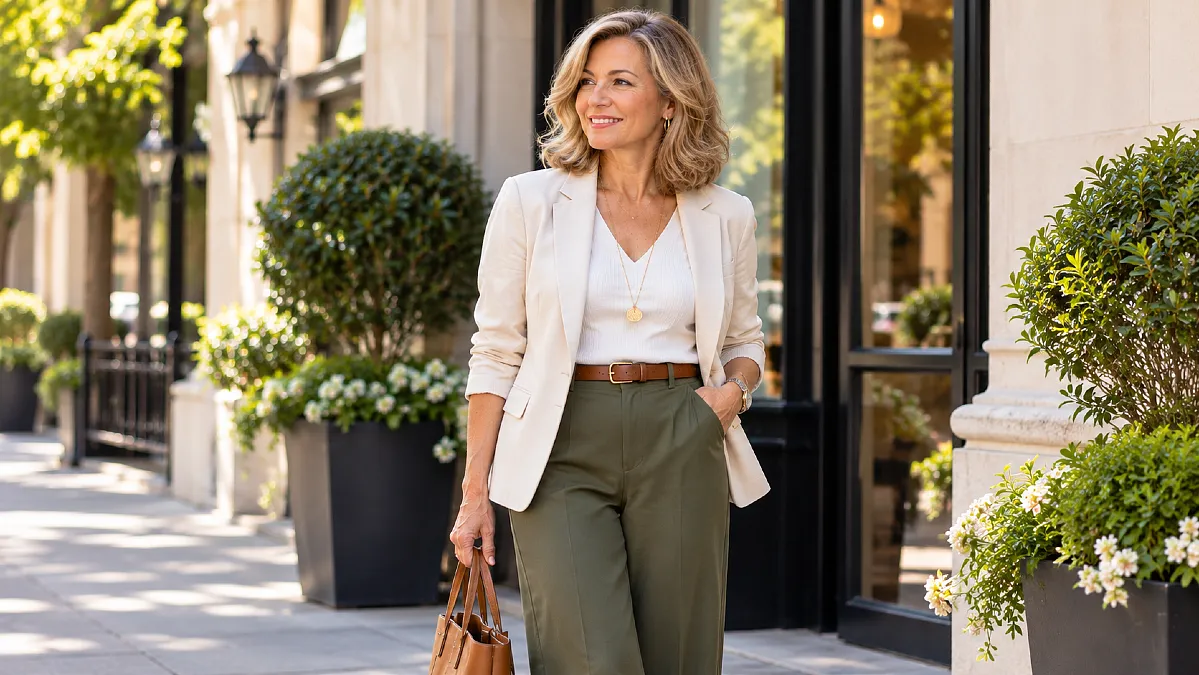
Finding clothes that sit comfortably at your waist can be frustrating when you have a short torso. A blouse may bunch above your waistband, a jacket may end too high, or your favorite high-waisted jeans may make your upper body look even shorter.
For women over 50, these little fit problems can make otherwise lovely outfits feel awkward. You might love each piece on its own, yet something looks slightly off when you put everything together.
The good news is that dressing a short torso over 50 doesn’t require a new wardrobe or complicated fashion rules. Small changes in waist placement, top length, necklines, and layering can make a noticeable difference.
Why Does a Short Torso Make Some Outfits Look Unbalanced?
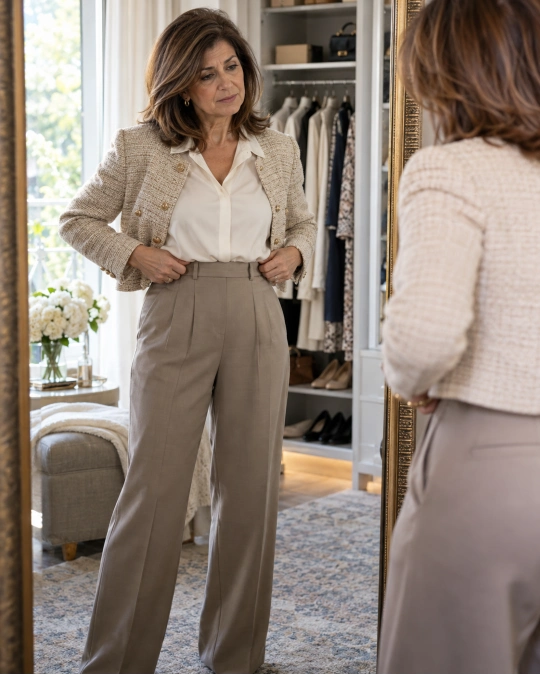
A short torso simply means the space between your shoulders and waist is relatively short compared with the rest of your body. You can have a short torso at any height, and it doesn’t automatically mean you have short legs.
The challenge often comes from clothing proportions rather than your body itself. Many modern jeans, trousers, and skirts have high waistbands that sit close to the rib cage, leaving little visible space between the bust and waist.
This can become more noticeable when you wear a tucked-in blouse or a cropped jacket. Both pieces draw attention to a high waistline, making the upper body appear shorter than it actually is.
Body changes over time can also affect how clothes sit. A fuller bust, changes around the middle, or different comfort needs may make familiar styles feel less comfortable than before.
The aim isn’t to hide your natural proportions. It’s to create a little more visual length through your upper body while keeping your whole outfit comfortable and balanced.
Choose Pants That Give Your Upper Body More Visual Length
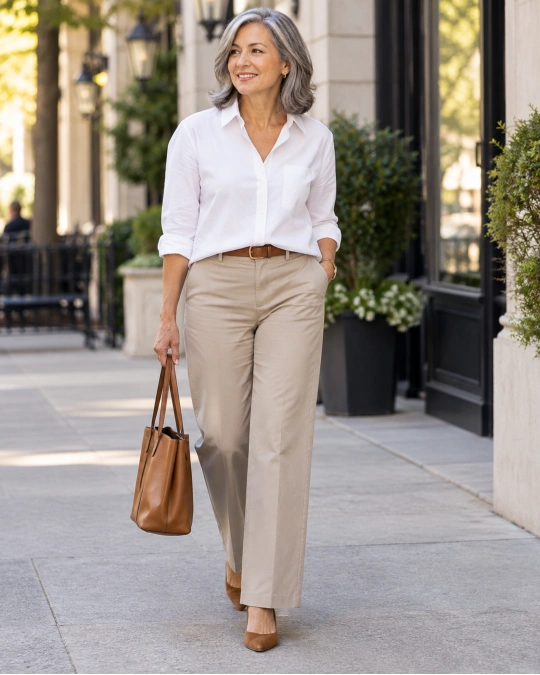
One of the easiest ways to balance a short torso is to pay attention to where your trousers sit. The height of your waistband can change how long your upper body appears, even when nothing else in your outfit changes.
Mid-rise trousers are often a useful starting point because they sit lower than very high-waisted styles. This leaves more visible space above the waistband and can create a softer transition between your torso and legs.
Straight-leg jeans, relaxed tailored trousers, and softly tapered pants are especially practical for everyday outfits for women over 50. They provide structure without needing a tight waistband or an exaggerated silhouette.
Very high-waisted trousers aren’t automatically a poor choice. If you love the support they provide, wearing them with a softly untucked top can help prevent the waistline from becoming the main focus.
Here is a simple guide to choosing trouser styles for a short torso.
| Trouser Style | What to Look For | Why It Helps |
|---|---|---|
| Mid-rise straight-leg jeans | Waistband near the natural waist or slightly below | Creates more visible space above the waist |
| Mid-rise tailored trousers | Smooth front with a comfortable waistband | Gives a clean, balanced silhouette |
| High-rise wide-leg pants | Soft waistband paired with an untucked top | Keeps the rise comfortable without emphasizing it |
| Relaxed tapered pants | Gentle shaping through the hips and thighs | Defines the lower body without adding bulk |
| Pull-on trousers | Flat, flexible waistband with minimal gathering | Reduces bunching around a shorter midsection |
Fit Note: Try trousers while sitting as well as standing. If the waistband presses into your ribs or folds uncomfortably when seated, the rise may be too high for your proportions.
Find the Right Top Length Without Making Your Legs Look Shorter
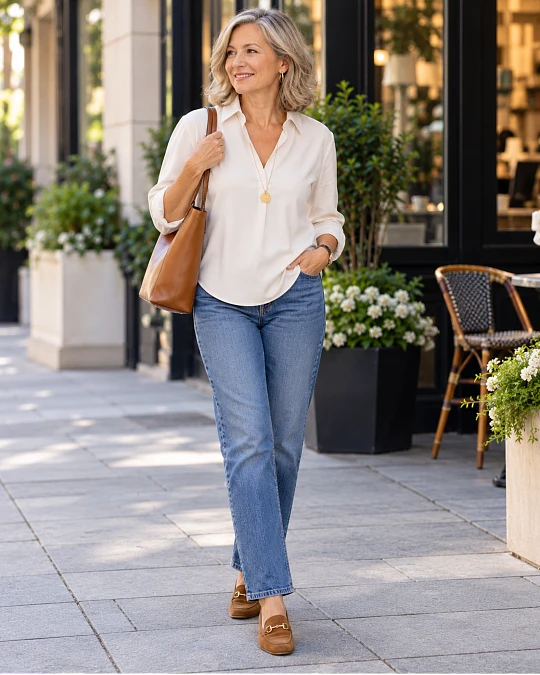
Top length can be surprisingly tricky when you have a short torso. Very cropped tops may make your upper body appear shorter, while oversized tunics can create too much fabric around your middle.
A useful starting point is a top that finishes around your upper hip. This gives your torso a little more visual length without covering so much of your legs that the outfit begins to feel heavy.
Softly shaped blouses, fine-knit sweaters, and relaxed cotton shirts often work beautifully. Look for fabrics that fall smoothly rather than gathering into thick folds above the waistband.
A top doesn’t need to be fitted to look polished. A gentle shape through the shoulders and bust, followed by a relaxed fall around the waist, can create definition without clinging.
Small Changes That Make Tops Look More Balanced
- Try a soft front tuck: Tuck only a small section of a lightweight blouse into mid-rise trousers, leaving the sides relaxed. This adds shape without pulling every bit of fabric into the waist.
- Choose tops that skim the upper hip: A hem near the top of your hip can create a longer upper-body line while keeping your legs visible.
- Look for gentle shaping: Vertical seams, subtle darts, and slightly shaped side seams help a top follow your body without squeezing your middle.
- Keep bulky fabrics away from the waistband: Fine cotton, fluid viscose, and lightweight knits usually sit more smoothly than thick, stiff materials.
For casual dressing, a softly untucked shirt with straight-leg jeans can look just as finished as a fully tucked blouse. The important detail is where the hem falls and how comfortably the fabric sits against your body.
Fabric Note: If your tops repeatedly bunch around your waist, check the garment’s overall length and how it fits through the bust. Sometimes the problem is not your waistband but a blouse that has too much fabric between the bust and hips.
Use Necklines and Jackets to Create a Longer Upper-Body Line
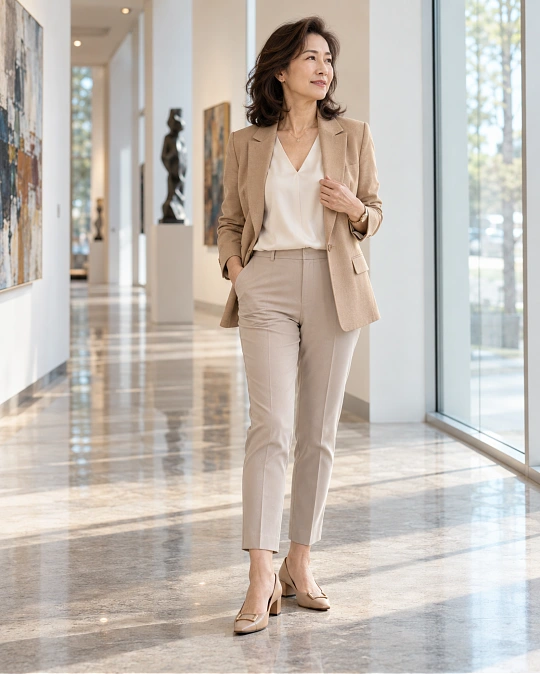
Necklines can change how your upper body looks without changing the waistline at all. Open shapes such as V-necks, scoop necks, and relaxed open collars encourage the eye to travel downward through the center of your torso.
A soft V-neck sweater is particularly useful because it gives the neckline some breathing room. Pair it with straight-leg trousers, and you have a simple outfit that feels modern without looking overly styled.
You don’t need to avoid crew necks if they’re your favorite. A crew-neck top beneath an open cardigan or an unbuttoned shirt can create a similar lengthening effect through the center of your outfit.
Jacket length matters just as much. Very short jackets that end well above your natural waist can make the upper body look compact, especially over high-waisted trousers.
Instead, consider jackets that finish around the hip or slightly below. A softly tailored blazer, open-front cardigan, or lightweight denim jacket can extend the visual line of your torso.
For example, a cream V-neck top beneath a navy hip-length blazer creates a clear vertical opening. Add dark straight-leg trousers and comfortable loafers, and the outfit feels balanced without relying on dramatic styling tricks.
Keep the shoulder fit neat, even when choosing a relaxed jacket. Excessively dropped shoulders or very wide sleeves can overwhelm a shorter upper body and make the whole outfit appear less defined.
Color Note: Wearing a jacket and top in similar shades can create a quieter, continuous upper-body line. You can still add contrast through your trousers, shoes, or handbag without drawing extra attention to your waist.
Wear Dresses and Belts Without Crowding Your Waist
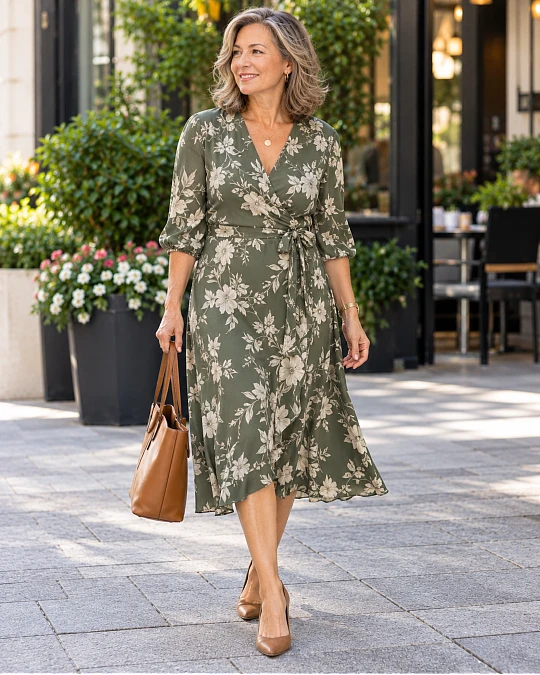
Dresses can be especially comfortable for women with short torsos because they remove the need to coordinate a separate waistband and top. However, the position of the dress’s waist seam can make a big difference.
A dress with a fixed, high waist seam may sit too close to your bust, creating a crowded look. A relaxed shift dress, gently shaped sheath, or wrap dress with an adjustable tie may provide more freedom.
Wrap dresses can be particularly useful when the tie can sit comfortably at your natural waist. The diagonal neckline and soft fabric movement help create a longer visual line through the upper body.
For everyday wear, a midi-length dress with a modest V-neck and gentle shaping through the middle offers a polished option. Add a hip-length cardigan if you want another layer without making the waistline too prominent.
Belts deserve a little attention, too. A very wide belt takes up valuable space on a short torso, especially when worn high above the natural waist.
A narrow or medium-width belt usually creates definition without overwhelming your middle. Choosing one close to the color of your dress or trousers can make the transition look softer.
If you enjoy wearing belts, experiment with their placement rather than automatically tightening them at the narrowest point. A slightly lower position can feel more comfortable and give the upper body a little extra visual space.
There is no need to belt every dress. Sometimes a well-cut dress with gentle shaping gives you all the definition you need.
Avoid the Styling Details That Make a Short Torso Look Crowded
Sometimes an outfit feels unbalanced because several small details are competing for the same limited space. A high waistband, a wide belt, and a cropped jacket might each look lovely alone, but together they can make the waist feel crowded.
The solution is usually to adjust one element rather than replace the entire outfit.
Here are a few common styling combinations worth reconsidering:
- A very high waistband with a fully tucked blouse: Try a mid-rise option or leave your blouse softly untucked to give your upper body more visible length.
- A cropped jacket over high-rise trousers: Consider a jacket that finishes near the hip, creating a longer line through your middle.
- A wide contrasting belt: Swap it for a slimmer belt in a similar color to your outfit, or skip the belt when the garment already has shape.
- A bulky sweater gathered at the waist: Choose a finer knit with a smoother hem, or wear the sweater untucked over straight-leg trousers.
These aren’t fashion mistakes you must avoid forever. They’re simply combinations to reconsider when you want your torso to appear longer.
Even accessories can help with proportion. A scarf worn loosely with the ends hanging down or a medium-length pendant can add a vertical detail without making your outfit complicated.
Try changing one thing at a time in front of a full-length mirror. You may discover that your favorite jeans look much better with a different top length, or that an open jacket makes a previously awkward outfit feel complete.
Build Balanced Everyday Outfits With One Simple Formula
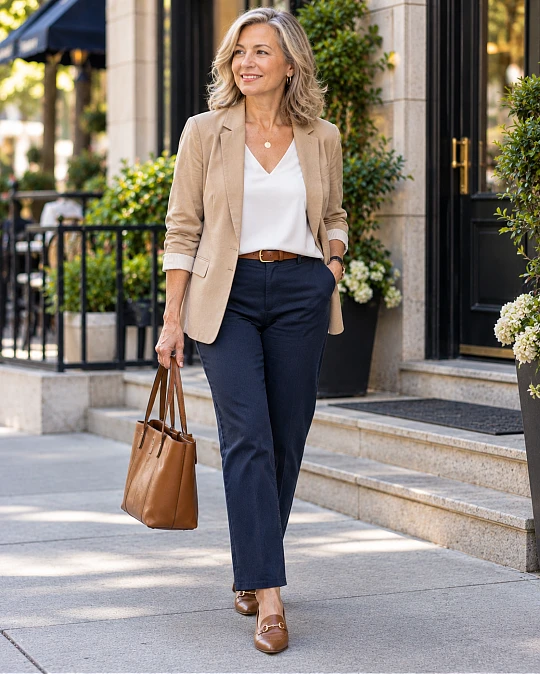
Once you understand the proportions that work for you, creating stylish outfits for women over 50 becomes much less complicated. You don’t need a different strategy for every occasion.
A useful everyday combination starts with a comfortable mid-rise bottom, a softly shaped top, and a layer that creates length through the upper body.
Formula: Mid-rise straight-leg trousers + upper-hip-length top + open hip-length layer
This combination gives the waist some breathing room while keeping the outfit neat and defined. You can change the fabrics, colors, and shoes to suit the weather or your plans.
The same proportion principle works with casual denim, tailored trousers, and even skirts.
| Occasion | Outfit Formula | Why It Works |
|---|---|---|
| Everyday errands | Mid-rise jeans + soft V-neck top + open cardigan | Creates a relaxed vertical line |
| Lunch with friends | Straight-leg trousers + fluid blouse + hip-length blazer | Adds polish without crowding the waist |
| Casual weekend | Mid-rise chinos + upper-hip-length knit + white sneakers | Keeps the outfit comfortable and balanced |
| Dinner out | Softly shaped midi dress + slim belt + low heels | Defines the waist without overpowering it |
| Travel day | Pull-on trousers + relaxed open-collar shirt + light jacket | Allows movement while maintaining a neat silhouette |
You can build several chic outfits for women over 50 from these combinations without buying a whole new wardrobe. Start with the trousers, blouses, and jackets you already wear, then experiment with their lengths and pairings.
For a more relaxed look, swap tailored trousers for straight-leg denim. When you want something dressier, replace sneakers with loafers or low block heels and add a structured handbag.
Comfort Upgrade: Choose waistbands with a little flexibility and fabrics that move when you sit, walk, and bend. An outfit that looks balanced but feels restrictive won’t become one you enjoy wearing.
Frequently Asked Questions
Should women over 50 with short torsos wear high-waisted jeans?
Yes, if they feel comfortable and suit your personal style. However, very high-waisted jeans can make a short torso appear even shorter, especially with a fully tucked top. Mid-rise jeans often create a more balanced appearance, while an untucked blouse can soften the look of a higher rise.
What type of tops look best on a short torso?
Tops that finish around the upper hip are often a useful choice because they add visible length without covering too much of the legs. Soft V-necks, open collars, and gently shaped blouses can also create a longer upper-body line. Avoid relying only on cropped or oversized lengths if those shapes make your proportions feel unbalanced.
Can a short-torso woman wear oversized sweaters?
Absolutely, but pay attention to where the sweater ends and how much fabric gathers around your waist. A soft, relaxed sweater that finishes near the upper hip can look lovely with straight-leg trousers. If the knit is very bulky, pairing it with slimmer or more structured bottoms may create a cleaner silhouette.
Are belts flattering for women with short torsos?
Belts can look beautiful on a short torso when their width and placement work with your proportions. Slimmer belts tend to take up less space and create a gentler waist definition. A belt that closely matches your clothing can also look less visually disruptive than a wide, contrasting one.
What dresses are most flattering for a short torso over 50?
Shift dresses, softly shaped sheath dresses, and adjustable wrap dresses are useful styles to try. Look for comfortable waist placement, smooth fabric, and necklines that create some visual length. Dresses without a fixed high waist seam can be particularly helpful when standard dress proportions don’t sit correctly on your body.