

Finding a color you love is one thing. Finding colors that make your complexion look clearer, your eyes brighter, and your whole outfit feel more pulled together can be surprisingly different.
For women over 50 with cool undertones, some warm beige, orange-brown, or yellow-heavy shades can make the face look more tired than it really is. That does not mean giving up half your wardrobe or following strict color rules.
The best colors for cool undertones over 50 usually have blue, pink, violet, or crisp neutral bases.
Once you know which versions work near your face, dressing over 50 becomes much simpler because your tops, jackets, scarves, and jewelry begin working together instead of competing with your coloring.
First, Make Sure Your Undertone Is Actually Cool
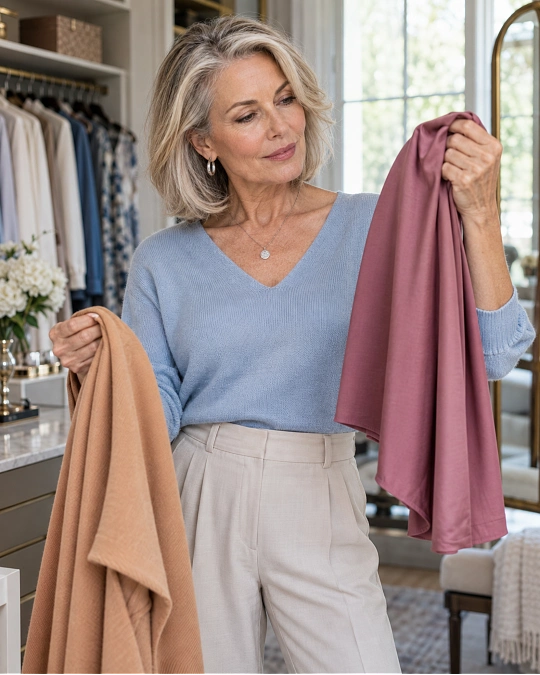
Your undertone is not the same thing as how light or deep your skin is. A woman with very fair skin and a woman with deep brown skin can both have cool undertones.
Cool undertones often have more pink, rosy, red, blue, or violet qualities beneath the skin. Neutral-cool coloring may sit somewhere between clearly cool and neutral.
Do not rely on one test alone. Instead, look for a pattern.
Try holding a cool pink top beside your face, then compare it with a yellow-orange or camel version. If the cooler shade makes your skin appear clearer while the warmer one seems to emphasize shadows or unevenness, that is useful information.
Silver jewelry may also look especially harmonious, although plenty of women with cool coloring can still wear gold beautifully.
Color note: Your hair color can change over time while your underlying skin tone remains similar. Going gray does not automatically turn a warm undertone cool, but your most flattering color intensity may change.
Here is a simple way to compare common color families.
| Color Family | Often Better for Cool Undertones | Warmer Version to Compare |
|---|---|---|
| Pink | Rose, raspberry, fuchsia | Coral, salmon |
| Red | Cherry, cranberry, blue-red | Tomato, brick-orange |
| Blue | Navy, cobalt, sapphire | Teal with strong yellow-green |
| Neutral | Charcoal, cool taupe, crisp navy | Camel, golden beige |
| Purple | Plum, violet, berry | Rusty mauve, brown-purple |
You do not need every color in the middle column. The goal is simply to notice which direction makes your complexion look freshest.
Blue Can Become the Backbone of a Cool-Toned Wardrobe
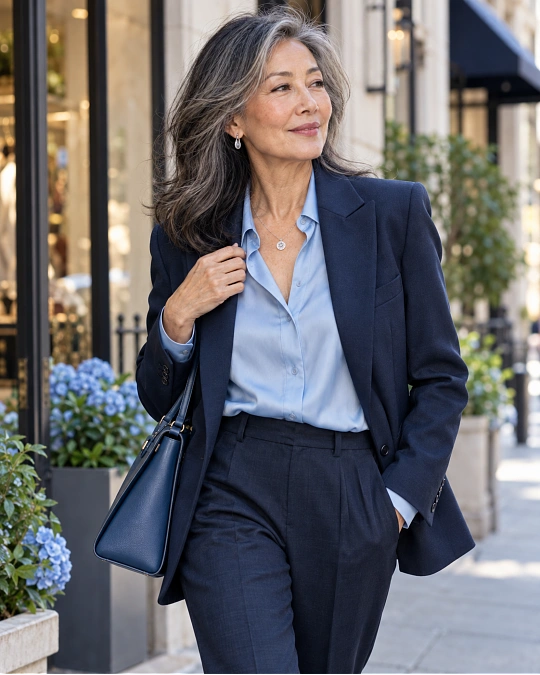
Blue is one of the easiest color families to build around because it works as both a statement color and a neutral.
Navy can replace black when black feels too severe. It works beautifully in trousers, blazers, knitwear, coats, and dresses and mixes easily with white, gray, berry, pink, and denim.
Sapphire and cobalt bring more energy. These shades can be especially useful when you want color near your face without wearing anything overly bright or sugary.
For relaxed everyday outfits for women over 50, try dark-wash jeans with a soft blue sweater and navy loafers. The colors stay connected while the difference in texture keeps the outfit interesting.
Denim also belongs in this family. Medium and dark blue denim often fits naturally into a cool-toned wardrobe because it acts almost like a neutral.
If very saturated royal blue feels too strong, move toward dusty blue, slate blue, or blue-gray instead.
The right blue should make you notice your face first, not the sweater.
Berry, Rose, and Blue-Based Reds Bring Warmth Without Looking Orange
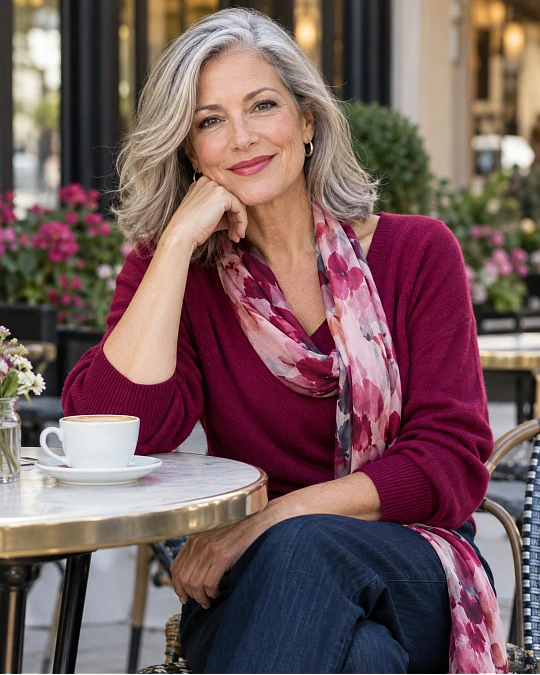
Women with cool undertones do not need to avoid warm-looking color altogether. The trick is choosing warmth that still has a blue or pink base.
Think cranberry instead of tomato red. Think raspberry instead of peach.
Rose, berry, wine, burgundy, cherry, plum, and cool pink can add life around the face while staying compatible with cool skin coloring.
These shades are especially useful when a wardrobe has become dominated by gray, navy, and black.
A berry sweater under a charcoal jacket, for example, adds richness without making the outfit busy. A dusty rose blouse can soften dark trousers without becoming overly sweet.
If you enjoy red lipstick, this same principle can help. Blue-red and berry-red shades often sit more naturally beside cool coloring than orange-red.
The same logic works with scarves and earrings. You can test a new color in a smaller area before buying a coat, dress, or expensive knit.
Some Cool Reds Are Softer Than Others
Not every woman with cool undertones needs jewel-tone intensity.
If your overall coloring is gentle, muted rose, dusty berry, soft plum, and blue-based mauve may feel more natural than electric magenta.
If your hair, eyes, and skin create stronger contrast, clearer cranberry, ruby, cobalt, and fuchsia may hold their own better.
Use intensity as a sliding scale, not another rigid rule.
Gray, Navy, and Cool Taupe Make Neutrals Much Easier
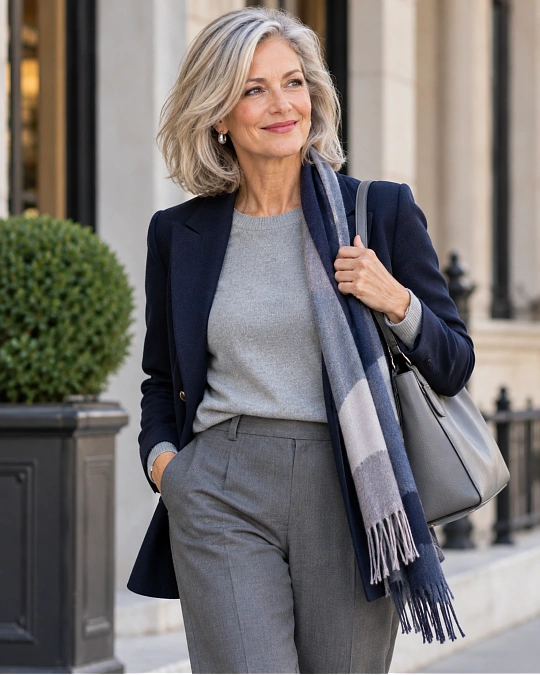
Beige is often treated as the default sophisticated neutral, but yellow-heavy beige can be difficult for cool undertones.
Fortunately, there are plenty of alternatives.
Charcoal gray has enough depth to anchor trousers, jackets, coats, and knit dresses. Softer dove gray works well in sweaters, shirts, and relaxed layering pieces.
Navy is another strong choice because it gives the wardrobe structure while feeling a little less harsh than solid black.
Cool taupe can work too, especially when it has a gray, mushroom, or slightly mauve undertone rather than a golden one.
This is where a capsule wardrobe over 50 becomes easier. Instead of collecting unrelated neutrals, choose two or three that naturally coordinate.
For example:
Navy + charcoal + soft white
or
Charcoal + cool taupe + dusty blue
or
Navy + dove gray + berry
Here is how a few core neutrals can function across a practical wardrobe.
| Neutral | Best Uses | Easy Color Partners |
|---|---|---|
| Navy | Blazers, trousers, coats, dresses | White, berry, rose, cobalt |
| Charcoal | Knitwear, pants, jackets | Plum, blue, soft pink |
| Dove gray | Sweaters, tees, scarves | Navy, raspberry, violet |
| Cool taupe | Trousers, cardigans, outerwear | Dusty blue, wine, soft white |
| Soft white | Shirts, knitwear, layering tops | Navy, charcoal, berry |
A smaller neutral palette also makes shopping easier because new pieces have more chances to work with clothes you already own.
White Matters More Than Most Women Expect
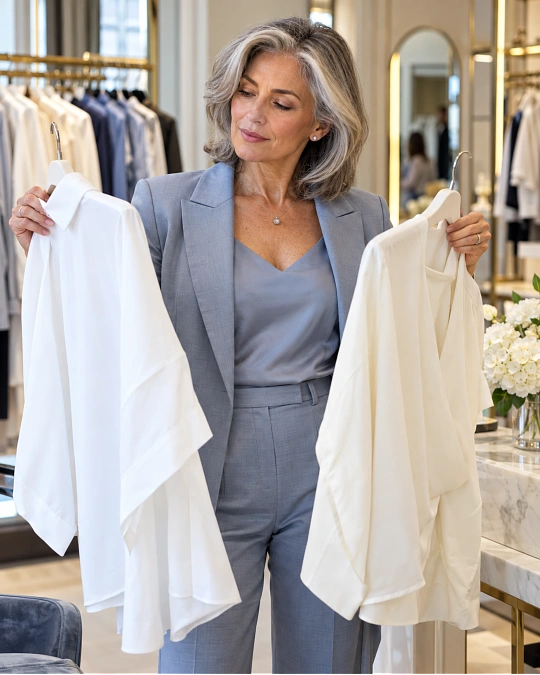
White sounds simple until you place several versions beside one another.
Cream, ivory, optic white, ecru, and soft white can look completely different against the skin.
Many cool undertones respond well to crisp white or a soft neutral white without obvious yellow. Very creamy ivory can sometimes cast a slightly dull tone onto the face.
That does not mean every cool-toned woman needs stark optic white. If bright white feels too sharp, look for soft white, pearl, icy gray, or pale blue-gray.
Try this: Place a cream blouse and a clean white blouse under your chin in daylight. Ignore the garment itself and look only at your face.
Does one version make your eyes stand out more? Does one make redness, shadows, or discoloration more noticeable?
That reaction is more useful than the name printed on the clothing tag.
Purple and Plum Can Be Surprisingly Wearable

Purple is sometimes treated like a special-occasion color, yet the right shades can be incredibly practical.
Plum works almost like a colored neutral. It looks polished with charcoal, navy, gray denim, and cool taupe.
Aubergine can replace brown in shoes, handbags, or outerwear when warm chocolate feels disconnected from the rest of your closet.
Violet, lavender, and lilac can also work, but their intensity matters.
Soft lavender can be lovely near the face when your coloring is light or muted. Clear violet can suit someone who carries stronger color well.
Instead of asking, “Can I wear purple?” ask, “Which purple makes my skin look clearest?”
That small change in thinking gives you much more freedom.
Green Works Best When It Leans Blue Instead of Yellow
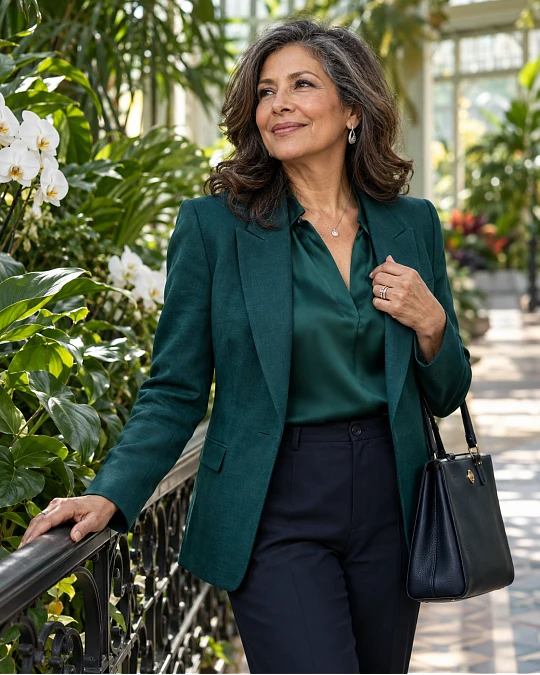
Green is one of the trickier families for cool undertones because many popular greens contain a large amount of yellow.
Olive, mustard-green, chartreuse, and moss can sometimes look less harmonious near the face. If you love them, there is no reason to throw them away.
Simply move them farther from your complexion.
An olive trouser can work beautifully with a cool white shirt and navy jacket. A moss-green handbag does not affect the face the way a moss sweater might.
For color closer to the face, try blue-green, pine, cool emerald, spruce, or deep teal.
These versions often work especially well in fall and winter when you want a richer alternative to navy.
The comparison below makes those swaps easier.
| If This Feels Off Near Your Face | Try This Instead | Easy Way to Wear It |
|---|---|---|
| Mustard | Raspberry or plum | Knit sweater |
| Camel | Cool taupe or charcoal | Coat or trousers |
| Orange-red | Cherry or cranberry | Blouse or scarf |
| Yellow olive | Pine or cool emerald | Jacket or cardigan |
| Peach | Dusty rose | Shirt or knit |
| Golden cream | Soft white | Tee or blouse |
None of the colors in the first column are forbidden. They may simply work better as trousers, bags, belts, or shoes instead of directly beside your face.
Black Can Stay, but It Does Not Have to Do All the Work
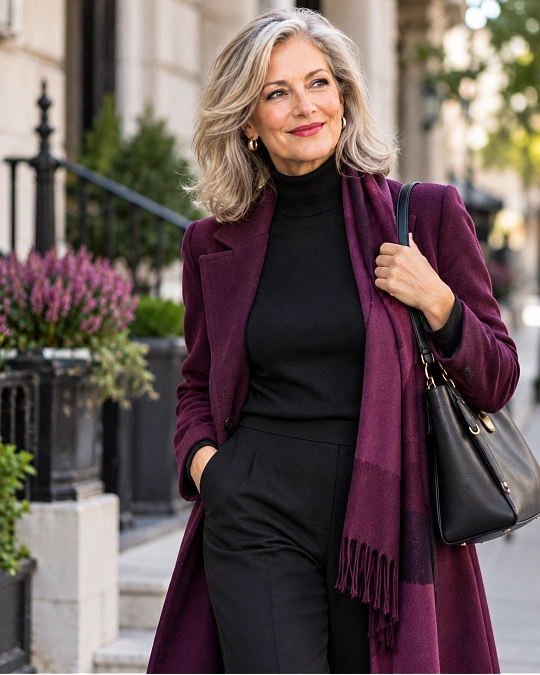
Many wardrobes rely heavily on black because it feels safe and easy.
Black can look striking on some cool undertones, particularly when there is naturally strong contrast between the skin, hair, and eyes.
For other women, especially after hair becomes silver, gray, or softer in tone, pure black can begin to feel heavier near the face.
You do not necessarily need to stop wearing it.
Try placing a softer color between black and your complexion. A white collar, berry scarf, silver necklace, blue shirt, or charcoal jacket can change the effect.
You can also move black downward.
Black trousers with a sapphire sweater still give you the simplicity of black without surrounding your face with it.
If you have been building chic outfits for women over 50 around black for years, this is often an easier adjustment than replacing everything at once.
Let Your Hair Color Help Fine-Tune the Palette
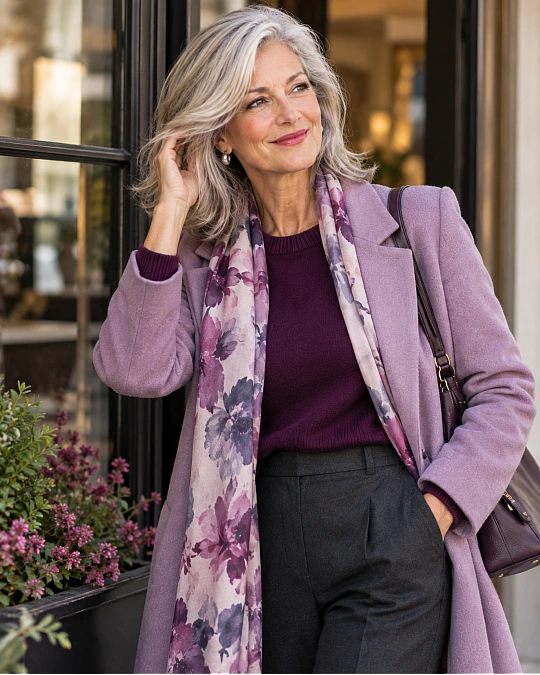
Cool undertone does not mean every cool color will be equally flattering.
Hair, eye color, and the amount of contrast in your features also shape how a shade looks.
Silver and white hair can look beautiful with navy, berry, violet, blue-red, charcoal, icy pink, and sapphire. These colors create definition without necessarily fighting against the hair.
Salt-and-pepper hair often works well with slightly deeper colors such as wine, cobalt, forest blue-green, charcoal, and plum.
If your hair is still dark, you may find that stronger jewel tones feel natural because the deeper contrast can balance them.
If your hair is light or soft, muted versions may feel easier.
This is why copying another woman’s color palette exactly rarely works. Her cool undertone may be similar to yours, but her level of contrast may be completely different.
Build a Cool-Toned Closet Around Color Families, Not Random Pieces

The easiest wardrobe is not necessarily the biggest one. It is the one where most pieces can talk to one another.
Start with one dark neutral, one lighter neutral, and two or three colors you genuinely enjoy wearing.
For example:
Core neutrals: navy + charcoal
Light neutral: soft white
Main colors: berry + dusty blue
Accent color: plum
Now a navy trouser can work with the soft white blouse, dusty blue knit, berry cardigan, or plum jacket.
That is far more useful than owning ten beautiful colors that only work with one other item.
A practical cool-toned wardrobe might look like this:
| Occasion | Simple Color Formula | Why It Works |
|---|---|---|
| Everyday errands | Dark denim + dusty blue + navy | Relaxed but coordinated |
| Lunch with friends | Charcoal trousers + rose blouse + silver jewelry | Soft color brightens the face |
| Smart casual | Navy pants + soft white shirt + berry cardigan | Clear contrast without feeling harsh |
| Evening | Black trousers + plum top + silver earrings | Keeps black away from most of the face |
| Travel | Navy pants + dove-gray knit + blue scarf | Pieces mix easily during the trip |
You do not need to recreate these outfits exactly. Use them as a pattern and swap in similar pieces from your own closet.
The Colors Near Your Face Deserve the Most Attention
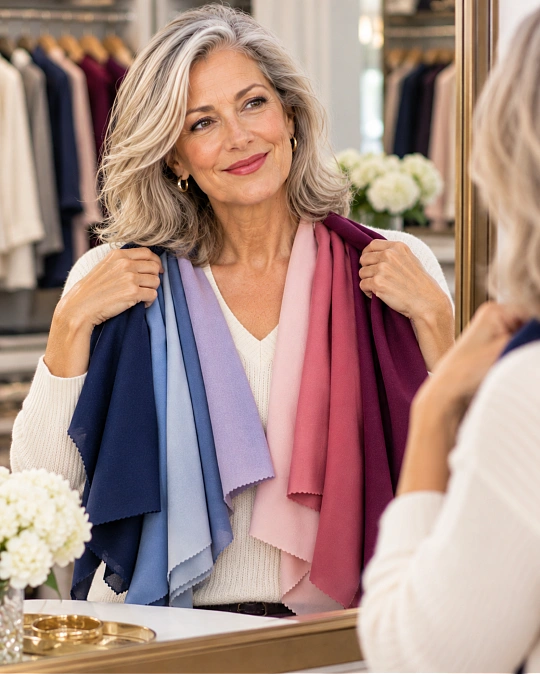
Color analysis becomes much less stressful once you stop treating every garment equally.
A pair of camel trousers has very little effect on your complexion. A camel turtleneck sits directly beneath your face and can make a much bigger difference.
Put most of your attention on:
- Tops
- Sweaters
- Dresses with higher necklines
- Blazers and jackets
- Coats
- Scarves
- Statement earrings
- Necklaces
- Eyeglass frames
Shoes, handbags, belts, and trousers give you more freedom.
This is especially useful if you already own warm-toned pieces you enjoy. Rather than replacing them, create a cool-toned buffer near your face.
A camel trouser with a navy knit can work beautifully. Rust loafers with dark denim and a dusty blue sweater can still make sense.
Color should make your wardrobe easier, not turn it into a set of restrictions.
A Simple Cool-Undertone Formula You Can Repeat

When mornings feel rushed, a dependable color formula removes some of the decision-making.
Formula: cool neutral bottom + flattering face color + coordinating neutral layer
Try charcoal trousers, a berry knit, and a navy blazer.
Swap the berry knit for dusty blue, plum, soft white, raspberry, or sapphire and you have several different outfits without changing the basic formula.
For more casual days, use dark-wash jeans as the bottom and a cardigan as the layer.
The formula works because the neutral pieces give the outfit structure while the color closest to your face does most of the visual work.
Frequently Asked Questions
What colors look best on cool skin undertones?
Blue-based shades usually work especially well, including navy, cobalt, sapphire, raspberry, berry, cherry red, plum, violet, cool pink, and blue-green. Cool neutrals such as charcoal, dove gray, soft white, and cool taupe can also be useful wardrobe foundations.
Can women with cool undertones wear beige?
Yes. Look for beige shades with gray, pink, mushroom, or taupe undertones rather than strong yellow or golden tones.
If traditional camel looks dull near your face, wear it in trousers, shoes, or a bag and pair it with a cooler top.
Can cool undertones wear gold jewelry?
Absolutely. Undertone guidelines are tools rather than rules.
Silver, white gold, and platinum tones may blend naturally with cool coloring, but yellow gold can still look beautiful, especially when it connects with another part of the outfit.
Is navy better than black for women over 50?
Neither is automatically better. Navy may feel softer on some complexions, while black creates stronger contrast and can look striking on others.
Try both directly beneath your face in natural daylight and see which one makes your complexion appear clearer.
What colors look good with gray hair and cool skin?
Navy, sapphire, berry, plum, violet, cranberry, charcoal, icy pink, and clear blue can work beautifully with gray or silver hair. Softer coloring may prefer dusty versions, while stronger contrast can often carry brighter jewel tones.