
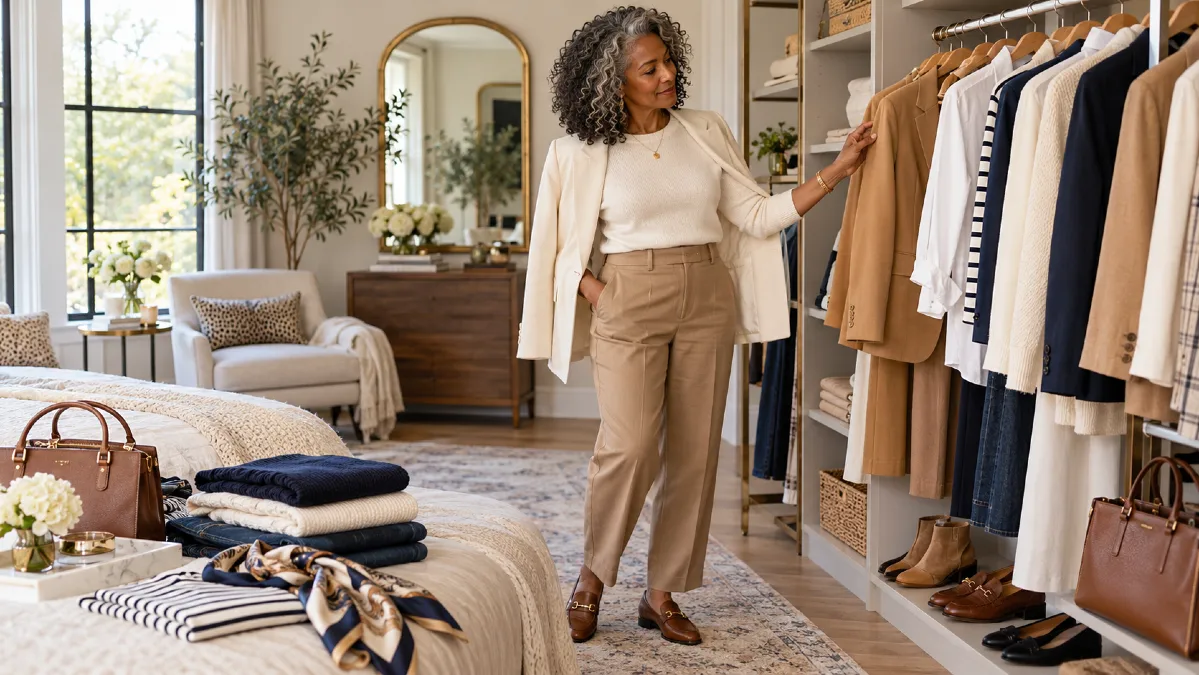
A closet full of clothes can still leave you feeling like you have nothing to wear. Some pieces no longer fit quite right, others belong to an old version of your lifestyle, and putting together a simple outfit takes more thought than it should.
For many women over 50, the problem isn’t a lack of clothes. It’s having too many pieces that don’t work well together.
Building a capsule wardrobe over 50 can make everyday dressing easier without giving up the colors, shapes, and personal details you love.
The goal isn’t to own as little as possible. It’s to create a smaller, more useful wardrobe filled with clothes that fit your body, suit your daily life, and make getting dressed feel enjoyable again.
Start With the Clothes You Actually Wear, Not the Ones You Think You Need
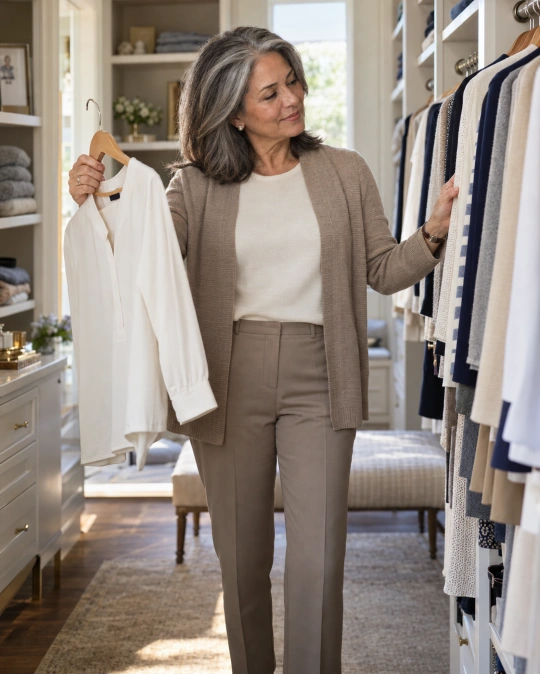
A useful capsule wardrobe starts with your real life. Before picking colors or shopping for basics, take a closer look at where you spend your time and which clothes make you feel comfortable.
Step 1: Look at Your Everyday Lifestyle Before Choosing Clothes
Think about a typical week. You might spend most mornings at home, run errands several afternoons, meet friends for lunch, and occasionally attend a family gathering.
Your wardrobe should reflect those activities rather than an imagined schedule filled with formal dinners and special occasions.
If you spend most days in casual clothes, comfortable jeans, soft trousers, breathable tops, and practical shoes deserve more space than dressy outfits.
Someone who works in an office may need structured jackets and smart trousers. A woman who travels often might get more use from wrinkle-resistant layers and shoes she can comfortably walk in.
Try this: Write down the five activities you dress for most often. Keep that list nearby when deciding which clothes deserve a place in your capsule.
Step 2: Edit Your Closet Without Getting Rid of Everything
Emptying your entire closet can make the process feel much harder than necessary. Start with one category, such as shirts, trousers, or jackets.
Try on pieces you haven’t worn recently. Pay attention to how they fit, how the fabric feels, and whether you still enjoy wearing them.
Separate your clothes into three groups:
- Keep: Clothes that fit comfortably, suit your life, and work with other pieces.
- Alter or reconsider: Good-quality items that need a small adjustment or a different styling approach.
- Let go: Clothes that are worn out, uncomfortable, or no longer suit your needs.
You don’t need to discard something simply because it isn’t fashionable right now. A favorite jacket or beautiful dress can still belong in your wardrobe.
The real question is whether you enjoy wearing it and can create outfits around it.
Fit note: If a garment feels tight across your shoulders or pulls when you sit down, don’t keep it simply because the label shows your usual size. Comfort matters more than the number.
Choose a Color Palette That Makes Mixing Clothes Easier

One reason a small wardrobe can work so well is that the colors connect naturally. When your tops, bottoms, and layers share a simple palette, you can create more outfits without buying more clothes.
Step 3: Pick Two or Three Neutral Colors as Your Foundation
Start with neutral shades you already enjoy wearing. Black, navy, cream, charcoal, camel, taupe, brown, and olive can all form the base of a wardrobe.
You don’t need every neutral. Choose two or three that work well together and suit your personal taste.
For example, navy, cream, and camel create a soft, classic palette. Black, gray, and white produce a cleaner look, while chocolate brown, ivory, and olive feel warm and relaxed.
Use these colors for your most frequently worn pieces, especially trousers, jeans, jackets, and everyday tops.
A navy blazer becomes far more useful when it works with your cream trousers, favorite denim, and several shirts.
The goal is simple: most of your clothes should be able to share an outfit without requiring a completely separate set of accessories.
Step 4: Add Accent Colors That Make the Wardrobe Feel Personal
A capsule wardrobe doesn’t have to be beige, black, and white. Color adds personality and keeps simple outfits from feeling repetitive.
Choose one or two accent shades you genuinely like wearing near your face.
Burgundy, forest green, dusty blue, rust, soft pink, teal, and plum are all options worth considering.
A burgundy sweater can work with navy trousers, cream denim, or charcoal jeans. A soft blue blouse can sit comfortably beneath a camel jacket.
Color note: Hold a color near your face in natural daylight. If you like how it looks with your complexion and hair, that’s more useful than following a strict seasonal color rule.
Patterns can fit into your capsule too. A striped shirt, subtle floral blouse, or checked scarf adds interest without requiring an entirely new color scheme.
Build Your Capsule Around Tops and Bottoms That Work Together

Once your colors are clear, concentrate on the clothes you wear closest to your body. These pieces form the base of most outfits, so comfort, fabric, and fit deserve extra attention.
Step 5: Choose a Small Collection of Versatile Tops
Start with tops you can wear alone or beneath a jacket. A few well-chosen styles can cover relaxed mornings, casual lunches, and more polished occasions.
Consider a crisp cotton shirt, a soft knit top, a fine-gauge sweater, and two or three simple tees in your chosen colors.
Look for necklines that you enjoy wearing, such as a boat neck, V-neck, scoop neck, or a neat crew neck.
Fabric matters just as much as the shape. Cotton blends can feel comfortable for everyday use, while fine merino wool and soft knit blends provide warmth without heavy bulk.
If a long, loose top makes an outfit feel shapeless, try a shorter style or a gentle front tuck. The aim is to create some definition without needing tight clothing.
A cream knit top, for example, can sit beneath a navy blazer, pair with straight-leg jeans, or work with tailored trousers.
Step 6: Find Two or Three Bottoms You Can Dress Up or Down
Bottoms often determine how useful the rest of a wardrobe becomes. Instead of collecting several similar pairs, look for cuts that serve different situations.
Straight-leg jeans are a practical starting point because they work with casual tees, soft sweaters, and structured jackets.
A pair of tailored trousers offers a more polished option for lunch, work, or evenings out.
You may also enjoy relaxed wide-leg trousers, a midi skirt, or comfortable pull-on trousers with a clean waistband.
The right choice depends on your lifestyle and the proportions you like.
If your waist or hips have changed, try different rises and fabrics rather than assuming a certain style no longer works for you.
A little stretch can make denim more comfortable, while trousers with a smooth front and some room through the hips often look neat without feeling restrictive.
Here is a practical starting point for choosing capsule wardrobe essentials.
| Wardrobe piece | What to look for | Works well with |
|---|---|---|
| Everyday T-shirt | Soft cotton, comfortable neckline, neat shoulder fit | Jeans, skirts, blazers |
| Button-down shirt | Breathable fabric, room across the bust, smooth buttons | Trousers, denim, cardigans |
| Fine knit sweater | Soft texture, easy layering weight | Jeans, tailored trousers |
| Straight-leg jeans | Comfortable rise, clean fit through hips | Shirts, sweaters, jackets |
| Tailored trousers | Smooth waistband, gentle drape | Knit tops, blouses, blazers |
| Optional midi skirt | Comfortable waist, fabric that moves easily | Knitwear, shirts, flats |
These are starting points, not a required shopping list. If you wear dresses more often than trousers, give them a larger role in your capsule.
The best wardrobe reflects what you reach for naturally, not what someone else considers essential.
Add Layers and Shoes That Make Simple Outfits Look Finished
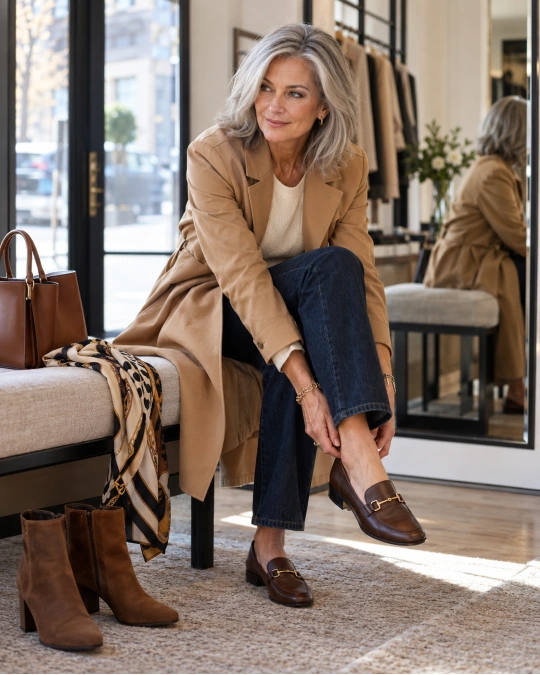
A capsule wardrobe needs a few pieces that change the mood of an outfit. This is where outer layers, shoes, and small accessories become especially useful.
Step 7: Invest in One or Two Layers That Work Across Different Outfits
A good jacket or cardigan can make the same jeans and T-shirt suitable for several occasions.
For a more structured look, consider a blazer with a comfortable shoulder fit and enough room to move your arms.
If you prefer softer clothing, a fine-knit cardigan or a relaxed jacket may feel more natural.
A lightweight trench coat can be useful in transitional weather, while a wool coat or warm insulated jacket may be more practical in colder climates.
Try wearing your chosen layer over several outfits before deciding it deserves space in your capsule.
A camel blazer that works with navy trousers, dark denim, and a cream dress has more value than one that matches only a single outfit.
Proportion tip: When wearing wide-leg trousers, a shorter jacket or one that gently defines your waist can create balance. With slimmer bottoms, a longer relaxed layer can also look beautiful.
You don’t need to follow a fixed proportion rule. Use the mirror to find the combination that feels best to you.
Step 8: Select Comfortable Shoes and Accessories That Work Harder
Shoes have a strong effect on how an outfit looks and feels. A beautiful wardrobe becomes less useful if the footwear is uncomfortable.
Start with the shoe styles that match your daily routine.
Clean leather sneakers are practical for casual outfits. Loafers can make jeans and trousers look more polished without requiring heels.
Ballet flats, supportive ankle boots, or low block heels can cover other occasions, depending on your climate and comfort preferences.
You don’t need all of them. Two or three dependable pairs may be enough for your everyday capsule.
Choose shoes in colors that work with several outfits. Black, tan, brown, navy, and cream are versatile options.
Accessories should follow the same approach. A structured handbag, simple earrings, a favorite watch, and a scarf may be all you need.
A silk scarf can bring color to a plain cream sweater. Gold or silver earrings can make an ordinary blouse feel more finished.
Comfort upgrade: If you enjoy the look of loafers but need more support, try designs with cushioning, a stable sole, and enough room across the toes.
The goal is to find accessories and shoes you enjoy using regularly rather than saving everything for special occasions.
Pay Attention to Fit, Fabric, and Small Alterations
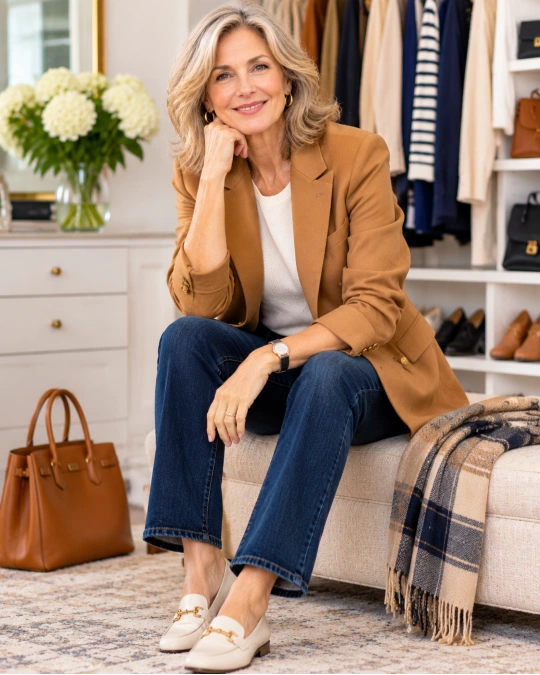
A smaller wardrobe places more attention on each garment. When everything is worn regularly, the way clothes sit on your body makes a real difference.
Step 9: Make Sure Every Piece Fits the Body You Have Now
Clothing sizes are not always consistent, and there is no reason to stay loyal to one number on a label.
A well-fitting pair of trousers in a different size can look better than a familiar size that pulls across the hips or waist.
Try clothes while standing, sitting, and walking. A garment should feel comfortable during the movements you make throughout the day.
Pay attention to shoulder seams, sleeve length, trouser hems, and waistbands.
Small alterations can often improve clothes you already own. Shortening trousers or adjusting a jacket sleeve may make a piece easier to style.
Choose fabrics with enough structure to hold their shape but enough softness to feel pleasant against your skin.
Cotton poplin, quality denim, linen blends, soft wool, and well-made knit fabrics can all serve different purposes.
Instead of following old rules about what women over 50 should avoid, focus on what makes the outfit feel balanced and comfortable.
A few simple changes can help.
| If this bothers you | Try this instead |
|---|---|
| A loose top and wide trousers feel shapeless | Add a gentle front tuck or shorter layer |
| A blazer feels stiff when you move | Look for a softer construction and comfortable shoulder fit |
| Thin trousers show every seam | Choose a slightly heavier fabric with better drape |
| Jeans feel tight when sitting | Try a different rise or denim with a little stretch |
| An old favorite looks slightly off | Consider adjusting the hem or sleeve length |
Fabric note: Check care labels before buying. A piece that requires special cleaning every week may not suit a low-maintenance wardrobe, even if it looks beautiful.
The clothes you wear most often should fit both your body and your routine.
Test Your Capsule With Ten Real Outfits Before Shopping Again
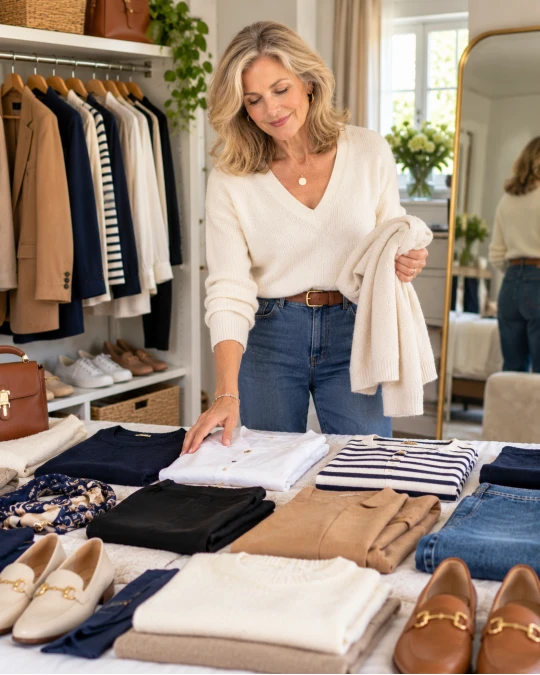
Once you have chosen your clothes, the next step is to see how well they work together. This simple test reveals gaps much faster than buying more pieces.
Step 10: Create Complete Outfits and Find Your Personal Style Formula
Take your chosen tops, bottoms, layers, and shoes and start making outfits.
Don’t judge each garment on its own. Look at how it works with the other pieces.
Try creating ten complete combinations for your most common activities. Include everything from the shoes to the outer layer.
For example, a cream sweater can work with dark jeans and loafers for errands. The same sweater can pair with tailored trousers, a blazer, and simple earrings for lunch.
A white shirt might look relaxed with straight-leg jeans and sneakers but more dressed up with navy trousers and a structured handbag.
These changes are small, yet they give the same clothes different uses.
Here are a few capsule outfit formulas worth trying.
| Occasion | Easy outfit formula | Why it works |
|---|---|---|
| Everyday errands | Straight-leg jeans + knit tee + sneakers | Comfortable, simple, and easy to repeat |
| Lunch with friends | Tailored trousers + soft blouse + loafers | Relaxed with a polished finish |
| Casual dinner | Dark denim + fine-knit sweater + blazer | A good mix of casual and structured pieces |
| Travel day | Comfortable trousers + cotton top + cardigan | Flexible layers for changing temperatures |
| Family gathering | Midi dress + light jacket + comfortable flats | One easy base with a finished look |
As you build outfits, take quick photos on your phone. They can become a useful reference on mornings when you don’t feel like planning what to wear.
Notice which combinations make you feel most comfortable and confident.
You might discover that your favorite formula is straight-leg trousers, a soft knit top, and loafers.
Someone else may feel best in a midi dress, a cardigan, and flats.
Neither approach is better. Your personal formula simply makes getting dressed easier.
Before adding anything new, ask yourself three questions:
- Can I wear this with at least three pieces I already own?
- Does it fill a real gap in my everyday wardrobe?
- Would I feel comfortable wearing it regularly?
If the answer is yes, the piece may deserve a place in your capsule.
If not, it might be worth leaving behind, even if it’s beautiful.
Remember that a capsule wardrobe isn’t a fixed collection. You can change it as the seasons, your lifestyle, and your preferences change.
Frequently Asked Questions
How Many Clothes Should a Woman Over 50 Have in a Capsule Wardrobe?
There is no required number, but around 25 to 35 versatile pieces can be a useful starting point for some women, often excluding underwear, sleepwear, and special-occasion clothing.
You may need fewer pieces if your daily routine is simple or more if you work in different settings or experience changing seasons. Focus on how well the clothes work together rather than reaching a specific number.
What Are the Most Important Capsule Wardrobe Essentials for Women Over 50?
A few reliable tops, comfortable jeans, tailored trousers, a versatile jacket, knitwear, and practical shoes are good starting points.
A dress or skirt can also be useful if you enjoy wearing one. The most important essentials are the pieces that support your real lifestyle and can be styled in several ways.
Can a Capsule Wardrobe Over 50 Include Bright Colors and Patterns?
Absolutely. A capsule wardrobe doesn’t need to contain only neutral colors.
You can build your wardrobe around navy, cream, or brown and add brighter shades through sweaters, blouses, dresses, and scarves. Keeping some colors consistent makes mixing easier without removing your personality.
How Do I Build a Capsule Wardrobe on a Budget?
Start with the clothes you already own and identify which combinations work well together.
Consider small alterations, secondhand shopping, and replacing worn basics gradually. Buying fewer pieces that you genuinely wear often can be more useful than purchasing a large collection of inexpensive clothes that rarely leave the closet.
How Often Should I Update My Capsule Wardrobe?
Review your wardrobe when the seasons change or when your daily routine shifts.
You don’t need to replace everything each year. Keep the pieces that still fit and feel good, then make small adjustments for weather, comfort, wear, and personal taste.