Women over 50 are often told to dress more conservatively, avoid certain trends, and choose clothes that supposedly suit their age. Yet following these outdated fashion rules can make getting dressed feel unnecessarily restrictive.
Your taste does not disappear when you turn 50, and neither does your love of beautiful clothes. What may change is how you want those clothes to fit, feel, and work with your lifestyle.
Finding stylish outfits for women over 50 is not about looking younger or copying every new trend. It is about choosing pieces that reflect your personality while making everyday dressing comfortable and enjoyable.
The good news is that you probably already own several pieces that can help you look more polished. A few changes in fit, proportion, and styling can make a familiar wardrobe feel fresh again.
Your Birthday Doesn’t Get to Choose Your Hemline
Fashion has spent decades telling women what they should stop wearing as they get older. Short skirts, sleeveless dresses, bright colors, and fitted clothing often appear on those outdated lists.
But a birthday does not suddenly make your favorite clothes unsuitable. What matters more is how a garment fits, how you style it, and how comfortable you feel wearing it.
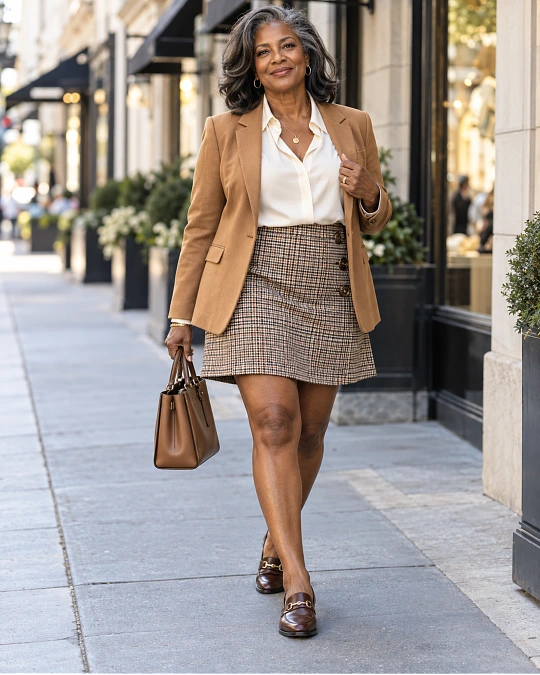
A shorter skirt can look wonderful with a relaxed blazer and loafers. A sleeveless dress can feel sophisticated when the fabric drapes nicely and the neckline suits your preferences.
Even distressed jeans, bold jewelry, and colorful sneakers can belong in an elegant wardrobe. The secret is creating a balanced outfit rather than worrying about whether a trend is meant for your age.
Fashion Rules Worth Reconsidering
Many traditional fashion restrictions can be replaced with more useful styling choices. These alternatives leave room for your taste while helping you create outfits that feel balanced.
| The Old Fashion Rule | What Works Better Now |
|---|---|
| Avoid short skirts after 50. | Choose a length that feels comfortable when sitting and walking. |
| Bright colors look too youthful. | Wear colors you enjoy and balance them with neutrals. |
| Sleeveless tops are inappropriate. | Choose flattering armholes and comfortable necklines. |
| Trends belong to younger women. | Try trends that fit your personal style. |
| Sneakers make outfits look sloppy. | Wear clean, well-shaped sneakers with polished separates. |
Style tip: If a bold piece feels unfamiliar, pair it with something you already love. A colorful skirt often feels easier to wear with a simple white shirt and classic shoes.
You do not have to prove that you can wear every trend. You simply deserve the freedom to choose clothes without letting age-based restrictions make the decision for you.
Start With Clothes That Fit Your Body Today
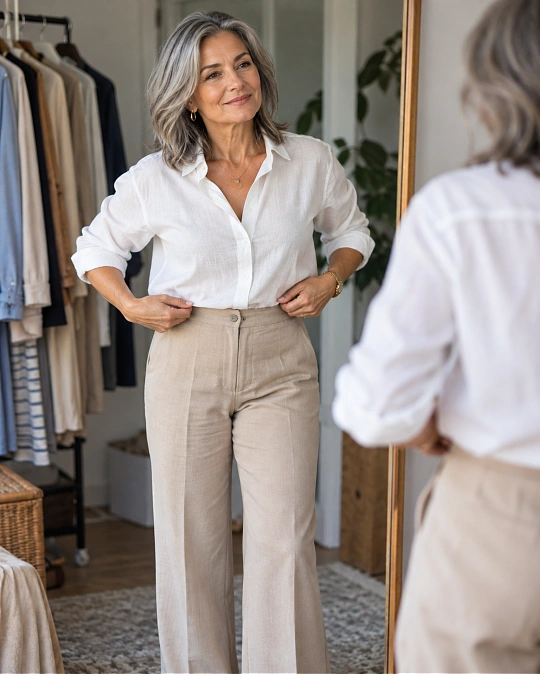
One reason dressing after 50 can feel frustrating is that familiar clothes may no longer fit the same way. Changes in body shape, posture, and lifestyle can affect how garments sit and move.
That does not mean your body needs fixing or your entire wardrobe needs replacing. Sometimes a different trouser rise, neckline, or jacket cut makes all the difference.
Straight-leg trousers may feel better than narrow ones, while a gently shaped blouse may hang more smoothly than a stiff shirt. These small adjustments can improve comfort without changing your personal style.
Fit also means paying attention to how clothing behaves throughout the day. A dress should feel comfortable when sitting, and trousers should not need constant adjusting when walking.
What Good Fit Actually Looks Like
Before buying something new, check how it feels when you move. These small details often tell you more than the size printed on the label.
- Shoulders: Jacket and shirt seams should sit comfortably without pulling or slipping.
- Waist: Trousers should feel secure without digging into your stomach.
- Bust: Buttons should lie flat, with enough room for comfortable movement.
- Length: Sleeves and hems should work with your height and favorite shoes.
- Movement: You should sit, bend, reach, and walk without constant adjustments.
Tailoring can also rescue clothes you already own but rarely wear. Shortening trouser hems, adjusting sleeves, or shaping a jacket can make familiar pieces feel more polished.
Fit note: Choose clothing based on how it sits on your body rather than the number on its label. A comfortable fit usually looks more natural than something that pulls or needs constant readjustment.
The Secret Is Proportion, Not Dressing Younger
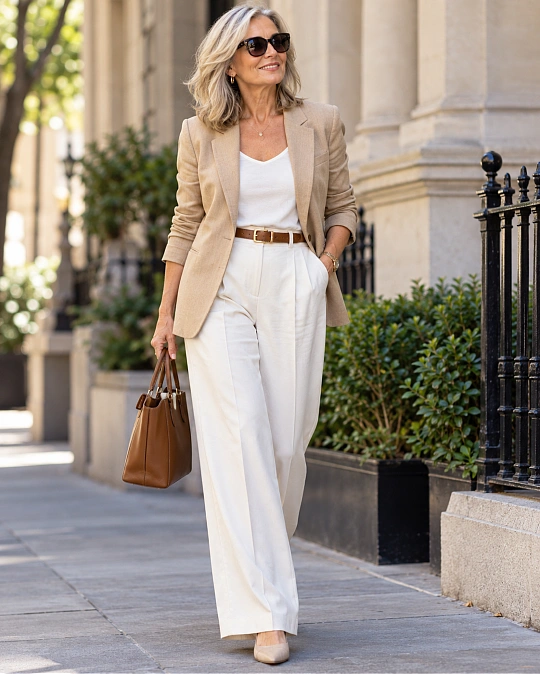
A stylish outfit often looks balanced because the clothing pieces work together visually. Their lengths, widths, and shapes create an overall silhouette that feels intentional.
Consider wearing wide-leg trousers with an oversized sweater. Both pieces may be beautiful, but the combination can sometimes feel too heavy if neither creates a clear shape.
Changing the sweater length or adding a loose front tuck can improve the outfit immediately. You keep the relaxed feeling while giving the overall look more definition.
This is why proportion matters more than following strict fashion rules. Once you understand how clothing shapes interact, you can make simple pieces look thoughtfully styled.
Loose Tops Look Better With a Little Structure
An oversized linen shirt can look beautiful with straight jeans and a simple belt. The jeans provide a clean line, while the shirt adds movement and a relaxed feeling.
If you prefer wearing shirts untucked, experiment with where the hem falls. A shirt ending around your hip may create a different balance than one extending farther down your thighs.
Wide-Leg Trousers Need the Right Finishing Touches
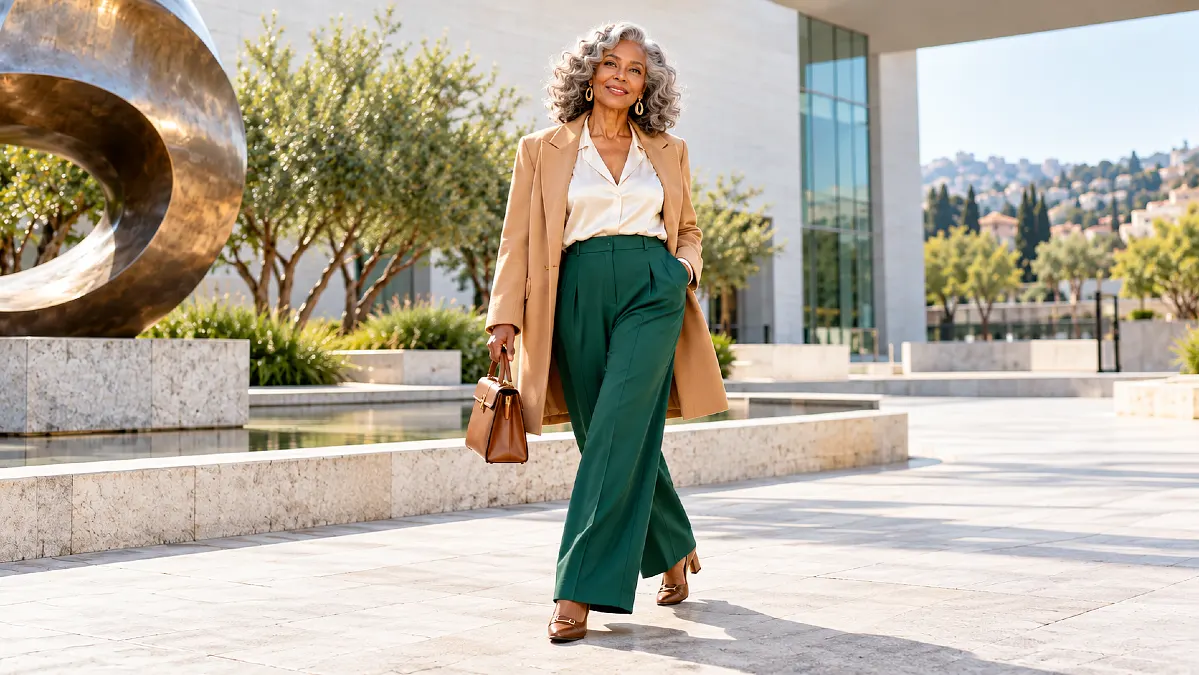
Wide-leg trousers can create a modern, elegant look without sacrificing comfort. Pairing them with a shorter jacket or fine-knit sweater helps balance their extra volume.
Shoes also influence the final silhouette, especially when trousers are long. Sleek loafers, pointed flats, or low block heels can make the outfit feel more refined.
Long Dresses Don’t Have to Hide Your Shape
Midi and maxi dresses are comfortable choices for everyday dressing and special occasions. Their flowing shapes can feel graceful, especially when the fabric moves naturally.
If a dress feels shapeless, try adding a cropped cardigan or structured jacket. Even a more open neckline or visible waist detail can change its appearance.
Style tip: Take a full-length photograph when an outfit feels slightly wrong but you cannot identify why. Looking at the overall silhouette may reveal that one hem or layer needs adjusting.
Wear Colors and Trends That Reflect Your Personality
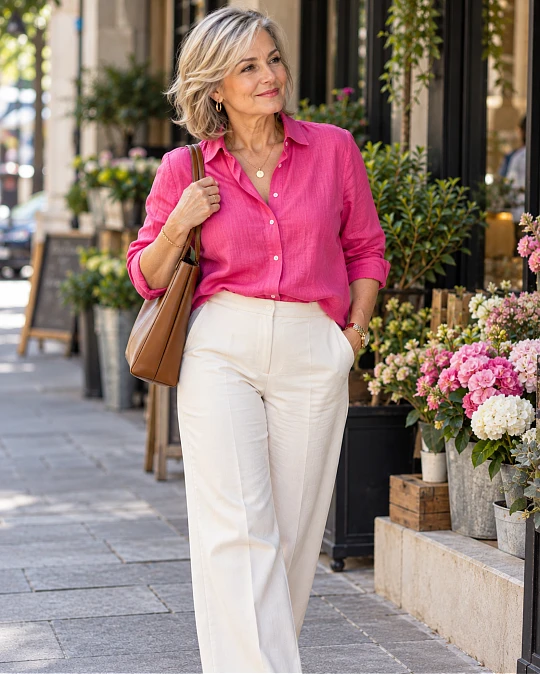
Turning 50 does not mean your wardrobe must suddenly become beige, navy, and gray. Those shades can look beautiful, but they should be personal choices rather than requirements.
If you love emerald green, cobalt blue, raspberry pink, or bright red, keep wearing them. Strong colors can add personality to simple outfits without requiring complicated styling.
Dark jeans and a white shirt look classic on their own. Add a red cardigan, and the outfit feels expressive; replace it with a camel blazer, and it becomes more understated.
Neither combination is better simply because one looks quieter. The right choice depends on your mood, occasion, and the colors you naturally enjoy.
Your Best Colors May Change Over Time
Hair color, skin contrast, and personal preferences can influence which colors appeal to you. Women who embrace gray or silver hair sometimes discover that previously overlooked shades now become favorites.
Clear blues, berry tones, soft pinks, and rich greens are worth experimenting with. However, no single color family works for every woman, so personal preference should remain your guide.
Color note: Hold two different fabric colors near your face in natural daylight and compare their effects. Choose the shade that makes you feel comfortable and brings the outfit together.
Trends Should Fit Your Wardrobe, Not Replace It
Trying a new trend does not require abandoning the clothes you already love. One modern piece can refresh an outfit while keeping the overall look familiar.
Here are a few easy combinations to experiment with:
- Wide-leg jeans with a favorite fitted sweater and loafers.
- A colorful scarf with a navy blazer and straight trousers.
- A relaxed jacket over a simple cotton T-shirt.
- A modern handbag with a classic shirt dress.
You do not need to buy something new every season to remain stylish. A wardrobe feels more useful when your favorite pieces work together in different combinations.
Fabric and Footwear Make Everyday Outfits Look More Polished
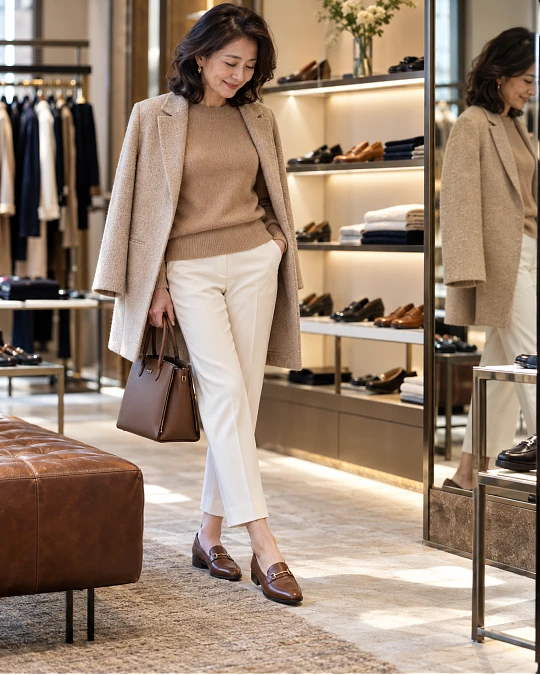
An outfit can contain beautiful pieces but still look different from what you expected. Sometimes the problem is not the design but the fabric, texture, or way the material falls.
A thin T-shirt that twists after washing will not behave like one made from substantial cotton. Similarly, trousers with a little structure often create a cleaner silhouette than fabric that loses its shape.
You do not need expensive designer clothing to notice these differences. Looking closely at fabric weight, seams, and construction can help you make better choices.
Choose Fabrics That Work With Your Lifestyle
The best fabrics depend on your climate, comfort preferences, and daily activities. These common wardrobe materials offer useful starting points when shopping or reviewing your closet.
| Fabric or Garment | What to Look For | Why It Works |
|---|---|---|
| Cotton T-shirts | Substantial knit and smooth seams | Creates a neat base for layering |
| Linen shirts | Softened linen or breathable blends | Adds texture and relaxed movement |
| Ponte trousers | Comfortable stretch with good recovery | Offers flexibility and structure |
| Fine-knit sweaters | Smooth fabric and finished cuffs | Layers without unnecessary bulk |
| Cotton twill jackets | Fabric that holds its shape | Adds structure to casual outfits |
Comfortable Shoes Can Still Look Beautiful
Stylish shoes do not have to be uncomfortable, and heels are certainly not required. Leather loafers, ballet flats, supportive sandals, ankle boots, and clean sneakers can all look polished.
The key is choosing a shoe shape that works with the trousers, skirt, or dress above it. Chunkier sneakers often suit relaxed denim, while slimmer loafers can balance tailored trousers.
A flat sandal can also look beautiful with a linen midi dress. Simple straps and a comfortable footbed can provide a polished finish without making the outfit difficult to wear.
Shoe swap: If your favorite jeans and T-shirt feel too casual, replace running shoes with streamlined leather sneakers or loafers. This small change can make the outfit look more considered while keeping it comfortable.
Build Personal Outfit Formulas Instead of Following Fashion Rules
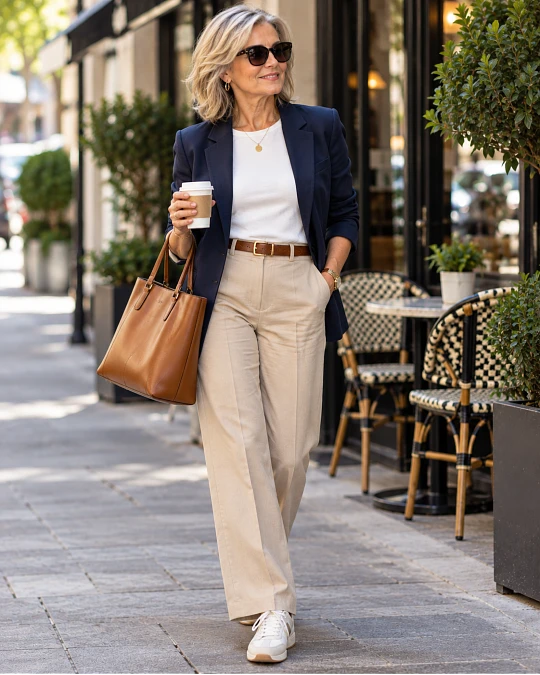
One of the easiest ways to simplify dressing over 50 is to create a few outfit combinations you trust. These personal formulas reduce morning decisions without making your wardrobe feel repetitive.
You may already have one without noticing it. Perhaps straight jeans, a soft shirt, and loafers consistently make you feel comfortable, confident, and ready for the day.
That combination can become your starting point for dozens of outfits. Changing the shirt color, adding a jacket, or switching shoes creates variety without rebuilding everything.
Four Outfit Formulas for Real Life
A useful outfit formula should fit the activities you actually do. These combinations offer comfortable starting points that can be adjusted for different seasons and occasions.
| Occasion | Outfit Formula | Why It Works |
|---|---|---|
| Everyday errands | Straight jeans + striped T-shirt + clean sneakers | Relaxed and practical |
| Lunch with friends | Wide-leg trousers + fine-knit top + loafers | Comfortable with balanced proportions |
| Casual dinner | Dark jeans + satin blouse + ankle boots | Mixes casual and dressy textures |
| Travel day | Pull-on trousers + cotton tee + cardigan + sneakers | Easy movement and layering |
The beauty of an outfit formula is that one small change creates a fresh combination. Black trousers and a cream sweater feel different from olive trousers and a striped knit.
Both outfits follow the same basic idea, so choosing what to wear becomes easier. You can create variety through color, fabric, shoes, and accessories rather than constantly buying new clothes.
Build Around What You Actually Wear
A wardrobe should reflect your real life instead of an imaginary version of it. If you spend most days in trousers, you probably need more useful trouser combinations than special-occasion dresses.
Look at the outfits you wear repeatedly and identify what they have in common. You may prefer soft fabrics, open necklines, relaxed tailoring, or colors that work with everything.
Budget-friendly tip: Before buying a new garment, imagine three outfits you could create with pieces you already own. This habit can prevent unnecessary purchases and make your wardrobe easier to use.
Give Yourself a Five-Minute Style Reset
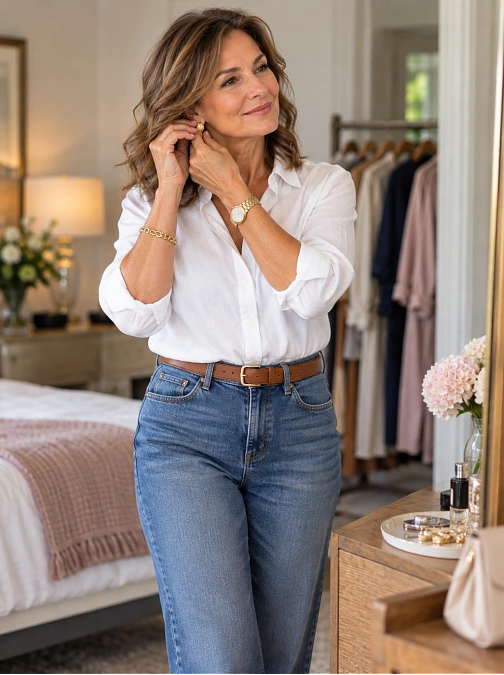
You do not need an expensive shopping trip or a completely new wardrobe to refresh your appearance. Sometimes five minutes with a familiar outfit can reveal styling possibilities you have overlooked.
Start with something you wear often, such as straight jeans and a sweater. Put the outfit on normally, then experiment with one detail before changing anything else.
Try a different shoe, loosen the front tuck, add a necklace, or replace your handbag. Pay attention to how each small adjustment changes the proportions and overall mood.
You may discover that the original clothes were never the problem. They simply needed a different finishing touch or a better balance between the pieces.
If an outfit still feels uncomfortable, try to identify the specific reason. Perhaps the sweater is too long, the trousers need hemming, or the fabric no longer holds its shape.
These observations are far more useful than deciding you are too old for a certain style. They give you practical ways to improve your wardrobe without unnecessary restrictions.
Try this today: Create one complete outfit that makes you feel wonderful, then photograph it for future reference. Save the picture on your phone so you have an easy starting point on busy mornings.
Frequently Asked Questions
How Can a Woman Over 50 Look Stylish Without Trying to Look Younger?
Focus on clothing that fits well, feels comfortable, and reflects your personality. Straight jeans, tailored trousers, beautiful knitwear, and a well-cut jacket can create modern outfits without copying youth-focused trends.
What Clothes Should Women Over 50 Avoid Wearing?
There is no universal list of clothes women should stop wearing after 50. If something feels uncomfortable, fits poorly, or no longer reflects your taste, consider a different cut or styling approach.
Can Women Over 50 Wear Trendy Clothes?
Absolutely, and trends can be a fun way to refresh familiar wardrobe pieces. Try one new denim shape, interesting shoe, or modern color while keeping the rest of your outfit comfortable and recognizable.
How Do I Stop Looking Frumpy Without Buying New Clothes?
Start by checking how your existing clothes fit and work together. Adjust trouser hems, experiment with shirt tucks, change your shoes, or add a structured layer to create a cleaner silhouette.
What Is the Easiest Way to Find My Personal Style After 50?
Look at the outfits you already enjoy wearing and identify their shared features. Use those preferences to create a few reliable combinations built around your favorite colors, fabrics, necklines, and silhouettes.
Style After 50 Is About Freedom, Not Permission
Being stylish after 50 is not about proving that you can follow every trend or look younger than your actual age. It is about choosing clothes that reflect your personality, fit comfortably, and support the life you enjoy living.
Your wardrobe can be elegant, playful, colorful, relaxed, or a beautiful mixture of everything. There is no reason to limit yourself to one look simply because you have reached a certain birthday.
Start with an outfit you already love and try changing one small detail this week. The more you understand what works for you, the less you will need anyone else’s fashion rules.