

One person wrestles with a confusing new phone interface until it makes sense, while another slides the device across the table for someone else to fix.
At fifty, ducking a crowded dinner, handing over the household budget, or using a drink to fall asleep feels like earned comfort. But the nervous system treats avoidance as obsolescence. Over twenty years, it quietly prunes the neural pathways, social stamina, and physical reflexes you stop testing.
Every convenience habit adopted for midlife ease trades immediate relief for long-term dependence, isolation, and cognitive decline. Spotting where you avoid daily friction today lets you reclaim the exact challenges that keep you independent at seventy.
Quick Tips Before You Start
Protect Weak Ties
Keep one regular monthly group commitment outside your primary family circle.
Tackle New Tech
Learn one unfamiliar app or digital interface every quarter without handing it off.
Check Your Senses
Schedule a baseline audiogram early rather than compensating for muffled speech.
Train Movement Variety
Practice single-leg balance and floor-to-stand transitions during weekly routines.
Social and Relational Erosion
Social networks do not collapse overnight. They unravel along the edges when you stop maintaining casual acquaintances and low-stakes community ties.
In your fifties, dropping acquaintance lunches saves calendar space while family and work demand attention. But without intentional maintenance, natural life transitions quietly cut your relational network in half before you realize you are isolated.
1. Letting Casual Friendships Lapse Creates Severe Isolation Later

Letting casual acquaintances slip away feels like an efficient way to protect your time.
Those low-stakes interactions – the former colleague you meet for coffee or the parent from the old school gate – feed you novel perspectives and low-pressure connection. When retirement removes workplace banter, and natural life events shrink networks by half over twenty years, the absence of an outer perimeter leaves you completely exposed.
Keeping one regular, low-pressure commitment like a monthly volunteer shift or a local recreational league protects that wider social foundation before those natural losses begin.
💡 Tip: Aim for low-stakes groups where attendance is weekly or monthly, so showing up requires zero social coordination.
⏳ From Benign Midlife Comfort to Late-Life Deficit
Age 50: The Shortcut
You offload an unfamiliar digital interface or skip an awkward social gathering because you have plenty of energy and backup.
Age 58: The Narrowing
Avoidance becomes routine habit, shrinking your social circle and dulling unexercised cognitive skills.
Age 65: Structural Disruption
Retirement and empty nests remove the external routines that masked your underlying loss of reserve.
Age 70: Lost Autonomy
Routine technology, unfamiliar rooms, and minor physical instability become high-stress barriers to daily independence.
2. Retreating From Social Friction Shrinks Your Comfort Zone

"I just do not have the patience for awkward dinner parties anymore." What gets framed as earned comfort is usually plain avoidance in disguise, quietly eroding your capacity to handle the ordinary friction of being around other people.
Genuine limits protect against mistreatment, but skipping gatherings simply because people might disagree or talk over each other just shields you from standard discomfort. Social tolerance functions like physical endurance. If you stop exposing yourself to unpredictable conversations and unfamiliar environments, your nervous system begins treating ordinary interpersonal effort as an intolerable threat.
The immediate comfort comes at a price.
Dodging low-stakes social tension at fifty compounds over twenty years into profound hesitation around ordinary public spaces and deep personal isolation. Staying in the habit of attending gatherings with unfamiliar guests, or routinely striking up brief conversations with strangers in public, provides the regular exposure that keeps your baseline interpersonal confidence fully intact.
⚠️ COMMON MISTAKE
Confusing Avoidance With Setting Healthy Boundaries
Boundaries protect your core values and safety. If a choice simply protects you from mild social awkwardness, it is avoidance behavior that narrows your psychological comfort zone over time.
3. Relying Entirely on a Spouse for Connection Backfires
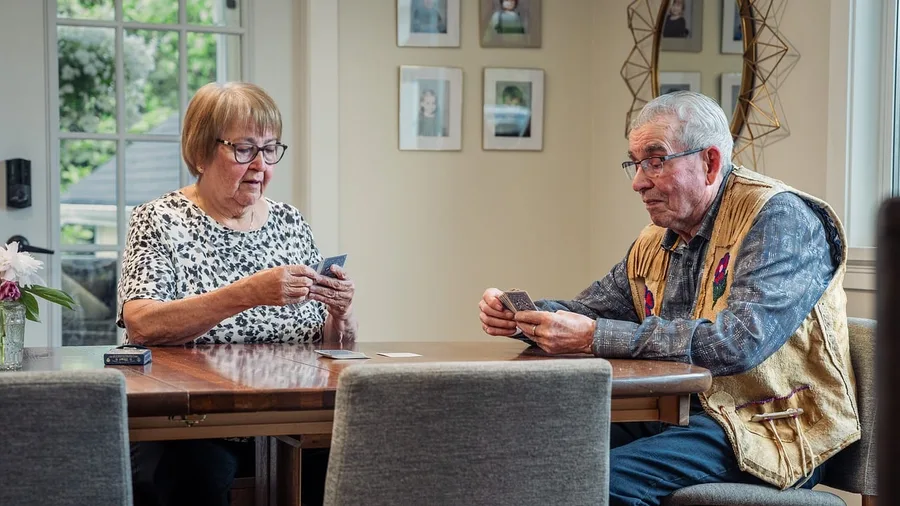
Popular wisdom says your spouse should be your best friend, primary confidant, and entire world. In practice, offloading every conversation, venting session, and weekend plan onto one person quietly strains the relationship.
You come home, bypass the phone call with an old friend, and dump every frustration about work, family, and health onto the kitchen counter across from your partner. When one person carries your entire emotional life, your mood becomes chained to theirs, leaving you without a floor if illness or loss strikes later.
Building separate hobbies, independent friendships, and personal confidants outside the home spreads that weight and preserves your emotional footing.
The Relational Support Pyramid
A healthy social architecture for long-term emotional resilience
Cognitive and Identity Ruts
Your brain preserves functional sharpness by grappling with unfamiliar systems, abstract problem-solving, and evolving social roles.
When you declare yourself done with new tools or anchor your entire sense of worth to a job title, you dismantle cognitive reserve long before you leave the workforce.
4. Avoiding Unfamiliar Technology Accelerates Mental Disengagement

Handing someone else the phone whenever a new interface updates looks like an ordinary domestic shortcut, and for years I treated it as harmless personal preference.
In practice, dismissing modern digital tools begins a slow erosion of cognitive reserve. Figuring out an unfamiliar software update or a redesigned banking site forces working memory to adapt to new rules. Avoiding that small mental stretch saves five minutes of annoyance today, but it compounds into severe operational illiteracy over twenty years.
By seventy, ordinary systems become insurmountable barriers.
What was once a minor inconvenience turns patient portals, prescription refills, and video calls with distant family into sources of acute helplessness. Committing to learn one new digital tool, operating system feature, or software interface every quarter protects your baseline problem-solving skills and preserves your independence when simple systems change without warning.
💡 Tip: When learning a new app, write down the three core steps in a pocket notebook so you can repeat them independently tomorrow.
5. Outsourcing Daily Problem-Solving Erodes Executive Function

The hidden price of letting someone else handle daily mental friction is the quiet loss of your own executive capacity when an unexpected crisis hits home years down the line.
When you routinely hand over route planning, tax filing, and household account tracking to a spouse or an algorithm, the brain stops practicing complex coordination. Spatial orientation, planning, and working memory decline under disuse when you never have to work out an unexpected detour, decipher a medical statement, or balance a family ledger.
Delegating logistics is healthy only when competence remains mutual.
You sit at the kitchen table and push the insurance renewal across the counter. "You understand this stuff better than I do" feels like reasonable teamwork on a quiet evening, but sudden widowhood or a hospital crisis at seventy leaves an unpracticed partner trying to decode complicated legal and financial systems under intense stress.
Handing off tasks makes total sense during temporary work crunches or physical recovery, provided you still understand the basic mechanics and could step in tomorrow if you had to.
The damage happens when convenience turns into total operational abdication. Protecting your cognitive independence requires staying in touch with the details: balancing monthly expenses by hand, driving across an unfamiliar part of town without turn-by-turn prompts, and completing tax filings so your brain retains its ability to organize complex, stressful information.
Daily Tasks: Autonomous vs. Outsourced
Retains Cognitive Reserve
- Navigating familiar city routes without turn-by-turn GPS
- Managing personal banking and direct bill payments
- Troubleshooting minor home device connection issues
- Scheduling and tracking medical appointments directly
Accelerates Functional Atrophy
- Handing all screen navigation to a spouse or child
- Ignoring household balance sheets and account passwords
- Relying on navigation apps for every routine drive
- Letting someone else manage all digital communications
6. Tying Your Entire Identity to Work Leaves a Dangerous Void

If professional achievement provides daily structure and intellectual engagement when domestic tasks are streamlined, why would dedicating your full energy to your career become a liability down the road?
Researchers who track post-career life consistently observe that individuals who anchor their identity entirely to a professional title face a steep psychological cliff at retirement. When daily problem-solving and social recognition exist only at the office, stepping away abruptly removes routine neural stimulation, frequently triggering deep disorientation and prolonged depressive slumps.
Professional status cannot replace personal purpose once the calendar clears.
Building long-term psychological resilience requires cultivating a secondary identity well before leaving full-time work. Developing demanding creative pursuits, serious community projects, or technical crafts outside the office establishes an alternative foundation for self-worth, making certain that mental engagement and a sense of usefulness continue long after workplace responsibilities come to an end.
Daily Compensations and Coping Mechanisms
Physical and sensory habits often seem harmless because the body absorbs the damage for years before symptoms become visible.
Ignoring subtle sensory decline or using chemical shortcuts to blunt stress creates severe physiological deficits by seventy.
7. Normalizing Chronic Sleep Disruption Damages Neurological Health

Five hours of fragmented rest a night is routinely dismissed as an unavoidable midlife compromise. When career demands peak, biological recovery is usually the first boundary people surrender, treating persistent exhaustion as an acceptable tax on getting things done.
During deep slow-wave rest, fluid washes through brain tissue to clear out toxic metabolic debris, including amyloid-beta and tau proteins. Truncating that restoration cycle creates persistent low-grade inflammation, erratic emotional control, and impaired memory retention. Over twenty years, unchecked sleep apnea or chronic insomnia quietly converts midlife fatigue into severe daytime confusion, mood instability, and accelerated cognitive decline.
Broken sleep is a biological warning, not standard aging.
If you experience persistent daytime drowsiness, middle-of-the-night waking, or nocturnal gasping, bypass sleeping pills and request clinical polysomnography. Tell your primary physician: 'I am waking up unrefreshed every morning, and I want an overnight sleep study to check for an airway obstruction or sleep architecture disorder before trying medication.'
Midlife Sleep Metrics — Target Profile
⏱️ Duration Target
7 to 8.5 Hours
🧠 Glymphatic Clearance
Slow-Wave Stages
🩺 Clinical Threshold
Frequent Waking
🚫 Common Pitfall
Sedative Reliance
Neurological Impact
Consistent restorative sleep flushes metabolic waste from brain tissue before damage accumulates.
8. Using Solitary Evening Alcohol to Decompress Masks Chronic Stress

You pour a drink at seven each evening to silence workday tension and force your nervous system to unwind. What feels like earned decompression is actually a chemical loan with compounding interest.
As liver metabolism slows and total body water drops with age, the same two drinks produce higher toxicity and higher blood alcohol concentrations. Evening alcohol shatters REM sleep and sparks late-night cortisol spikes, generating next-day rebound anxiety that drives you back to the bottle the following night.
Replace chemical sedation with somatic transitions like progressive muscle relaxation, contrast showers, or an herbal tea ritual that downregulates stress without stealing tomorrow's calm.
💡 PRO TIP
Establish a Somatic Transition Ritual
Signal the end of the workday with physical cues like changing into dedicated evening clothes, dimming overhead lights, and taking five minutes of slow exhales.
9. Ignoring Mild Hearing Loss Speeds Up Cognitive Decline

Most people treat mild hearing decline as a minor inconvenience to tolerate until communication becomes impossible. Dismissing that muffled sound is a direct drain on your brain.
Straining to decode conversation forces the prefrontal cortex to divert working memory and comprehension just to process raw sound. That extra effort makes noisy rooms exhausting, prompting subtle social withdrawal while sensory deprivation shrinks the auditory cortex and accelerates generalized cognitive decline by age seventy.
Notice your reaction at dinner: do you ask people to repeat themselves, or do you quietly tune out? If you nod along without hearing, schedule a baseline audiogram and adopt corrective hearing devices immediately.
💡 Tip: Modern prescription hearing aids are discreet and can be adjusted directly from a smartphone to filter background chatter.
10. Dropping Complex Movement Weakens Confidence and Balance

Five miles of brisk walking every single morning feels like an ironclad defense against physical decline, but it leaves a critical blind spot.
Just as sensory contraction narrows your awareness, reducing your physical movement to a single forward plane steadily erodes spatial and motor confidence. Linear walking completely ignores lateral agility, rotational stability, and multi-directional proprioception. The body adapts strictly to what it repeats, abandoning the reflexive adjustments required for complex, unpredictable real-world terrain.
When your vestibular and proprioceptive systems go unchallenged for decades, the nervous system starts perceiving ordinary instability as an acute emergency. Stepping onto wet grass or a cracked curb triggers sudden, rigid hesitation.
By seventy, that unconditioned balance system turns an ordinary stumble into a catastrophic fall. The true cost is psychological: a single scare shatters your confidence, prompting you to avoid stairs, stay indoors, and rapidly surrender your autonomous mobility. Saying, 'I just cannot trust my footing anymore' becomes a permanent, self-imposed cage.
Preserving functional independence requires reintroducing daily motor complexity.
You can restore these reflexes through simple physical challenges: single-leg balance stands while the coffee brews, lateral lunges across the kitchen, backward walking down a hallway, and floor-to-stand transitions without bracing on furniture. These small demands maintain the dynamic fall resistance that comfortable, flat walking quietly lets atrophy over time.
Frequently Asked Questions
Why do these small habits matter more after fifty than in your thirties?
In your thirties, high baseline physical reserves, compulsory workplace interactions, and built-in family routines automatically compensate for behavioral shortcuts. By fifty, those external supports begin to fall away, meaning unpracticed skills rapidly atrophy instead of being reinforced by circumstance.
How does mild hearing loss directly impact brain function?
When hearing declines, the brain must redirect significant cognitive resources from working memory and executive processing toward the basic mechanical task of decoding sounds. Over time, that constant cognitive reallocation accelerates brain atrophy and drives social isolation.
Is walking every day sufficient to preserve functional mobility?
While linear walking supports cardiovascular health, it does not challenge lateral stability, reactive balance, or floor recovery. Preserving autonomy requires multi-directional movement, single-leg stabilization, and regular floor-to-stand transitions.
What is the best way to rebuild a social circle in midlife?
Join recurring, task-focused groups such as community volunteer shifts, gardening collectives, or amateur athletic leagues. Activity-based groups create repeated low-stakes interactions that foster weak ties without the pressure of forced intimacy.
The Compounding Cost of Midlife Comfort
Late-life frailty and isolation are rarely sudden accidents; they are the accumulated tally of midlife decisions that traded future resilience for present comfort.
Audit your daily routine this week for the single habit you use to bypass discomfort, whether that means avoiding an awkward gathering, handing off a complicated spreadsheet, or skipping balance exercises.
Reintroduce one point of friction today. Drive across town without a mapping app, join a demanding community project, or pull that frustrating screen back across the kitchen table and work it out yourself.
Audit Your Routine Today
Review the comparison card above and pick one outsourced daily task to reclaim for yourself this week.