
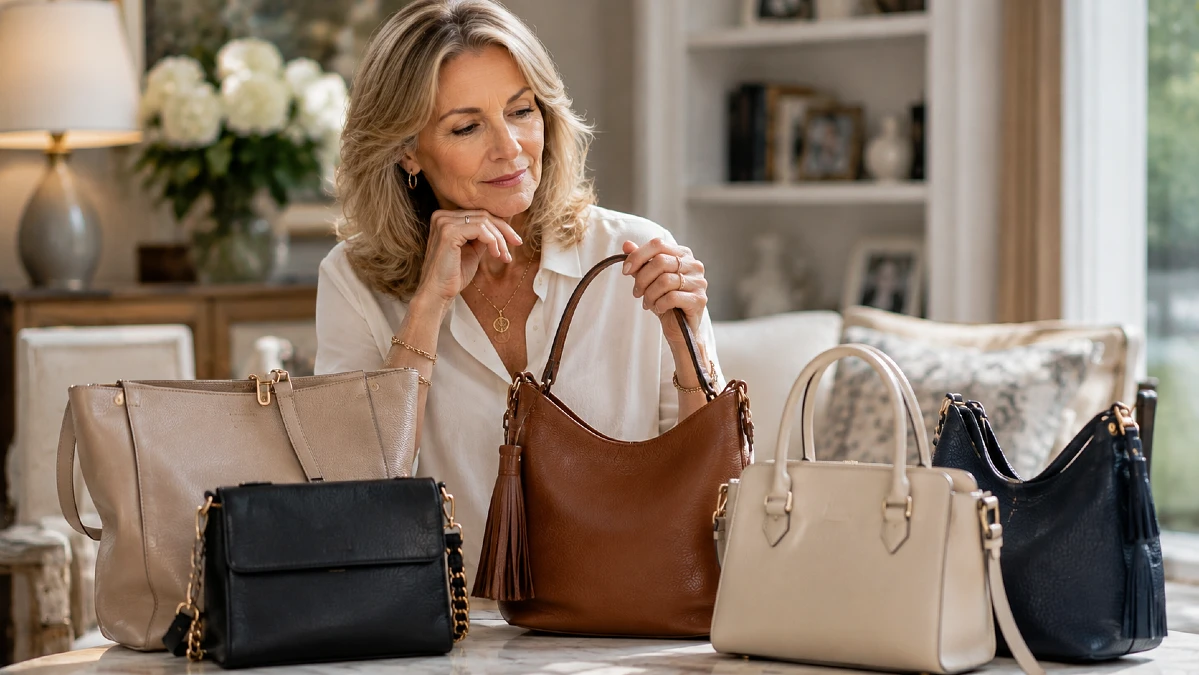
A handbag can make an otherwise good outfit feel surprisingly wrong. The problem is rarely your age or even the bag itself. More often, the size, shape, strap length, or level of structure simply fights with the clothes you are wearing.
That can make shopping frustrating for women over 50. You may want something polished without carrying a stiff, heavy bag, or something practical without slipping into the territory of purely functional.
The good news is that dressing over 50 does not require a special category of handbags. You simply need a bag that works with your proportions, lifestyle, wardrobe, and comfort needs.
The Best Handbag Is the One That Supports Your Outfit
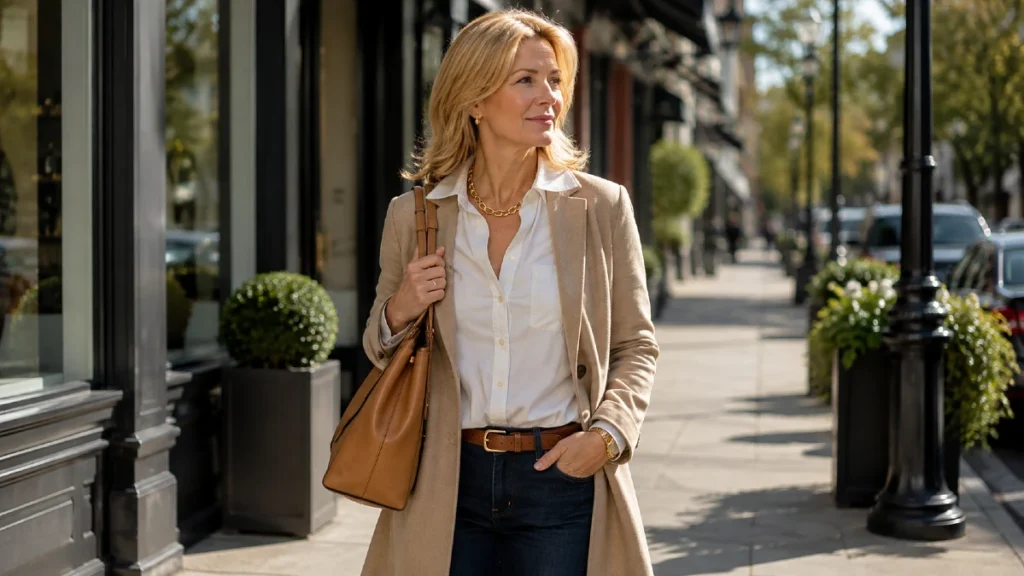
A useful handbag should do more than hold your phone and wallet. It becomes part of the silhouette of your outfit, which means its shape, scale, and placement matter almost as much as the clothes themselves.
A large, soft tote creates a relaxed visual line. A medium structured shoulder bag feels sharper. A small crossbody introduces a cleaner, lighter shape.
None of these is automatically better after 50. The goal is to choose the amount of structure that makes sense with what you are already wearing.
If your outfit is loose and flowing, a slightly defined handbag can give it some shape. With a crisp blazer and straight trousers, a softer leather bag can stop the combination from feeling overly formal.
Try this: Before leaving home, look at your outfit with and without the bag. If the bag suddenly becomes the first thing you notice, its scale, color, or detailing may be competing with your clothes rather than finishing them.
Get the Size and Proportion Right First
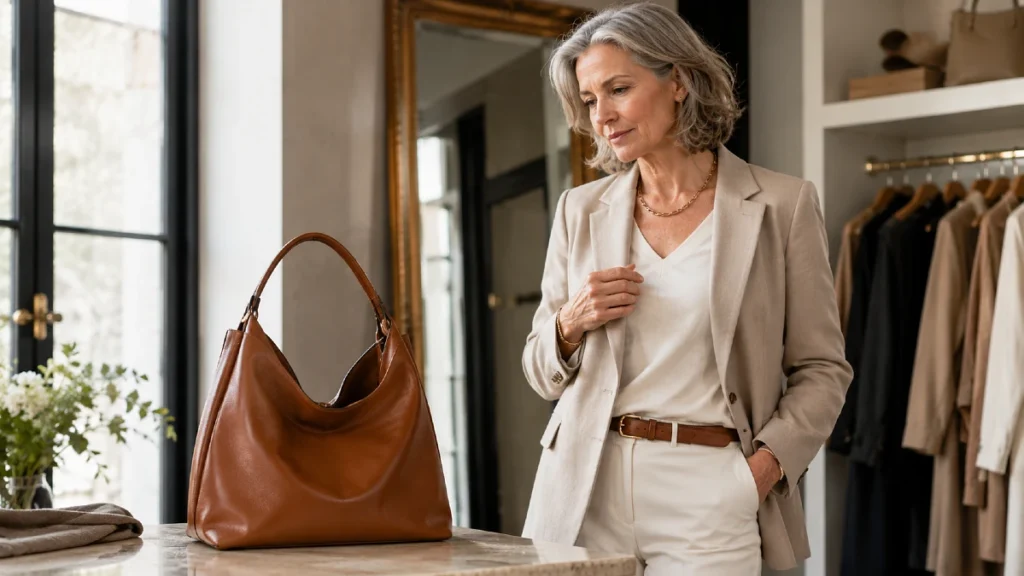
Handbag size has less to do with body size than many old fashion rules suggest. What matters more is how the bag relates to the volume of your clothing and what you realistically carry.
A tiny bag can look disconnected from a substantial winter coat. An oversized tote may overwhelm a slim knit, ankle trousers, and loafers when you are carrying only a few essentials.
Think in terms of visual balance rather than rules about which bag a certain woman is “supposed” to carry.
This quick guide makes the differences easier to see.
| Bag Style | What to Look For | Why It Works |
|---|---|---|
| Small crossbody | Clean shape, adjustable strap, enough room for essentials | Keeps light outfits visually uncluttered |
| Medium shoulder bag | Defined but not rigid shape, comfortable strap width | Works with most everyday outfits |
| Structured top-handle | Medium scale, simple hardware, optional longer strap | Adds polish to softer clothing |
| Soft tote | Supple leather or sturdy fabric, secure closure, strong handles | Suits travel, errands, and layered outfits |
| Medium hobo bag | Controlled slouch rather than excessive bulk | Softens tailored or minimal outfits |
A medium-sized bag is often the easiest starting point because it sits comfortably between dressy and practical. It can work with jeans one day and trousers or a midi dress the next.
Fit note: Pay attention to where the bag ends when you wear it. A shoulder or crossbody bag creates a visual focal point at the place where it rests, so adjusting the strap by even a few inches can change the whole proportion.
Strap Length and Weight Matter More Than They Seem
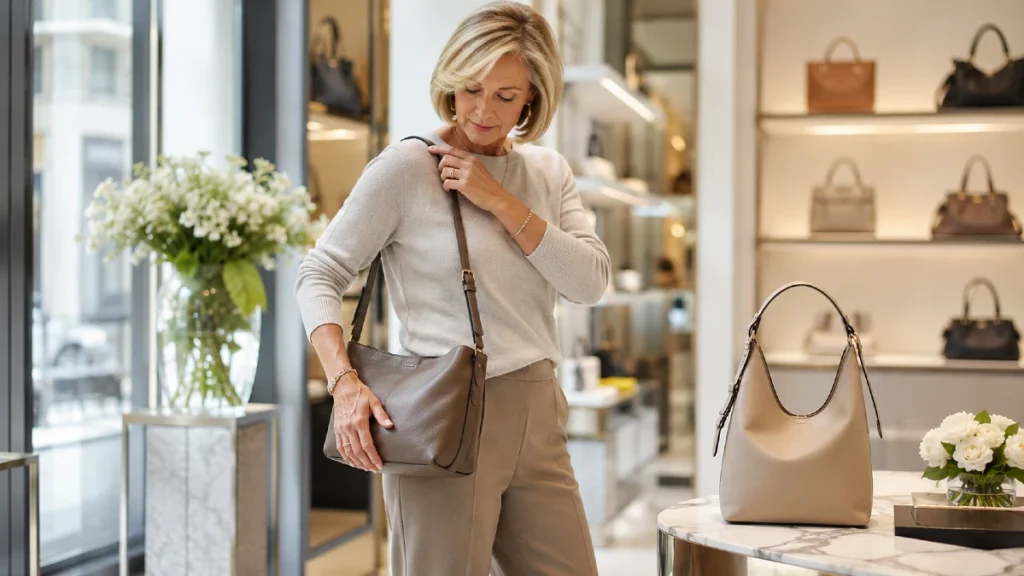
A beautiful handbag stops being useful when you are constantly pushing the strap back onto your shoulder. Comfort deserves to be part of the buying decision rather than something you sacrifice for appearance.
For shoulder bags, check whether the strap gives you enough room when wearing a coat or blazer. Very short straps can feel restrictive once heavier layers arrive.
Crossbody bags are especially useful for errands, travel, markets, and busy days because your hands stay free. Look for an adjustable strap so the bag can sit where it feels comfortable rather than at a fixed point chosen by the manufacturer.
Bag weight also matters. Heavy hardware, thick chains, multiple buckles, and dense leather can make an empty handbag surprisingly substantial.
Comfort upgrade: When shopping in person, put your usual items inside before judging the bag. A handbag that feels manageable empty may feel completely different once it contains a phone, glasses case, wallet, keys, cosmetics, and water bottle.
You do not need to give up attractive bags for comfort. Often the smartest choice is simply cleaner construction, lighter hardware, and fewer decorative extras.
Choose Materials and Colors That Work With Your Real Wardrobe
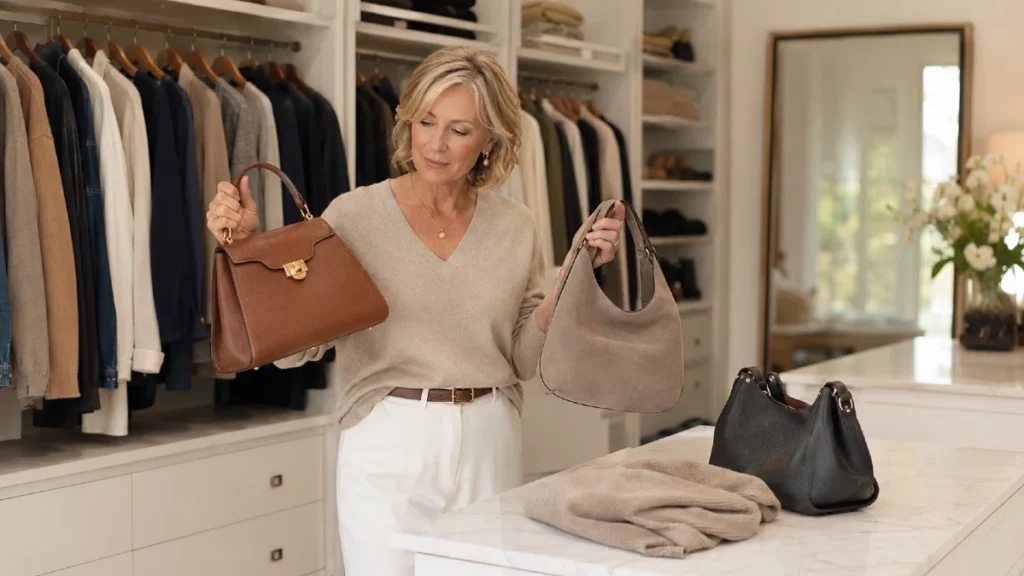
The most useful handbag color is not automatically black. It is the color that works with the clothes and shoes you actually wear.
If your wardrobe contains navy, denim, cream, camel, olive, and soft gray, cognac or chocolate brown may blend more naturally than jet black. With a wardrobe built around charcoal, black, white, burgundy, and cool blue, black or deep taupe can be much easier.
This is where a handbag can become part of a practical capsule wardrobe over 50 rather than another accessory sitting unused in the closet.
Leather is popular because it can hold its shape while developing character over time. Suede brings softness and texture, while nylon or coated fabrics can be useful for travel and bad weather.
You do not need the same bag for every season. Small material changes can keep the same wardrobe feeling appropriate throughout the year.
| Base Bag | Warmer-Weather Swap | Cooler-Weather Swap |
|---|---|---|
| Black leather shoulder bag | Cream or tan leather | Burgundy or chocolate leather |
| Structured tote | Light woven or canvas tote | Supple dark leather tote |
| Small crossbody | Soft beige or muted color | Deep brown, navy, or oxblood |
| Neutral handbag | Raffia or lighter textured finish | Suede or pebbled leather |
Color note: Matching your handbag exactly to your shoes is optional. Repeating the general color family usually looks more relaxed and current than trying to create a precise match.
Tan loafers with a cognac handbag work beautifully. So do black shoes with a burgundy bag when another dark tone appears elsewhere in the outfit.
Let Your Lifestyle Decide How Structured the Bag Should Be
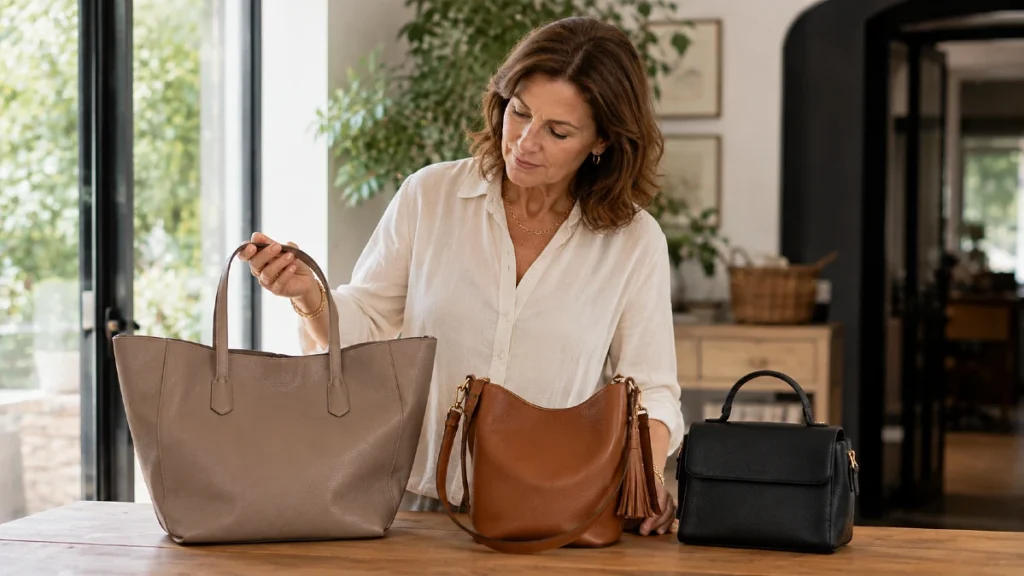
A bag that looks wonderful on a shelf can become annoying very quickly if it does not suit your day.
For errands, lunch with friends, or casual afternoons, a medium shoulder bag or crossbody usually provides enough polish without requiring much thought. Look for an opening you can reach easily and an interior that does not turn into one large empty compartment.
For work or appointments, slightly more structure can help an outfit look pulled together. A clean tote, top-handle bag, or simple shoulder bag works particularly well with blazers, knit jackets, trousers, and dresses.
Travel changes the priorities again. Secure zippers, comfortable straps, lighter materials, and practical pockets start to matter more than a perfectly sculpted silhouette.
The same handbag therefore does not have to handle every part of your life.
A small handbag wardrobe can be much more useful than a large collection of bags that all serve the same purpose.
An Easy Three-Bag Handbag Wardrobe
You can cover most situations with:
- A medium everyday shoulder or crossbody bag in your best neutral
- A larger tote for travel, shopping, and days when you carry more
- A smaller polished bag for dinners, celebrations, and dressier outfits
That approach also improves cost-per-wear. Instead of buying bags because they look exciting in isolation, you are choosing each one to fill a clear role.
Details Can Make a Handbag Feel Current or Dated
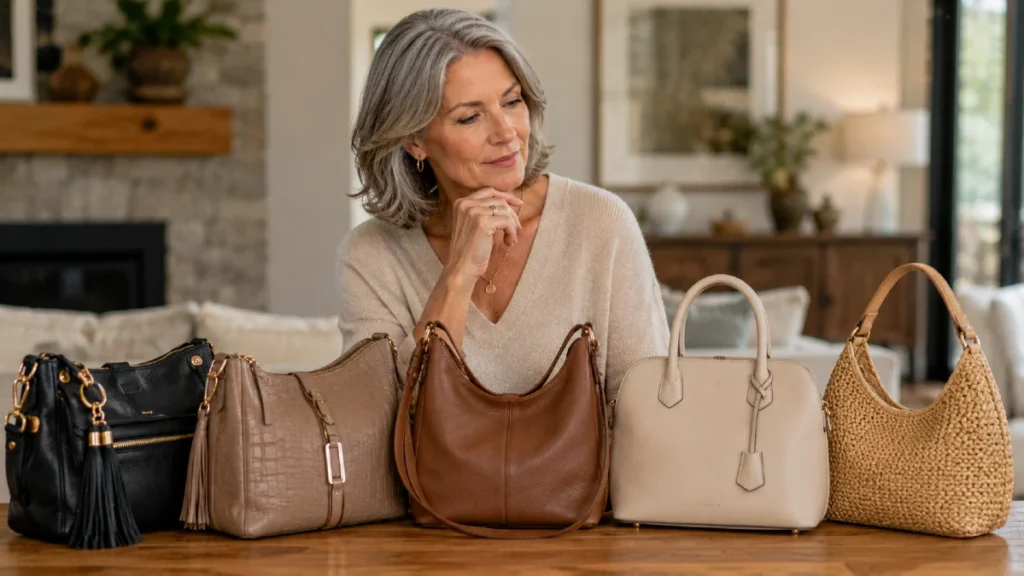
You do not need to chase handbag trends to look modern. Small design choices usually make a bigger difference.
Very busy hardware, oversized logos, excessive tassels, multiple decorative zippers, and complicated color blocking can make a handbag dominate a simple outfit. If you love those details, wear them, but treat the bag as the statement piece.
Cleaner bags are easier to combine with stylish outfits for women over 50 because they leave room for interesting jewelry, scarves, shoes, and clothing textures.
There is also no need to assume that a classic bag must be stiff or conservative. Soft leather, rounded shapes, wider straps, woven textures, and slightly slouchy silhouettes can make familiar wardrobe pieces feel much fresher.
Here are some common handbag problems and the easiest adjustment.
| If This Bothers You | Try This Instead |
|---|---|
| The bag looks bulky with your outfit | Choose a medium bag with a cleaner profile |
| A crossbody cuts awkwardly across your clothes | Lengthen or shorten the adjustable strap |
| Your handbag makes casual clothes feel too formal | Try soft leather or a relaxed shoulder shape |
| Your outfit feels plain with a neutral bag | Add texture through suede, woven leather, or subtle hardware |
| The bag becomes uncomfortable after an hour | Choose lighter hardware and a wider strap |
Notice that none of these fixes involves abandoning your personal style. It is usually a small adjustment in scale, texture, or placement.
A Simple Handbag Formula to Keep
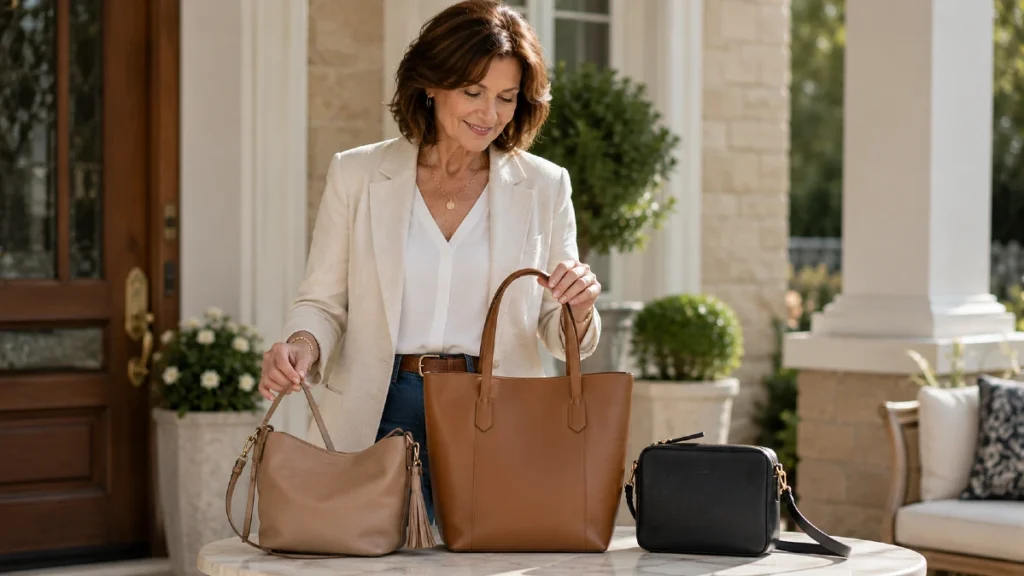
When you are unsure which handbag works, use the overall level of polish in your outfit as the starting point.
Formula: simple clothing + one defined handbag + comfortable shoes
For example, try straight-leg jeans + a fine-knit sweater + a medium leather shoulder bag + loafers. The clean bag gives relaxed clothes enough structure to feel intentional.
For a dressier version, use tailored trousers + a soft blouse or knit + a structured medium bag + flats or low heels. You can change the colors and fabrics without changing the logic.
This type of personal uniform makes dressing over 50 much easier because you are working from proportions you already trust instead of reinventing your outfit every morning.
Frequently Asked Questions
What handbag color goes with the most outfits?
Black is versatile, but it is not always the most useful neutral. Brown, cognac, taupe, navy, cream, and burgundy may work better depending on the colors already in your wardrobe.
Look at the shoes, coats, trousers, and jackets you wear most often. Choose the handbag color that connects naturally with several of them.
Should women over 50 carry large or small handbags?
Either can work. Choose the size based on your outfit proportions, what you need to carry, and how comfortable the bag feels when full.
Medium bags tend to be especially versatile because they work easily with casual clothing, tailoring, dresses, and outerwear.
Are crossbody bags stylish for women over 50?
Yes. A simple crossbody can look polished while being one of the most practical choices for everyday use.
Adjustable straps, good-quality materials, and moderate proportions usually make a crossbody easier to combine with both casual and smart-casual clothing.
Does a handbag need to match your shoes?
No. Your shoes and handbag can coordinate without being identical.
A cognac bag can work with tan, cream, brown, or even navy shoes. Repeating related tones often creates a more natural-looking outfit than exact matching.
How many handbags do you really need?
There is no set number, but three well-chosen bags can cover a surprising amount of everyday life. An everyday bag, a roomy tote, and a smaller polished option give you enough variety without creating unnecessary clutter.
If you already own more, focus on which ones you actually reach for. Those bags reveal the size, strap, shape, and colors that work best for your lifestyle.
Conclusion
Choosing a handbag after 50 is much less about following age-based fashion rules and much more about knowing what supports your clothes and your day.
The right size, comfortable strap, useful color, and sensible amount of structure can make even very simple clothes feel considered.