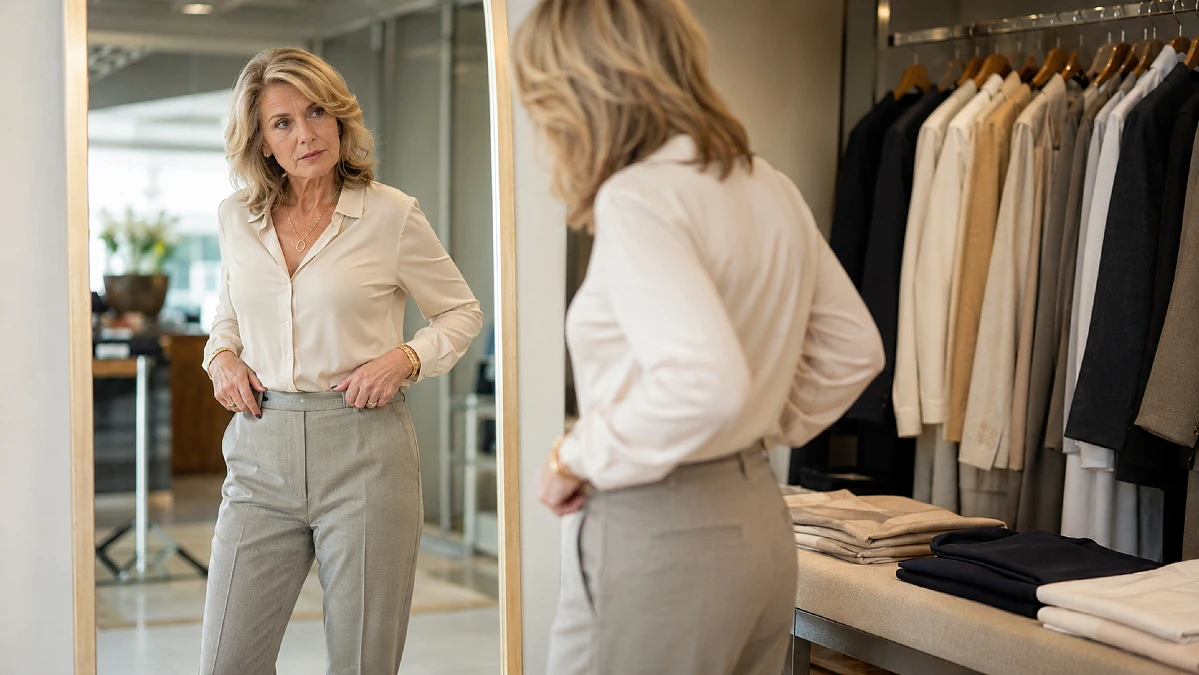
You pull a trusted pair of pants from your closet, and suddenly the waistband pinches while the thighs bag out. It feels incredibly frustrating when clothes you rely on just stop working.
You might start to blame your body, assuming you need to radically change your shape. The dressing room becomes a battleground, and getting dressed feels like a chore instead of a joy.
The truth is simpler, and it has nothing to do with your worth. Your proportions naturally shift, and standard clothing sizes rarely account for this reality.
What’s Actually Changing Behind the Scenes
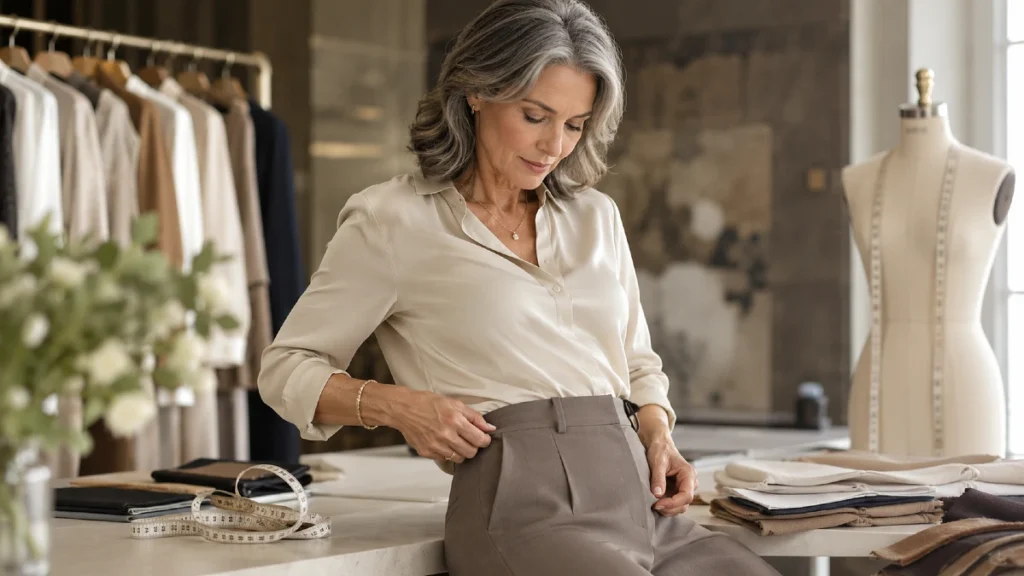
The shift in how your clothes fit comes down to a combination of human biology and rigid industry standards. As we cross into our fifties, hormonal shifts naturally redistribute where we carry our weight.
Even if the number on the scale remains exactly the same, your silhouette is subtly evolving. Weight often moves toward our middle and away from our arms and legs.
At the same time, mass-market clothing brands base their standard sizes on “fit blocks” modeled after women in their twenties. They assume an hourglass shape with a highly defined waistline.
When you put a twenty-five-year-old’s fit block on a fifty-five-year-old’s body, the math simply does not align. You are not the problem; the outdated template is.
Your Proportions Shift, Even if Your Scale Doesn’t
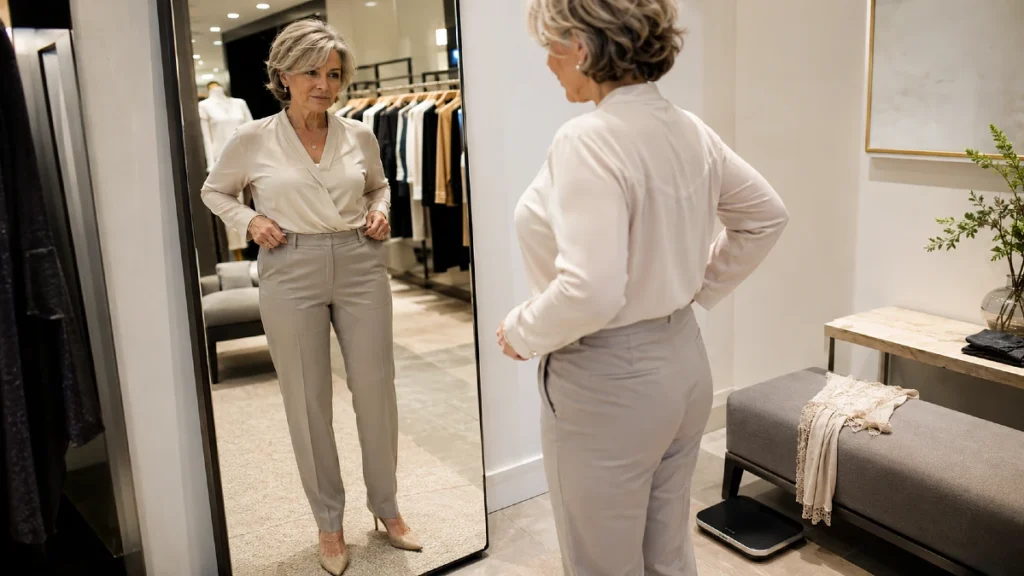
The most common complaint I hear from readers is about finding pants that actually fit. Your legs might be getting slimmer, while your waistline is expanding slightly.
When you buy trousers to comfortably clear your middle, the thighs and rear end up looking baggy and sloppy. This changing waist-to-hip ratio is completely normal, but it requires a new way of shopping.
You have to stop dressing the shape you had ten years ago. Adapting to this subtle shift is how you continue creating stylish outfits for women over 50 without feeling restricted.
Here is a quick look at how to adjust your styling logic to match your body’s new balance.
| Outdated Rule | What Actually Works Now |
| Buying pants purely based on your waist size. | Fitting the widest part of your hips first, then taking the waist to a tailor. |
| Relying on stiff cotton shirts for a crisp look. | Seeking out tops with soft draping that skim over the midsection. |
| Wearing low-rise jeans to avoid stomach pressure. | Choosing mid-to-high rises with a contoured waistband to prevent back gaps. |
| Assuming a larger size fixes tightness. | Recognizing that sizing up often makes the shoulders and armholes look sloppy. |
Fabric and Construction Matter More Than the Size Tag
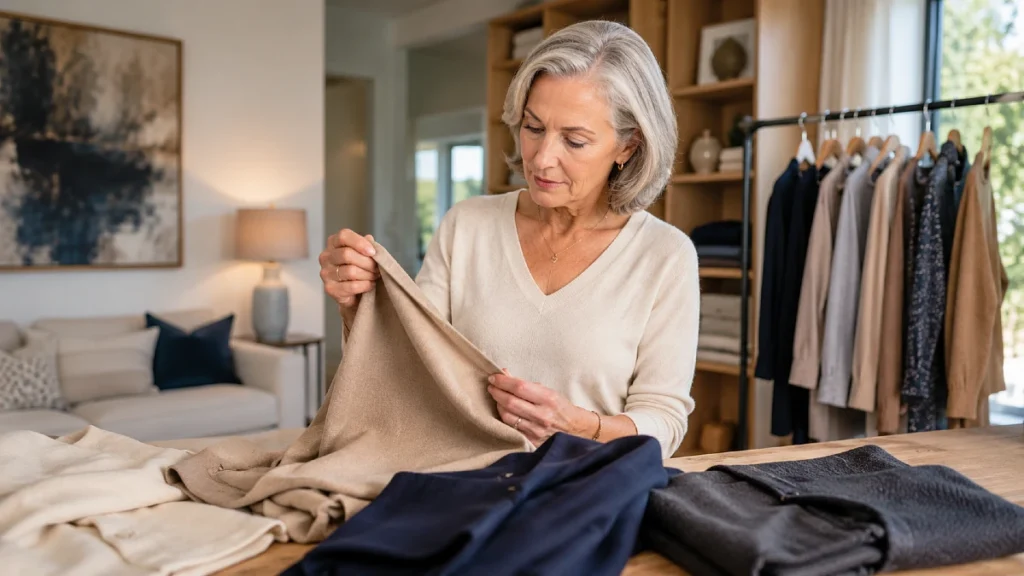
When our bodies shift, rigid fabrics highlight every mismatch between the garment and our shape. A stiff, heavy cotton button-down that used to glide over your hips might now pull awkwardly across the waist or shoulders.
This does not mean you are relegated to wearing shapeless tunics or oversized sweats. It simply means you need fabrics with “give” and structural memory to maintain a polished look.
Look for textiles that drape over your frame gracefully rather than boxing it in. A tiny percentage of stretch woven into structured pieces makes a massive difference in daily comfort.
When shopping for clothes that actually flatter you, prioritize materials that work with you, not against you.
| Fabric Choice | What to Look For | Why It Works |
| Stretch Denim | 1% to 2% elastane or spandex blended with cotton. | Holds its shape while bending, preventing the dreaded baggy knees at the end of the day. |
| Ponte Knit | A thick, double-knit fabric usually found in trousers or blazers. | Offers the structure of a woven dress pant with the forgiving stretch of a legging. |
| Viscose / Rayon | Lightweight, breathable weaves often used in blouses. | Drapes beautifully over the stomach and bust without clinging to areas you prefer not to highlight. |
| Merino Wool | Fine-gauge knits for sweaters and cardigans. | Regulates temperature well and stretches gently across shifting shoulder lines without bagging. |
What to Do About It Right Now

The best reaction to changing proportions is to rethink how you buy and alter your clothes. You do not need an entirely new wardrobe, just a different approach to making your garments work for you.
- Fit the largest part of your body first. If a blazer fits your shoulders but will not button, buy it for the shoulders and wear it open.
- Embrace the tailor. A simple adjustment to the waistline or the hem of a pant can make an inexpensive piece look completely custom-made.
- Ignore the size tag entirely. Sizing is completely arbitrary and varies wildly between brands, so cut the tags out as soon as you bring a piece home.
Consistently putting together stylish outfits for women over 50 comes down to honoring your current shape. Do not force yourself into rigid clothing that ruins your day.
Here is a quick guide to troubleshooting the most common fit issues you might face in the dressing room.
| Common Fit Problem | Do This | Not That |
| Waistband pinches, but hips fit | Buy for the hips and have the waistband let out by a tailor (check for extra fabric inside). | Do not size up, or the thighs and rear will look saggy. |
| Shirts pull across the back | Look for blouses with back pleats or raglan sleeves for extra mobility. | Do not suffer through stiff shoulders just because the waist fits. |
| Pants gap at the lower back | Seek out brands that offer “curvy” fits, which naturally have a smaller waist-to-hip ratio. | Do not rely on a tight belt to bunch the fabric together. |
Adapting Style to Body Changes
Can I still wear high-waisted jeans after 50?
Reveal the FixYes, absolutely. High-waisted jeans can be incredibly flattering. Look for mid-to-high rises with a contoured waistband, which curves slightly inward at the top to prevent gaping in the back and reduces pinching across your stomach when sitting.
Why do my shirts suddenly pull across the shoulders?
Reveal the FixPosture changes and subtle shifts in muscle mass can gently broaden our backs as we age. Look for tops with back box pleats, drop shoulders, or a slight stretch blend to allow arm mobility without forcing you to buy a larger, boxier size.
Should I just buy a size larger when clothes feel tight?
Reveal the FixNot automatically. Sizing up often makes the shoulders, armholes, or leg openings far too large. Fit the trickiest or widest part of your body first, then take the garment to a tailor to bring in the looser areas for a custom fit.
How do I dress a changing midsection without looking frumpy?
Reveal the FixAvoid stiff, clingy fabrics that highlight tension. Choose tops with subtle ruching, wrap details, or soft draping that naturally float over the waist. A well-tailored blazer worn open over a soft blouse also creates long, flattering vertical lines.
Conclusion
Realizing your clothes no longer fit can feel defeating, but it is not a failing on your part. Your body has carried you through decades of life, and it deserves clothes that honor it today.
By understanding how your proportions shift and choosing fabrics that move with you, dressing can become enjoyable again.