Blazers can go wrong fast after 50 when the cut feels too stiff, the shoulder sits too wide, or the whole outfit looks like it belongs in an office you no longer work in.
That is the frustrating part. A blazer should make you feel sharper, not boxed in. Yet many women over 50 try one on and feel too corporate, too formal, or just not like themselves.
The good news is that a blazer can be one of the easiest ways to create stylish outfits for women over 50. The trick is not wearing it like a suit jacket.
Why Blazers Can Feel Stuffy After 50
A blazer often feels wrong because the rest of the outfit is too formal around it. A crisp blazer with a button-down shirt, dress trousers, pumps, and structured handbag can read very businesslike, even when each piece is lovely on its own.
Fit also matters more than most people think. A blazer that pulls across the bust, pinches the upper arm, or lands at the widest part of the hip can make you feel trapped. That discomfort shows.
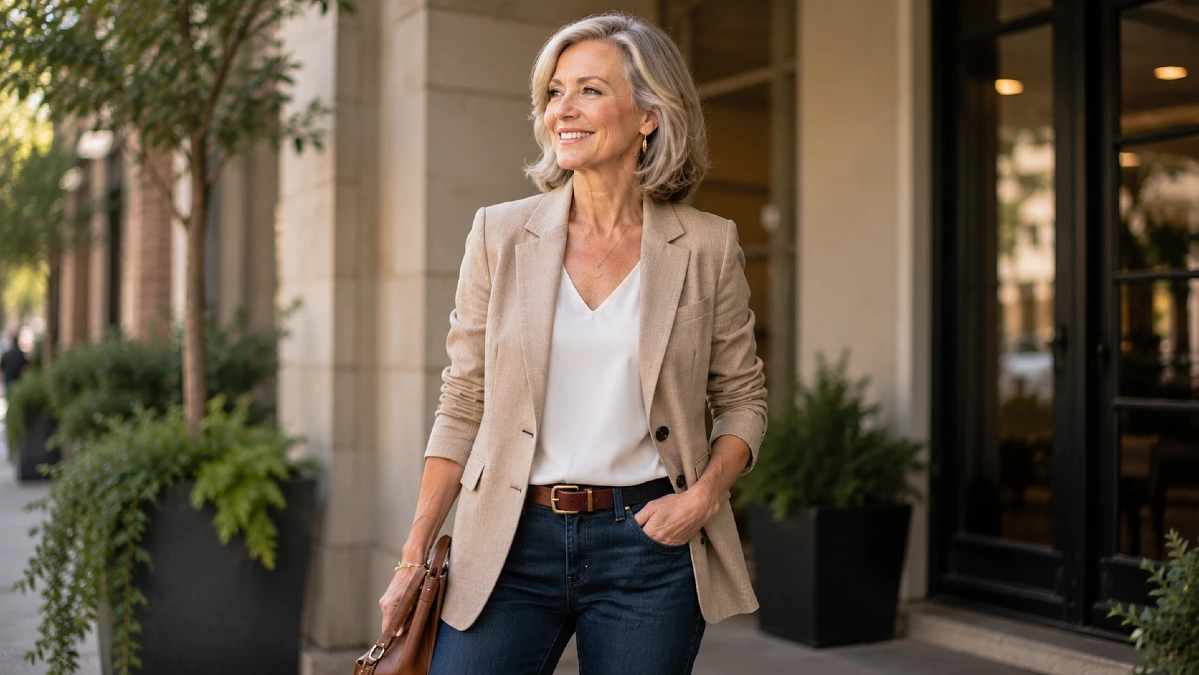
Modern blazer styling is more relaxed. The blazer still gives shape, but the pieces around it bring ease. Think soft knits, straight jeans, fluid trousers, leather flats, clean sneakers, or a simple tee.
The goal is not to look younger. It is to look current, comfortable, and pulled together.
The One Styling Rule That Changes Everything
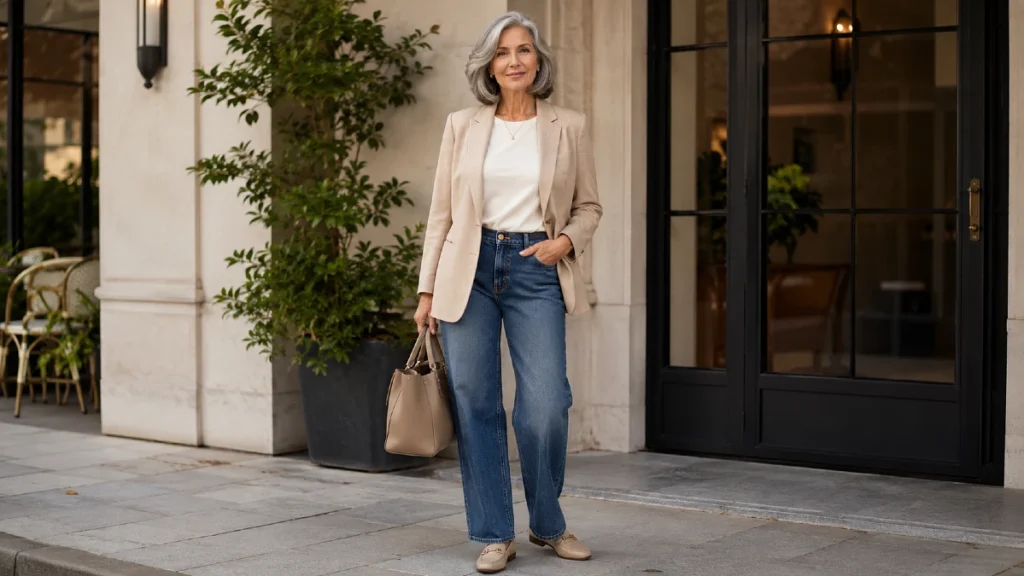
A blazer looks more effortless when one part of the outfit feels relaxed.
That is the whole rule.
A structured blazer needs contrast. If every piece is sharp, the look can feel stiff. If every piece is loose, the outfit can lose shape. The sweet spot is structure on top, ease somewhere else.
That might mean a blazer with dark straight-leg jeans. It might mean a blazer over a soft crewneck tee. It might mean wide-leg trousers with a fine knit underneath.
Here is the simple balance to remember:
| Blazer Style | Pair It With | Why It Works |
|---|---|---|
| Tailored black blazer | White tee and straight jeans | The tee softens the blazer, while jeans keep it casual |
| Linen-blend blazer | Ribbed tank and relaxed trousers | The texture feels lighter and less corporate |
| Longline blazer | Slim knit top and ankle pants | The slim base keeps the longer shape from feeling bulky |
| Soft knit blazer | Dark denim and loafers | The blazer feels comfortable but still polished |
A blazer should frame your body, not fight it. When the base layer is simple and comfortable, the blazer does the style work without making the outfit feel forced.
Choose a Fit That Moves With You
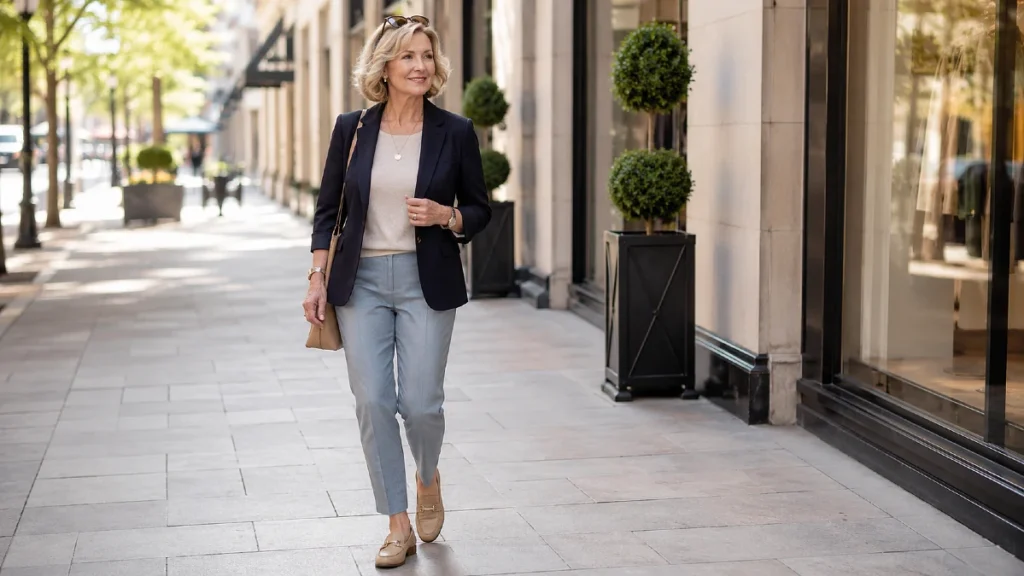
The best blazer over 50 is not always the sharpest one on the hanger. It is the one you can sit in, reach in, and wear for more than ten minutes without tugging.
Start with the shoulders. The seam should sit close to the edge of your shoulder, not droop down the arm or pinch inward. A slightly relaxed shoulder can look modern, but too much extra width may make the blazer feel heavy.
Next, check the bust and waist. You do not need to button every blazer. Many look better worn open. Still, the front should hang cleanly instead of pulling, flaring, or creating tension lines.
Sleeves are often the small detail that changes everything. A sleeve that stops near the wrist bone looks cleaner than one that covers half your hand. Rolling or pushing the sleeves slightly can also make the blazer feel less formal.
Fit note: if a blazer feels right in the shoulders but boxy through the body, tailoring the side seams or shortening the sleeves can make it feel custom without replacing your whole wardrobe.
What to Wear Under a Blazer
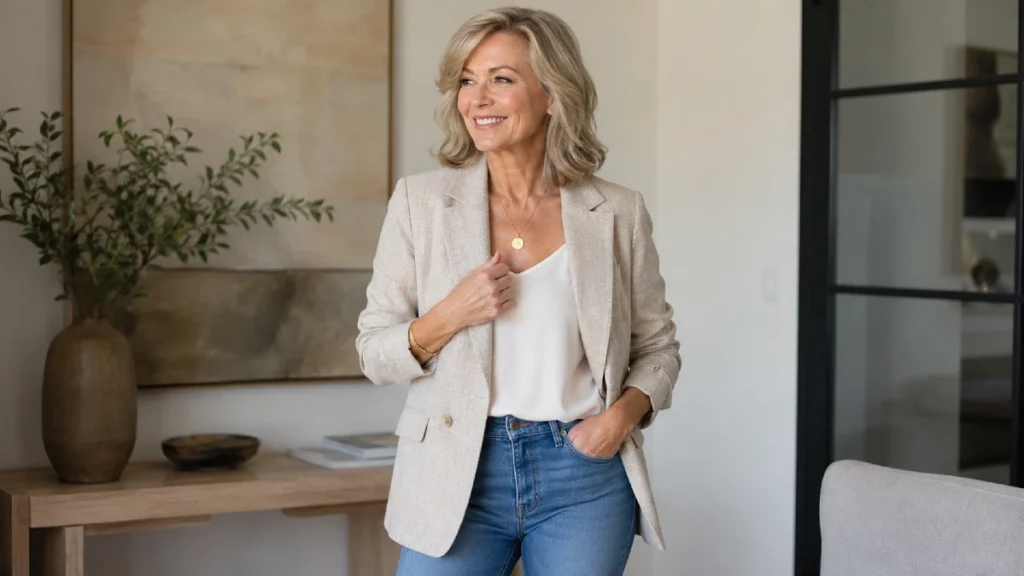
The layer under your blazer sets the mood. This is where many blazer outfits become either modern or too stiff.
A button-down shirt can work beautifully, but it is not the only choice. For everyday outfits for women over 50, softer tops often make the blazer easier to wear.
A fine knit tee, silk-feel shell, ribbed tank, lightweight turtleneck, or simple crewneck can make the blazer feel more natural. These pieces sit closer to the body, which keeps the blazer from adding too much bulk.
Use this quick guide when choosing your base layer:
| Under-Blazer Piece | What to Look For | Best With |
|---|---|---|
| Crewneck tee | Smooth cotton or modal, not clingy | Jeans, chinos, casual trousers |
| Fine knit top | Lightweight, close-fitting, soft neckline | Wide-leg pants or midi skirts |
| Sleeveless shell | Fluid fabric with a clean drape | Work dinners, lunch, travel |
| Lightweight turtleneck | Thin knit, not bulky at the neck | Longline blazer and slim pants |
| Button-down shirt | Soft cotton or chambray, slightly open collar | Relaxed denim or ankle trousers |
Color also helps. A column of color under a blazer, such as navy top with navy trousers, can look long and polished. Add a cream, camel, gray, or olive blazer over it and the outfit feels intentional without being loud.
Make the Bottom Half Feel Current
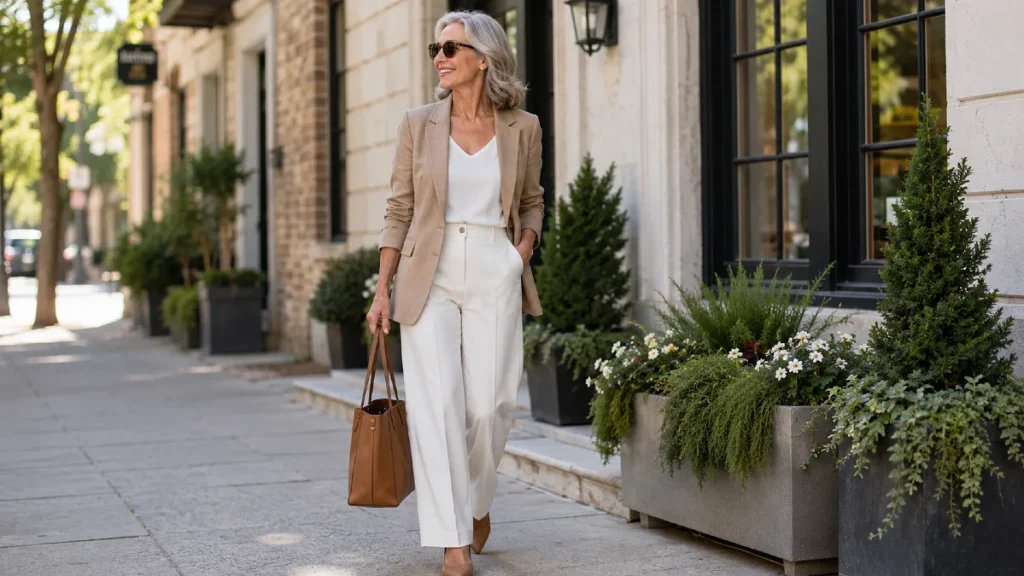
The pants or skirt you choose can change the entire blazer mood.
Skinny pants with a tight blazer can feel dated if the proportions are too narrow from head to toe. That does not mean slim pants are wrong. It means they usually look better with a longer blazer, a softer shoe, or a slightly relaxed top.
Straight-leg jeans are one of the easiest pairings. They give the blazer a casual base without making the outfit sloppy. Dark denim looks more polished, while faded denim feels more weekend-friendly.
Wide-leg trousers can also look chic, especially with a fitted tee or fine knit underneath the blazer. The key is balance. If the pants have volume, keep the top layer neat and the shoe clean.
For skirts, try a slip skirt, straight midi skirt, or denim midi. A blazer over a flowy skirt works best when the waist is defined in some way, either with a tucked top, a shorter blazer, or a slight shape through the jacket.
Shoe swap: trade high pumps for loafers, block-heel ankle boots, ballet flats, low slingbacks, or clean leather sneakers. The shoe tells the eye whether the blazer is office-only or real-life chic.
Use Color and Fabric to Soften the Look
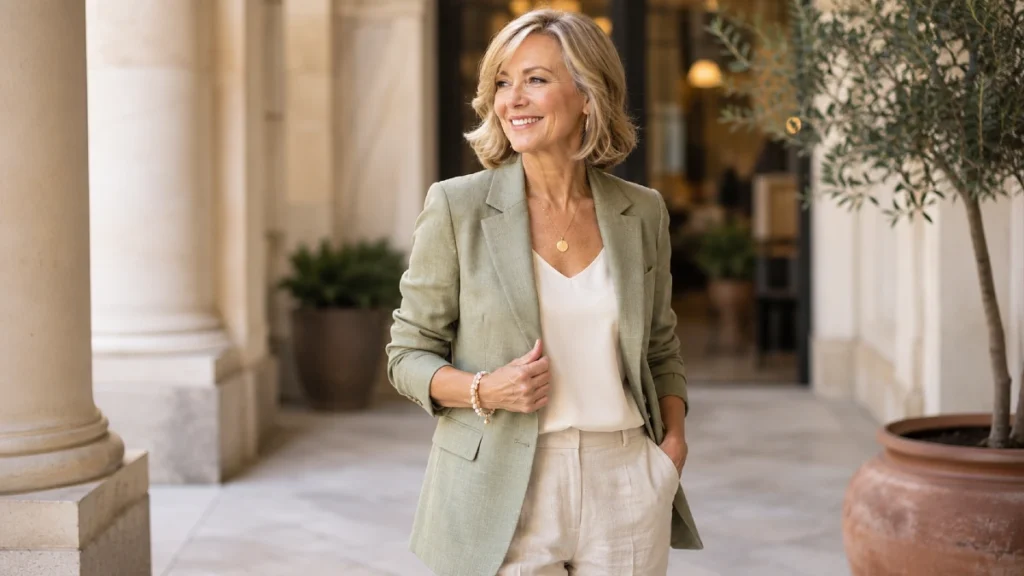
Black blazers are useful, but they are not the only option. Sometimes black feels too harsh next to softer hair color, lighter makeup, or a more relaxed wardrobe.
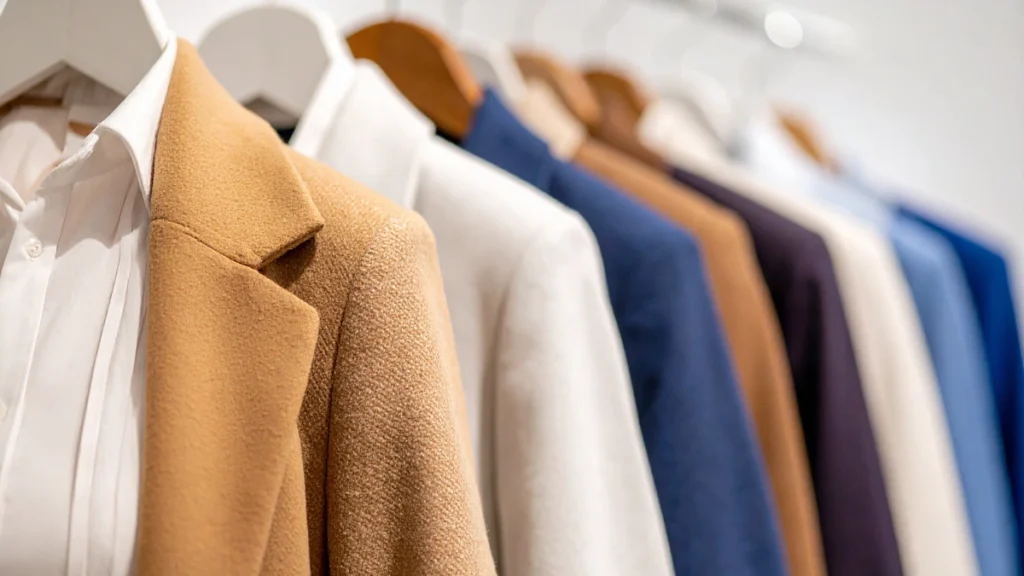
Navy, charcoal, taupe, camel, ivory, olive, chocolate brown, and soft gray can be easier to wear. These shades still look polished, but they blend better with casual outfits for women over 50.
Fabric changes the feeling too. A wool blazer feels sharp. A linen-blend blazer feels relaxed. A ponte knit blazer feels comfortable. A crepe blazer feels dressier without being rigid.
Here is how to choose based on the life you actually dress for:
| Situation | Blazer Choice | Why It Works |
|---|---|---|
| Errands and lunch | Soft knit or ponte blazer | Comfortable enough for movement, sharper than a cardigan |
| Travel day | Unlined blazer with stretch | Gives shape without feeling tight on the plane or in the car |
| Dinner out | Crepe or satin-trim blazer | Feels elegant without needing a full dressy outfit |
| Casual office | Linen-blend or relaxed wool blazer | Looks smart without feeling too corporate |
| Weekend plans | Oversized blazer with jeans | Modern shape, especially with a simple tee underneath |
Fabric note: if you dislike stiffness, look for a blazer with a little stretch, partial lining, or a softer shoulder. You still get polish, but not the feeling of wearing armor.
What to Avoid and What to Try Instead
Blazer mistakes are usually not about age. They are about proportion, fabric, and styling habits that no longer feel fresh.
Try these gentle swaps:
| Instead of This | Try This |
|---|---|
| A tight blazer buttoned over a stiff shirt | An open blazer over a soft tee or fine knit |
| Matching suit pieces for casual days | Blazer with jeans, relaxed trousers, or a slip skirt |
| Sleeves that cover the hand | Tailored sleeves or a casual sleeve push |
| Heavy shoulder pads with a boxy cut | Light structure with a cleaner shoulder line |
| Thin clingy top underneath | Smooth base layer that skims the body |
A small change can be enough. Push the sleeves. Swap the blouse for a tee. Change the pumps to loafers. Suddenly the same blazer feels less formal and more like you.
A Simple Blazer Formula to Copy
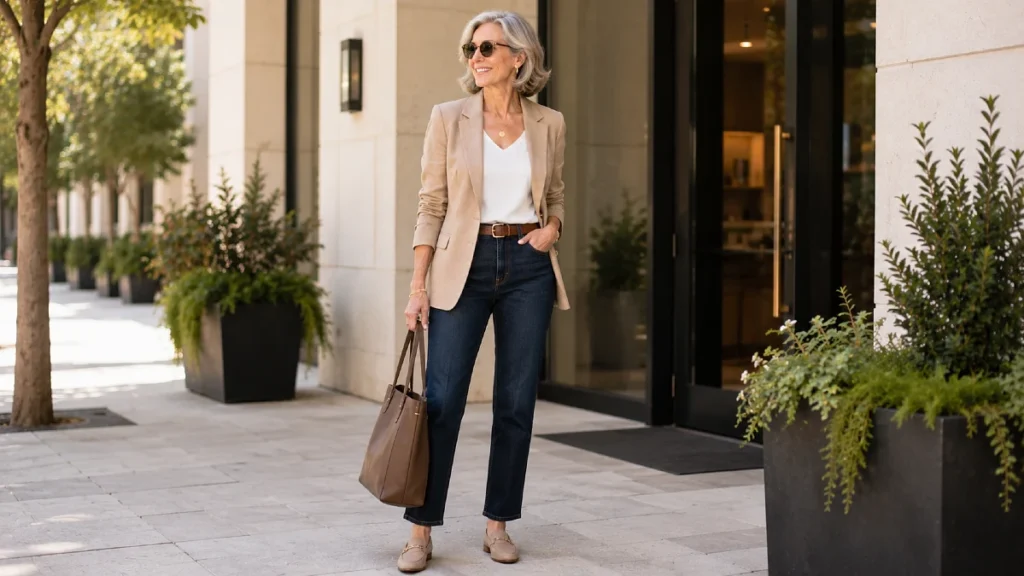
Formula: relaxed blazer + smooth tee or fine knit + straight jeans or fluid trousers + polished flat shoe.
This works because every piece has a job. The blazer gives shape. The tee or knit adds softness. The jeans or trousers keep the outfit grounded. The shoe finishes the look without making it feel overdone.
You can vary this formula all year. In spring, use a linen blazer and light jeans. In fall, wear a wool-blend blazer with a thin turtleneck. For dinner, switch the tee to a silky shell and the flats to low slingbacks.
This is how chic outfits for women over 50 become easier. You are not starting from zero every morning. You are repeating a formula that already works.
Frequently Asked Questions
Frequently Asked Questions
Can women over 50 wear oversized blazers?
What is the most flattering blazer length over 50?
How do I make a blazer look casual instead of corporate?
Are black blazers too harsh after 50?
What shoes look best with a blazer over 50?
Conclusion
A blazer over 50 should not make you feel stiff, hidden, or dressed for someone else’s life. The right one gives you shape, polish, and confidence while still letting you move through your day with ease.
Style confidence over 50 comes from fit, comfort, and small choices that feel like you. Start with one blazer, one soft base layer, and one bottom you already trust.