Covering crepey skin can feel harder than it should, especially when your favorite clothes show more of your arms, chest, or knees than you feel comfortable with. A sleeveless dress may fit beautifully, yet you still reach for a cardigan before leaving home.
For many women over 50, the frustration isn’t about wanting to look younger. It’s about finding clothes that feel comfortable and look polished without adding heat, bulk, or an outdated shape.
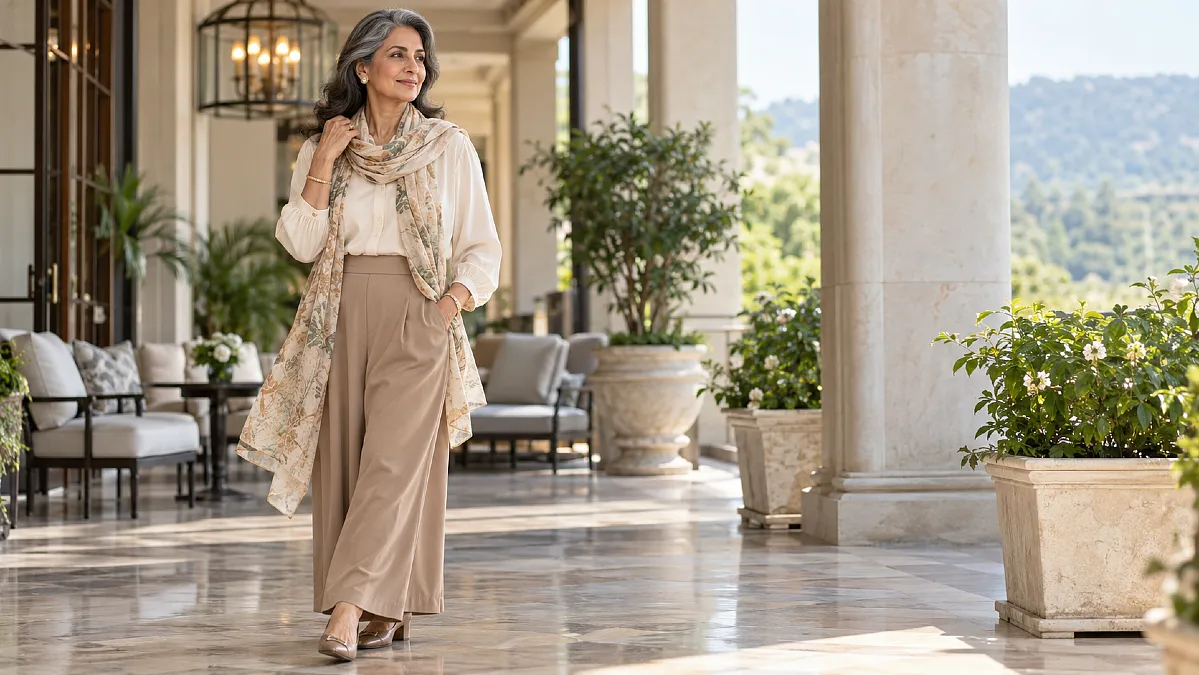
The good news is that learning how to dress to cover crepey skin over 50 doesn’t require a new wardrobe. Thoughtful sleeves, flattering necklines, flowing fabrics, and a few simple outfit formulas can give you the coverage you want while keeping your personal style in view.
Choose Clothes That Skim Your Skin Instead of Clinging to It
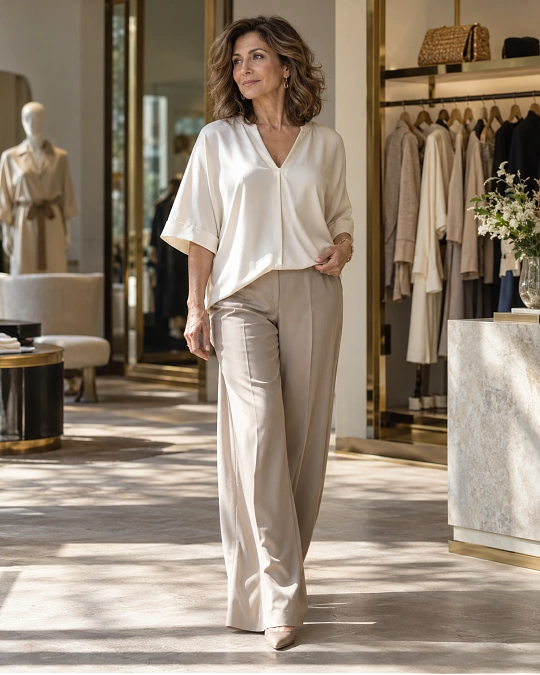
The most elegant way to cover crepey skin is to choose clothes that fall gently over the body. Fabric that skims your skin creates a smooth outline without feeling tight or hiding your natural shape.
Very thin, clingy materials can settle into the folds of the skin, especially around the upper arms and chest. Extremely stiff fabrics can cause the opposite problem by creating a wide, boxy shape.
Look for materials that have a little weight, move naturally, and hold their shape without feeling heavy.
For example, a soft crepe blouse often drapes more smoothly than a thin jersey top. A lightweight cotton shirt can also provide comfortable coverage while keeping your outfit fresh and modern.
Fabric Note: Matte fabrics can create a softer finish than highly reflective materials. You don’t have to avoid shine completely, but consider where you want the light to fall.
Here is a quick guide to fabrics that can make elegant coverage easier.
| Fabric | What to Look For | Best Use |
|---|---|---|
| Soft crepe | Fluid drape with a matte finish | Blouses, dresses, and eveningwear |
| Cotton poplin | Light structure without stiffness | Button-down shirts and summer tops |
| Linen blends | Breathable fabric with a softer fall | Warm-weather shirts and trousers |
| Silk or silk blends | Smooth movement without a clingy fit | Dressy blouses and scarves |
| Fine-gauge knits | A smooth surface and comfortable stretch | Cardigans and long-sleeve tops |
Don’t judge a fabric by its name alone. Hold it up, let it fall, and check how it moves when you walk or bend your arms.
A good fabric should give you enough coverage without demanding constant adjustments. That comfort is part of what makes an outfit look elegant.
Find Sleeve Styles That Gracefully Cover Crepey Arms
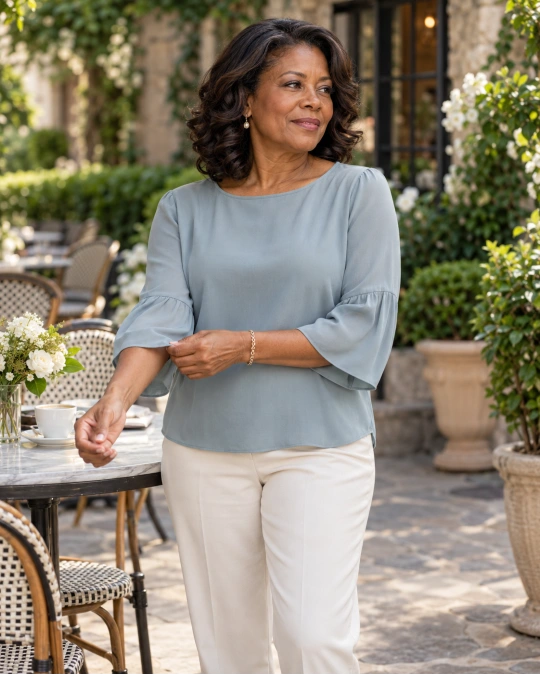
The solution isn’t to cover your arms with thick sweaters all year. It’s to find sleeve shapes that give you coverage without creating extra width.
Elbow-length sleeves are especially useful when your main concern is the upper arms. They cover much of that area while leaving the lower arm free.
Three-quarter sleeves offer a little more coverage and create a neat, polished line. They work beautifully with tailored trousers, midi skirts, and casual jeans.
For more coverage, consider these options:
- Elbow-length sleeves: A clean choice for everyday tops, knitwear, and dresses when you want to cover the upper arms.
- Three-quarter sleeves: A smart option for office outfits, lunches, and transitional weather.
- Full-length sleeves: Useful when you prefer to cover the forearms as well, especially in lightweight fabrics.
- Soft flutter sleeves: Provide gentle coverage around the upper arms without the tightness of fitted sleeves.
- Sheer or lace sleeves: Add an elegant layer for evenings and special occasions, although skin texture may remain visible beneath them.
The fit around the upper arm matters as much as the sleeve length. A tight sleeve can pull against the skin, while a very wide sleeve can add more volume than you want.
Look for enough room to bend and raise your arms comfortably. The shoulder seam should also sit neatly rather than slipping too far down the arm.
Fit Note: If a blouse fits across your shoulders but pulls around the upper arms, try another sleeve cut before sizing up. A larger size may make the whole blouse look loose when only the sleeves need more room.
You can also keep sleeveless dresses you already own. A cropped cardigan, soft jacket, or light open shirt can provide coverage without replacing the dress.
Use Necklines, Collars, and Scarves to Soften the Neck and Chest
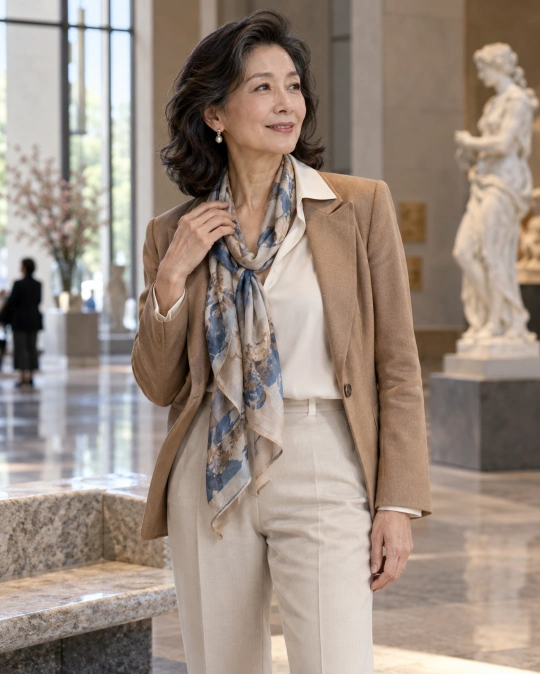
Crepey skin around the neck and upper chest can make choosing a neckline feel frustrating. A deep neckline may show more skin than you prefer, while a tight turtleneck can feel restrictive.
A softly structured neckline often offers a comfortable middle ground. It provides coverage while keeping the upper half of your outfit open and balanced.
A modest boat neckline is a lovely example. It follows the collarbone and draws attention across the shoulders without revealing much of the chest.
Soft mock necks are another option, especially in cooler weather. Choose a lightweight knit that sits gently against the neck rather than folding tightly around it.
Collared shirts can work just as well. A shirt buttoned to a comfortable height creates a neat frame around the face and lets you adjust the neckline throughout the day.
For more relaxed outfits, try a blouse with a shallow V-neck or a modest scoop neckline. These shapes can look graceful without exposing the entire upper chest.
Scarves are helpful when you want adjustable coverage. A narrow silk scarf tied loosely at the neck adds color, while a lightweight rectangular scarf can drape over the neckline of a dress.
Keep the scarf soft and loose enough to feel comfortable. Large, stiff scarves can overwhelm a small neckline and make the outfit look heavier than necessary.
Jewelry can complete the look without adding another layer of fabric. Simple earrings or a necklace worn over a higher-neck top can make the outfit feel intentional.
The goal is to frame your face beautifully, not to create a wall of fabric between your chin and shoulders.
Choose Dresses and Trousers That Offer Elegant Leg Coverage
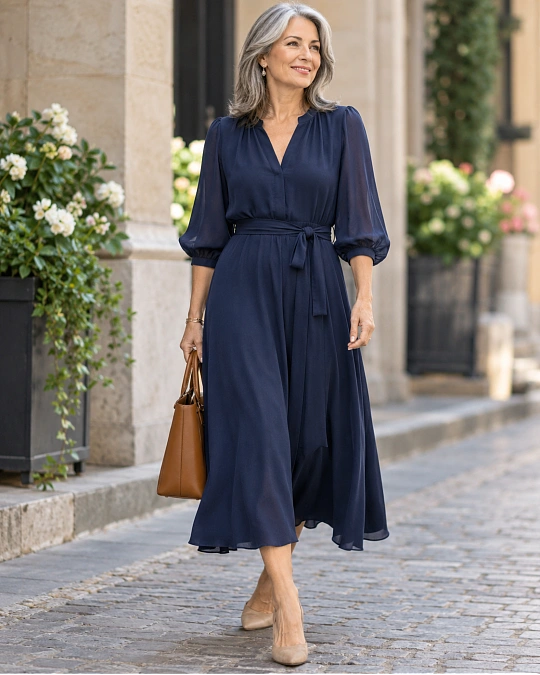
Crepey skin around the knees and thighs can make shorter dresses feel less appealing. Fortunately, you don’t have to give up dresses or wear long skirts every day.
Midi dresses are a useful choice because they offer more coverage while keeping the outfit feminine and easy to wear. A hem that falls below the knee or around mid-calf can work particularly well.
Pay attention to where the hem finishes on your leg. If a dress ends at a point that feels awkward, try another length rather than giving up on the style.
A softly shaped A-line skirt gives the legs room to move and creates a graceful outline. A straight midi skirt can also look polished when it has enough ease for comfortable walking.
For everyday dressing, a midi shirt dress with sleeves can solve several concerns at once. It covers the upper arms, offers adjustable neckline coverage, and falls below the knees.
If you prefer trousers, straight-leg and softly wide-leg styles are excellent options. They cover the legs without making the lower half of your outfit look heavy.
Choose trousers that fall smoothly from the hip and finish neatly over your shoes. Very thin, tight trousers may show more skin texture than a softly structured pair.
In cooler weather, opaque tights can make a knee-length dress more comfortable to wear. A close color match between tights and shoes can also create a longer visual line.
Shoe Swap: With midi dresses, try pointed-toe flats, sleek loafers, or low block heels. These shapes help the outfit look polished without requiring uncomfortable high heels.
Coverage should still allow you to sit, walk, and move freely. A dress that looks elegant while standing but needs constant pulling when you sit won’t become a wardrobe favorite.
Layer Lightly So You Stay Cool Without Showing More Skin
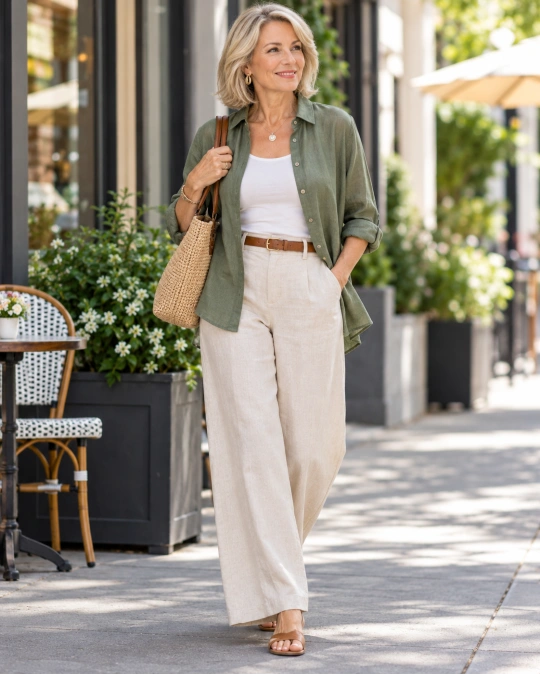
One of the biggest challenges of covering crepey skin is managing warm weather. Heavy cardigans can feel uncomfortable, while jackets may seem too formal for daily life.
The answer is to use breathable layers that provide coverage without trapping unnecessary heat.
An open linen-blend shirt over a simple tank can create a relaxed summer outfit. The shirt covers the arms, and the open front keeps the look light.
For a smarter setting, try a lightweight blazer over a sleeveless blouse. Choose a style with soft structure and enough room through the sleeves.
A fine-knit cardigan can also work, especially when it finishes around the hip or waist. Avoid automatically choosing an oversized shape, as too much fabric can hide the outfit underneath.
The best layer depends on the occasion and the level of coverage you want.
| Occasion | Comfortable Coverage | Elegant Finishing Touch |
|---|---|---|
| Casual summer outing | Linen-blend shirt over a tank | Straight-leg trousers and sandals |
| Lunch with friends | Elbow-sleeve blouse | Midi skirt and pointed flats |
| Office or smart casual | Light blazer over a shell top | Tailored trousers and loafers |
| Evening dinner | Crepe dress with sheer sleeves | Small earrings and low heels |
| Cool-weather outing | Fine-knit mock neck and cardigan | Dark jeans and ankle boots |
For very hot days, consider the weight and weave of the fabric as well as its sleeve length. A loose cotton blouse may feel cooler than a fitted top made from a less breathable material.
If sun coverage is also important, look for clothing with a stated UPF rating. A sheer layer may soften the look of the skin without offering the same sun protection as an opaque, protective fabric.
Comfort Upgrade: Try your outfit while sitting and raising your arms before leaving home. If the layer twists, pulls, or feels too warm indoors, it may be uncomfortable after several hours outside.
Avoid Styling Choices That Make Extra Coverage Look Heavy
More coverage doesn’t automatically create a more elegant outfit. Sometimes, adding several loose layers can make your clothes look less defined than you intended.
The trick is to balance the amount of fabric with the shape of the outfit. You can cover the areas you prefer without covering every part of your figure.
Here are a few changes worth trying:
- Instead of oversized tops with oversized trousers: Pair a relaxed blouse with straight-leg trousers to create a cleaner outline.
- Instead of thick cardigans over every dress: Try a lightweight cropped cardigan or an open soft jacket.
- Instead of tight, thin sleeves: Choose sleeves with a little ease and enough fabric weight to drape smoothly.
- Instead of wrapping a large scarf tightly around your neck: Try a soft, narrow scarf or a higher neckline with simple earrings.
Color also influences how an outfit comes together. A similar color palette across your top and trousers can make extra coverage look more natural.
Navy, chocolate brown, charcoal, olive, cream, and soft camel are easy shades to build around. You can also wear brighter colors if they suit your taste.
A rich burgundy blouse with dark trousers, for example, can look striking without showing much skin. A cream shirt with beige trousers creates a softer effect.
Don’t feel pressured to dress only in dark colors. The cut and quality of the fabric often matter more than the shade.
Pay attention to small details such as sleeve cuffs, shoulder seams, hemlines, and waist placement. These finishing touches can make a covered outfit look thoughtfully styled rather than simply layered.
Build a Simple Outfit Formula That Looks Elegant Every Day
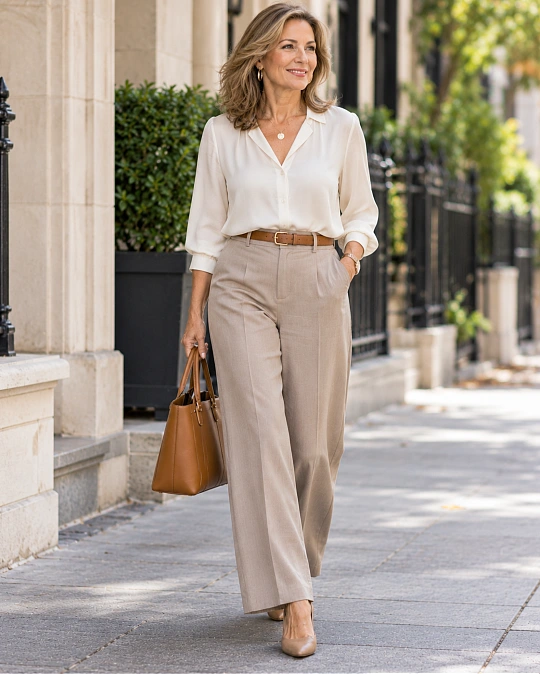
The easiest way to dress with more coverage is to create a personal outfit formula. Once you find a combination that feels comfortable, you can change the colors and accessories without starting from scratch each morning.
One particularly useful formula works for casual days, appointments, travel, and lunch with friends.
Formula: Soft long-sleeve blouse + straight-leg trousers + polished flats
The blouse gives you comfortable arm and chest coverage, while the trousers create a smooth line through the legs. Polished flats keep the outfit practical without making it feel too casual.
Choose a blouse with enough room through the shoulders and arms. A gentle front tuck can add waist definition if the fabric allows it.
For a dressier day, replace the flats with low block heels and add a simple necklace. For everyday errands, swap the trousers for dark straight-leg jeans and wear clean leather sneakers.
You can also make the formula work in warmer weather.
Try an elbow-length cotton blouse with relaxed linen-blend trousers and flat sandals. Choose a fabric that isn’t too transparent if full coverage is your goal.
In cooler weather, a fine-knit mock neck paired with tailored trousers and a soft jacket creates a similar effect. It looks neat without needing many accessories.
If you prefer dresses, create a second formula around a sleeved midi dress, a defined waist, and comfortable shoes.
The benefit of having a personal formula is consistency. You spend less time worrying about individual problem areas and more time wearing clothes that suit your life.
Before buying something new, check whether your wardrobe already contains a blouse, cardigan, or dress that works with one of these combinations.
Sometimes, changing the layer or the proportions is enough to make an older outfit feel fresh again.
Frequently Asked Questions
What Is the Best Way to Cover Crepey Arms After 50?
Elbow-length, three-quarter, and full-length sleeves are useful choices, depending on how much coverage you want. Look for soft fabrics with enough room around the upper arms. A lightweight cardigan or open shirt can also make sleeveless pieces easier to wear.
What Can I Wear in Summer to Hide Crepey Skin Without Getting Too Hot?
Try loose cotton blouses, linen-blend shirts, lightweight long-sleeve tops, and breathable midi dresses. Focus on loose but controlled shapes rather than thick layers. Light-colored fabrics can feel practical in sunny weather, while UPF-rated clothing offers more dependable sun protection.
What Necklines Help Cover Crepey Skin on the Neck and Chest?
Modest boat necklines, shallow scoop necks, collared shirts, and soft mock necks can all provide comfortable coverage. Lightweight scarves are another option when you want to adjust how much of your neck or chest shows. Choose the neckline that feels comfortable and frames your face in a way you enjoy.
Can I Still Wear Sleeveless Dresses If I Have Crepey Arms?
Yes. You can wear sleeveless dresses on their own or add a cropped cardigan, lightweight jacket, or sheer-sleeve layer when you want more coverage. The key is choosing a layer that complements the dress rather than hiding its shape.
What Should I Wear to Cover Crepey Skin on My Knees?
Midi skirts, below-the-knee dresses, straight-leg trousers, and relaxed wide-leg pants offer comfortable options. For cooler weather, opaque tights can give a shorter dress more coverage. Choose a hemline that looks balanced with your shoes and lets you move comfortably.