
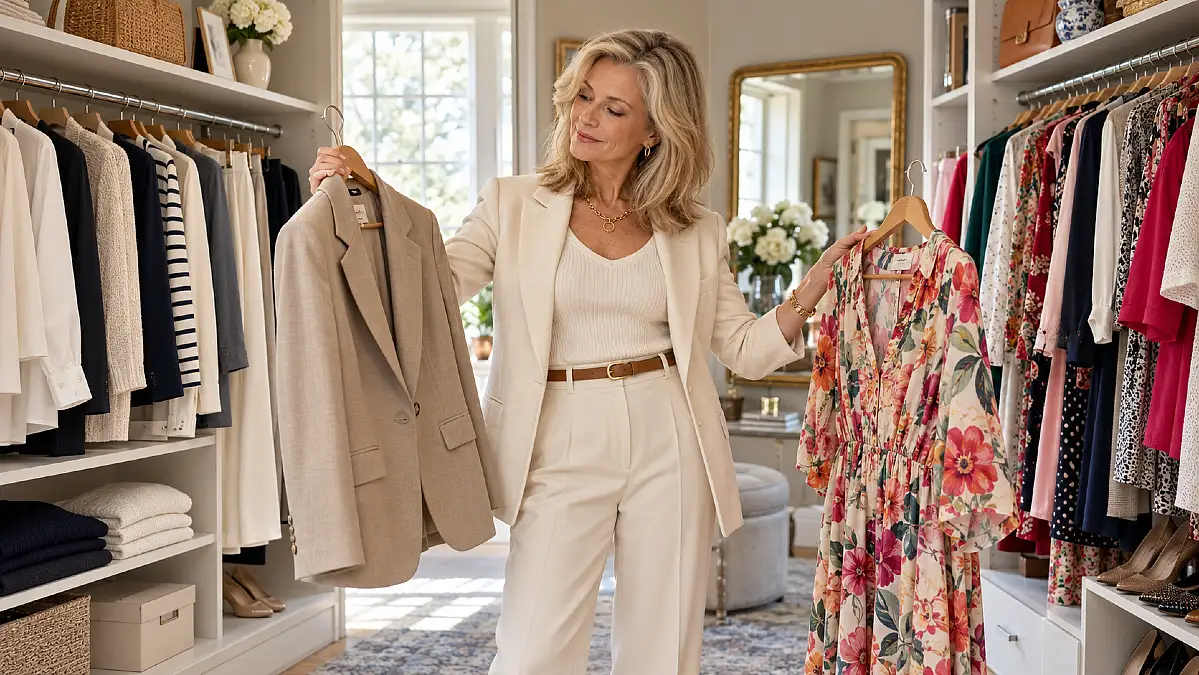
A crowded closet can still leave you feeling as if you have nothing to wear. The jeans fit differently now, your old work clothes sit unused, and getting dressed takes longer than it should.
A capsule wardrobe over 50 sounds like the simple answer. Yet a tiny closet may not leave room for changing seasons, special events, or the colorful pieces you love.
Keeping a full wardrobe has its own appeal, but too many choices can make everyday outfits harder to put together. Neither approach is automatically more stylish or more practical.
The right choice depends on your real life, your favorite clothes, and how much variety makes you happy. Here’s how to find a balance without clearing out everything you own.
What a Capsule Wardrobe Really Looks Like After 50
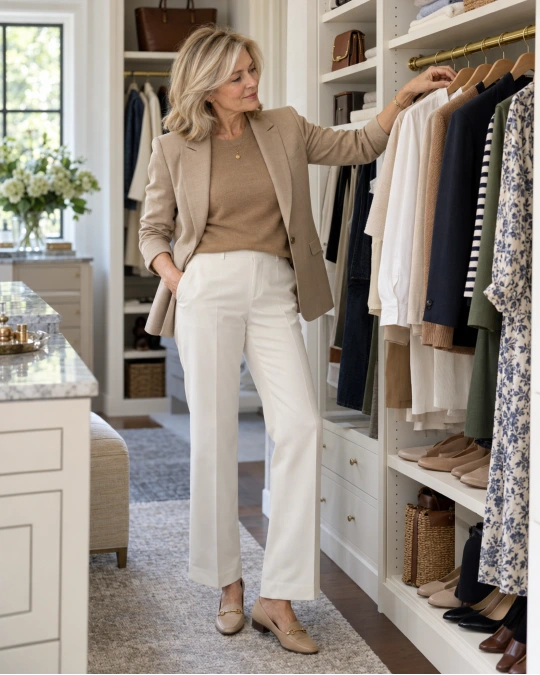
A capsule wardrobe is a smaller collection of clothes chosen to work together. Instead of keeping dozens of unrelated pieces, you focus on garments that fit well, suit your routine, and create several outfits.
Think of dark straight leg jeans, tailored navy trousers, an ivory sweater, a striped cotton shirt, and a relaxed blazer. Each piece can work with several others, making your morning choices much simpler.
The goal is not to own the fewest clothes possible. It is to have enough useful options without feeling buried under things you rarely wear.
A good capsule wardrobe over 50 also makes room for comfort and personal taste. You can choose wide leg trousers instead of slim cuts, bright colors instead of beige, or soft cardigans instead of structured jackets.
Why fewer pieces can make dressing easier
When most of your clothes work together, putting together an outfit takes less thought. You already know which trousers go with your favorite blouse and which shoes finish the look.
That can be especially helpful when your mornings are busy or you simply dislike spending too much time choosing clothes. A smaller selection also makes it easier to spot the items that need replacing.
But a capsule does have limits. If you love changing your look often or dress for very different activities, a small collection may start to feel restrictive.
Why a Full Wardrobe Can Still Be the Better Choice

A full wardrobe is not automatically a cluttered wardrobe. It can be a thoughtful collection of clothes for different seasons, occasions, moods, and parts of your life.
Perhaps you work several days a week, enjoy dressing up for dinner, and spend your weekends in comfortable casual clothes. You may genuinely need more variety than a small capsule can offer.
A larger closet also gives you more room to enjoy fashion. A patterned midi skirt, colorful silk blouse, or special occasion dress does not have to match everything else to deserve its place.
The key difference is how you manage those choices. Here is how the two approaches compare in everyday life.
| What Matters | Capsule Wardrobe | Full Wardrobe |
|---|---|---|
| Getting dressed | Fewer choices, easier matching | More choices, but may need more planning |
| Special occasions | A few versatile dressy pieces | More event specific options |
| Personal expression | Color and accessories add variety | More room for prints, trends, and different looks |
| Seasonal dressing | Small seasonal clothing rotations | A wider range of seasonal pieces |
| Closet space | Easier to store and organize | Needs more storage and regular editing |
A full wardrobe works best when you can see what you own and reach the clothes you wear most. If everything is squeezed together, even lovely clothes can be forgotten.
The important question is not how full your closet looks. It is how much of that closet genuinely works for you.
Let Your Weekly Routine Decide How Much Clothing You Need

Your schedule often tells you more about your wardrobe needs than any fashion rule. Start by thinking about what you actually do during a normal week.
If most days involve errands, coffee with friends, walks, and time at home, you may wear the same few outfit types repeatedly. A capsule built around comfortable trousers, good denim, easy knits, and practical shoes could be enough.
Your needs may be different if you work, attend formal events, travel frequently, or enjoy several hobbies. Those activities can call for clothes that do not easily fit into one small collection.
Signs a capsule wardrobe may suit you
- You repeat favorite outfits. You already reach for the same jeans, trousers, tops, and jackets most weeks.
- You prefer easy mornings. You want reliable outfits without sorting through many choices.
- You have limited storage. A smaller collection helps keep your closet neat and accessible.
- You value simple outfit formulas. You enjoy changing accessories rather than building a completely different look each day.
Signs a full wardrobe may suit you better
You may enjoy having a larger closet if getting dressed is one of your favorite creative activities. Mixing prints, trying different silhouettes, and choosing colors to suit your mood can be part of the pleasure of fashion.
A full wardrobe may also make sense when your activities call for very different clothing. Comfortable walking shoes and cotton tops serve a different purpose from formal dresses, polished workwear, and winter outerwear.
There is no need to squeeze every part of your life into one clothing formula. Your wardrobe should support your routine rather than make it harder.
Why Fit, Fabric, and Color Matter More Than the Number of Clothes

A small wardrobe full of uncomfortable clothes is not an improvement over a large one. Both approaches depend on keeping pieces that feel good and sit properly on your body.
Fit is especially worth reviewing when older favorites no longer feel the way they once did. Sometimes a different trouser rise, softer waistband, or roomier sleeve makes a familiar outfit much more comfortable.
Fabric can make just as much difference. A medium weight cotton shirt may hold its shape better than a very thin one, while a soft knit blazer can feel more relaxed than a stiff tailored jacket.
These details can help you choose clothes worth keeping in either type of wardrobe.
| Clothing Piece | What to Look For | Why It Helps |
|---|---|---|
| Everyday trousers | Comfortable waistband and fabric that holds its shape | Stays neat while sitting and walking |
| White or cream shirt | Opaque cotton or a soft cotton blend | Offers coverage without feeling heavy |
| Knitwear | Smooth texture and a comfortable shoulder fit | Layers neatly without extra bulk |
| Blazer | Easy shoulder movement and a length you like | Works over casual and dressy outfits |
| Everyday shoes | Supportive soles and a secure fit | Makes favorite outfits practical for longer days |
Choose colors you actually enjoy wearing
A capsule wardrobe does not have to consist of black, white, gray, and beige. If navy, olive, burgundy, or soft blue works better with your coloring and taste, start there.
Two or three colors that mix easily can form a useful base. Add an accent color through a blouse, cardigan, scarf, or bag to keep your outfits interesting.
A larger wardrobe benefits from the same idea, even if it contains more colors. Grouping pieces into a few color families makes it easier to see which combinations you already own.
Fit note: Try on trousers and jackets while sitting, walking, and reaching forward. Clothes that look attractive while standing should still feel comfortable when you move.
The Best Middle Ground Is a Capsule Inside Your Full Wardrobe

You do not have to choose between a tiny closet and a large collection of clothes. For many women, the most useful answer is a small everyday capsule supported by a wider wardrobe.
Think of it as your personal collection of reliable outfits. These are the clothes you wear most often, while special occasion pieces, seasonal favorites, and more playful styles stay available when you want them.
Start with a few well fitting bottoms, several tops, two useful layers, and shoes you enjoy wearing. Choose items that match your current life rather than someone else’s idea of a complete closet.
Build outfits around one reliable formula
Formula: Comfortable trousers + a favorite top + an easy layer.
That simple combination can look completely different depending on fabric, color, and shoes. A cotton tee and cardigan feel relaxed, while a silky blouse and structured jacket create a more polished result.
Here are four ways to use a small everyday collection without wearing the same outfit repeatedly.
| Occasion | Outfit Formula | Why It Works |
|---|---|---|
| Running errands | Straight leg jeans + striped tee + cardigan + sneakers | Relaxed, practical, and easy to move in |
| Lunch with friends | Wide leg trousers + soft blouse + blazer + loafers | Polished without feeling formal |
| Travel day | Stretch trousers + cotton tee + lightweight cardigan + walking shoes | Comfortable layers for changing temperatures |
| Casual dinner | Dark jeans + fine knit top + cropped jacket + ankle boots | A dressier shape using familiar basics |
These formulas give your wardrobe a dependable starting point. You can still add a patterned scarf, bold necklace, colorful bag, or statement jacket whenever you want more personality.
Keep special pieces without forcing them into the capsule
Your favorite floral dress does not need to work with five different jackets to earn its place. If you love wearing it and have occasions to enjoy it, keeping it makes sense.
The same goes for holiday outfits, formalwear, and seasonal clothing. Store these pieces separately from your everyday capsule so they do not crowd the clothes you use most.
This approach gives you easier mornings without losing the variety you enjoy. It also allows you to change your everyday collection as your routine or preferences shift.
How to Test a Smaller Wardrobe Without Getting Rid of Anything

The safest way to find your preferred wardrobe size is to try it before making permanent changes. You do not need to donate clothes or buy matching basics to begin.
Choose enough clothing to create outfits for your usual activities over two weeks. Include comfortable bottoms, favorite tops, appropriate layers, and the shoes you actually need.
Move those pieces to the easiest part of your closet. Keep everything else available, but try dressing from your chosen collection first.
Pay attention to what happens during the test. If getting dressed feels simpler and you rarely need other clothes, a smaller wardrobe may suit you well.
If you keep reaching for extra colors, dresses, or different styles, that is useful information too. A broader wardrobe may bring you more enjoyment and better serve your routine.
Make changes based on what you discover
After two weeks, look at the clothes you wore repeatedly. Notice which pieces felt comfortable, which matched easily, and which stayed untouched.
You may find that one good pair of trousers does more work than several pairs that never fit quite right. Or you may realize that your favorite printed skirts deserve more attention than the neutral basics you thought you should wear.
Before buying anything new, try creating fresh combinations from what you already own. A different shoe, jacket, or necklace may make an older outfit feel current again.
When you do need to shop, think about cost per wear. A garment you wear often and maintain easily may offer better value than a cheaper piece that stays in the closet.
The aim is not to finish with a certain number of hangers. It is to build a wardrobe where your clothes are useful, comfortable, and enjoyable to wear.
Frequently Asked Questions
How many clothes should a capsule wardrobe over 50 have?
There is no fixed number that works for every woman. Your ideal collection depends on your climate, laundry routine, activities, and how often you like changing outfits. Start with your most worn pieces and add what is missing.
Is a capsule wardrobe too boring if I love color and prints?
Not at all. You can build a capsule around navy trousers, colorful blouses, patterned scarves, and bright cardigans. The important part is choosing colors and prints that work together, not giving up your personality.
Does a full wardrobe always cost more than a capsule wardrobe?
Not necessarily. A larger wardrobe can be affordable if you wear what you own and avoid unnecessary purchases. A small capsule can also become expensive if you replace perfectly good clothes just to create a matching collection.
Should I throw away clothes to start a capsule wardrobe?
No. Begin by separating your favorite everyday pieces and trying a smaller selection for a few weeks. You can decide what to donate or store later, once you know which clothes you genuinely need.
Can I change my wardrobe style as I get older?
Absolutely. Your preferences, lifestyle, and comfort needs may change at any age. You are free to choose different cuts, colors, fabrics, and outfit combinations whenever they feel better for you.