

By the end of this you will have eleven habits, most of them free, and one of them startable this week. Begin with the arithmetic you already know. Three grandchildren, ages 4, 7 and 10, live 1,150 miles away, a four-hour flight, and twice a year is what the calendar allows: one visit in July, one in October.
That is easy to read as the whole story. Birthdays, a handful of video calls, and two visits a year, with the worry that the relationship is quietly thinning out between them. It is not the distance that thins it. It is that every contact becomes an occasion, so there are only a few of them a year and each one has to carry too much.
Closeness at that distance is not built by bigger visits or longer calls. It is built by small setups the children can predict and add to: a call with a name, a book read aloud, a photo album where their pictures land. Most cost nothing. The Wednesday call of 15 minutes and the Sunday read-aloud of two chapters are already a working core.
Around that core, eleven habits can grow, and about $25 a month covers the postcards, stamps, shared album and small craft supplies. Start one at a time and each answers the gap the one before left. By the end you will know which call to start this week, which second and third habits suit ages 4, 7 and 10, and the exact first fifteen minutes of the first call.
Before The First Call
Wednesday, 6pm
Same slot every week, put on their calendar, so nobody has to negotiate it.
Fifteen, then stop
End it while they still want more. The 4-year-old needs three minutes, the 10-year-old twelve.
First line ready
Open with one question they can answer in a word: what did you eat at lunch?
Skip this week if
Someone is sick, or a visit is within ten days. The rhythm survives one miss; three in a row does not.
Build the box once
A lidded tub at their house: $60 of duplo, cards, two craft kits, a disposable camera. It lives there, not in a suitcase.
1. A Named Standing Video Call

The spontaneous call is the one that never happens. "Wednesday works, right?" gets answered seven hours later, the child is at a friend's house, the adult is tired, and the whole thing quietly slides to next week and then to never. The negotiation, not the distance, is what eats the contact.
Fix the appointment and let the content be nothing. Wednesday, fifteen minutes, propped phone on the kitchen table, kept even in a week where nobody has news. Give it a household name all three grandchildren use, so they can ask for it by name and it stops being something you arrange.
Then hand five of those minutes to the child: one object, one drawing, one thing learned. Ask two specific questions and let it be, rather than running a school interview. If they wander at minute eight, let it end there without a word of reproach, because the moment the call becomes a loyalty test, it is a chore.
💡 Tip: If the child gets bored at minute eight, let the call end there. Never scold. The call is not a loyalty test.
| Habit | Time per week or month | Cost to start | Best age range |
|---|---|---|---|
| Named standing video call | 15 min weekly | $0 | All ages |
| Read-aloud chapter book | 20 min weekly | $15 for two copies | 7-10 (picture books for 4) |
| Voice notes | 3 x 30 sec weekly | $0 | All ages |
| Shared photo album | 10 min weekly | $0 | All ages |
| Grandparent box at their house | One-off setup | $60 | 4-10 |
| Cook-along on both ends | 30 min monthly | $10 ingredients | 6-10 |
| Weekly online game | 30 min weekly | $0-$5 app | 8 and up |
| Paper countdown calendar | 2 min daily | $5 calendar | 4-10 |
| Joint mailed journal | 15 min fortnightly | $6 notebook + postage | 7-10 |
| Two visits a year | $340 round trip | $340 | All ages |
| Private named tradition | 2 min weekly | $0 | All ages |
2. One Chapter Book Read Aloud

The phone is propped against a cereal box, both copies open, and the 7-year-old is leaning in to point at the illustration on page 94 while you hold the same page open 1,150 miles away. Then the chapter stops, mid-scene, and you say goodnight.
That cliffhanger is doing quieter work than it looks. The standing slot gives the week its appointment; small habits that make grandparents remembered give it a reason to exist, and turn the question that carries no answer into one that does. Two chapters each Sunday, twenty minutes for the 7- and 10-year-old, picture books for the 4-year-old joining the same slot.
Buy the same edition. It sounds fussy; it is what lets a child follow your turning page and find the spot again alone. Once the 10-year-old is fluent, hand over the cliffhanger page to read aloud, and the call stops being a performance you give and becomes a thing the two of you own.
What it spends is slower to notice than what it buys. Twenty minutes every Sunday for the length of a book is real, and the book ends. Choosing the next one together on the final call is the part that keeps the ritual going rather than letting it lapse with the last page.
💡 Tip: Buy two copies of the same edition, not just any edition—page numbers must match.
🌱 GROWING TIP
Start One, Not All
The standing call first, alone, for three weeks. Add a second habit only after the first has run without a missed week.
3. Voice Notes With No Reply Expected

A thirty-second voice note is what carries the ordinary days, the stretch between one story and the next.
It is a short recording sent two or three times a week, in your voice, that the child can listen to whenever their evening allows and play again if they want. Aim it at the child, not the parent: the bird that just landed on the feeder, a joke that fell flat, one question about their day. Nothing that asks for a paragraph back.
Then state the permission plainly and mean it: reply if you like, ignore it if you don't. No chasing, no second message asking why the last one went unanswered. The 4-year-old answers with a parent holding the phone; the 10-year-old answers alone from the hand-me-down tablet, and the gap between those two is exactly why the reply is optional.
The whole point is that it fits their day instead of interrupting it, and leaves a recording they can keep. Announce the standing story slot and a child can plan for it; send a voice note into an ordinary evening and the relationship simply has a presence, which is a different thing than a schedule.
4. A Shared Photo Album They Can Add To
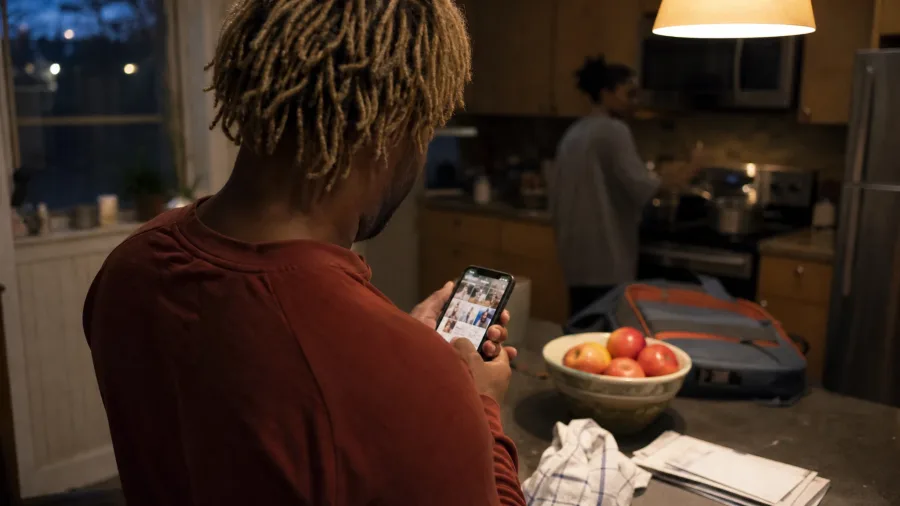
You stop being the audience for the photos and become a contributor to the same album – one shared, running record of the unremarkable parts of their life, which is the part a child actually lives in.
One album, roughly twenty new photos a month, nothing styled or selected. A dog asleep on a stair. Three pairs of shoes dropped inside the door. A school project with the glue still drying. The walk home from the bus. Nothing here is worth framing, which is exactly why it works: the ordinary is what fills a week, and the pose is what turns a grandchild into a performance.
The ten-year-old uploads straight from a hand-me-down tablet. The four- and seven-year-olds add through a parent's phone, held out for them to point and snap. Nobody assigns this. The album simply sits on the household devices, in reach, so a photo can land in it in the four seconds between homework and dinner.
Here is the line that separates a log from a performance metric. Comment on the specific thing, not the child. Not "lovely!" and not "you're getting so big" – "the red boot halfway up the slide" or "that tower's leaning and it's still standing." Specificity is the proof that you actually looked, and a child can tell the difference instantly.
And then no chasing. No second comment asking why nobody answered. No count of how many photos came in this month. The album is a record, not a scoreboard, and the moment it starts expecting a reply it turns into one more thing the parents have to keep up with.
What this builds is small and durable: the children become people who add to something rather than people who are shown off to. A photograph taken for the album is a thought aimed at the far-off reader. That is the difference between a child who is watched and a child who is in touch.
💡 Tip: Make the child a contributor, not a viewer. Even one photo a month from them changes the exchange.
The Grandparent Box at a Glance
5. A Grandparent Box at Their House

Ten minutes. That is the whole test. Next visit, how long after you walk through the door until the three of you are actually doing something together – not hugging, not catching up with the parents, not sitting on the edge of the sofa asking what they have been up to?
If your honest answer is under ten minutes, you have solved the warm-up. If it is closer to a day – and for most people travelling 1,150 miles twice a year, it is – the visit is spending its first afternoon on introductions the children already paid for. The fix is a lidded plastic tub that lives at their house, stays there, and is not raided between visits: about $60 of duplo, playing cards, two craft kits and a disposable camera.
One thing inside it should be left unfinished. A half-built craft, a card game with the score still written on the back of an envelope, a camera with frames left on the roll. Then ask yourself the second question: can the child name the unfinished thing and ask for it before you arrive? If they can, the tub has done its job, and the visit starts playing.
6. The Same Recipe Cooked on Both Ends

The usual advice is to prep better questions, to keep a list of things to ask about so the conversation never stalls. It does not work, because the problem was never the questions.
A call where the only thing to do is talk puts everything on the child. They are ten, or seven, or four, and they have been at school all day; asked how it went, they say fine, and the two of you sit looking at each other through a screen while you work through your list and they wait for it to be over. The fix is not a better list. It is something for both pairs of hands to do at the same time.
Pick one thing both kitchens can actually make on a weeknight: pancakes, soft pretzels, no-bake cookies. Choose it for what is already in the cupboard and for a low oven risk, because a grandparent across four hours of flight cannot reach through the screen to move a tray. You send the ingredients list three days ahead, by message or in with the postcard, so nobody is standing in a shop the afternoon of the call hunting for the one thing missing on either end.
Then it runs thirty minutes, and the phone gets propped against something so the camera shows the counter and both pairs of hands, not two faces taking turns. When the task leads, the school question never comes up. It is replaced by 'add the flour now' and 'is that mixed enough', and the talking happens sideways, while everyone is looking down at a bowl.
Give the four-year-old a real job. Pouring, stirring, sprinkling the salt: something that actually goes into the bowl and can actually go wrong, because a child handed a pretend task drifts to the edge of the frame within minutes. The seven- and ten-year-old take the measuring and the timing, which means reading numbers aloud and watching the clock and telling you when to start the next thing. You are not running a lesson. You are cooking with three grandchildren who happen to be in another kitchen.
Once a month is plenty. The result is the point as much as the conversation: both houses end with a plate of something, and the next call has a built-in opening line about how the batch turned out. The awkward stretch is not solved by becoming a better interviewer. It is solved by giving everyone something to do with their hands, so the talk can arrive on its own.
Two things tend to go wrong. A recipe with too many steps turns into an adult giving instructions while the children wait, which is the interview again in a different costume. Keep it to five ingredients and one bowl. And if a batch fails, say so out loud and laugh, because a child watching you shrug at a flat pancake learns that the call is not a test of anybody's performance.
Visit Before and After: Vacation Mode vs. Ordinary Days
The attraction schedule
- Hotel room, not their house
- Zoo, museum, theme park every day
- Meals out, no bedtime routine
- The children are guests in their own town
- Everyone tired by day three
The ordinary-days visit
- Stay in their home, not a hotel
- School pickup and the walk home
- Homework, dinner, bath, bedtime
- One unscheduled afternoon the child chooses
- The children's normal week, with you in it
7. A Weekly Online Game With a Set Start Time

"I don't want to make them talk to me." That worry is real, and the usual fix — more calls, longer calls — tends to make it worse.
build the weekly call around a game instead of a conversation, so talking is a side effect rather than the point. Pick one game both houses can run on hardware you can both see — online chess, a word game, a shared building world — and give it a fixed 30-minute slot each week. The screen shows the board, not just faces, and there is a turn structure to carry the minutes when nobody has anything to say.
Learn the game well enough to be a real opponent. If you keep asking the ten-year-old to remind you of the rules, the slot turns into another lesson they have to give, and lessons get old. Then let the result be honest: lose when you lose, win when you win, no deliberately dropped pieces, no gloating. Name a good move on both sides of the board — "that knight going where I didn't see it coming" — so the competition stays warm.
This is the habit most likely to survive the read-aloud years. When the ten-year-old turns thirteen and the video calls start to feel like being checked on, a standing game still gives them a reason to show up that has nothing to do with affection — a streak, a score, a half-finished map.
💡 Tip: Choose a game with a visible board on both ends. Anything that is only words on a screen loses its turn structure.
8. A Paper Countdown Calendar to the Next Visit

I once sent a child a beautiful calendar counting down to a visit and left the crossing-off to their mother, who had her own reasons to pull away. She did it for a week, then it slid behind the bread bin, and the visit arrived as a surprise to the only person it was meant to excite.
Mail a paper calendar to the grandchildren's house with both dates already written in, July and October, and let the child be the one who marks a square each evening. Ownership is what keeps a countdown from becoming an adult reminder: a calendar you mark is a calendar you check.
Hang it where the child sees it daily, a kitchen door or the side of the fridge, and send one small thing each week alongside it, a postcard or a comic, so the mailbox is tied to you and the calendar is not the only arrival. A visit stops being a someday and becomes a row of squares.
The Joint Journal – At a Glance
📓 Format
One sturdy notebook, mailed both ways
📅 Frequency
Every two to three weeks
✏️ Each turn carries
One drawing, one question, one sentence
📸 Safety step
Photograph every page before mailing
🎯 Sweet spot age
7-10 (younger children contribute drawings)
Why it lasts
The child can hold the last turn while waiting for the next one.
9. A Joint Journal Mailed Back and Forth

The cost of a notebook is that it can vanish in the mail — a sorting machine, a wet doorstep, a lost bin — and with it three weeks of a child's drawing. Photograph every page before you seal the envelope, and the loss is a gap rather than a hole.
Give it two to three weeks between houses, a sturdy cover, and a turn small enough to finish in one sitting: a sketch, one question to pass on, a single line about the week. The seven-year-old is the sweet spot. The four-year-old adds a drawing, and the ten-year-old adds a question or a comic panel without being dragged into it.
A screen can't hold a wobbly crayon sun or the slope of a child's letters, and the last turn can sit on a kitchen table for days, waiting.
📞 The First Fifteen Minutes of the Wednesday Window
Minute 0-2
Open the call and let the children see you before anyone speaks.
Minute 2-7
Hand over the show-and-tell: one object, one drawing, one thing learned.
Minute 7-11
Ask two specific questions about the object, then stop asking.
Minute 11-14
Read two chapters of the book and end on the cliffhanger.
Minute 14-15
Say the same closing line every week and hang up first.
10. Two Visits a Year, One on Ordinary Days

Not the attractions. Researchers who study family memory keep finding the same thing: children recall the ordinary evenings, not the outing. The summer week and the long October weekend are your two best chances at that, so build them like a Tuesday.
Stay in the house, not a hotel. Do school pickup twice, sit through homework, sit through dinner and bedtime. That is how the visit enters their real week instead of hovering above it.
Keep one afternoon completely empty and let the child decide. The backyard, a board game, a walk to the corner. You follow, and you say yes to whatever they pick.
11. One Tradition That Belongs Only to You Two
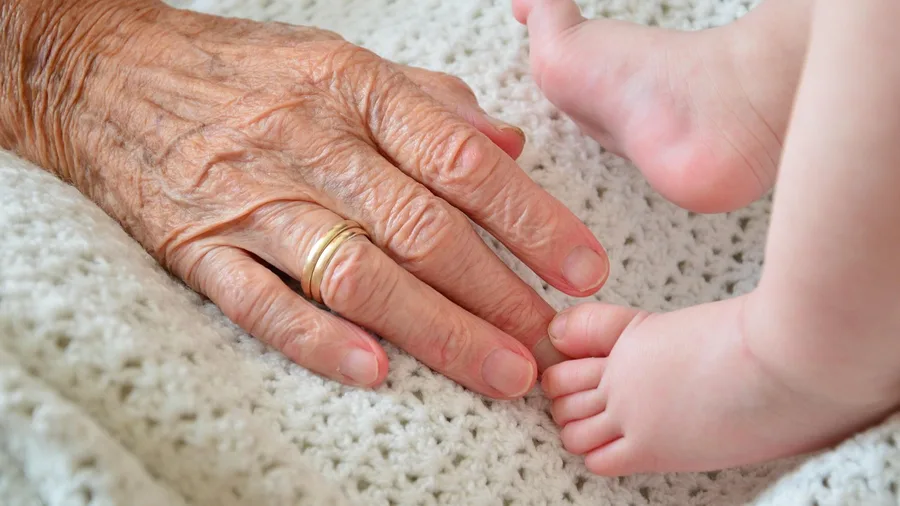
One thing, repeated for years, that nobody else in the child's life does. A secret handshake, a weekly weather report, a running joke that has outlasted three of their haircuts. It costs nothing and needs no equipment, which is exactly why it survives.
The name is what makes it work. When the 7-year-old asks for 'the weather report,' the ritual has become theirs to call, not yours to offer.
It has to travel. The same handshake by phone, by letter and in person means distance never gets a vote, and the thing keeps running whether you are four hours or four feet away.
One version per child, kept separate, and the cost shows up slowly. The 4-year-old gets a handshake, the 7-year-old the weather report, the 10-year-old the running joke, and none of them is a family custom you happen to be part of. What it spends is your attention divided three ways, and what it buys is the thing that makes you a person they would miss.
Frequently Asked Questions
How do I start when the grandchildren are already school-age and we barely talk?
Start with the standing video call and keep it short. Fifteen minutes every Wednesday, named, with the first five minutes handed to the children. The awkwardness fades once the slot is predictable, usually within three or four weeks.
What if the parents are not on board with the routines?
Ask for one thing at a time, not a program. A single weekly slot, or one envelope in the mail, is easy for a parent to say yes to. Add the next habit only after the first one is running without reminders.
How much does all of this cost?
About $25 a month for postcards, stamps, a shared album and small craft supplies. The grandparent box is a one-off $60, and the two visits run about $340 round trip each. Most of the habits are free.
What if the children are too young to talk on a call?
Use the same Sunday slot with picture books and let them wander off. The 4-year-old joins for a few minutes, contributes a drawing to the journal, and replies to voice notes with a parent holding the phone.
How do I keep this going when they become teenagers?
The weekly online game is the habit built for that stretch. It gives a teenager a reason to want the call that is not affection—competition, a streak, a project. Keep the private tradition going on the same schedule so it does not lapse.
What is the one thing to do this week?
Name the call and send the first invitation. Pick Wednesday at a fixed time, tell the family what it is called, and hold the first one for fifteen minutes even if there is no news.
The Wednesday Window Is the One to Start This Week
Start this week with the named standing call: Wednesday, fifteen minutes, 'The Wednesday Window.' It costs nothing and works at every age. Then add a second by age and budget: the weekly online game for the 10-year-old, the joint journal for the 7-year-old, the cook-along with the pouring and stirring for the 4-year-old. Add a third only after the first has run three clean weeks. The $25 monthly starter budget still carries the postcards, stamps, shared album and craft supplies.
Starting all eleven at once is how these die. One habit, repeated until the children expect it, is the whole mechanism. And birthdays and video calls are not the last of the relationship. A named Wednesday call, the Sunday read-aloud of two chapters and the July and October visits turn them into a rhythm the grandchildren count on.
Tonight, at the named time, prop the phone so both faces and a tabletop show. Open with the call's name and ask the child to show one object, drawing or thing learned. Let them lead five minutes while you ask two specific questions. Then show one ordinary thing of yours, the bird feeder or the kettle, and ask one question back. At minute twelve, name the next call and say goodbye. If they wander at minute eight, let it end early and do not scold. That is the first of eleven habits, most of them free, and the one that makes room for the rest.
Name Your Call Tonight
Pick the day, pick the time, and send one message to the family with the name of the call. The first Wednesday Window starts this week.