
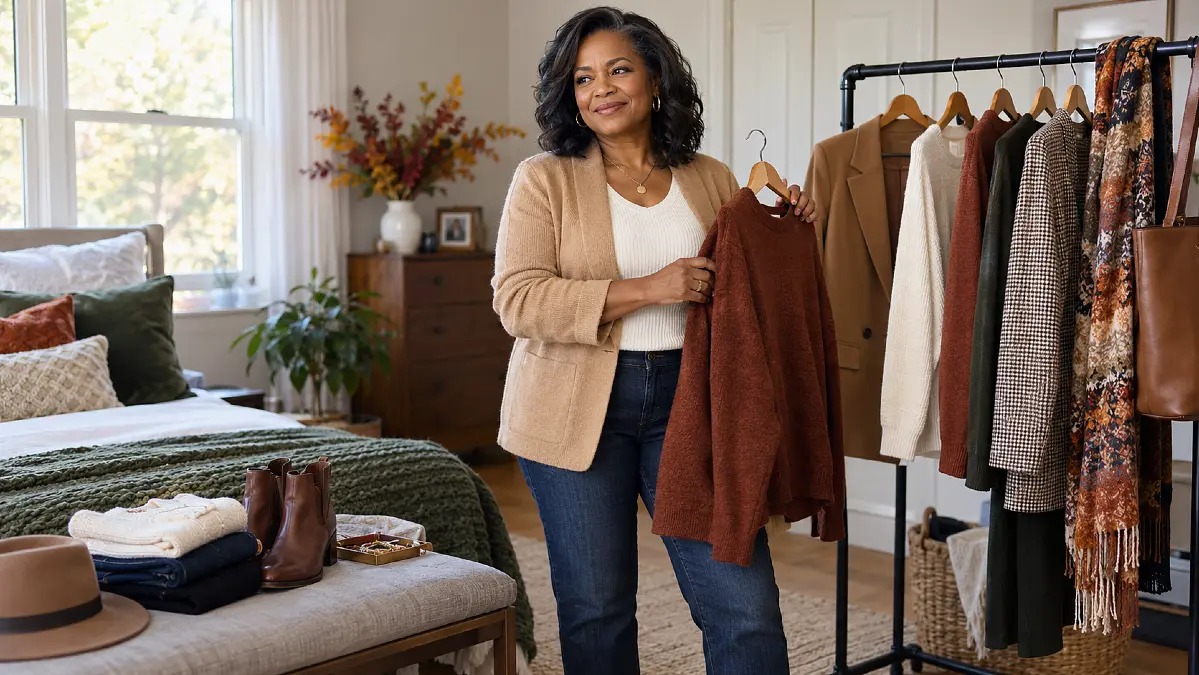
Building a fall wardrobe can feel surprisingly expensive when every store seems to suggest you need new boots, new coats, new sweaters, and a completely different color palette.
For women over 50, there can be another layer of frustration. Clothes you once reached for may no longer fit or hang the same way, while some newer trends can feel either too young or too shapeless.
The good news is that a beautiful fall wardrobe does not require a large shopping haul. A smart capsule wardrobe over 50 starts with the clothes you already wear, then fills only the gaps that make getting dressed easier.
Start Your Fall Wardrobe With the Clothes You Already Trust
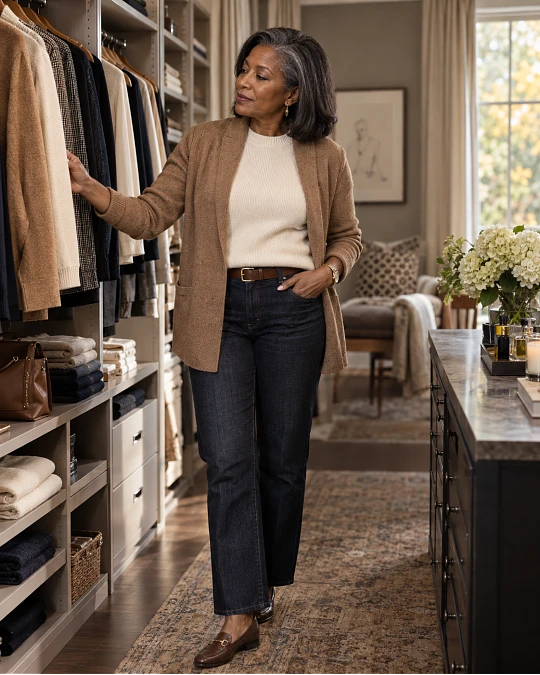
Before shopping, pull out the pieces you genuinely enjoyed wearing last fall. Ignore anything you kept only because it was expensive, barely worn, or still technically fits.
Look for the clothes that already solve everyday dressing problems. Straight jeans, dark trousers, a soft cardigan, an easy jacket, and comfortable ankle boots may already give you most of your fall wardrobe.
Try each piece on rather than judging it on the hanger. A jacket that looked useful in your closet may pull across the shoulders, while an old pair of trousers might suddenly look excellent with a different sweater.
Make three small groups: wear now, needs a simple fix, and no longer useful. A hem adjustment, new buttons, steaming, or a better layering piece can often bring an older garment back into rotation.
Budget-friendly swap: Before replacing a slightly tired sweater, try wearing it under a structured jacket. The visible neckline and cuffs may be all anyone sees.
Build Around a Small Fall Color Palette
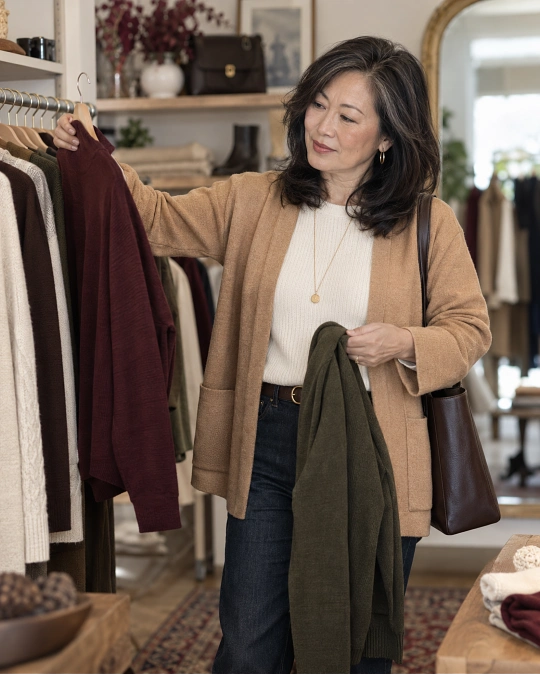
A limited color palette makes an affordable wardrobe look much larger because more pieces work together.
Choose two or three neutrals you already wear often. Navy, chocolate brown, charcoal, cream, camel, olive, and black all work well for fall, but you do not need every one.
Then add one or two colors that make your basics feel more interesting. Burgundy, rust, forest green, deep teal, plum, or muted red can bring warmth without forcing you to rebuild the whole wardrobe.
If your closet contains navy trousers, dark jeans, cream knitwear, and a camel jacket, for example, a burgundy scarf or green sweater can create several fresh combinations.
This simple approach is one of the easiest ways to make wardrobe essentials for women over 50 work harder without constantly buying more.
Here is a useful way to think about color before adding anything new:
| What You Own | Fall Addition | Why It Works |
|---|---|---|
| Dark jeans and navy trousers | Cream knit | Lightens darker outfits and layers easily |
| Black trousers and coat | Burgundy top | Adds warmth without being difficult to match |
| Camel jacket and denim | Forest green sweater | Gives earthy fall contrast |
| Gray trousers and cardigan | Plum scarf | Adds color near the face at a low cost |
You do not have to follow traditional fall colors if they do not suit you. A soft blue sweater can look just as seasonal when paired with charcoal trousers and brown boots.
Spend More Carefully on Jackets, Knits, and Trousers
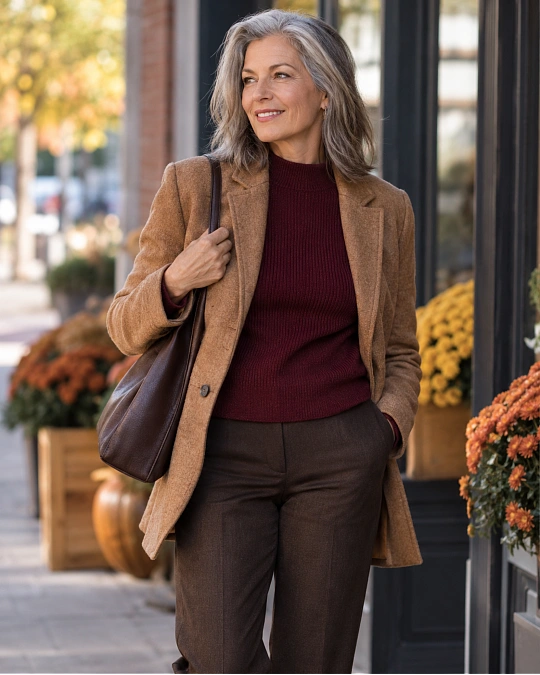
When money is limited, spend according to how often you will wear something, not how exciting it looks in the store.
A jacket that works with jeans, trousers, skirts, and dresses may earn far more wear than a statement blouse that only suits one outfit.
For jackets, look for enough room through the shoulders and upper arms to layer a lightweight knit underneath. Too-tight outer layers make even expensive outfits look uncomfortable.
Sweaters are worth checking closely too. A clean neckline, smooth shoulder seam, and fabric with enough body to skim rather than cling can make a simple knit look much more polished.
With trousers, focus on the line from waist to shoe. Straight, softly tapered, and wide-leg styles can all work well, but the hem and rise matter more than whatever silhouette happens to be trending.
Fabric can also tell you whether something will earn repeat wear.
| Piece | Look For | Why It Helps |
|---|---|---|
| Sweater | Soft knit with some structure | Layers neatly without looking bulky |
| Trousers | Fabric with drape and slight stretch | Moves comfortably while keeping its shape |
| Blazer or jacket | Smooth lining and flexible shoulders | Makes layering easier |
| Jeans | Midweight denim with recovery | Holds its shape through repeated wear |
| Coat | Fabric substantial enough to hang cleanly | Makes simple outfits look finished |
Fit note: If you are between two sizes, choose the one that gives you the cleaner silhouette. The number on the label matters far less than how the garment falls.
Let Layers Create More Outfits Instead of Buying More Clothes
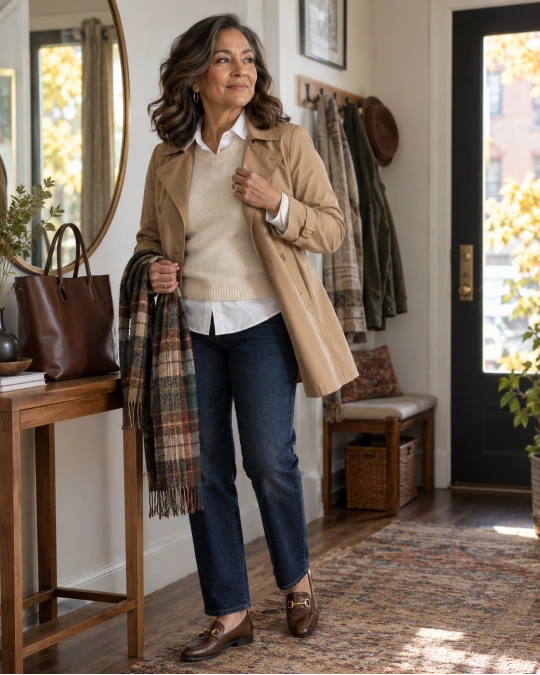
Fall is one of the easiest seasons for stretching a wardrobe because layers change the look of the same basic pieces.
A white or cream shirt can sit under a cardigan for errands, under a blazer for lunch, or open over a simple knit top on a mild afternoon.
The same principle works with lightweight sweaters. Wear one alone with trousers, layer it beneath a jacket, or add a scarf when the temperature drops.
Rather than buying several complete everyday outfits for women over 50, think in terms of interchangeable layers.
A useful fall wardrobe might contain a few dependable bottoms, several tops, two or three layers, and shoes that work across most combinations. The exact number matters less than how easily everything mixes.
You can also shift the same foundation between casual and slightly dressier plans without changing the entire outfit.
| Base Outfit | Casual Version | Dressier Version |
|---|---|---|
| Dark jeans + cream knit | Sneakers + utility jacket | Loafers + blazer |
| Black trousers + soft top | Cardigan + flats | Structured jacket + ankle boots |
| Straight jeans + button-down | Lightweight sweater + sneakers | Belt + loafers + coat |
| Knit dress | Denim jacket + flat boots | Long coat + polished ankle boots |
This is especially useful on days when you move from errands to lunch or an appointment and do not want to change completely.
Use Shoes and Accessories to Refresh Clothes You Already Own
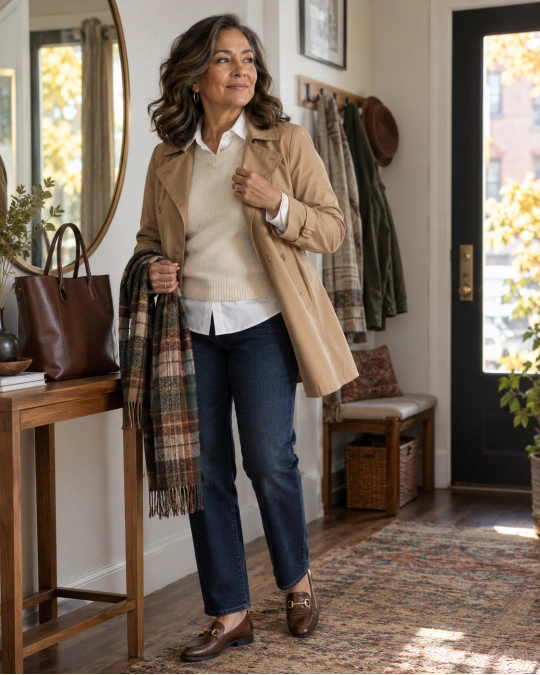
A wardrobe can feel dated even when the clothes themselves are perfectly wearable. Sometimes the problem is simply what you are pairing with them.
Changing the shoe is one of the fastest fixes. Straight jeans can look more current with a sleek loafer, clean sneaker, ballet flat, or simple ankle boot instead of a heavy shoe that overwhelms the leg line.
Belts can also change proportion. A soft sweater partially tucked into trousers with a slim belt often creates more shape than leaving every layer long and loose.
Scarves, earrings, handbags, and necklaces are useful, but you do not need many. Choose accessories that repeat the colors already in your wardrobe rather than buying one for every outfit.
Comfort upgrade: If you love the look of a heeled ankle boot but dislike wearing heels all day, choose a low block heel or flat pointed-toe boot instead. You keep the polished shape without sacrificing comfort.
Secondhand shops and resale sites can be especially useful for accessories, jackets, and quality knitwear. Condition and fit matter more than the season printed on the original tag.
Avoid the Purchases That Quietly Blow the Fall Budget
Most wardrobe overspending does not come from one expensive coat. It comes from small purchases that never become part of real outfits.
A sweater may be beautiful on its own but still be poor value if it only works with one pair of trousers. A trendy shoe can create the same problem if none of your existing hems sit correctly over it.
If a fall trend interests you, try the smallest version first. A current color, scarf, belt, or updated shoe shape can make your clothes feel fresh without forcing you to build outfits around an expensive statement piece.
A few simple checks can stop many regret purchases:
- If a color only matches one thing you own, leave it unless you truly love it.
- If a jacket cannot comfortably fit over your usual fall tops, try a different cut.
- If a shoe requires buying new trousers to make the proportions work, consider another shoe.
- If you are buying something because your closet feels boring, style three new combinations before shopping.
Think in cost per wear rather than price alone. A well-fitting $80 jacket worn weekly may serve you better than three $30 tops that rarely leave the hanger.
Use One Fall Outfit Formula on Busy Mornings
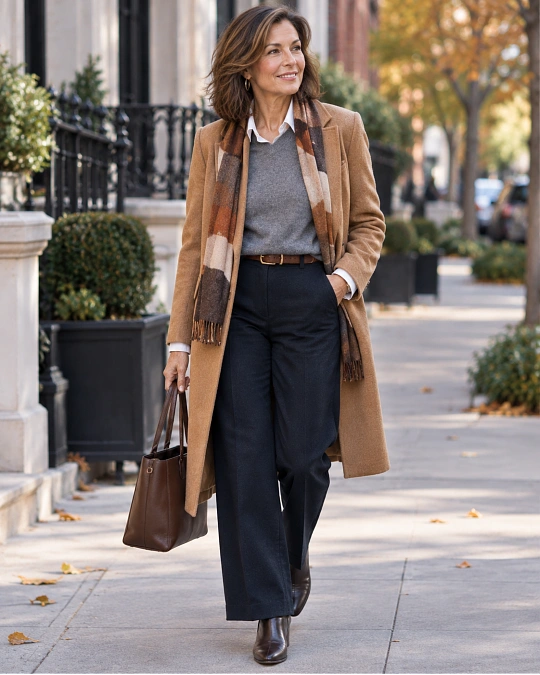
The easiest wardrobes usually have a personal uniform hiding inside them.
Formula: straight jeans or trousers + soft knit + structured third layer + comfortable polished shoe
This combination works because the knit adds softness, the jacket or cardigan creates shape, and the clean shoe gives the outfit a finished point at the bottom.
Change only one part when you want variety. Swap jeans for trousers, the blazer for a cardigan, or loafers for ankle boots.
Your own formula may look different. What matters is having one combination you know feels comfortable and pulled together.
A good capsule wardrobe over 50 should reduce decision fatigue, not give you another set of fashion rules to follow.
Frequently Asked Questions
How many clothes do I need for a fall capsule wardrobe over 50?
There is no correct number. Start with enough tops, bottoms, layers, and shoes to create a week or two of outfits without feeling repetitive.
Focus on pieces that mix rather than trying to hit a specific capsule wardrobe count.
What should I buy first if my fall wardrobe budget is very small?
Start with the gap that affects the most outfits. That might be comfortable trousers, a versatile jacket, a neutral knit, or shoes that work with several hems.
One useful purchase is usually better than several inexpensive pieces that duplicate what you already own.
What colors make a fall wardrobe look elegant?
Chocolate brown, navy, charcoal, cream, camel, olive, burgundy, and deep green can all create a rich fall palette.
You do not need to wear traditional autumn colors, though. The most elegant palette is one that works with your existing wardrobe and suits the colors you enjoy wearing.
How can I look current without buying every fall trend?
Update small details first. A newer trouser shape, contemporary shoe, fresh color combination, or different way of layering can make familiar clothes look modern.
Choose trends that work naturally with your personal style instead of rebuilding your wardrobe around them.
Can inexpensive clothes still look polished after 50?
Yes. Fit, fabric condition, proportion, and styling often matter more than the price tag.
Steam wrinkled pieces, check hems, remove pilling, and combine inexpensive basics with a structured layer or polished shoe.
Build a Fall Wardrobe That Works for Your Real Life
A beautiful fall wardrobe does not come from buying the most clothes. It comes from knowing which pieces fit well, work together, and make everyday dressing feel easier.
Style after 50 is not about following stricter rules. It is about becoming more selective about fit, comfort, proportion, and what deserves space in your closet.
Start with one outfit you already like this week. Then make one small change that helps you wear it in two new ways.