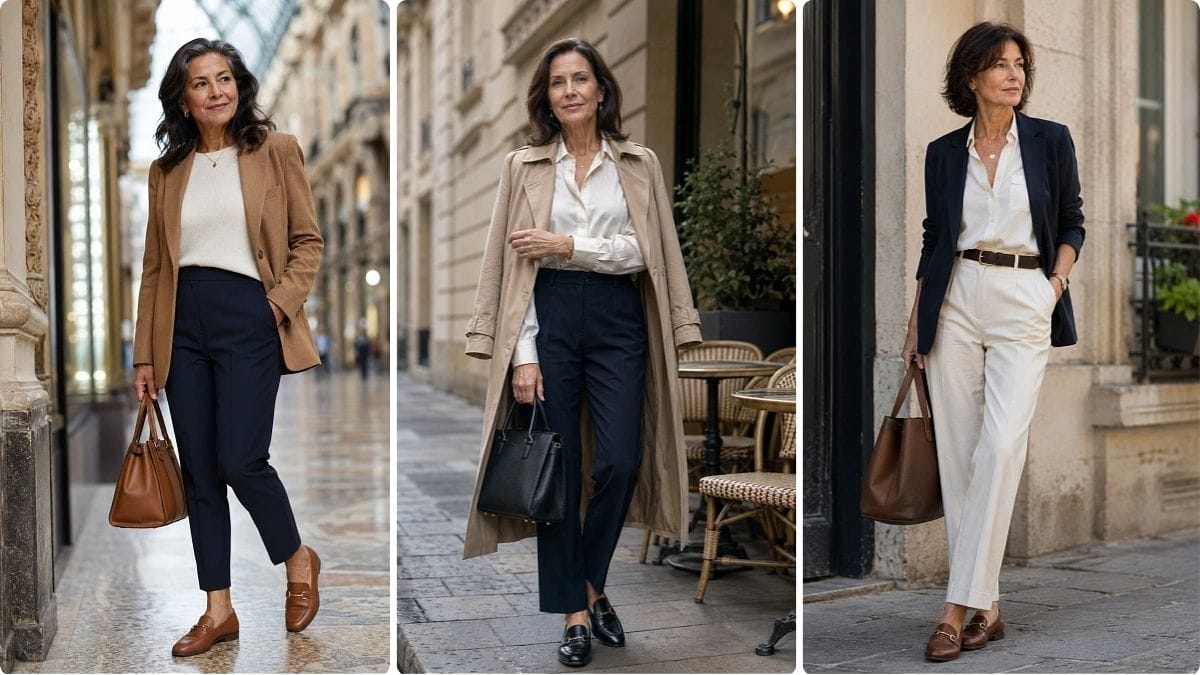
Getting dressed can become strangely harder when the clothes in stores seem either too young, too dull, or designed for a life you do not actually live. Many women over 50 want to look current without chasing every trend or building outfits that feel overly styled.
That is where French-inspired dressing can be useful. The appeal is less about owning a striped shirt or copying Parisian clichés and more about restraint, fit, good fabric, and knowing when an outfit has enough.
For dressing over 50, these ideas can make mornings simpler while still giving clothes personality. You do not need a new wardrobe. A few changes in proportion, color, shoes, and finishing details can make familiar pieces feel far more polished.
French Style Starts With Restraint, Not a Closet Full of Basics
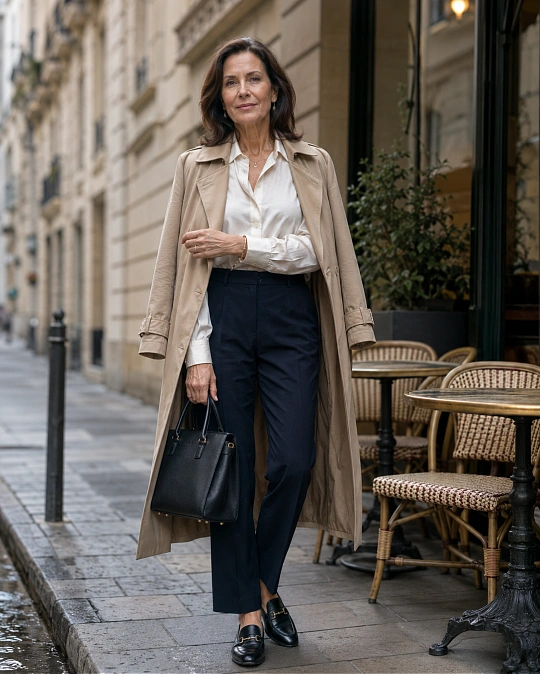
French-inspired style often looks simple because the outfit has been edited. There may be only three or four visible elements, but each one has a clear purpose.
That does not mean your wardrobe has to be beige, minimal, or expensive. It means giving the eye somewhere to rest instead of asking every garment, accessory, color, and trend to compete for attention.
A plain navy knit with straight trousers can look stronger than an outfit filled with statement pieces when the knit sits neatly at the shoulder, the trousers skim rather than cling, and the shoes give the outfit a clean finish.
This shift is especially useful when you want stylish outfits for women over 50 that feel modern but still realistic for errands, lunches, work, travel, and ordinary weekdays.
French dressing also leaves room for repetition. Wearing the same good jeans twice in one week is not boring if you change the knit, scarf, jacket, or shoes around them.
Here is a more useful way to think about some familiar fashion rules.
| Old Rule | French-Inspired Approach |
|---|---|
| Every outfit needs something eye-catching | Let one detail lead and keep the rest quiet |
| Basics are boring | Strong basics create space for personality |
| Trends make an outfit look current | Updated proportions often matter more |
| You need lots of clothes for variety | Repeat a small group of reliable combinations |
| Looking polished means dressing formally | Good fit and clean finishing can polish casual clothes |
The goal is not to look as though you spent an hour planning your clothes. It is to make the outfit feel considered without looking overworked.
Get the Proportions Right Before Adding Accessories
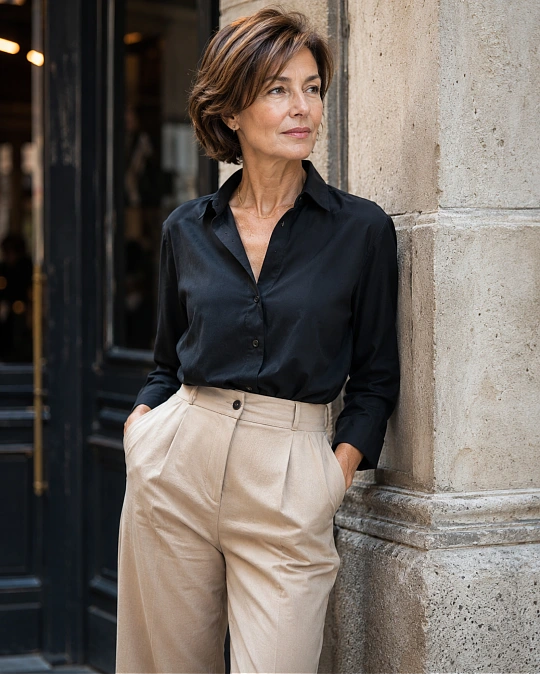
One of the strongest French style habits is paying attention to silhouette before decoration. If the proportions are working, you often need very little else.
Try pairing one relaxed piece with one cleaner, more controlled shape. Wide-leg trousers can work beautifully with a fitted knit, while a roomy blazer often looks better over a simple tee than over several loose layers.
Length matters too. A jacket ending near the hip creates a different line from one ending at mid-thigh, while a small front tuck can stop a longer shirt from hiding your entire shape.
You do not need to highlight your waist if you do not want to. The aim is simply to give the outfit some structure so the fabric does not fall as one long block.
Fit note: Before deciding that a garment is unflattering, check the shoulder seam, sleeve length, hem placement, and trouser break. Small proportion problems are often mistaken for body problems.
For a quick test, stand in front of a full-length mirror and look at the outfit from several feet away. Notice the overall outline before focusing on individual areas.
Fabric Makes Simple Clothes Look More Intentional
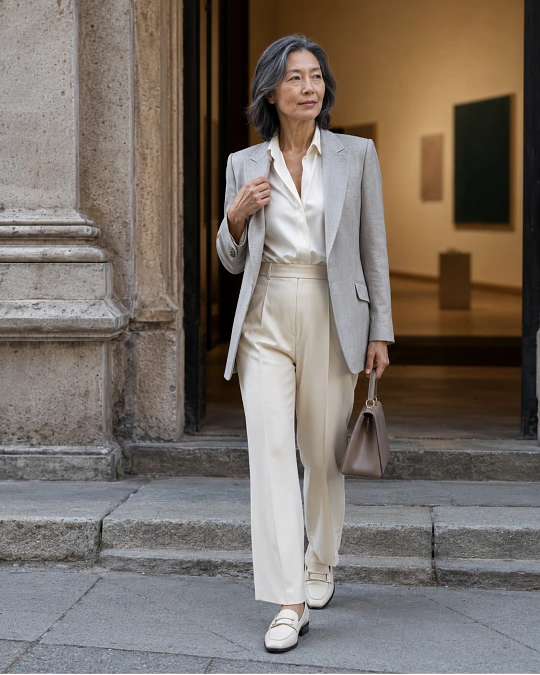
French-inspired wardrobes tend to rely heavily on texture because texture gives simple clothes depth. A cotton poplin shirt, soft wool cardigan, linen blend blazer, or substantial jersey top often needs less styling than a thin fabric that twists, clings, or loses shape.
This becomes especially helpful with everyday outfits for women over 50. When the fabric holds its line, you can wear fewer pieces and still look pulled together.
You do not need luxury labels. Pay attention to how the cloth behaves in your hand and on your body rather than focusing only on fiber content or price.
The best fabric depends on the garment and how you plan to use it.
| Garment or Fabric | What to Look For and Why |
|---|---|
| Cotton shirt | Enough weight to hold the collar without feeling stiff |
| Fine knit | Smooth drape that follows the body without gripping it |
| Trousers | Fabric with some structure so the leg line stays clean |
| Linen blend | Natural texture with less severe creasing than very light linen |
| Jersey top | Medium-weight cloth that does not turn transparent when stretched |
For warm weather, breathable fabrics keep simple outfits from feeling heavy. In cooler months, wool blends, brushed cotton, denim, suede, and soft knits add interest without relying on extra decoration.
Fabric note: If a simple outfit feels flat, adding texture is often more effective than adding another accessory.
Build Around Quiet Colors, Then Add One Point of Interest
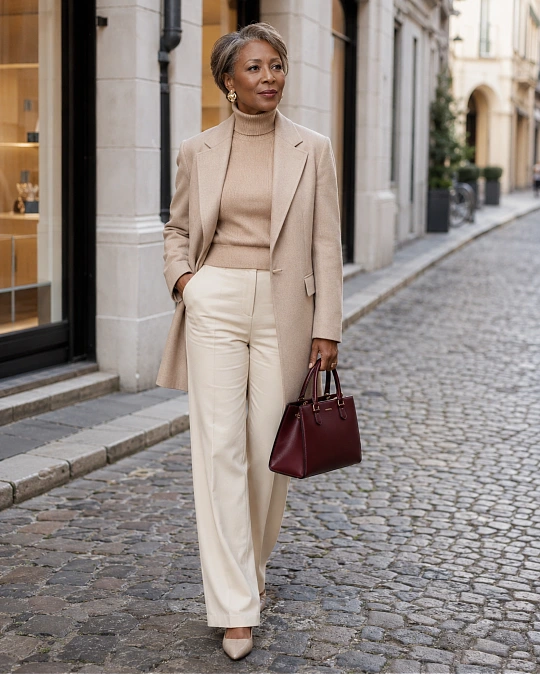
Neutral dressing is associated with French style for a reason, but the useful lesson is not that everyone should wear black from head to toe.
A limited palette makes pieces easier to combine. Navy, cream, chocolate, camel, gray, olive, soft white, denim blue, and black can create a calm base that works across seasons.
From there, choose one point of interest. That could be burgundy loafers, a red lip, a printed silk scarf, tortoiseshell glasses, a cobalt cardigan, or a patterned bag.
If you enjoy brighter colors, keep wearing them. The French-inspired trick is simply to control where the color appears rather than scattering several competing shades through one outfit.
A green blazer can look chic over a cream top and dark jeans because the eye understands immediately which piece is meant to stand out.
Color also becomes easier when you repeat it. Wearing a favorite burgundy knit with denim, charcoal trousers, cream jeans, and a navy skirt creates more value than buying four unrelated statement tops.
That kind of repetition is one reason a capsule wardrobe over 50 can feel personal rather than restrictive.
Shoes and Bags Should Finish the Outfit, Not Fight With It
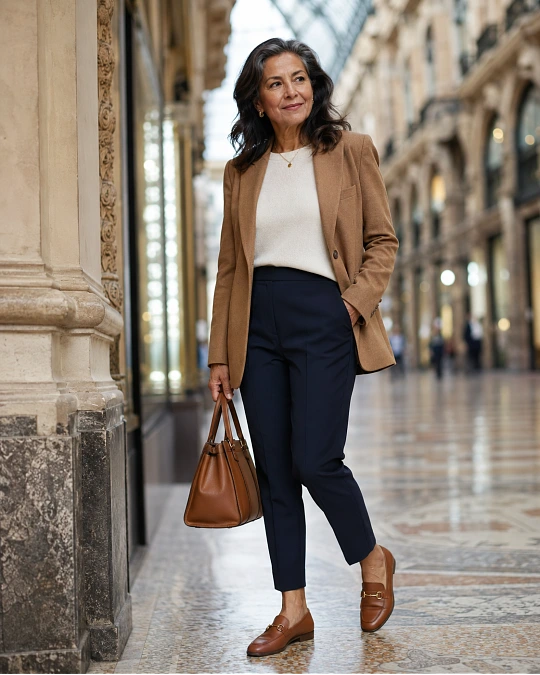
French-inspired outfits often look memorable because the finishing pieces are understated but deliberate.
Loafers, ballet flats, slim ankle boots, simple sneakers, low block heels, and refined sandals all work because they continue the clean line of the outfit rather than interrupting it.
Comfort still comes first. A shoe is not chic if you spend the entire day thinking about your feet.
Look for cushioning, a secure heel, enough width through the toe area, and a heel height that works with your normal routine. You can find all of those features without giving up a polished shape.
Bags work in much the same way. A structured crossbody, medium shoulder bag, soft leather tote, or clean top-handle shape can make even jeans and a knit feel finished.
A few helpful swaps:
- If delicate flats feel too slight, try a loafer with a slightly stronger sole.
- If high heels are no longer enjoyable, switch to a low block heel or pointed flat.
- If athletic sneakers make trousers feel too casual, try a clean leather sneaker.
- If a large tote overwhelms the outfit, test a smaller shoulder or crossbody bag.
The point is not to make every accessory expensive. It is to choose accessories that look connected to the clothes around them.
Avoid Turning French Style Into a Costume
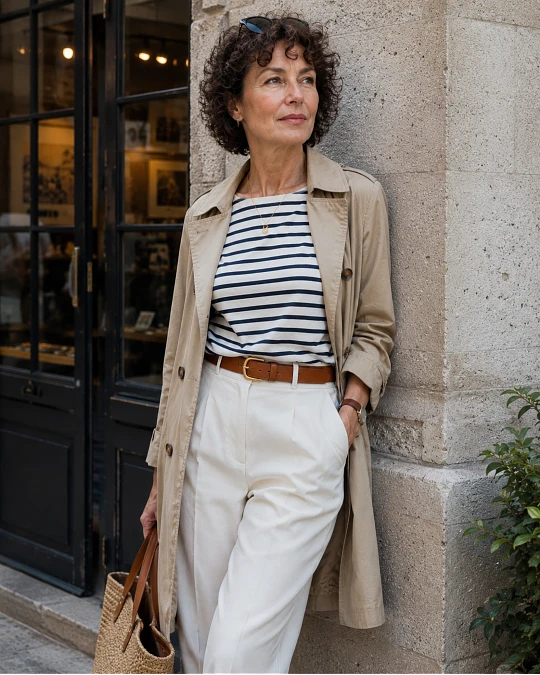
The least useful way to approach French dressing is to collect every cliché at once.
A beret, striped knit, neck scarf, ballet flat, red lip, trench coat, and basket bag can each be stylish. Worn together purely to look “French,” they can make the outfit feel more like a theme than personal style.
Instead, borrow the principle behind the look.
If you love striped tops, wear one with modern trousers and loafers. If you enjoy scarves, tie one onto a handbag rather than automatically putting it around your neck.
If black makes you feel strong, use it. If cream, olive, navy, chocolate, or rust suits you better, build your palette there instead.
French-inspired dressing over 50 works best when you stop copying the image and start copying the editing.
You may also find that some classic pieces simply do not suit your life. A trench coat is not necessary if you live somewhere hot, and ballet flats are not useful if you need more support.
Style becomes stronger when your wardrobe reflects your actual mornings rather than somebody else’s photograph.
Use One Repeatable French-Inspired Outfit Formula
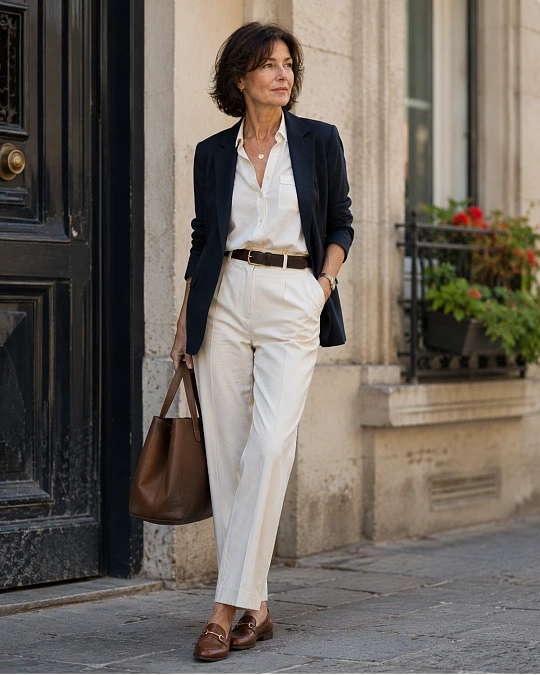
The easiest way to make these ideas practical is to create a personal uniform that removes some of the decisions from getting dressed.
Formula: straight or relaxed trousers + simple knit or shirt + structured third piece + clean shoes.
The third piece might be a blazer, cardigan, short jacket, trench, or lightweight coat. It gives the outfit shape while allowing the first two pieces to stay very simple.
You can adapt the same formula for different parts of your week.
| Occasion | Pieces | Why It Works |
|---|---|---|
| Errands | Straight jeans + knit tee + cropped jacket + sneakers | Comfortable base with enough structure to look finished |
| Lunch | Trousers + fine knit + blazer + loafers | Clean lines create an elegant casual look |
| Travel | Soft trousers + cotton shirt + cardigan + supportive flats | Layers adjust easily without looking bulky |
| Evening | Dark trousers + silky blouse + short jacket + low heel | Texture adds richness without requiring heavy accessories |
Once you find one or two formulas that suit your life, repeat them freely.
Change the color, fabric, jewelry, or shoes rather than rebuilding the entire outfit from scratch. That is how a personal uniform becomes useful rather than repetitive.
Frequently Asked Questions
How can a woman over 50 dress more like a French woman?
Start with fit, simple color combinations, and fewer competing details. Choose well-cut trousers, good knitwear, shirts, jackets, and comfortable shoes, then add one personal detail such as jewelry, a scarf, or a stronger color.
The goal is not to copy a stereotype. It is to create clothes that feel edited, relaxed, and genuinely useful.
Do French women over 50 wear jeans?
Jeans can fit easily into French-inspired style. Straight, slim-straight, relaxed, and gently wide-leg cuts can all work depending on the proportions you prefer.
Pair them with a knit, shirt, blazer, trench, loafers, ankle boots, or clean sneakers instead of treating denim as purely casual.
What colors create a French-inspired wardrobe?
Navy, cream, black, gray, camel, chocolate, olive, and denim are useful starting points because they mix easily. You can then add colors you genuinely enjoy, such as red, burgundy, green, cobalt, or soft pink.
A restrained palette simply makes outfit building easier. It does not mean giving up color.
How do you look chic without looking overdressed?
Keep the clothes simple and pay attention to fit, fabric, and shoes. Straight trousers with a knit and loafers can look polished without feeling formal.
Stopping before the outfit feels overloaded is often what gives chic outfits for women over 50 their relaxed quality.
Do I need expensive clothes to get French style?
No. Fabric behavior, fit, condition, and how often a piece works with the rest of your wardrobe matter more than the label.
A well-fitting cotton shirt worn regularly can offer better cost-per-wear than an expensive statement piece that rarely leaves the closet.