

A closet full of clothes can still leave you feeling like you have nothing to wear. Some pieces no longer fit comfortably, others belong to a different stage of life, and a few are simply too meaningful to give away.
For many women over 50, clearing out a wardrobe feels more emotional than expected.
The hardest part is often deciding what deserves to stay. That expensive jacket, the dress you wore to a special event, or the jeans you hope to fit into again can make every decision feel difficult.
Learning how to declutter your closet over 50 doesn’t mean throwing away half your wardrobe or replacing everything with basics.
Start With the Clothes You Actually Wear, Not the Ones You Think You Should

The easiest way to make a mistake when decluttering is to begin pulling everything out and deciding what to throw away. A better starting point is to notice which clothes already make getting dressed easier.
Look at the pieces you reach for during an ordinary week. Your favorite trousers, a soft cardigan, comfortable jeans, or a well-fitting shirt can tell you more about your personal style than a closet full of occasional outfits.
These clothes have already proved their value. They suit your daily routine, feel comfortable, and work with other things you own.
Your wardrobe may also need to reflect a different lifestyle than it did ten years ago. Perhaps you work fewer hours, travel more often, or prefer relaxed outfits instead of formal clothing.
There’s no reason to keep an entire collection of office suits if your current days mostly involve lunches, errands, hobbies, and time with family.
Try this: Before removing anything, choose five outfits you genuinely enjoy wearing. Notice their colors, fits, fabrics, and shoes. These are useful clues about what deserves space in your closet.
The goal isn’t to create a smaller wardrobe just for the sake of it. It’s to build one that makes sense for the woman you are today.
Try Everything On Before Deciding What Stays

A piece of clothing can look wonderful on a hanger and feel completely different once you’re wearing it.
This becomes especially relevant after 50, when changes in body shape, comfort needs, and personal preferences can affect how familiar clothes feel. Something that fitted beautifully years ago might now pull at the waist or sit differently across the shoulders.
Before deciding whether to keep something, try it on with the shoes and undergarments you’d normally wear.
Move around, sit down, raise your arms, and look at how the fabric falls. Good clothing should allow you to enjoy your day without constant adjusting.
Pay attention to these details:
- Shoulders: Jackets and shirts should sit comfortably without pulling or drooping too much.
- Waistbands: Trousers and skirts should feel comfortable when standing and sitting.
- Fabric: Check for scratchiness, excessive stiffness, pilling, and worn-out stretch.
- Length: Notice where tops, skirts, and trousers end and how they work with your shoes.
- Condition: Look for faded colors, stains, loose seams, and damaged closures.
A garment doesn’t need to fit the same way it did years ago to deserve a place in your wardrobe. It simply needs to feel good and work for you now.
Which Pieces Are Worth Altering?
Some clothes need only a small adjustment to become useful again. Others require so many changes that the cost and effort may not make sense.
Use this quick guide while trying things on.
| Clothing Piece | What to Check | Best Decision |
|---|---|---|
| Tailored blazer | Shoulders fit, but sleeves are too long | Consider shortening the sleeves |
| Favorite jeans | Waist feels tight or fabric has lost its shape | Try a different fit or let them go |
| Quality dress | Fits well but hem feels awkward | Consider a simple hem alteration |
| Cashmere sweater | Minor pilling but otherwise comfortable | Remove pills and keep wearing it |
| Leather shoes | Good condition but uncomfortable to walk in | Check whether fit can be improved safely |
Fit note: Don’t keep uncomfortable clothes solely because they were expensive. A lower-priced piece that fits beautifully can be far more valuable in your everyday wardrobe.
If you find something you still love but cannot comfortably wear, set it aside for a realistic alteration decision rather than returning it to your closet untouched.
Use a Four-Category Sorting System Instead of Making Quick Decisions
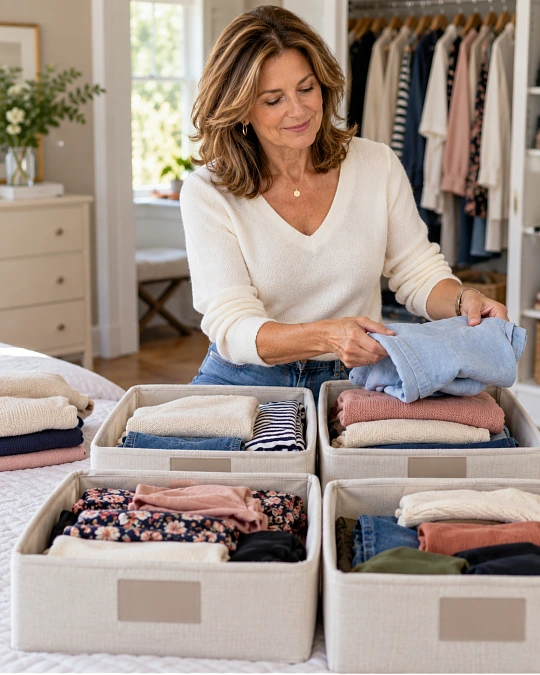
One reason closet decluttering becomes exhausting is that every garment seems to demand an immediate yes-or-no answer.
But clothing decisions aren’t always that simple. Some pieces need repairs, some are seasonal, and others deserve a little more thought.
Instead of deciding everything at once, create four clear categories.
Keep and Wear
These are clothes that fit comfortably, suit your current lifestyle, and work with things you already own.
They don’t need to be new or trendy. If a ten-year-old cardigan still looks beautiful and makes you feel good, there’s no reason to replace it.
Repair or Alter
This category is for garments you would happily wear if one small issue were fixed.
A missing button, loose hem, or slightly long pair of trousers may be worth correcting. However, give yourself a reasonable deadline so this pile doesn’t become another forgotten collection.
Donate, Sell, or Pass Along
Clothes that are clean and in good condition may have value to someone else, even if they no longer serve you.
Consider donating everyday items, selling pieces with meaningful resale value, or offering something special to a family member who genuinely wants it.
Decide Later
This is the category that makes decluttering without regret possible.
Choose a small box for pieces you’re emotionally attached to or genuinely unsure about. Put a date on it and revisit the contents after 30 to 60 days.
If you haven’t needed or missed something, letting it go may feel easier the second time.
What to avoid: Don’t create an unlimited maybe pile. Give it a fixed amount of space so it helps you make decisions rather than postponing all of them.
Make Room for Sentimental Clothes Without Keeping Everything

Some clothes carry memories that have nothing to do with style.
A dress worn at your daughter’s wedding, a coat purchased on a memorable trip, or a beautiful blouse inherited from your mother may hold more meaning than anything else in your wardrobe.
Treating these items like ordinary unwanted clothing can lead to regret.
Instead, separate sentimental pieces from the clothes you wear regularly. They serve a different purpose and don’t have to compete for the same hanging space.
You might choose a small memory box, a garment bag, or a dedicated shelf for the things you want to preserve.
A special scarf may deserve to stay even if you wear it only once every few years. The same may not be true of twenty similar scarves you haven’t touched in a decade.
Stop Following Old Closet Rules That Don’t Fit Your Life
Some familiar decluttering advice sounds sensible but can lead to rushed decisions.
A more flexible approach helps you protect meaningful pieces without holding on to everything.
| Old Decluttering Rule | A Better Approach After 50 |
|---|---|
| If you haven’t worn it in a year, discard it | Consider seasonal use, special events, and sentimental value |
| Keep only neutral colors | Keep colors that flatter you and make you happy |
| Throw away everything that doesn’t fit | Consider realistic alterations and future needs |
| Every item must serve a practical purpose | Allow limited space for meaningful keepsakes |
| Replace old clothes with modern versions | Keep older pieces that still fit, look good, and work |
Style tip: Consider photographing special clothing before passing it along. You can preserve the memory without needing to store every garment forever.
You can also keep one meaningful piece from a collection rather than the entire collection.
For example, saving a favorite silk blouse from your working years may feel more personal than keeping six suits you no longer plan to wear.
Build Your Everyday Wardrobe Around Outfits That Already Work

Once you’ve identified the clothes you love, the next step is making sure they work together.
A closet can contain dozens of beautiful individual pieces that rarely become complete outfits. This often happens when shopping decisions are made one item at a time.
Instead of counting garments, start thinking in combinations.
A navy cardigan might work with straight-leg jeans, cream trousers, and a printed midi skirt. A white shirt could suit all three bottoms with just a change of shoes.
These connections make your wardrobe feel larger without adding more clothes.
Find Your Personal Outfit Formula
A reliable outfit formula is simply a combination of pieces you enjoy wearing together.
You can change colors, fabrics, and accessories while keeping the basic shape of the outfit familiar.
Here are a few useful combinations.
| Occasion | Easy Outfit Formula | Why It Works |
|---|---|---|
| Everyday errands | Straight-leg jeans + cotton knit + loafers | Comfortable, relaxed, and put together |
| Lunch with friends | Wide-leg trousers + soft blouse + structured bag | Creates shape without feeling restrictive |
| Casual gathering | Midi dress + cropped cardigan + flats | Balances comfort with a polished finish |
| Travel day | Stretch trousers + breathable tee + lightweight jacket | Easy to layer and move in |
| Smart casual event | Dark trousers + silk-blend top + tailored blazer | Dressy without requiring a formal outfit |
Notice how some pieces can appear in several combinations. That’s the foundation of a useful capsule wardrobe over 50.
You don’t need a strict number of shirts, trousers, or dresses. The right amount depends on how often you do laundry, your local weather, and the kinds of days you actually have.
Color note: Choosing two or three main neutral colors can make outfits easier to coordinate. Add favorite shades such as burgundy, sage green, dusty blue, or soft pink so your wardrobe still feels personal.
Before keeping a garment you’re unsure about, try creating two or three outfits with it using clothes you already own.
If you love the piece but cannot make it work with anything else, consider whether it fills a real need or simply looks attractive on its own.
Avoid the Closet-Clearing Mistakes That Lead to Regret
Decluttering often feels exciting at first. Once the bags start filling up, it can be tempting to keep going until every shelf looks almost empty.
But a dramatic clear-out isn’t necessarily a successful one.
The goal is to remove what no longer serves you while keeping enough variety to dress comfortably for your real life.
Several common mistakes are worth avoiding.
Getting Rid of Clothes Because They’re Not Trendy
Fashion changes, but well-made clothes can remain useful for years.
A classic trench coat, tailored trousers, or beautiful knit doesn’t suddenly become worthless because a different silhouette is popular this season.
Try this: Before discarding an older favorite, experiment with more current shoes, a different belt, or a fresh combination of pieces.
Sometimes the garment isn’t the problem. It’s simply being styled the same way it was years ago.
Donating Your Entire Special-Occasion Wardrobe
You may rarely attend weddings, formal dinners, or celebrations, but that doesn’t mean you’ll never need a dressier outfit.
Keeping one or two versatile pieces can prevent stressful last-minute shopping.
A simple dark dress, elegant trousers, or a dressy blouse may cover several occasions with different accessories.
Holding On Because Something Was Expensive
The original price of a garment doesn’t make it more comfortable or useful today.
If a designer jacket hasn’t fitted properly for years, keeping it won’t recover the money you spent.
Consider selling it if the resale value makes the effort worthwhile. Otherwise, giving it a new home may feel better than letting it take up valuable space.
Throwing Away Clothes Before Checking What You Need
Be careful about donating practical staples just because they don’t feel exciting.
A raincoat, winter layers, comfortable walking shoes, and basic layering tops might not be your favorite items, but replacing them can become expensive.
Check what you own before removing useful pieces, especially garments you need only during certain seasons.
Keep Your Closet Organized Without Starting Over Every Season

The best decluttering system is one you can maintain without spending an entire weekend reorganizing.
Once you’ve finished sorting, arrange clothing so the pieces you wear most often are easiest to reach.
Keep everyday trousers, favorite tops, and regularly worn jackets at eye level. Move special-occasion clothes and off-season items into less prominent spaces.
Grouping similar items together also makes it easier to see what you already own.
For example, keep all your cardigans in one section instead of spreading them across different shelves. You’ll quickly notice if you have several nearly identical ones.
The 15-Minute Closet Check
Every few weeks, spend about fifteen minutes checking the clothes you’ve recently worn.
Ask yourself three simple questions:
- Did anything feel uncomfortable, worn out, or difficult to style?
- Is there a garment I keep avoiding for a specific reason?
- Have I discovered a combination I want to wear more often?
Put anything needing attention in your repair or decision area rather than ignoring it.
You can also turn your hangers around at the beginning of a season, then return them to their normal position after wearing each item.
At the end of the season, the untouched hangers show which clothes may deserve another look. They aren’t automatic instructions to donate.
Budget-friendly tip: After a closet clean-out, avoid buying replacements immediately. Wear your smaller wardrobe for a few weeks first so you can identify genuine gaps instead of shopping out of habit.
A wardrobe that grows slowly around your needs often feels more useful than one rebuilt in a single shopping trip.
Frequently Asked Questions
How many clothes should a woman over 50 have?
There isn’t one correct number of clothes for women over 50. Your wardrobe should reflect your lifestyle, climate, laundry habits, and personal preferences. Focus on having enough comfortable outfits for your regular activities rather than meeting a strict clothing count.
What clothes should I get rid of first when decluttering?
Start with damaged pieces you won’t repair, clothes that are uncomfortable, and items you no longer enjoy wearing. Next, review duplicates and garments that don’t suit your current routine. Save sentimental and expensive purchases for later, when you’ve already made easier decisions.
How do I declutter clothes without feeling guilty?
Remember that keeping an unused garment doesn’t recover its original cost or make it more useful. Selling, donating, or passing it along can give the piece another purpose. For emotionally difficult decisions, use a small maybe box and revisit it after a few weeks.
Should I keep clothes that no longer fit?
Keeping a few meaningful pieces or items that can reasonably be altered is a personal choice. However, storing a large wardrobe of uncomfortable clothing can make everyday dressing frustrating. Give priority to clothes that fit comfortably today rather than building your closet around a future size.
How often should I declutter my closet after 50?
A seasonal review is usually enough for most wardrobes, especially when paired with small monthly checks. You don’t need to remove clothing every time you organize. The purpose is to keep your closet easy to use and notice when your needs have changed.